Oct 20, 2015

RhoDeo 1542 Re-Ups 35

Hello, with 32 re-ups today a substantial part of the requests have been fullfilled, meanwhile there's still thousands of postings that could be re-upped, all it takes is a simple civilized request at the page where its originally posted.

Storage maybe dirt cheap these days -compared to 5 years ago, but the hosts are much more money orientated and look at turnover and notice that keeping data longer than 1 month isn't making them money. Thus the coming months i'm making an effort to re-up, it will satisfy a small number of people which means its likely the update will  expire relativly quickly again as its interest that keeps it live. Nevertheless here's your chance ... asks for re-up in the comments section prefarbly at the page where the expired link resides....requests are satisfied on a first come first go basis. As my back up ogg hard disk is nonresponsive currently, i most likely will post a flac instead~for the the pre medio 2011 posts~ but i would think that is not really a problem...updates will be posted here and yes sign a name to your request and please do it from the page where the link died!

Looka here another batch of 32 re-ups .. ...N' Joy

Something for the Costello, Fall, Jesus And Mary Chain, Bim Sherman, Slits, The Mighty Bop, Cabaret Voltaire and then some..more for fans today

3x Elvis Costello Back In Flac (My Aim Is True, Armed Forces, Get Happy)

3x The Fall Back In Flac (Dragnet, Grotesque, Slates)


3x Jesus And Mary Chain Back in Flac (Psychocandy, Automatic, Honey's Dead)


3x Bim Sherman Back in Flac ( Across the Red Sea, Crazy World, It Must Be A Dream)


3x Q Back in Ogg In Flac (Quintessence - Oceans of Bliss, Quando Quango - Pigs And Battleships, Queens Of The Stoneage - Id)


3x Sundaze NOW In Flac (Talk Talk - Laughing Stock, Jóhann Jóhannsson - Virðulegu Forsetar, Yokoto & Rothko - Distant sounds of Summer)


4x Slits Back In Flac (The Slits - Cut, Uncut, Return Of The Giant Slits I,  II)


3x The Mighty Bop Back In Flac (La Vague Sensorielle,  Autres Voix Autres Blues, The Mighty Bop)


3x Aetix Back In ogg (Anthony Moore - Flying Doesn't Help, The Dance - In Lust, Freur - Doot-Doot)


4x Cabaret Voltaire NOW in Flac ( Plasticity, International Language, The Conversation 1, The Conversation 2)


xxxxx xxxxx xxxxx xxxxx xxxxx

Oct 19, 2015

RhoDeo 1542 Quest 12

Hello, .

Today a series that will be running into the new year, 24 episodes of Elvenquest. It's is a sitcom about a misanthropic writer of fantasy novels who finds himself whisked away into a parallel universe by an elf, a dwarf and a warrior princess, where he must undertake to find the Sword of Asnagar in order to save Lower Earth from the evil Lord Darkness before he can get home. Today the finale of season 2 .. N'Joy

xxxxx xxxxx xxxxx xxxxx xxxxx

Plot

During the Third Age of Elven Princes of Lower Earth, a band of noble warriors – Vidar the Elf Lord (Boyd), Penthiselea the Warrior Princess (Winkleman) and Dean the Dwarf (Eldon) – plan to save Lower Earth from the evil rule of Lord Darkness by searching for the Sword of Asnagar, "for whoso'er wields the sword shall rule all of Lower Earth."[2] However, they first have to discover "The Chosen One" who will lead them to the Sword, whose name is "Amis". Amis is a dog belonging to Sam Porter, a misanthropic fantasy novelist in the real world.

Vidar, Penthiselea and Dean travel via a portal to take Amis, who is with Sam at a book signing in Totnes High Street, to Lower Earth. When they take Amis, Sam follows them and both Sam and Amis arrive in Lower Earth. When they arrive in Lower Earth, Amis is transformed into a human (played by Lamb), retaining many of his canine traits, such as becoming excited when there is a knock at the door, and being totally devoted to Sam. Sam believes he has been kidnapped by deranged fans until he sees the world outside the room in which he awakes. He asks to be sent back home, but is told that the portal is closed and can only be opened by the same Sword of Asnagar that Amis must seek.

Sam decides to travel with Amis, Vidar, Penthiselea and Dean to find the Sword. Meanwhile, Lord Darkness (Alistair McGowan) is planning to stop them from finding the Sword, helped by his evil but dimwitted assistant Kreech (also played by Eldon). Sam proves invaluable in using his modern instincts to trick his way past various creatures barring their way. For instance, he bluffs a three-headed troll guardian of Darkness' fortress in the same way as he would a security guard at a nightclub, distracting it long enough for Dean the dwarf to attack. He also tends to expect secret tunnels and concealed doors because that's the sort of thing he would have written into one of his plots. He is often right.


Characters

Sam Porter (Stephen Mangan). An author of fantasy novels with a jaded attitude, especially towards his more fanatical fans. As the series opens his career and personal life are not going well.

Amis, the Chosen One (Dave Lamb). Originally Sam's pet dog and best friend in the world, he transforms into a human in Lower Earth but retains canine traits and behaviours.

Vidar the Elf Lord, (Darren Boyd), last of a mighty family of Elf Lords, and the leader of the Questers, despite being somewhat dim. His name may be inspired by Víðarr, a god in Norse mythology associated with vengeance.

Penthiselea the Warrior Princess (Sophie Winkleman Series 1-3) (Ingrid Oliver Series 4) in silver breastplate armour and thigh-high boots, who has been promised to Vidar since childhood. Sam is very interested in her, but having been raised as a Warrior Princess she has no concept of relationships with men. Her name may be inspired by Penthesilea, a legendary Amazon warrior-queen.

Dean the Dwarf (Kevin Eldon), a mighty if diminutive warrior with unsavoury personal habits.

Lord Darkness (Alistair McGowan), Lord of Evil, whose efforts to dominate Lower Earth are frustrated by the Questers and his own staff of extremely dimwitted minions.

Kreech (Kevin Eldon), the Right Hand of Darkness, and only slightly less dimwitted than the other minions.

Other characters played by Chris Pavlo.


xxxxx xxxxx xxxxx xxxxx xxxxx


Elvenquest 12 Good vs Evil (mp3  25mb)

12 Good vs Evil 28:10


xxxxx xxxxx xxxxx xxxxx xxxxx

previously

Elven Quest Season 1 (01-06) (mp3  152mb)

Elvenquest 07 The Sword Of Asnagar (mp3  25mb)
Elvenquest 08 The Evil Sorcerer Dietica (mp3  25mb)
Elvenquest 09 Vidar's Love Potion (mp3  25mb)
Elvenquest 10 Lord Darkness (mp3  25mb)
Elvenquest 11 Emperor Jackie (mp3  25mb)


xxxxx xxxxx xxxxx xxxxx xxxxx

Oct 18, 2015

Sundaze 1542

Hello, well my blanco update page caused a small deluge of requests, it will take some time to fullfill them all but no worry i'll get there.


Today more music from the rising sun. When asked about his music, he said, "I never had education in music, I just learned to trust my ears and my feelings." He credits ‘powers beyond himself’ for his music, saying, "This music is not from my mind. It is from heaven, going through my body and out my fingers through composing. Sometimes I wonder. I never practice. I don't read or write music, but my fingers move. I wonder, 'Whose song is this?' I write my songs, but they are not my songs."...... N'joy

xxxxx xxxxx xxxxx xxxxx xxxxx

Kitaro (real name, Masanori Takahashi) was born in Toyohashi, Aichi, Japan, and is a graduate of Sahid University. After graduating, Kitaro moved to Tokyo to experience and become a part of the music scene, and it was there that he discovered the synthesizer. His first synthesizer was analog, and he recalls having “just loved the analog sound that it made compared to today's digital sound”.

His parents were first opposed to the idea of their son having a musical career. In an effort to maneuver him towards their vision, they made arrangements for him to take a job at a local company. In return, he left home without telling them. He supported himself by taking on several part-time jobs such as cooking and civil service work, while composing songs at night. In the early 1970s, he changed completely to keyboards. He joined the Japanese music group Far East Family Band which was formed in 1965, and toured with them around the world. While in Europe, he met the German electronica and former Tangerine Dream member Klaus Schulze. Schulze produced two albums for the band and gave Kitaro some tips for controlling synthesizers. In 1976, Kitaro left Far East Family Band and travelled through Asia (China, Laos, Thailand, India)

Back in Japan, Kitaro started his solo career in 1977. The first two albums Ten Kai and Full Moon Story became cult favorites of fans of the nascent new-age movement. He performed his first symphonic concert at the 'Small Hall' of the Kosei Nenkin Kaikan in Shinjuku, Tokyo. The Silk Road: The Rise And Fall Of Civilizations is an NHK Tokushu documentary series that first aired on 7 April 1980, with sequels being broadcast over a 10-year period. It took a total of 17 years from conception to complete what many consider a landmark in Japan's broadcasting television history. The intention of the program was to reveal how ancient Japan was influenced by the Silk Road trade route. The documentary was narrated by Ishizaka Koji with music composed by Kitaro, who insisted that the show be broadcast in stereo. The music was composed mainly using a Minimoog, Minikorg 700 and Maxikorg DV800. The series of soundtracks sold millions and the success created from the program brought Kitaro international attention.

In 1984, Kitaro embarked on a "Live in Asia" tour. Notably, he was forced to cancel a leg in Singapore because he had long hair and at that time the country had a policy banning it. He entered into a worldwide distribution arrangement with Geffen Records in 1986. This included a re-releasing of six prior albums titled Astral Voyage, Full Moon Story, Millennia, India, Silver Cloud and Asia (each packaged with Japanesque obi strips) as well as a new album, aptly titled Towards the West. In 1987, he collaborated with Mickey Hart of the Grateful Dead for the album The Light of the Spirit and in 1992 with Jon Anderson (Yes) for the album Dream. In 1988, his record sales soared to 10 million worldwide following a successful US tour. He was nominated three times for Grammy Award during his tenure at Geffen Records. His soundtrack for the movie Heaven & Earth won the Golden Globe Award for Best Original Score. In 1989, he wrote the Japanese theme for the film Return from the River Kwai.

Since his 1994 debut for Domo Records, the Grammy-nominated Mandala, Kitaro has released 24 studio albums. Among them, the live An Enchanted Evening (1995), Gaia-Onbashira (1998), and Ancient (2001) were all Grammy nominated. In 1999, Thinking of You won the Grammy for Best New Age Album. In total, Kitaro's albums with Domo Records have received 15 Grammy Award nominations.

Kitaro’s music has long been recognized for its messages of peace and spirituality. In the wake of 9/11, the artist began recording Sacred Journey of Ku-Kai, a series of peace-themed albums inspired by the Shikoku Henro Pilgrimage, the travel of Kūkai more than 1100 years ago. The four volumes in the album series were released in 2003, 2005, 2007, and 2011, respectively. The event of September 11 occurred while he was en route from Japan to Los Angeles. Kitaro's flight was diverted to Honolulu for five days, during which time the conceptual endeavor, which he envisioned as an artistic means to help unify people globally, first took shape. Every track on the 4 volumes of Sacred Journey Of Ku-Kai contains samples from ancient Japanese temple bells (Peace Bells) from 88 sacred temples on the island of Shikoku, Japan.

In 2007, Kitaro composed the music for Impression West Lake, a large-scale opera, directed by the renowned Chinese film director Zhang Yimou. The opera reflects Hangzhou city’s history and culture through music and dance. Using modern technology, the stage is 75 centimeters below the lake’s surface during the day so as not to affect the landscape and boating activities. In the evening, the stage is a few centimeters below the lake’s surface so actors can walk and perform freely over a surprising water mirror that compose with the lights and colors. The one-hour event had its opening night in March 2007. In 2009, Domo Records released the original soundtrack album Impressions of the West Lake which was nominated for the 2010 Grammy Awards.

Kitaro's latest studio album is Final Call, which is a homage to Kitaro's lifetime reverence for Nature and was released in September 2013. A year later, in September 2014, his latest live album Symphony Live In Istanbul was released. It was recorded live at the Halic Congress Center in Istanbul, Turkey during Kitaro's Symphonic World Tour, balancing the artists trademark signature sound and expanding it to new heights with the addition of a 38-piece chamber symphony orchestra. Both Final Call and Symphony Live In Istanbul were nominated for Best New Age Album; Final Call for the 56th Annual Grammy Awards and Symphony Live In Istanbul for the 57th Annual Grammy Awards, becoming Kitaro’s 15th and 16th career Grammy Award nominations.

In 2010, Kitaro performed in Singapore in March, in Mexico for the Zacatecas Cultural Festival in April,[12] in Xi'an, China for the opening event of Daming Palace National Heritage Park in September, in Aichi, Japan for the Thousand Drums Event at COP10 for the Convention on Biological Diversity in October. From March to April, 2011, Kitaro toured Thailand, Hong Kong, Indonesia, Singapore and Malaysia. He donated part of the CD sales and concert profits to Tōhoku earthquake and tsunami Relief.

While Kitaro has been touring, Domo Records released Kitaro's compilation Album, soundtracks to Toyo's Camera and 442 - Live With Honor, Die With Dignity, as well as the Grammy nominated Sacred Journey Of Ku-Kai, Volume 4. In February 2014, Kitaro launched the Symphonic World Tour and has so far performed in Warsaw, Moscow, Bucharest, Istanbul, Singapore, Nagoya, Omachi and Tehran among other historic locations. Early 2015 he released the soundtrack to 442 Extreme Patriots Of WW II - Live With Honor, Die With Dignity.

xxxxx xxxxx xxxxx xxxxx xxxxx

The Silk Road: The Rise And Fall Of Civilizations is an NHK Tokushu documentary series that first aired on 7 April 1980, with sequels being broadcast over a 10-year period. It took a total of 17 years from conception to complete what many consider a landmark in Japan's broadcasting television history. The intention of the program was to reveal how ancient Japan was influenced by the Silk Road trade route. The documentary was narrated by Ishizaka Koji with music composed by Kitaro, who insisted that the show be broadcast in stereo. The music was composed mainly using a Minimoog, Minikorg 700 and Maxikorg DV800. The series of soundtracks sold millions and the success created from the program brought Kitaro international attention

Kitaro's music is fluid and harmonic, as he blends smooth electronic lines with influences from traditional Japanese music, rock, and the romantic Western tradition. Silk Road is a phenomenal success and very possibly the best Kitaro release. There are incredible transitions throughout the pieces, making this a true masterpiece and a treasure to own.


Kitaro - Silk Road I  (flac 229mb)

01 Silk Road 4:12
02 Bell Tower 2:27
03 Heavenly Father 4:07
04 The Great River (Yellow River) 2:40
05 The Great Wall Of China 1:54
06 Flying Celestial Nymphs 4:38
07 Silk Road Fantasy 4:40
08 Shimmering Light 3:20
09 Westbound 2:57
10 Time 3:30
11 Bodhisattva 2:12
12 Everlasting Road 5:33
13 Theme From Silk Road (6:14)

xxxxx xxxxx xxxxx xxxxx xxxxx

It can be easy to dismiss a Kitaro album as more "new age fluff." Indeed, many reviewers have done so, thereby depriving their readers of an honest appraisal and an opportunity to experience the sheer joy of this music. Silk Road, Vol. 2 is the second collection from Kitaro's soundtracks for the Japanese television series of the same name. These light, symphonic synthesizer pieces are elegant and glamorous. Kitaro approaches his craft tenderly and lovingly and it shows in his gentle touch. The ebb and flow of these pieces is warm and friendly. Kitaro is in the elite class of new age artists.


Kitaro - Silk Road II (flac 252mb)

01 In The Silence (Shizukesa No Nakade) 3:41
02 Takla Makan Desert (Takuramakan Sabaku) 3:17
03 Eternal Spring (Inochi No Izumi) 5:26
04 Silver Moon (Karakhoto No Genso) 5:03
05 Magical Sand Dance (Shimpi Naru Suna No Mai) 6:06
06 Year 40080 (40080 Nen) 4:39
07 Time Travel (Jikukan) 2:39
08 Reincarnation (Saisei) 4:17
09 Dawning (Yoake) 3:12
10 Tienshan (Tenzan) 4:43

xxxxx xxxxx xxxxx xxxxx xxxxx

The instrumentation on Tunhuang is heavy on the analog synths and the dreamy, soft soundscapes that would not be out of place on a Tangerine Dream or (especially) Vangelis album from 1977 - 1979 are everywhere on Tun Huang (aka Silk Road 3). I would also throw 1975 Pink Floyd in there too, but that might be stretching it a bit...but not much I might add. The analog synthesizers used by Kitaro include instruments by Roland, Prophet (Prophet V), and Moog (mostly mini-moog), along with the mellotron - everything sounds incredibly warm and organic. Kitaro is also quite the multi-instrumentalist and plays a full drum kit and percussion on a few tracks, along with the sitar (on Lord of the Sand only), tabra, acoustic guitar, chanting bell, and wind chime. Joining Kitaro on this album is violinist Yasuo Kojima - he contributes some excellent playing.

The music is richly textured, contemplative, deeply haunting and sad at times, exhilarating, sweeping. Musically, there is far, far too much going on in this recording to simply lump it with the static and motionless approach of ambient music or the homogenized mood pieces that characterize much of current New Age music. Harmonies are used to good effect, there is melodic counterpoint and dynamic range along with shifts in rhythm, not to mention variation in timbre. The pieces all flow together in one song-cycle suite which adds a bit of drama to the overall work, although there is a slight break between Tun Huang and Free Flight.


Kitaro - Silk Road III Tunhuang (flac 252mb)

01 Lord Of The Wind 4:33
02 Fata Morgana 3:42
03 Pilgrimage I 3:48
04 Lord Of The Sand 5:22
05 Tunhuang 4:52
06 Free Flight 4:20
07 Mandala 5:20
08 Tao 4:26
09 Pilgrimage II 6:22

xxxxx xxxxx xxxxx xxxxx xxxxx

Silk Road IV Ten Jiku (India) has been described as the fourth album of the ' Silk Road ' series, characterized by a fragile beauty of many flute and wind melodies with a much traditional feel.  "India" is one of the few perfect recordings. Complete with opening fanfare, floating, relaxing introduction comprised mainly of synthesized, agreeable chords, free of heavy drums or pounding rhythms, "India" is nothing short of sacred to me. Track 5, "Ganga" is the one single piece that truly makes me feel right next to God and thankful for His healing power. No way I'm trying to convert you or push anything on to you, I'm just telling you how it is. "India" will never again leave my collection, and in the middle of my bout with pneumonia it has already helped me on my road to recovery. Every second of the forty-two minutes of Kitaro's perfect recording is precious, not to be simply enjoyed but to be assimilated by the soul, healing in power and for clearing the mind. Truly, Vishnu has his hand in this one.  A modern melancholy tribute to India, the motherland of Hinduism and Buddhism.


Kitaro - Silk Road IV Ten Jiku (flac 208mb)

01 The Mist 6:08
02 Caravansary 4:57
03 Mountain Stream 4:46
04 Pray 6:36
05 Ganga 3:30
06 Sunset 5:02
07 Linden 3:28
08 Moon Star 8:52

xxxxx xxxxx xxxxx xxxxx xxxxx

Oct 17, 2015

RhoDeo 1541 Grooves

Hello, my blanco update page caused a lot of requests, it will take some time to grant them all-but these will.

It's not exactly fair to peg today's artists as a one-hit wonder, because they did have a few hits for Motown in the first half of the 1970s (albeit only one big one), as well as made half a dozen albums for the label. Still, it's not that far from the truth. Nothing else they did matched the strength of "Smiling Faces Sometimes," which made number three in 1971. Crafted by Norman Whitfield, Motown's most adventurous producer of the time, it employed the funk-psychedelic guitars and ominous, socially aware lyrics that were also characteristic of his work with the Temptations during the period. .  ... N'joy

xxxxx xxxxx xxxxx xxxxx xxxxx

It's not exactly fair to peg the Undisputed Truth as a one-hit wonder, because they did have a few hits for Motown in the first half of the 1970s (albeit only one big one), as well as made half a dozen albums for the label. Still, it's not that far from the truth. Nothing else they did matched the strength of "Smiling Faces Sometimes," which made number three in 1971. Crafted by Norman Whitfield, Motown's most adventurous producer of the time, it employed the funk-psychedelic guitars and ominous, socially aware lyrics that were also characteristic of his work with the Temptations during the period.

Undisputed Truth came into being after Bobby Taylor brought Billie Rae Calvin and Brenda Joyce to Motown as part of the Delicates. When the Delicates broke up, the pair kept busy doing background vocals for the Four Tops, Diana Ross, and Edwin Starr. Whitfield teamed them up with Joe Harris of the Preps, Harris served as main lead singer with The Delicates, on additional leads and background vocals, laying the groundwork for the male-female vocal interplay that would typify their Motown sessions.

The group's music and unusual costuming (large Afros and white makeup) typified the then-popular trend of "psychedelic soul" which producer Norman Whitfield had inaugurated. A number of their singles became minor hits, and many of them were also songs for Whitfield's main act, The Temptations.

It's fair to say that the Undisputed Truth were little more than a mouthpiece for Whitfield. He wrote most of their material (sometimes in association with Barrett Strong), and used their sessions as a laboratory to devise funk rhythms and psychedelic guitar effects. He was doing the same thing with the Temptations, and the Undisputed Truth's records couldn't help but suffer in comparison. As vocalists they weren't in the same league as the Temps, and Whitfield was most likely reserving his real killer songs for the more famous group.

The group never approached the success of "Smiling Faces Sometimes" again, although they racked up a series of modest R&B hits through the mid-'70s. The best of these were "You Make Your Own Heaven and Hell Right Here on Earth" and the original version of "Papa Was a Rollin' Stone," which Whitfield would quickly redo with the Temptations for a much more definitive (and massively successful) version.

In 1975 after 6 albums at Motown The Undisputed Truth, along with Rose Royce and Willie Hutch, they followed Whitfield during his exodus from Motown to set up Whitfield Records in 1975. At this time, Calvin and Joyce left the group, and Harris was joined by new members Virginia "V" McDonald, Tyrone "Big Ty" Douglas, Tyrone "Lil Ty" Barkley, and Calvin "Dhaak" Stephenson. The group's costuming and style changed as well, becoming even more unusual and Funkadelic-influenced. It resulted in 2 more albums Method To The Madness and Smokin before the act folded in 79.

Noman Whitfield meanwhile scored a Grammy for the Carwash Soundtrack but found success in the 80's hard to come by. No need to feel sorry for the man because in 2005 he faced charges of tax evasion on more than $2 million worth of income, failing to report royalty income he earned from 1995 to 1999. He pleaded guilty but got away with house arrest as he was seriously ill because of Diabetes a disease he succumbed to 16th of september 2008.

xxxxx xxxxxxxxxx xxxxx xxxxx

This sparkling debut, fueled by "Smiling Faces Sometimes," a number three pop hit, zoomed to #43 on Billboard's Top 200 albums chart. Lead singer Joe Harris had recorded as a teenager with Little Joe & the Moroccos and later with the Fabulous Peps, and logged a brief, unsuccessful stint with the Ohio Players. Additionally, Brenda Joyce and Billie Rae Calvin had done background work and sung in the Delicates. Producer Norman Whitfield brought one original song to the session, "You Got the Love I Need"; every other cut was previously recorded by others (Holland-Dozier-Holland's "We Got a Way Out Love" was originally done by the Originals, and so on). Whitfield had the creative juices flowing on "Ball of Confusion," which bounces along for more than ten minutes and is true bliss; the arrangement is totally different from the Temptations blockbuster. The monster "Smiling Faces Sometimes" has a dead serious beat and some strong comments about people who show their teeth all the time. The tracks, with a couple of exceptions, follow a pattern: Harris sings lead, sounding Jerry Butler-ish, and Joyce and Calvin sweeten the tracks with their sugary, two-part harmonies. On Bob Dylan's "Like a Rolling Stone," Whitfield experiments with the trio by testing the pop/psychedelic waters, an indication of a new direction for Undisputed Truth.


The Undisputed Truth - The Undisputed Truth  (flac 250mb)

01 You Got The Love I Need 2:57
02 Save My Love For A Rainy Day 3:50
03 California Soul 3:45
04 Aquarius 2:39
05 Ball Of Confusion (That's What The World Is Today) 10:20
06 Smiling Faces Sometimes 3:05
07 We've Got A Way Out Love 2:55
08 Since I've Lost You 3:10
09 Ain't No Sun Since You've Been Gone 2:42
10 I Heard It Through The Grapevine 2:51
11 Like A Rolling Stone 6:30

xxxxx xxxxx xxxxx xxxxx xxxxx

Face to Face With the Truth peaked at #114 on the charts, 71 slots lower than their self-titled debut, yet overall it's artistically more satisfying. Side One is straight head music, all remakes, but arranged totally different from their predecessors. "You Make Your Own Heaven and Hell Right Here on Earth" had all the biting commentary of "Smiling Faces Sometimes," and then some. Originally done at a faster tempo by the Temptations, Norman Whitfield slowed the pace for the Truth. Joe Harris sang with perfect diction, making the stark lyrics even more riveting, while Brenda Joyce and Billie Calvin chirped like songbirds. Likewise for "Ungena Za Ulimengu (Unite the World)," another Temptation cut that Whitfield slowed and transformed into a psychedelic mind bender. You won't recognize the arrangement of "Friendship Train," a hit for Gladys Knight & the Pips; and Marvin Gaye's classic "What's Going On" may come off a bit too esoteric for most. Norman Whitfield never produced a song the same way twice, and that's the undisputed truth.


The Undisputed Truth - Face To Face With The Truth  (flac 255mb)

01 You Make Your Own Heaven And Hell Right Here On Earth 6:58
02 What It Is? 4:56
03 Ungena Za Ulimwengu (Unite The World) Friendship Train 8:51
04 Superstar (Remember How You Got Where You Are) 3:07
05 Take Me In Your Arms And Love Me 4:02
06 Don't Let Him Take Your Love From Me 5:24
07 What's Going On 9:24

xxxxx xxxxxxxxxx xxxxx xxxxx

It's not exactly fair to peg the Undisputed Truth as a one-hit wonder, because they did have a few hits for Motown in the first half of the 1970s (albeit only one big one), as well as made half a dozen albums for the label. Still, it's not that far from the truth. Nothing else they did matched the strength of "Smiling Faces Sometimes," which made number three in 1971. Crafted by Norman Whitfield, Motown's most adventurous producer of the time, it employed the funk-psychedelic guitars and ominous, socially aware lyrics that were also characteristic of his work with the Temptations during the period. The Undisputed Truth came into being after Bobby Taylor brought Billie Rae Calvin and Brenda Joyce to Motown as part of the Delicates. When the Delicates broke up, the pair kept busy doing background vocals for the Four Tops, Diana Ross, and Edwin Starr. Whitfield teamed them up with Joe Harris of the Preps, laying the groundwork for the male-female vocal interplay that would typify their Motown sessions. It's fair to say that the Undisputed Truth were little more than a mouthpiece for Whitfield. He wrote most of their material (sometimes in association with Barrett Strong), and used their sessions as a laboratory to devise funk rhythms and psychedelic guitar effects. He was doing the same thing with the Temptations, and the Undisputed Truth's records couldn't help but suffer in comparison. As vocalists they weren't in the same league as the Temps, and Whitfield was most likely reserving his real killer songs for the more famous group. The group never approached the success of "Smiling Faces Sometimes" again, although they racked up a series of modest R&B hits through the mid-'70s. The best of these were "You Make Your Own Heaven and Hell Right Here on Earth" (which perhaps recalled "Smiling Faces" a little too closely) and the original version of "Papa Was a Rollin' Stone," which Whitfield would quickly redo with the Temptations for a much more definitive (and massively successful) version. Little else in the Undisputed Truth discography demands attention, though Motown scholars will find their work worth a listen to investigate some of the ideas rattling around Whitfield's head in the 1970


The Undisputed Truth - Law Of The Land  (flac 217mb)

01 Law Of The Land 4:24
02 Papa Was A Rollin' Stone 3:25
03 Girl You're Alright 2:54
04 Killing Me Softly With This Song 4:49
05 Just My Imagination (Running Away With Me) 3:40
06 This Child Needs Its Father 3:24
07 Mama I Gotta Brand New Thing (Don't Say No) 3:37
08 Feelin' Alright 4:51
09 Love And Happiness 3:13
10 With A Little Help From My Friends 4:23
11 If I Die 3:16
12 Walk On By 3:46

xxxxx xxxxx xxxxx xxxxx xxxxx

Oct 16, 2015

RhoDeo 1541 Goldy Rhox 231

Hello, today the 231th post of Goldy Rhox, classic pop rock. In the darklight today are an English symphonic rock band formed in 1970.  The group from Birmingham released eleven studio albums between 1971 and 1986 and another album in 2001. They were formed to accommodate Roy Wood and Jeff Lynne's desire to create modern rock and pop songs with classical overtones. After Wood's departure following the band's debut record, Lynne wrote and arranged all of the group's original compositions and produced every album.

Despite early singles success in the United Kingdom, the band were initially more successful in the United States, billed as "The English guys with the big fiddles" They soon gained a cult following despite lukewarm reviews back in their native United Kingdom. By the mid-1970s, they had become one of the biggest-selling acts in music. From 1972 to 1986, they accumulated 27 Top-40 hit singles in both the UK and the US. The group also scored 20 Top 20 UK hit singles, as well as 19 Top-20 hit singles in the US. The band also holds the record for having the most Billboard Hot 100, Top 40 hits of any group in US chart history without ever having a number one single. They sold over 50 million records worldwide during the group's active period of recording and touring.

***** ***** ***** ***** *****
Most of the albums i 'll post made many millions for the music industry and a lot of what i intend to post still gets repackaged and remastered decades later, squeezing the last drop of profit out of bands that for the most part have ceased to exist long ago, although sometimes they get lured out of the mothballs to do a big bucks gig or tour. Now i'm not as naive to post this kinda music for all to see and have deleted, these will be a black box posts, i'm sorry for those on limited bandwidth but for most of you a gamble will get you a quality rip don't like it, deleting is just 2 clicks...That said i will try to accommodate somewhat and produce some cryptic info on the artist and or album.

***** ***** ***** ***** *****
Todays mystery album was the seventh studio album by the band, released in October 1977. Todays mystery album is often thought to be the band's high water mark because, in many ways, it was the culmination of Lynne's ambitious original mission to blend rock'n'roll with orchestral flourishes, his presumptuous effort to "pick up where the Beatles left off." By this, his seventh album, Lynne had developed the idea far beyond the cheesy primordial mashups like his "Roll Over Beethoven" cover (excepting the silly throwback "Birmingham Blues"), and had even reached past the increasingly restrictive borders of 70s rock to embrace treble-heavy elements of the rising disco sound like liberal uses of falsetto, arcade synths, and melodramatic strings.

Prophetic anticipation or dumb luck, today's mystery album hit the zeitgeist jackpot in 1977, coming out within a month of Saturday Night Fever and reflecting, if not true disco, a perfect crossover gateway-drug to piggyback on the explosion of their fellow rock defectors, the Bee Gees. Though today's mystery band finest singles may have appeared on the two prior albums (can you argue with "Evil Woman" or "Livin' Thing"?), Out of the Blue has its share of greatest hits regulars sprinkled across its four vinyl sides: "Turn to Stone", "Sweet Talkin' Woman", "Wild West Hero". The side C four-song suite "Concerto for a Rainy Day" (god bless the 70's) even includes the triumphant "Mr. Blue Sky", deservedly exhumed in the past few years by the hipster cognoscenti as a perfectly weird slice of gaudy, over-the-top FM-dial pop. Here today in it's 30th anniversary remaster....


Goldy Rhox 231   (flac 482mb)

Goldy Rhox 231   (ogg 177mb)


***** ***** ***** ***** *****

Oct 14, 2015

RhoDeo 1541 Aetix

Hello, tonight FIFA has a new #1 in its listing, Belgium yes Belgium but tonight they almost seemed more happy about the Dutch unable to Qualify for the EC next summer, ah well neighbourly love... Meanwhile the downed airplane over Ukraine (MH 17) remains a mystery as it was established that it was a BUK rocket that did the damage, only it was an old version one that Ukraine possessed. Let's not forget the US(spy satellites) know where it launched, but remains suspiciously silent, could it be it's politically expedient to have the Russians blamed...


Abrasive, aggressive, and antagonistic, Britain's Throbbing Gristle pioneered industrial music; exploring death, mutilation, fascism, and degradation amid a thunderous cacophony of mechanical noise, tape loops, extremist anti-melodies, and bludgeoning beats, the group's cultural terrorism -- the "wreckers of civilization," one tabloid called them -- raised the stakes of artistic confrontation to new heights, combating all notions of commerciality and good taste with a maniacal fervor. ... N'Joy

xxxxx xxxxx xxxxx xxxxx xxxxx

Throbbing Gristle were an English music and visual arts group that evolved from the performance art group COUM Transmissions. The band comprised Genesis P-Orridge (born Neil Megson; bass guitar, violin, vocals, vibraphone), Cosey Fanni Tutti (born Christine Newby; guitars, cornet, vocals), Peter "Sleazy" Christopherson (tapes, found sounds, horns, piano, vibraphone, synthesizer) and Chris Carter (synthesizers, tapes, electronics). The band is widely viewed, along with contemporaries Cabaret Voltaire, as having created the industrial music genre. The group disbanded in 1981, but the individual members went on to participate in other projects, and reformed in 2004 for a second stint before disbanding again in 2010 after the death of Peter Christopherson.

In 1987, Newton reactivated DVA and invited Dean Dennis and Paul Browse back into the fold to aid Newton's use of computer aided sampling techniques which he had been developing in The Anti Group. They released Buried Dreams (1989), an electronic album which (along with its single "The Hacker") received critical acclaim as a pioneering work in the cyberpunk genre. It is also rumored to have been the CD found in Jeffrey Dahmer's stereo at the time of his arrest, according to a 1990s piece published by Alternative Press. Browse left the group in 1989 and was replaced by Robert E. Baker. The album Man-Amplified (1992), an exploration of cybernetics, was the next release. Digital Soundtracks (1992), an instrumental album, followed.

Throbbing Gristle evolved from the performance art group COUM Transmissions, which was formed in Kingston upon Hull by a group of performers centred on Genesis P-Orridge and Cosey Fanni Tutti. The final performance of COUM Transmissions in 1976 was also the debut of Throbbing Gristle.[citation needed]


Throbbing Gristle's confrontational live performances and use of often disturbing imagery, including pornography and photographs of Nazi concentration camps, gave the group a notorious reputation. However, the group always maintained that their mission was to challenge and explore the darker and obsessive sides of the human condition rather than to make attractive music.[citation needed] Throbbing Gristle made extensive use of pre-recorded tape-based samples[5] and special effects to produce a distinctive, highly distorted background, usually accompanied by lyrics or spoken-word performances by Cosey Fanni Tutti or Genesis P-Orridge. Though they asserted they wanted to provoke their audience into thinking for themselves rather than pushing any specific agenda (as evidenced by the song "Don't Do As You're Told, Do As You Think" on Heathen Earth), Throbbing Gristle also frequently associated with the anarchist punk scene. They appeared in the fanzine Toxic Grafity, with a condensation of their own propaganda parody series, Industrial News.

In 1977, they released their debut single, "United"/"Zyklon B Zombie", followed by an album, The Second Annual Report. Although pressed in a limited initial run of 786 copies on the band's own Industrial Records label, it was later re-released on Mute Records due to high demand; however, this later release was reversed with all tracks playing backwards and in reverse order. This was followed by a series of albums, singles and live performances over a four-year period.

On 29 May 1981, Throbbing Gristle performed at the Kezar Pavilion in San Francisco, California, United States. This concert marked the end of the group and its mission. As Cosey succinctly put it, "TG broke up because me and Gen broke up".
Genesis P-Orridge and Peter Christopherson went on to form Psychic TV, while Cosey Fanni Tutti and Carter continued to record together under the names of Chris and Cosey, Carter Tutti and Creative Technology Institute. Christopherson later went on to become half of the band Coil with his partner and fellow Psychic TV member, the late John Balance. Meanwhile, Gen (now known as Genesis Breyer P-Orridge) subsequently formed Thee Majesty and PTV3 with the help of her wife, the late Jacqueline "Jaye" Breyer.

In 2004, Throbbing Gristle briefly reunited to record and release the limited album TG Now. On 2 April 2007, TG released the album Part Two, which the group had finished recording in Berlin. With the exception of TG Now, it was their first studio album in twenty five years. It was originally set to be released by Mute Records in September 2006 but was delayed for unknown reasons.

In March 2007, Side-Line announced Part Two's final release date, adding that a string of special live events would take place in 2007. A seven-disc DVD set, titled TGV, was issued in 2007. The set contains old and new footage of the band. TGV came packaged in a deluxe box with a 64-page book, all designed by Christopherson.

The group performed a re-interpretation of their debut album The Second Annual Report twice in 2008 to mark thirty years since its original release. The performance in Paris on 6 June was issued as a limited edition framed vinyl set entitled The Thirty-Second Annual Report, which was limited to 777 copies (as the group claim the original was, although other sources claim that there were 785). Throbbing Gristle worked to record an album based on their interpretation of Nico's album Desertshore. The group issued the entirety of the recording sessions for this album as a limited edition twelve-CD set packaged in a custom CD wallet, The Desertshore Installation, which sold out via mail order from the group's website.

In April 2009, Throbbing Gristle toured the United States, appearing at the Coachella Valley Music and Arts Festival in Los Angeles, New York, San Francisco and Chicago. A new release was made available at these shows, The Third Mind Movements, which was edited from jams recorded during the Desertshore recording sessions.

A collaboration with Cerith Wyn Evans titled A=P=P=A=R=I=T=I=O=N was displayed at Tramway, Glasgow from the 7 August to 27 September 2009. Throbbing Gristle contributed a multi-channel soundtrack that was played through sixteen hanging Audio Spotlight sound panels that Evans had incorporated into his sculpture. In November 2009, Throbbing Gristle and Industrial Records released their version of the Buddha Machine called Gristleism. It was designed by Throbbing Gristle and Christiaan Virant based on FM3's design. Gristleism offers more loops and almost twice the frequency range of the Buddha Machine. The player comes in three colors: black, chrome and red.

On 29 October 2010, Throbbing Gristle announced on their website that Genesis P-Orridge had informed them that she was no longer willing to perform with Throbbing Gristle and would be returning to her home in New York. Chris, Cosey and Christopherson would finish the tour under the name X-TG. P-Orridge's website stated that she had not quit Throbbing Gristle and had just stopped participating on the current tour; it also said that an explanation would be released when all things were cleared up. However, on 24 November 2010, Christopherson died in his sleep at the age of 55, and the band subsequently dissolved.

In 2011, Industrial Records had an official "re-activation", as TG's contract with Mute Records had expired. Since TG has permanently disbanded following the death of Christopherson, the label's plan is to re-release the original TG albums (The Second Annual Report, D.o.A: The Third and Final Report, 20 Jazz Funk Greats, Heathen Earth and Greatest Hits) on the label. Originally intended to be released en masse on 26 September 2011, they had to delay due to a Sony DADC warehouse fire in London. The plan changed to issue each album chronologically once per week starting on Halloween 2011 with The Second Annual Report and ending 28 November with Greatest Hits.
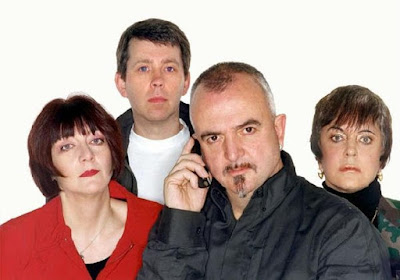


Industrial Records announced that a double album, called Desertshore/The Final Report, would be released on 26 November 2012. Chris and Cosey produced the album, with the participation of guest vocalists Antony Hegarty (from Antony and the Johnsons), Blixa Bargeld (from Einstürzende Neubauten), Marc Almond (from Soft Cell), film director Gaspar Noé and former pornstar Sasha Grey.

A group decision had been made prior to Christopherson's death that the album would be recorded afresh, as they were not satisfied with the ICA recordings. Christopherson had been the driving force behind the project and had been working on the record in Bangkok with Danny Hyde, even getting custom instruments made to use for the album. "It was Sleazy's project, then Cosey and Sleazy's, then I came in on it", Carter explained in an interview with The Quietus.[19] After Christopherson died, the Desertshore instruments were given to Carter and Cosey and they have been combining the recordings he had been making with the work they had done themselves. They have announced plans to debut the album live at AV Festival on 17 March 2012 accompanied by a screening of Philippe Garrel's film The Inner Scar "for which Desertshore was soundtrack and inspiration"

xxxx xxxxx xxxxx xxxxx xxxxx

A collection of previously unreleased Throbbing Gristle material, Kreeme Horn is subtitled "In Praise of the Grotesque," a description that fits the music contained herein perfectly. The recording is from 1975; the tracks have almost no real structure and are very noisy-ambient, just made with synthesizers, electric violins and guitar. An early form of TG is recognizable, anyway. Some ideas of it were later used for real songs like "Hamburger Lady" or the "20 Jazz Funk Greats".


Throbbing Gristle ‎– Kreeme Horn  (flac 331mb)

Inelegant Epistels
01 Careless Idle Chatter 17:42
02 Merely Nodding 14:31
03 Raw Mode Of Life 8:16
04 Rumour And Dishonour 12:50
05 Ugliness Is A Form Of Genius 11:37
.
xxxxx xxxxx xxxxx xxxxx xxxxx

 The Second Annual Report is the debut album by English industrial music pioneers Throbbing Gristle, released in November 1977 through Industrial Records. It is a combination of live and studio recordings which date from October 1976 to September 1977. The Second Annual Report is considered to be immensely influential and is credited as being the album that birthed the industrial genre
It's a proper debut of sorts, Second Annual Report includes several versions each (some live) of early Throbbing Gristle standards like "Slug Bait" and "Maggot Death," as well as an "Industrial Introduction" and the soundtrack work "After Cease to Exist." The music is relentless, grinding distortion, only occasionally leavened by vocal samples and percussion.

 "A few words about this record: for various reasons we have decided to include a solo track by each of the four individual group members. We think you may find this illuminating [...] Explanatory details about individual tracks are as follows:  "I.B.M." was inspired by a found cassette sent to us by Mark Eyles. "Hit by a Rock" was recorded at Highbury Roundhouse, London in September 1977. [...] "Dead on Arrival" was recorded live at A.T.C., Goldsmiths College, London in May 1978. [...] "Hamburger Lady" was inpired by a section of a letter from Dr. Al Ackerman of Portland, Oregon, U.S.A. reproduced elsewhere on this sleeve. [...] "Death Threats" was taken unaltered off our telephone answering machine. "Walls of Sound" was recorded live at five locations during the last year. "Blood on the Floor" was recorded live at Highbury Roundhouse, London in September 1977. The remaining material was gathered on location or recorded at the studios of Industrial Records, to whom, as ever, our thanks are due."


Throbbing Gristle - The Second Annual Report  (flac 216mb)

01 Industrial Introduction 1:05
02 Slug Bait - ICA 4:21
03 Slug Bait - Live At Southampton 2:46
04 Slug Bait - Live At Brighton 1:19
05 Maggot Death - Live At Rat Club 2:50
06 Maggot Death - Studio 4:35
07 Maggot Death - Southampton 1:37
08 Maggot Death - Brighton 0:57
09 "After Cease To Exist" - The Original Soundtrack Of The Coum Transmissions Film 20:19
10 Zyclon B Zombie 3:52
11 United 4:05

xxxxx xxxxx xxxxx xxxxx xxxxx

Breaking from the live sound of the previous Second Annual Report, D.O.A. finds the group assembling collages of computer noise (before connecting to the internet sounded almost friendly), cassette tapes on fast forward, looped feedback and tape hiss, surreptitiously recorded conversation, threatening phone calls, and much more, all to a grand alienating effect, the sound of a gray day in a British tower block after all the drugs have run out. Of course, this was the intended effect and the band succeed well enough. "Weeping," Genesis P-Orridge's version of a love ballad, loses itself among delayed strings and drones, a barely enunciated vocal, and a violin like a squeaky door. "Hamburger Lady" (about a burn victim) is even more repellent, but in a good way -- a genuinely scary listen. "AB/7A," on the other hand, approaches the pulsing electronics of Kraftwerk or early Yello.


Throbbing Gristle - D.O.A. The Third And Final Report  (flac 252mb)

01 I.B.M. 2:35
02 Hit By A Rock 2:32
03 United 0:16
04 Valley Of The Shadow Of Death 4:01
05 Dead On Arrival 6:10
06 Weeping 5:31
07 Hamburger Lady 4:15
08 Hometime 3:46
09 AB/7A 4:31
10 E-Coli 4:17
11 Death Threats 0:41
12 Walls Of Sound 2:49
13 Blood On The Floor 1:06
14 Five Knuckle Shuffle 6:43
15 We Hate You (Little Girls) 2:08

xxxxx xxxxx xxxxx xxxxx xxxxx

It's a break in the clouds from Throbbing Gristle's pummeling noise and a first glimpse at the continuing pop influence on the TG/PTV axis, but 20 Jazz Funk Greats still isn't best described by its title. If there is such a thing as a funky Throbbing Gristle LP, however, this could well be it. "Hot on the Heels of Love," "Still Walking" and "Six Six Sixties" add only occasional bits of distortion between the rigid sequencer lines. 20 Jazz Funk Greats is the best compromise between TG's early industrial aesthetic and the reams of industrial-dance and dark synth-pop groups that used the album as a stepping stone to crossover appeal.


Throbbing Gristle - 20 Jazz Funk Greats  (flac 305mb)

01 20 Jazz Funk Greats 2:51
02 Beachy Head 3:42
03 Still Walking 4:56
04 Tanith 2:20
05 Convincing People 4:54
06 Exotica 2:53
07 Hot On The Heels Of Love 4:24
08 Persuasion 6:36
09 Walkabout 3:04
10 What A Day 4:38
11 Six Six Sixties 2:07
12 Discipline (Berlin) 10:45
13 Discipline (Manchester) 8:06

xxxxx xxxxx xxxxx xxxxx xxxxx

Oct 13, 2015

RhoDeo 1541 Re-Ups

Hello, there's still thousands of postings that could be re-upped, all it takes is a simple civilized request at the page where its originally posted.  Odddly there are currently no outstanding requests hence no re-ups this week...


Oct 12, 2015

RhoDeo 1541 Quest 11

Hello, .todays F1 Grand Prix had a predictable winner who led from the front. Behind Hamilton there was plenty of action specially the battle for third led to two Fins fight for the bone but the Mexican took it home, Yes viva Peres. A couple of crashes and Rosberg with a stuck gaspeddle. Rookie Verstappen had bad luck his race started witha flat tire after the start, I suspect he could have scored points if he had known cars upfront would drop out as his team mate did,  therefor he played it safe somewhat (for his engine) as his position seemed hopeless. There you go another lesson for the rookie, it wasn't, he could have achieved ninth. As it happens he got 1 point after Alonso got a time penalty (not his season again).

Today a series that will be running into the new year, 24 episodes of Elvenquest. It's is a sitcom about a misanthropic writer of fantasy novels who finds himself whisked away into a parallel universe by an elf, a dwarf and a warrior princess, where he must undertake to find the Sword of Asnagar in order to save Lower Earth from the evil Lord Darkness before he can get home.  .. N'Joy

xxxxx xxxxx xxxxx xxxxx xxxxx

Plot

During the Third Age of Elven Princes of Lower Earth, a band of noble warriors – Vidar the Elf Lord (Boyd), Penthiselea the Warrior Princess (Winkleman) and Dean the Dwarf (Eldon) – plan to save Lower Earth from the evil rule of Lord Darkness by searching for the Sword of Asnagar, "for whoso'er wields the sword shall rule all of Lower Earth."[2] However, they first have to discover "The Chosen One" who will lead them to the Sword, whose name is "Amis". Amis is a dog belonging to Sam Porter, a misanthropic fantasy novelist in the real world.

Vidar, Penthiselea and Dean travel via a portal to take Amis, who is with Sam at a book signing in Totnes High Street, to Lower Earth. When they take Amis, Sam follows them and both Sam and Amis arrive in Lower Earth. When they arrive in Lower Earth, Amis is transformed into a human (played by Lamb), retaining many of his canine traits, such as becoming excited when there is a knock at the door, and being totally devoted to Sam. Sam believes he has been kidnapped by deranged fans until he sees the world outside the room in which he awakes. He asks to be sent back home, but is told that the portal is closed and can only be opened by the same Sword of Asnagar that Amis must seek.

Sam decides to travel with Amis, Vidar, Penthiselea and Dean to find the Sword. Meanwhile, Lord Darkness (Alistair McGowan) is planning to stop them from finding the Sword, helped by his evil but dimwitted assistant Kreech (also played by Eldon). Sam proves invaluable in using his modern instincts to trick his way past various creatures barring their way. For instance, he bluffs a three-headed troll guardian of Darkness' fortress in the same way as he would a security guard at a nightclub, distracting it long enough for Dean the dwarf to attack. He also tends to expect secret tunnels and concealed doors because that's the sort of thing he would have written into one of his plots. He is often right.


Characters

Sam Porter (Stephen Mangan). An author of fantasy novels with a jaded attitude, especially towards his more fanatical fans. As the series opens his career and personal life are not going well.

Amis, the Chosen One (Dave Lamb). Originally Sam's pet dog and best friend in the world, he transforms into a human in Lower Earth but retains canine traits and behaviours.

Vidar the Elf Lord, (Darren Boyd), last of a mighty family of Elf Lords, and the leader of the Questers, despite being somewhat dim. His name may be inspired by Víðarr, a god in Norse mythology associated with vengeance.

Penthiselea the Warrior Princess (Sophie Winkleman Series 1-3) (Ingrid Oliver Series 4) in silver breastplate armour and thigh-high boots, who has been promised to Vidar since childhood. Sam is very interested in her, but having been raised as a Warrior Princess she has no concept of relationships with men. Her name may be inspired by Penthesilea, a legendary Amazon warrior-queen.

Dean the Dwarf (Kevin Eldon), a mighty if diminutive warrior with unsavoury personal habits.

Lord Darkness (Alistair McGowan), Lord of Evil, whose efforts to dominate Lower Earth are frustrated by the Questers and his own staff of extremely dimwitted minions.

Kreech (Kevin Eldon), the Right Hand of Darkness, and only slightly less dimwitted than the other minions.

Other characters played by Chris Pavlo.


xxxxx xxxxx xxxxx xxxxx xxxxx


Elvenquest 11 Emperor Jackie (mp3  25mb)

11 Emperor Jackie 27:39


xxxxx xxxxx xxxxx xxxxx xxxxx

previously

Elven Quest 01 The Chosen One (mp3  25mb)
Elvenquest 02 The Search For Amis (mp3  25mb)
Elvenquest 03 The Tower Of Tests (mp3  25mb)
Elvenquest 04 The Distress Call (mp3  25mb)
Elvenquest 05 The Oracle Of Fenrog (mp3  25mb)
Elvenquest 06 The Rock Of Sorrows (mp3  25mb)
Elvenquest 07 The Sword Of Asnagar (mp3  25mb)
Elvenquest 08 The Evil Sorcerer Dietica (mp3  25mb)
Elvenquest 09 Vidar's Love Potion (mp3  25mb)
Elvenquest 10 Lord Darkness (mp3  25mb)


xxxxx xxxxx xxxxx xxxxx xxxxx

Oct 11, 2015

Sundaze 1541

Hello, as turkey seems to get sucked into middle eastern mess with two suicide bombers and thusfar 95 dead-mainly peace loving kurds, so who's behind this ? Erdogan ? en route to become dictator or the IS who is known to hate Kurds, latter seems obvious, but thusfar they haven't claimed this successful terrorist attack. It would be very bad for Europe if the Turks would start fleeing too.


Today more music from the rising sun. When asked about his music, he said, "I never had education in music, I just learned to trust my ears and my feelings." He credits ‘powers beyond himself’ for his music, saying, "This music is not from my mind. It is from heaven, going through my body and out my fingers through composing. Sometimes I wonder. I never practice. I don't read or write music, but my fingers move. I wonder, 'Whose song is this?' I write my songs, but they are not my songs."...... N'joy

xxxxx xxxxx xxxxx xxxxx xxxxx

Kitaro (real name, Masanori Takahashi) was born in Toyohashi, Aichi, Japan, and is a graduate of Sahid University. After graduating, Kitaro moved to Tokyo to experience and become a part of the music scene, and it was there that he discovered the synthesizer. His first synthesizer was analog, and he recalls having “just loved the analog sound that it made compared to today's digital sound”.

His parents were first opposed to the idea of their son having a musical career. In an effort to maneuver him towards their vision, they made arrangements for him to take a job at a local company. In return, he left home without telling them. He supported himself by taking on several part-time jobs such as cooking and civil service work, while composing songs at night. In the early 1970s, he changed completely to keyboards. He joined the Japanese music group Far East Family Band which was formed in 1965, and toured with them around the world. While in Europe, he met the German electronica and former Tangerine Dream member Klaus Schulze. Schulze produced two albums for the band and gave Kitaro some tips for controlling synthesizers. In 1976, Kitaro left Far East Family Band and traveled through Asia (China, Laos, Thailand, India)

Back in Japan, Kitaro started his solo career in 1977. The first two albums Ten Kai and Full Moon Story became cult favorites of fans of the nascent new-age movement. He performed his first symphonic concert at the 'Small Hall' of the Kosei Nenkin Kaikan in Shinjuku, Tokyo. The Silk Road: The Rise And Fall Of Civilizations is an NHK Tokushu documentary series that first aired on 7 April 1980, with sequels being broadcast over a 10-year period. It took a total of 17 years from conception to complete what many consider a landmark in Japan's broadcasting television history. The intention of the program was to reveal how ancient Japan was influenced by the Silk Road trade route. The documentary was narrated by Ishizaka Koji with music composed by Kitaro, who insisted that the show be broadcast in stereo.
The music was composed mainly using a Minimoog, Minikorg 700 and Maxikorg DV800. The series of soundtracks sold millions and the success created from the program brought Kitaro international attention.

In 1984, Kitaro embarked on a "Live in Asia" tour. Notably, he was forced to cancel a leg in Singapore because he had long hair and at that time the country had a policy banning it. He entered into a worldwide distribution arrangement with Geffen Records in 1986. This included a re-releasing of six prior albums titled Astral Voyage, Full Moon Story, Millennia, India, Silver Cloud and Asia (each packaged with Japanesque obi strips) as well as a new album, aptly titled Towards the West. In 1987, he collaborated with Mickey Hart of the Grateful Dead for the album The Light of the Spirit and in 1992 with Jon Anderson (Yes) for the album Dream. In 1988, his record sales soared to 10 million worldwide following a successful US tour. He was nominated three times for Grammy Award during his tenure at Geffen Records. His soundtrack for the movie Heaven & Earth won the Golden Globe Award for Best Original Score. In 1989, he wrote the Japanese theme for the film Return from the River Kwai.

Since his 1994 debut for Domo Records, the Grammy-nominated Mandala, Kitaro has released 24 studio albums. Among them, the live An Enchanted Evening (1995), Gaia-Onbashira (1998), and Ancient (2001) were all Grammy nominated. In 1999, Thinking of You won the Grammy for Best New Age Album. In total, Kitaro's albums with Domo Records have received 15 Grammy Award nominations.

Kitaro’s music has long been recognized for its messages of peace and spirituality. In the wake of 9/11, the artist began recording Sacred Journey of Ku-Kai, a series of peace-themed albums inspired by the Shikoku Henro Pilgrimage, the travel of Kūkai more than 1100 years ago. The four volumes in the album series were released in 2003, 2005, 2007, and 2011, respectively. The event of September 11 occurred while he was en route from Japan to Los Angeles. Kitaro's flight was diverted to Honolulu for five days, during which time the conceptual endeavor, which he envisioned as an artistic means to help unify people globally, first took shape. Every track on the 4 volumes of Sacred Journey Of Ku-Kai contains samples from ancient Japanese temple bells (Peace Bells) from 88 sacred temples on the island of Shikoku, Japan.

In 2007, Kitaro composed the music for Impression West Lake, a large-scale opera, directed by the renowned Chinese film director Zhang Yimou. The opera reflects Hangzhou city’s history and culture through music and dance. Using modern technology, the stage is 75 centimeters below the lake’s surface during the day so as not to affect the landscape and boating activities. In the evening, the stage is a few centimeters below the lake’s surface so actors can walk and perform freely over a surprising water mirror that compose with the lights and colors. The one-hour event had its opening night in March 2007. In 2009, Domo Records released the original soundtrack album Impressions of the West Lake which was nominated for the 2010 Grammy Awards.

Kitaro's latest studio album is Final Call, which is a homage to Kitaro's lifetime reverence for Nature and was released in September 2013. A year later, in September 2014, his latest live album Symphony Live In Istanbul was released. It was recorded live at the Halic Congress Center in Istanbul, Turkey during Kitaro's Symphonic World Tour, balancing the artists trademark signature sound and expanding it to new heights with the addition of a 38-piece chamber symphony orchestra. Both Final Call and Symphony Live In Istanbul were nominated for Best New Age Album; Final Call for the 56th Annual Grammy Awards and Symphony Live In Istanbul for the 57th Annual Grammy Awards, becoming Kitaro’s 15th and 16th career Grammy Award nominations.

In 2010, Kitaro performed in Singapore in March, in Mexico for the Zacatecas Cultural Festival in April,[12] in Xi'an, China for the opening event of Daming Palace National Heritage Park in September, in Aichi, Japan for the Thousand Drums Event at COP10 for the Convention on Biological Diversity in October. From March to April, 2011, Kitaro toured Thailand, Hong Kong, Indonesia, Singapore and Malaysia. He donated part of the CD sales and concert profits to Tōhoku earthquake and tsunami Relief.

While Kitaro has been touring, Domo Records released Kitaro's compilation Album, soundtracks to Toyo's Camera and 442 - Live With Honor, Die With Dignity, as well as the Grammy nominated Sacred Journey Of Ku-Kai, Volume 4. In February 2014, Kitaro launched the Symphonic World Tour and has so far performed in Warsaw, Moscow, Bucharest, Istanbul, Singapore, Nagoya, Omachi and Tehran among other historic locations. Early 2015 he released the soundtrack to 442 Extreme Patriots Of WW II - Live With Honor, Die With Dignity.

xxxxx xxxxx xxxxx xxxxx xxxxx

Astral Voyage was first released in Japan in 1978 under the title Ten Kai (the original LP also gave the English title of Astral Trip).
This 1978 release by Kitaro is very relaxing, yet has a bit of an edge to it that I normally associate with 1970s electronica and perhaps some progressive music too.

This is perhaps one of his less New Age-y, more experimental albums. He really created some really nice and interesting Moog sounds, plus he tended to use a lot of Solina string synths here. There's also use of acoustic guitar and sitar, and he does tend to explore some World music here, when he does, it (unsurprisingly) has a strong Asian feel. One cut has Koto, with an obviously Japanese feel (meaning Kitaro was exploring his Japanese roots there, no surprise), to another more Chinese-influenced number. But throughout all that, the synthesizers are quite present and the album is quite electronic.


Kitaro - Ten Kai (Astral Voyage)  (flac 229mb)

01 By The Sea Side 6:06
02 Soul Of The Sea 2:34
03 Micro Cosmos 5:15
04 Beat 4:37
05 Fire 7:20
06 Mu 2:43
07 Dawn Of The Astral 5:17
08 Endless Dreamy World 3:14
09 Kaiso 4:34
10 Astral Trip 7:37

xxxxx xxxxx xxxxx xxxxx xxxxx

Sensitively woven, tranquil textures of sound wash through the mind of the listener on this album from sound master Kitaro. He is one of the leading sound designers in the new age community. He is also one of the leading composers and performers. Oasis is one of his older albums (originally released on Pony Canyon Records in 1979), and it is a gem. This is truly a rest stop in the middle of a storm. The atmospheres are light, airy, and lyrical without vocals. The sound design incorporates symphonic synths and gentle melodies. The soundscapes are dynamic and bold.


Kitaro - Oasis (flac 275mb)

01 Rising Sun 6:31
02 Moro-Rism 2:42
03 New Wave 2:51
04 Cosmic Energy 8:09
05 Aqua 5:00
06 Moonlight 3:46
07 Shimmering Horizon 2:55
08 Fragrance Of Nature 6:48
09 Innocent People 3:48
10 Oasis 6:30

xxxxx xxxxx xxxxx xxxxx xxxxx

Kitaro's early work (his first 5 albums or so) has a weird 70's/80's prog rock/space vibe to it that is absolutely enchanting. It’s just as mind-bending as anything else. He eases you into the world he creates with the sound of flowing water, dripping synths, and a hooting owl, a moment which recalls Can’s “Sing Swan Song,” which ironically was also made by a Japanese man only six years prior to the recording of Full Moon Story, the difference being, of course, that “Damo Suzuki ain’t got nothin’ on Kitaro.” Like Astral Voyage, after we are abruptly cast into Kitaro’s strange world, we are given no exit from it, though there is one exception here. Kitaro makes but one mistake, which is the inclusion of a strange a-capella group chant halfway through side one. It rudely jettisons the listener from what he has created and nearly sours the rest of the experience, as it fills so out of place amongst the other tracks that blend together so smoothly. The interweaving synth melodies are as captivating as ever, if not more so, and the production is better this time around so the details don’t get lost in a sea of distortion as often as they did on Astral Voyage.


Kitaro - Full Moon Story (flac 259mb)

01 Krpa 5:07
02 Aurora 3:40
03 Hikari No Mai 5:47
04 Fuji 3:47
05 Full Moon 4:46
06 Resurrection 4:52
07 From Astral 3:48
08 Heavenly Illusion 6:18
09 New Lights 8:21

xxxxx xxxxx xxxxx xxxxx xxxxx

Sensitively woven, tranquil textures of sound wash through the mind of the listener on this album from sound master Kitaro. The instrumentation includes synthesizers, slide guitar, mellotron, percussion, tabla and Irish harp. This early album is a rare, exceptional gem in the wistful Kitaro repertoire - all gentle-flowing and melodious throughout without anything heavy, edgy, or disquieting, musically speaking. In fact, a few songs are quite sweet and mellow, with only a touch of blue, especially the ending air ' Cloud in the Sky ' - wonderfully sweet-flowing and mellow-floating - lovely and enjoyable.  On the other hand, it was also meant for more sober, reflective meditation, as the songs and titles ' Revelation ', ' Stream of Being ', ' Oasis ', ' Endless Water ', ' Sun ', and ' Tree ' especially impress the listeners.


Kitaro - Ki (flac 254mb)

01 Descension 2:05
02 Tenkujin 5:10
03 Timeless Phase 4:43
04 Sakebi 2:10
05 Nagare 7:36
06 From Far East 8:42
07 Ascension 4:13

xxxxx xxxxx xxxxx xxxxx xxxxx

Oct 10, 2015

RhoDeo 1540 Grooves

Hello,

Today the final Temptations  Known for their choreography, distinct harmonies, and flashy wardrobe, the group was highly influential to the evolution of R&B and soul music. Having sold tens of millions of albums, the Temptations are one of the most successful groups in music history. As of 2015, the Temptations continue to perform with one living original member, Otis Williams, still in the lineup.  ... N'joy

xxxxx xxxxx xxxxx xxxxx xxxxx

Thanks to their fine-tuned choreography -- and even finer harmonies -- The Temptations became the definitive male vocal group of the 1960s; one of Motown's most elastic acts, they tackled both lush pop and politically charged funk with equal flair, and weathered a steady stream of changes in personnel and consumer tastes with rare dignity and grace. The Temptations' initial five-man lineup formed in Detroit in 1961 as a merger of two local vocal groups, the Primes and the Distants. Baritone Otis Williams, Elbridge (aka El, or Al) Bryant, and bass vocalist Melvin Franklin were longtime veterans of the Detroit music scene when they joined together in the Distants, who in 1959 recorded the single "Come On" for the local Northern label. Around the same time, the Primes, a trio comprised of tenor Eddie Kendricks, Paul Williams (no relation to Otis), and Kell Osborne, relocated to the Motor City from their native Alabama; they quickly found success locally, and their manager even put together a girl group counterpart dubbed the Primettes. (Later, three of the Primettes -- Diana Ross, Mary Wilson and Florence Ballard -- formed the Supremes).

In 1961, the Primes disbanded, but not before Otis Williams saw them perform live, where he was impressed both by Kendricks' vocal prowess and Paul Williams' choreography skills. Soon, Otis Williams, Paul Williams, Bryant, Franklin, and Kendricks joined together as the Elgins; after a name change to The Temptations, they signed to the Motown subsidiary Miracle, where they released a handful of singles over the ensuing months. Only one, the 1962 effort "Dream Come True," achieved any commercial success, however, and in 1963, Bryant either resigned or was fired after physically attacking Paul Williams. the Tempts' fortunes changed dramatically in 1964 when they recruited tenor David Ruffin to replace Bryant; after entering the studio with writer/producer Smokey Robinson, they emerged with the pop smash "The Way You Do the Things You Do," the first in a series of 37 career Top Ten hits. With Robinson again at the helm, they returned in 1965 with their signature song, "My Girl," a number one pop and R&B hit; other Top 20 hits that year included "It's Growing," "Since I Lost My Baby," "Don't Look Back," and "My Baby."

In 1966, the Tempts recorded another Robinson hit, "Get Ready," before forgoing his smooth popcraft for the harder-edged soul of producers Norman Whitfield and Brian Holland. After spotlighting Kendricks on the smash "Ain't Too Proud to Beg," the group allowed Ruffin to take control over a string of hits including "Beauty's Only Skin Deep" and "(I Know) I'm Losing You." Beginning around 1967, Whitfield assumed full production control, and their records became ever rougher and more muscular, as typified by the 1968 success "I Wish It Would Rain." After Ruffin failed to appear at a 1968 live performance, the other four Tempts fired him; he was replaced by ex-Contour Dennis Edwards, whose less polished voice adapted perfectly to the psychedelic-influenced soul period the group entered following the success of the single "Cloud Nine." As the times changed, so did the group, and as the 1960s drew to a close, The Temptations' music became overtly political; in the wake of "Cloud Nine" -- its title a thinly veiled drug allegory -- came records like "Run Away Child, Running Wild," "Psychedelic Shack," and "Ball of Confusion (That's What the World Is Today)."

After the chart-topping success of the gossamer ballad "Just My Imagination (Running Away With Me)" in 1971, Kendricks exited for a solo career. Soon, Paul Williams left the group as well; long plagued by alcoholism and other personal demons, he was eventually discovered dead from a self-inflected gunshot wound on August 17, 1973, at the age of 34. In their stead, the remaining trio recruited tenors Damon Harris and Richard Street; after the 1971 hit "Superstar (Remember How You Got Where You Are)," they returned in 1972 with the brilliant number one single "Papa Was a Rolling Stone." While the Tempts hit the charts regularly throughout 1973 with "Masterpiece," "Let Your Hair Down," and "The Plastic Man," their success as a pop act gradually dwindled as the '70s wore on. After Harris exited in 1975 (replaced by tenor Glenn Leonard), the group cut 1976's The Temptations Do the Temptations, their final album for Motown. With Louis Price taking over for Edwards, they signed to Atlantic, and attempted to reach the disco market with the LPs Bare Back and Hear to Tempt You.

After Edwards returned to the fold (resulting in Price's hasty exit), the Temptations re-entered the Motown stable, and scored a 1980 hit with "Power." In 1982, Ruffin and Kendricks returned for Reunion, which also included all five of the current Temptations; a tour followed, but problems with Motown, as well as personal differences, cut Ruffin's and Kendricks' tenures short. In the years that followed, The Temptations continued touring and recording, although by the '90s they were essentially an oldies act; only Otis Williams, who published his autobiography in 1988, remained from the original lineup. The intervening years were marked by tragedy: after touring in the late '80s with Kendricks and Edwards as a member of the "Tribute to the Temptations" package tour, Ruffin died on June 1, 1991, after overdosing on cocaine; he was 50 years old. On October 5, 1992, Kendricks died at the age of 52 of lung cancer, and on February 23, 1995, 52-year-old Franklin passed away after suffering a brain seizure.

In 1998, The Temptations returned with Phoenix Rising; that same year, their story was also the subject of a well-received NBC television mini-series. Ear-Resistable followed in the spring of 2000 and would win the Grammy Award for Best Traditional R&B Vocal Performance the following year. In 2004, Legacy became their last album for Motown as 2006’s Reflections was released by New Door. The label also released their 2007 effort, Back to Front, which featured new recordings of soul classics from the '60s and '70s. After three years of touring the globe, they returned with Still Here, which was issued on the eve of their 50th anniversary.

xxxxx xxxxxxxxxx xxxxx xxxxx

Struggling to rekindle the magic that kept them atop the charts, the group was, for the most part, missing in action on this album. Nonetheless, the five vocalists did hit the charts with the title track, "Power." The single is groomed around a poppin' bassline that's blended with Melvin Franklin's natural bass. Glenn Leonard, Dennis Edwards and Richard Street share lead on the single, which peaked at #11 on the Billboard R&B charts after 13 weeks. In spite of its ranking, the single is not as worthy as some of the group's other songs of comparable ranking. An honorable mention is "Isn't the Night Fantastic." With Richard Street out front, the Tempts groove their way through this inviting track. "Shadow of Your Love" has a tendency to deviate from its original feel, as do some of the other selections, but "Go For It," also a ballad, stays its course with Leonard on lead. The group's vocal skills remain keen.


The Temptations - Power  (flac 228mb)

01 Power 6:06
02 Struck By Lightning Twice 4:13
03 Isn't The Night Fantastic 4:15
04 How Can I Resist Your Love 3:53
05 Shadow Of Your Love 4:38
06 Can't You See Sweet Thing 6:07
07 Go For It 4:22
08 I'm Coming Home 4:08

xxxxx xxxxxxxxxx xxxxx xxxxx

The album that preceded this one (Back to Basics) introduced the group's new falsetto lead, Ron Tyson, who is also a remarkable tenor. To fill the departure of Dennis Edwards, this release introduces the electrifying vocals of Ali Ollie Woodson. As talented, competitive and competent as Edwards is, Woodson's sound is not only refreshing to fans of the Tempts, but to the music industry overall. The smash hit on this release was "Treat Her Like a Lady," a soulful, dance composition that entails some dazzling backgrounds led by Woodson's fiery approach to the melody and the ligthnening squeal of his trademark falsetto. The single was treated very well by the Billboard R&B charts, peaking at number two for two consecutive weeks after 21 thriving weeks. The title track, "Truly for You," retains much of that Temptations magic with its affectionate harp-like guitar rhythms, a romantic confession conveyed in a sincere tone and Ron Tyson's agile, flowing vocals that express the lyrics with honesty and grace. The single made its mark at number 14 on the Billboard R&B charts inside of 13 weeks.


The Temptations - Truly For You  (flac 248mb)

01 Running 3:28
02 Treat Her Like A Lady 4:40
03 How Can You Say That It's Over 6:05
04 My Love Is True (Truly For You) 6:08
05 Memories 4:39
06 Just To Keep You In My Life 4:23 0
07 Set Your Love Right 5:09
08 I'll Keep My Light In My Window 4:30

xxxxx xxxxx xxxxx xxxxx xxxxx

This 18-track compilation contains Temptations B-sides, non-hit cuts and obscure sides recorded from 1963-1974. It includes such sumptuous ballads as "What Love Has Joined Together" and "Gonna Keep On Trying Till I Win Your Love," plus uptempo wailers and an occasional dud ("Stop The War Now"). The early tracks show the group evolving from its doo-wop roots into soul's premier group. While the cuts on this disc aren't the ones that made The Temptations popular music institutions, they're still a vital part of their legacy.


The Temptations - Hum Along And Dance  (flac 372mb)

01 I Want A Love I Can See
02 What Love Has Joined Together
03 You've Got To Earn It
04 No More Water In The Well
05 Ain't No Sun Since You've Been Gone
06 Gonna Give Her All The Love I Got
07 He Who Picks A Rose
08 Fan The Flame
09 Don't Let Him Take Your Love From Me
10 Gonna Keep On Tryin' Until I Win Your Love
11 Hum Alaong And Dance
12 Ungena Za Ulimwengu (Unite The World)
13 It's Summer
14 Stop The War Now
15 Take A Look Around
16 The Plastic Men
17 Heavenly
18 You've Got My Soul On Fire On Fire

xxxxx xxxxx xxxxx xxxxx xxxxx