Apr 10, 2018

RhoDeo 1814 Roots

Hello,


Today's artist is a prominent Peruvian singer-songwriter, school teacher, folklorist, ethnomusicologist and two-times Latin Grammy Award winner. She has been a key figure in the revival of Afro-Peruvian music.... ......N'Joy

xxxxx xxxxx xxxxx xxxxx xxxxx

Much of the original music has been lost, but in the 1950s a revival was staged by José Durand, a white Peruvian criollo who was a folklore professor, and Porfirio Vásquez. Durand founded the Pancho Fierro Dance Company. Drawing upon elderly members of the community for memories of musical traditions, Durand collaborated with Vásquez to revive various songs and dances to create the repertoire for the group. One of the best known is his revival of the carnival dance “El Son de los Diablos.” In colonial times, this dance was featured in parades with a fleet of austere, pure angels leading the way, followed by the mischievous devils. In the revival of the dance, the angels were eliminated, and the crowds were entertained by rambunctious devils and their leader “el diablo mayor.” The dance featured energetic zapateo tap-dancing. The group performed for about two years, including a concert for Peruvian composer Chabuca Granda and a tour through Chile.

Actually, poet Nicomendes Santa Cruz and Victoria Santa Cruz (siblings) both created Cumanana (1957) an Afroperuvian ensemble that highlighted the rich West and Central African call and response poetry, music / dance traditions that were a staple of Peruvian culture and are essentially valued to this day.

One long lasting Afro-Peruvian dance company was Perú Negro, which, incorporated more modern use of percussion combined with criollo music. Perú Negro is also known for their use of blackface, celebrating the mixture of African and Spanish heritage. Two of their best known pieces are “Dance of the Laundresses,” which depicts historical hard working yet beautiful black women in Peru, and the “Canto a Elegua,” which shows tribal religion before the Spanish influence.

Lima and Chincha are two areas where there are many performers of this music, which is played in night clubs, dinner dances and festivals. Notable artists and groups through the years have included Victoria and Nicomedes Santa Cruz, Lucila Campos, Pepe Vásquez, and Susana Baca. One of the best known songs in the genre is Peru's "Toro Mata".

Today, Afro-Peruvians (also known as Afrodescent Peruvians) reside mainly on the central and south coast, with the majority of the population in the provinces of Lima, Callao, Nazca, Chincha, Ica and Cañete. Many Afro-Peruvians live on the northern coast in Lambayeque and Piura. The greatest concentration of Afro-Peruvians and mestizos of Afrodescent is in the Callao, an area that has historically received many of the Afro-Peruvians from the north and southern coast.

On the southern coast of the Ica Region, there are many cotton fields and vineyards, and the area is commonly known for its black populations such as that in El Carmen of the populous Chincha Province. There are other such towns in the Nazca, Ica City and in the district of San Luis in the Cañete Province near Lima, and Nazca to the south of Lima. In Lima, the towns best known for having large concentrations of Afro-descended populations are Puente Piedra, Chorrillos, Rimac, and La Victoria. Afro-Peruvians also reside in the northern regions of Peru such as La Libertad and Ancash, but the larger populations are concentrated in the northern valley plantations of the regions of Piura and Lambayeque.

Most Afro-Peruvian communities live in rural farming areas where mango, rice, and sugarcane production is present. Contrary to the southern coast, these communities are mainly found away from the coastal shores and into the region of the yungas, where the plain meets the Andes. The greatest Afro-Peruvian populations of the north coast are found mainly in the outskirts of the Morropón Province and concentrate themselves in Piura and Tumbes. The central province of Morropón is well known for its black communities in cities such as Chulucanas, Yapatera, Chapica del Carmelo, La Matanza, Pabur (Hacienda Pabur), Morropón, Salitral, Buenos Aires, San Juan de Bigote and Canchaque, and to the north Tambogrande. All of these cities belong to the Piura Region, where there are large rice fields and mango plantations. South of the Lambayeque Region and north of La Libertad where sugarcane production was very productive in the past, there are several cities known for their black inhabitants. Examples are the colonial city of Saña in Lambayeque, famous for being the second most important Afro-Peruvian city of the Peruvian north. Tuman, Capote, Cayaltí, and Batán Grande within the region of Lambayeque also have large amounts of Afro-Peruvian populations in the sugarcane region.

In November 2009, the Peruvian government issued an official apology to Peru's Afro-Peruvian people for centuries of racial injustice; it was the first such apology ever made by the government.

xxxxx xxxxx xxxxx xxxxx xxxxx

With a splendid voice and equally impressive interpretive gifts, Susana Baca is a primary exponent of the Afro-Peruvian musical tradition. Baca came to world attention in 1995, when her rendition of "Maria Lando," a heartbreaking ballad of Third World worker oppression, was included on David Byrne's The Soul of Black Peru compilation. Since the Byrne compilation, she has toured the United States several times and released several albums, including an eponymously titled solo album on Byrne's Luaka Bop label; a disc, Del Fuego y del Agua, for Tonga Productions; 2002's Espíritu Vivo, and 2006's Travesías. Baca is particularly interested in reinterpreting old Afro-Peruvian melodies. At her best, Baca conveys an unforgettable, haunting melancholy, the lament of a people separated from their homeland by a continent and an ocean.

Baca was born in the black coastal barrio of Chorrillos, outside Lima, where descendants of slaves have lived since the days of the Spanish Empire. Her family was interested in music; her father played the guitar, while her mother was a dancer, and she grew up listening to Cuban musicians like Pérez Prado and Beny Moré. Baca's singing first came to public attention when she was a student. She formed an experimental group combining poetry and song, and started performing after receiving grants from Peru's Institute of Modern Art and the National Institute of Peruvian Culture. She attracted the attention of the composer and singer Chabuca Granda, who became her mentor. Granda encouraged Baca to record, but a 1983 record deal fell apart upon Granda's death. Baca then turned her attention to researching the Afro-Peruvian tradition. With her husband she founded the Instituto Negrocontinuo (Black Continuum) in Lima, which is dedicated to preserving Afro-Peruvian culture. She released a new EP, Seis Poemas, in 2009, following it with the full-length Afrodiaspora in 2011.

In July 2011 the newly elected President of Peru, Ollanta Humala, announced that Baca would become his Minister of Culture. On 28 July she was sworn in, becoming the second Afro-Peruvian cabinet minister in the history of independent Peru. She resigned due to a cabinet reshuffle on 11 December 2011. In November 2011 she was elected to the Organization of American States (OAS) as President of the Commission of Culture for the period 2011–13.

Baca founded the Instituto Negrocontinuo (Black Continuum Institute) in her seafront home in Chorrillos, to foster the collection, preservation and creation of Afro-Peruvian culture, music and dance.


Susana Baca in her own words
I was born in Lima and grew up in a small town in Peru called Chorrillos. My father was a chauffeur for a wealthy family and my mother worked as a cook and sometimes washed clothes. In Lima we lived in an alleyway, the kind where the servants lived, off the main streets past the fancy neighborhoods. My father played the guitar. He was the official musician of the alley. Whenever there was a party they called him. He played serranitas which are tales of the Golondrinos, people who came from Los Andes near the coast in the time of cotton-picking. My father learned the serranitas from them in his childhood. They are sung at Christmas: (singing) Ay, my dove is flying away, she’s gone. Let her go, she’ll soon return. “I have an older sister and brother, and the three of us would sing together. My mother taught us how to dance. She’d say, “How can my children not know how to dance?” And so we sang and danced every afternoon. Later, my mother bought a record player, which was a big event. I imitated everything. My sister enrolled in a singing contest on the radio, and we went to watch the broadcast. It left a very strong mark on me. I saw her there and felt as though that was where I wanted to be. My brother made me a stick with a can on the end, which was the microphone. People came and we put on a show. I would drop anything for music. “I tried not to become a professional singer, mainly for my mother’s sake. She thought I wouldn’t be able to earn a living. That’s my mother’s image of musicians. My mother told me many stories about musicians who were not famous like Felipe Pingo, a renowned musician and composer who died of tuberculosis. She said, “This is the destiny of my daughter,” and she pushed me to become a teacher. I liked studying to be a teacher; I dedicated myself to being a singer later. When I first met my husband, Ricardo, I was active as a musician, but everything moved so slowly. I dedicated myself to music, and couldn’t devote myself to looking for work or figuring out how to record an album. I thought that if I worked hard enough, I’d find someone who was interested in working with me. I realized, after many years, that no one was interested in what I was singing, which was poetry. I was black, singing black music. It was a big problem. In Peru the black population is very small—you find mixed people, like me, or even lighter. But as a culture it is present everywhere. And another thing: blacks also segregate themselves. By class or by skin tone. I’ve heard my aunts say, “Marry someone lighter, even an Indian, so that your children will have hair they can comb.” “I would like to be remembered for my voice, of course. But also for helping to spread the music of my ancestors—all those people who were never recognized for their work or for their beautiful culture.


xxxxx xxxxx xxxxx xxxxx xxxxx

Susana Baca’s singing – sometimes plaintive, sometimes a purr, always evocative – hangs gracefully over sophisticated songs, equal parts rhythm and emotion. “Ms. Baca, with her cool, distinct voice, as beautiful as any working in pop, has the strength to create her own tradition.” The New York Times

Is it rhythm, merely rhythm, that moves my heart? Is it merely the rhythm of the words, the cadence of falling notes that floods me with longing, calling to me? Does rhythm have memory, can it travel through time and make the old forever new? Can it tell us of other nights, caress us? Does it have a feeling, to make us dance alive in our skin?

All the songs that make up this record carry a life force flowing from the different rhythms comprising the rich and varied world of Peruvian culture. They are the ancestral rhythms of the grandparents who told us their stories, the mestizo rhythms of religious processions, the rhythms of cadence searching for words in poetry, and the eternal rhythm of the heart and celebration.

Our greatest challenge is to find the one true rhythm of freedom—something like the wind that allows a bird to fly, or a new language more powerful than speech, that holds you. -Susana Baca


 Susana Baca - Susana Baca   (flac  231mb)

01 Negra Presentuosa 4:15
02 Molino Molero 2:55
03 Heces 2:48
04 Tu Mirada Y Mi Voz 3:49
05 Zamba Malató 4:25
06 Luna Llena 3:35
07 Caras Linda 4:58
08 Se Me Van Los Pies 5:02
09 Enciéndete Candela 4:32
10 Señor De Los Milagros 4:41

Susana Baca - Susana Baca (ogg   98mb )


xxxxx xxxxx xxxxx xxxxx xxxxx

On this record Susana Baca delivers yet another solid example of why she is the queen of Afro-Peruvian music. These songs drift by like time in a crowded dirt-floor bar, like the hard sweet-sour of well-made cuba libre. A band composed mostly of well-schooled New York session players provides competent backing. Baca's voice is smooth, her songs and world darkly sinister. Anyone into the sounds of her neck of the woods or serious female singers with a unique voice like Cesaria Evoria will certainly enjoy this. Yet another worthy effort from a woman who refuses to pander to the nouveau hippie crowd.


Susana Baca - Eco De Sombras   (flac  248mb)

01 De Los Amores 5:14
02 Valentín 5:20
03 Poema 3:13
04 Los Amantes 5:34
05 El Mayoral 4:07
06 La Macorina 3:57
07 Golpe E' Tierra 5:22
08 Panalivio/Zancudito 4:47
09 Reina Mortal 3:22
10 Xanaharí 4:41
11 Untitled 2:55

Susana Baca - Eco De Sombras (ogg 108mb)

xxxxx xxxxx xxxxx xxxxx xxxxx

Recorded in New York just after the trauma of 9/11, Espíritu Vivo marries Susana Baca's wonderfully airy vocals and her usual Peruvian backing band with the downtown N.Y.C. sounds of John Medeski and guitarist Marc Ribot -- and it proves to be a wonderful union indeed. Recorded before a small invited audience, this has the immediacy of a live album, with the benefits of the studio, a superb balance of instruments. As usual, most of the material comes from the Afro-Peruvian canon that's Baca's hallmark, but she does draw upon outsiders for three interesting covers: Mongo Santamaria's "Afro Blue," Caetano Veloso's "13 de Mayo," and most surprisingly of all, "Anchor Song" from Björk. But she integrates them perfectly into her style, taking them all to a place they'd never imagined, where her voice can be dreamlike over a simple backing, as on the gorgeous "Si Me Quitaran Totalamente Todo" and "Les Feuilles Mortes," or more rhythmically lively, which she finds on "Caracunde" and "Se Me Van los Pies." Medeski and Ribot work well with the combo, Ribot especially, offering unusual atmospheric licks throughout, while Medeski's Hammond organ offers a warm bed a sound for Baca's voice. Given the time and place of recording, there's an astonishingly transcendental quality to the record, as if Baca is giving every iota of herself to the music, and the players are following her lead. Her best album to date, which is quite a claim.


Susana Baca - Espiritu Vivo   (flac  304mb)

01 La Noche Y El Día 4:41
02 Se Me Quitaran Totalmente Todo 3:31
03 Caracunde 4:09
04 El Fusil 5:32
05 Se Me Van Los Pies 5:34
06 13 De Mayo 4:19
07 Toro Mata 6:40
08 Aparición 5:05
09 Afro-Blue/Zum Zum 5:19
10 Les Feuilles Mortes 5:52
11 Anchor Song 5:48

Susana Baca - Espiritu Vivo (ogg  125mb)

xxxxx xxxxx xxxxx xxxxx xxxxx

This album was released by Empresa Editora El Comercio a powerful newspapergroup from Peru, i assume this came with a special newspaper. Anyway it comes with a 15 page booklet on Susana, obviously in Spanish (alas). It's a mix of older and later Luaka Bop times (96).


 Susana Baca - A Viva Voz Vol 1 ( flac  285mb)

01 Aparición 5:02
02 Valentín 5:17
03 Bartola 3:39
04 Los Gallinazos 3:19
05 Panalivio , Zancudito 4:47
06 Poema 3:14
07 Te Quiero 4:51
08 Summertime 4:54
09 Caras Lindas 5:01
10 Se me van los pies 5:35
11 Copla de la O 0:54
12 El Mayoral 4:08

 Susana Baca - A Viva Voz Vol 1 (ogg  119mb)

xxxxx xxxxx xxxxx xxxxx xxxxx

Apr 9, 2018

RhoDeo 1814 Nineteen84

Hello,


In many respects Orwell is ubiquitous and more relevant than ever. His once-visionary keywords have grotesque afterlives: Big Brother is a TV franchise to make celebrities of nobodies and Room 101 a light-entertainment show on BBC2 currently hosted by Frank Skinner for celebrities to witter about stuff that gets their goat. Meanwhile, Orwellian is the second-most-overused literary-generated adjective (after Kafkaesque). Orwell is the go-to thinker to account for our present woes – even though he is 68 years dead. Which, in the Newspeak of 1984, is doubleplusgood. ......'N Joy

xxxxx xxxxx xxxxx xxxxx xxxxx

BBC dramatisation of George Orwell's post-modern classic, published in 1949, concerning what the world may look like in 1984.

Winston Smith works for the Ministry of Truth. Sick and separated from his wife, he lives alone in a one-room flat in Victory Mansions in London, chief city of Airstrip One. Big Brother stares out from every poster, the Thought Police uncover every act of betrayal. When Winston finds love, he discovers that life does not have to be dull and deadening, and awakens to new possibilities.

Dramatised for radio by Jonathan Holloway, with Christopher Eccleston as Winston Smith, Pippa Nixon as Julia, and Tim Piggot-Smith as O’Brien.


Nineteen Eighty Four - George Orwell - Part 2 (mp3  53mb)

2 Nineteen Eighty Four - George Orwell - Part 2 56:40

now with George Orwell - 1984 [1949] [EPUB-MOBI-PDF]

xxxxx xxxxx xxxxx xxxxx xxxxx

previously

Nineteen Eighty Four - George Orwell - Part 1 (mp3  52mb)

xxxxx xxxxx xxxxx xxxxx xxxxx


Apr 8, 2018

Sundaze 1814

Hello,

Today's artist is a Tokyo-based ambient musician and mastering engineer who creates chiming, shimmering soundscapes with acoustic instruments (including guitar, vibraphone, and piano) and laptop processing. His works often evoke scenes from nature, and appropriately include an abundant amount of field recordings and other organic sounds. Since the release of his well-received debut album, Minima Moralia, in 2006, he has been remarkably prolific as both a solo artist and collaborator, and his work has always maintained a consistently high quality..... N'joy

xxxxx xxxxx xxxxx xxxxx xxxxx

Chihei Hatakeyama is a musician and an organizer who was born in 1978, and lives in the outskirts of Tokyo. He has performed for years under his given name and also as one half of the electroacoustic duo Opitope, along with Tomoyoshi Date. Hatakeyama got involved in playing music through strumming a guitar in a few rock-oriented bands in his teenage years. Subsequently a laptop computer superseded his bands as his main platform. Hatakeyama polychromes memory-evoking soundscapes with various recorded materials of acoustic instruments such as guitars, vibraphone, and piano; mostly played by hand and processed time and time again via laptop. His first album Minima Moralia was commissioned for release by the Chicago-based label kranky in early 2006.

Hatakeyama originally began making music as part of various hardcore and metal bands, and his interests gradually drifted toward experimental rock and classical music. He formed a duo called Opitope in 2002 with Tomoyoshi Date. Kranky issued Hatakeyama's solo debut in 2006, and Opitope released their first full-length, Hau, on Spekk the following year. Hatakeyama's second solo album, Dedication, appeared on Magic Book Records in 2008. From 2009 on, his release schedule was relentless, with albums on Hibernate (The River), Room40 (Saunter, Mirror), Home Normal (A Long Journey), and numerous other ambient/experimental labels.

Opitope actively organizes a continuous live performance event named Kuala Mute Geek in Tokyo (Kuala means "a crossing point of streams" in Malay). The event is powered by hand-made vacuum tube amplifiers and speakers in up to eight channel settings. Electroacoustic and improvisational artists such as Taylor Duepree, Christopher Willits, Toshimaru Nakamura, Christophe Charles, Hans Reichel, Uchihashi Kazuhisa, Tamaru, Carl Stone, Keiichi Sugimoto, Tetsuro Yasunaga, Boris D Hegenbart, Yoshio Machida and many more have performed. Kuala Mute Geek creates possibilities for interaction and dialogue among the artists and listeners.

In 2010, he began releasing music digitally through his White Paddy Mountain label; gradually, the label began issuing CDs by other artists (such as Celer, Machinefabriek, and Aaron Martin), which were mixed and mastered by Hatakeyama himself. He continued to release albums on other labels, including Rural Colours, Small Fragments, and Airplane Label, in addition to collaborations with artists like Asuna, Hakobune, and Federico Durand. Hatakeyama released six albums in 2015 alone, including Frozen Silence (a collaboration with Sakana Hosomi), Mist, Five Dreams, and his third album for Lawrence English's Room40 label, Moon Light Reflecting Over Mountains. In 2017, he returned to Room40 with Mirage. Recorded over a five-year period, the album found Hatakeyama exploring the relationship between architecture and music.

xxxxx xxxxx xxxxx xxxxx xxxxx

Hatakeyama's debut US album is a meditation on silence. The albums works as a series of vignettes or meditation exercises. Each track title is a specific image (Bonfire in the Field, Beside a Well, etc.), which the music apparently then seeks to replicate. Because each track has a slow tempo, little identifiably possessing a time signature, and very gradual changes to the droning chords which begin the songs, these titles can be seen as something worth contemplating while listening to the sound. Although he relies heavily on processing on the release, it's different in the work of many artists in that all the sounds were created from organic means such as electric and acoustic guitar and vibraphone. It's this small detail that gives the album a warm and soothing feel, and his evocative song titles suggest little moments in the day that he's seemingly tried to capture in sound.

"Bonfire On The Field" opens the release with hushed crystalline tones that flutter and flourish into a sustained wash while "Swaying Curtain In The Window" opens with more overlapping tones before cascading guitar notes fall over one another before dissolving into a warm haze. On "Towards A Tranquil Marsh" and "Inside Of The Pocket," warm acoustic guitar and micro electronic pulses are joined by violin from Masahiro Kobayashi and the results are even more stunning. Basically, if you're one of those people who can't seem to get enough ambient music, Minima Moralia is going to be a release that you'll want to hunt down. The title of the album refers to German philosopher Theodor W. Adorno's book Minima Moralia.


Chihei Hatakeyama - Minima Moralia (flac 285mb)

01 Bonfire on the Field 8:13
02 Swaying Curtain in the Window 8:25
03 Starlight Reflecting on the Surface of the River 7:00
04 Towards a Tranquil Marsh 4:46
05 Granular Haze 7:21
06 Inside of the Pocket 4:31
07 Beside a Well 11:30

xxxxx xxxxx xxxxx xxxxx xxxxx

Hatakeyama uses the palette of the True Drone Believers but he seeds his overstretched chords with easy pleasures. It's in the way the monolithic chord with harmonics like a pipe organ fills the first two minutes only to slowly dissolve into a tinkling music box melody and, finally, clouds of acoustic guitar picking. Hatakeyama thinks of sound as vibration first, but conventional ideas about when such movement becomes music quickly come into play.


Chihei Hatakeyama - Dedication (flac 172mb)

01 White Mountain 3:36
02 Bird Above the Ocean 5:23
03 Chair and Acoustic Guitar 3:52
04 Light of the Sun 2:29
05 Illusion of Memory I 6:07
06 Illusion of Memory II 3:10
07 Illusion of Memory III 4:35
08 Quiet Morning 3:52
09 Dedication 5:45

xxxxx xxxxx xxxxx xxxxx xxxxx

The basic distinction between Hatakeyama's works and others would be the guitarist’s fondness of his signature instrument in lieu of plethoric aureoles supercharged with synths. The guitar has always been there, but is as of late constantly recognizable in each and every track, serving as the solacing base frame of anagnorisis even in the most dreamlike states and paradisiac visions. Said states and visions, however, are augmented, amplified and extrapolated with the aid of filters, hues and alloying constituents which add chromodynamics to the amethystine peritoneums. Another big trademark is the amicability of the presented material: the compositions are never too warped and far out, always bound to a certain gravity even in aerial situations, making them earthbound and autochthonous at once.


Chihei Hatakeyama  - August (flac 166mb)

01 Grass Pillow 21:48
02 Swallow 5:18
03 A Tube Amp for an Electric Guitar 11:34

xxxxx xxxxx xxxxx xxxxx xxxxx

The River is one of the first releases of UK ambient label hibernate. It consists of delicate guitar and computer drones plus occasional field recordings arranged to form peaceful aural landscapes that verge on new age music. The pieces are monochromatic, floating like fog instead of developing or moving, inhabiting the listening space with their shimmering tones. It could sound almost too easy if it weren't for the obvious care with which these tracks have been composed:  It's not music that will move you, but it radiates quiet (and slightly cold) beauty.


Chihei Hatakeyama - The River  (flac 201mb)

01 Jade Green River 3:34
02 Under the Sun 6:22
03 Light Drizzle 5:05
04 Mud 1:04
05 Gray Hued Sky 4:45
06 Twilight Gloom 6:09
07 A House in the Fog 2:13
08 Lance and Arrow 4:58
09 A Temple in the Past 2:59
10 Phantasm 9:46

xxxxx xxxxx xxxxx xxxxx xxxxx

A Long Journey is a metaphor for life, Hatakeyama's image of the journey of birth to death, a collection of serene dreamscapes based on field recording material gathered in San Francisco during 2006, mixed with guitar-based pieces, as well as gorgeous piano elements, inspired by Shinto religion of Japan. According to Hatakeyama "Shinto teaches us that everything has a spiritual essence (a ‘Kami’). This loosely translates as a spirit, or god even. There being a myriad of these Kami, they reside in everything but some places are considered to have a more scared spirit within them. Quite often these are rocks, rivers, trees, mountains and other such calming natural places, hence why so many shrines are built in such unique areas." Ideal music for good-vibed sunny days, roaming around some nice grassy hills in the countryside. Add weed to the experience and you've got yourself a mindblowingly beautiful day.


Chihei Hatakeyama - A Long Journey    (flac 165mb)

01 Morning Arrive on the Island 2:02
02 Waves 4:06
03 Confession 7:12
04 The Moon Reflecting on the Surface of the Ocean 2:53
05 Within New Trees 5:07
06 A Quiet Pond 1:18
07 The Distant Sound of a Bustle 4:30
08 Calm 4:29
09 White Light 2:08
10 Haze From the River 4:36
11 The Dance of the Sea 2:56


xxxxx xxxxx xxxxx xxxxx xxxxx

Apr 6, 2018

RhoDeo 1813 Grooves

Hello, some Aetix Grooves here today..


xxxxx xxxxx xxxxx xxxxx xxxxx

D Train, an innovative post-disco duo that consisted of James "D-Train" Williams (vocals) and Hubert Eaves III (keyboards, bass, drums, arrangements, productions), recorded a clutch of electrified dance/R&B classics in the early '80s. From the release of their first single onward, Williams' voice was instantly recognizable for its power-packed, uplifting nature. Eaves' instrumental backing and production were extremely complementary to Williams' deliveries, punching out bold, intricate arrangements that were often livened up for the dancefloor by remixer extraordinaire Francois Kevorkian.

Williams and Eaves met in Brooklyn, New York. Shortly after the '70s gave way to the '80s -- long after the latter had established himself as a crucial jazz and R&B session musician, often as an associate of James Mtume -- they began recording together, using Williams' nickname (earned from his prowess on the football field) as their recording alias. They signed a contract with Prelude and released their first single, the brilliant "You're the One for Me," by the end of 1981. The song hit number one on the dance chart in early 1982 and kept that position for three weeks. Their somewhat spotty debut album followed later that year and included another spectacular track, the spirited "Keep On."

Music, D Train's second album, followed in 1983 and was supported with another batch of singles: "Keep Giving Me Love," "Are You Ready for Me," and Top 40 U.K. hit "Music" among them. Something's on Your Mind, the third and final album from the duo, spawned a Top Five R&B chart hit in the form of the title track. A couple of other singles from the album didn't do as well, but the group bowed out in fine fashion. They could've milked the sound of "You're the One for Me" for a long time, but they kept moving ahead and did the unexpected by incorporating elements inspired from other music forms. A list of covers they recorded -- Carole King's "So Far Away," Bacharach/David's "Walk On By," Mandel/Webster's "The Shadow of Your Smile" -- hardly indicate the scope.

Williams and Eaves quit recording as D Train in 1985. Eaves' accomplishments did not go unnoticed, as he continued working with the likes of Aretha Franklin, Whitney Houston, and Luther Vandross. Williams continued as a solo artist and notched three R&B chart hits during the latter half of the '80s. He also lent background vocals to several records throughout the following decade.


xxxxx xxxxx xxxxx xxxxx xxxxx

Some of the most memorable and fresh-sounding R&B of the early to mid-'80s came from D Train, a group that had one foot in soul music and the other in urban contemporary. Blessed with a big, booming voice, lead vocalist James "D-Train" Williams was, in many respects, the epitome of the classic soul belter. Williams, like so many of the great soulsters of the 1960s and 1970s, brought a strong gospel influence to secular lyrics and wasn't afraid to wear his heart on his sleeve. But in terms of production, Williams' partner, Hubert Eaves III, was very urban contemporary. When Eaves produced the duo's self-titled debut album in 1981 and 1982, he made sure that his distinctive keyboards were quite prominent. Horns and strings are employed, but keyboards are really the main instrument on funk gems like "You're the One for Me" (a major hit), "Keep on," and "Love Vibration." And keyboards are equally important on the ballads, which include the Philadelphia soul-influenced "Lucky Day" and an inspired remake of the Burt Bacharach/Hal David favorite "Walk on By" (which had previously been recorded by Isaac Hayes, Dionne Warwick, and Gloria Gaynor). Many 1970s funk bands thought of horn sections as part of the main course and keyboards as a mere side dish -- on this superb LP, it's just the opposite. Not that Eaves was alone in pushing R&B in a more keyboards-minded direction; anyone who listened to urban radio in 1982 realized that R&B producers in general were using more and more keyboards and synthesizers. From Eaves' attractive production to Williams' inspired singing and the duo's first-rate songwriting, D Train is a stunning debut all around.


One of the most enduring albums on the Prelude label, and a great bit of modern soul by James "D-Train" Williams. Hubert Eaves produced the album, and he added lots of tasty electro keyboards to the set, played with his usual jazzy touches and a nice flourish that gives Williams' voice a strong kick on the best cuts. Sparklingly sophisticated – and proof that the indie labels could still churn out quality soul as well as they could disco! Includes the cuts "You're The One For Me", "D Train Theme", "Walk On By", "Lucky Day", and "Love Vibration"


D Train - You're The One For Me   (flac 529mb)

01 You're The One For Me 5:11
02 Walk On By 5:27
03 Tryin' To Get Over 5:24
04 Lucky Day 5:00
05 'D' Train Theme 5:15
06 Keep On 6:43
07 Love Vibrations 5:17
08 You're The One For Me (Reprise) 3:47
09 Walk On By (Remix) 6:11
10 'D' Train Theme (Dub) 7:21
11 Keep On (Remix) 8:36
12 You're The One For Me (Remix) 5:55
13 Keep On (Radio Edit) 4:20

xxxxx xxxxx xxxxx xxxxx xxxxx

D Train's second album for Prelude isn't on the level of their debut, but there's this marvelous voice that's totally dynamic. A producing wizard that's totally brilliant. Together, James Williams and Hubert Eaves, III, known as "D" Train, created some of the most powerful works for New York's Prelude Records during the '80s. The proof's in the pudding on the group's second effort Music. The title track itself is just as funky as the group's breakthrough smash "You're the One For Me." Also a treat is the remake of the classic "The Shadow of Your Smile." And let's not forget "Keep Giving Me Love" and "Don't You Wanna Ride," two more instant "D" Train classics. Another gem to own.


D Train - Music    (flac 290mb)

01 Keep Giving Me Love 6:57
02 The Shadow Of Your Smile (Love Theme From "The Sand Piper") 6:50
03 Are You Ready For Me 7:12
04 Music 8:11
05 Children Of The World 5:21
06 Let Me Show You (A World Of Wonder) 4:46
07 Don't You Wanna Ride (The D Train) 4:50

xxxxx xxxxx xxxxx xxxxx xxxxx

Released in 1984, Something's on Your Mind was the last of three albums that singer/composer James "D-Train" Williams and producer/keyboardist/composer Hubert Eaves III -- together known as D Train -- recorded for Prelude. In 1985, Williams and Eaves left the small New York-based label (which subsequently went out of business) and, although they continued to work together, Williams signed with Columbia as a solo artist in 1986. Something's on Your Mind isn't quite as essential as D Train's self-titled debut album of 1982, but it's still impressive. The moody yet funky title song became a major hit, and the duo is equally captivating on funk/dance offerings like "I'll Do Anything" and "Hustle and Bustle of the City" (which should have been released as a single). To its credit, the duo isn't afraid to try different things -- "Thank You" finds Williams and Eaves detouring into reggae, while a brief performance of Carole King's "So Far Away" combines R&B with adult contemporary/soft rock elements. Eaves' keyboards played a prominent role on most of the duo's Prelude recordings, but on "So Far Away" Williams accompanies himself on acoustic guitar. Again, 1982's D Train is the group's most essential album, but this LP is also rewarding and is well worth having.


 D Train - Something's On Your Mind    (flac  240mb)

01 I Treasure Your Pleasure 6:39
02 Something's On Your Mind 6:38
03 You're The Reason 5:25
04 Hustle & Bustle Of The City 5:42
05 Thank You 5:57
06 I'll Do Anything 5:20
07 So Far Away 2:14

xxxxx xxxxx xxxxx xxxxx xxxxx

The Best of the 12" Mixes compiles ten extended remixes from James "D Train" Williams and Hubert Eaves III's body of work as D Train. If you were partial to a particular mix of any of the duo's singles that wasn't made available on their three proper albums, it might behoove you to seek this out. But even then, you're not exactly guaranteed to find what you're looking for, and it's not as if radio DJs and club DJs informed listeners and dancers of what particular version of each song was played -- so, unfortunately, some gambling might be involved.


D Train - The Best of the 12 mixes     (flac 478mb)

01 You're The One For Me (Labor Of Love Mix) 5:52
02 Keep On 6:40
03 Walk On By 5:24
04 Keep Giving Me Love 6:54
05 Music 8:11
06 Something's On Your Mind 6:36
07 Just Another Night (Without Your Love) 7:05
08 "D" Train Theme 6:07
09 Trying To Get Over (Edited Version) 7:31
10 "D" Train (Dub) 7:19

xxxxx xxxxx xxxxx xxxxx xxxxx


Apr 5, 2018

RhoDeo 1813 Re-Ups 137

Hello, 50 years ago a minister was murdered, he certainly wasn't a saint but he did have a dream....Liverpool managed to beat Manchester City for the second time this year, they had some help from bad linesmen refereeing which cost the lightblues 2 goals- one for one against and 2-1 is a very different score from the 3-0 Manchester will have to overcome next week, inbetween they are expected to become league champions. The Brexit Games started today yes that's Britain fooling around with it's (former) colonies, exiting. Australia threatened to take 50% of all medals..those criminal genes go a long way, but they lost to the island of Jersey with bowls.. too subtle i presume.


14 correct requests for this week and as usual, requests that totally ignore my 12 months limit, whatever another batch of 44 re-ups (14 gig)


These days i'm making an effort to re-up, it will satisfy a smaller number of people which means its likely the update will  expire relatively quickly again as its interest that keeps it live. Nevertheless here's your chance ... asks for re-up in the comments section at the page where the expired link resides, or it will be discarded by me. ....requests are satisfied on a first come first go basis. ...updates will be posted here remember to request from the page where the link died! To keep re-ups interesting to my regular visitors i will only re-up files that are at least 12 months old (the older the better as far as i am concerned), and please check the previous update request if it's less then a year old i won't re-up either.

Looka here , requests fulfilled up to April 2nd.... N'Joy

xxxxx xxxxx xxxxx xxxxx xxxxx

3x Beats Back In Flac ( Sabres Of Paradise - Sabresonic,  Sabres Of Paradise - Haunted Dancehall, Sabres Of Paradise - Sabresonic II)


4x Beats Back  In Flac (Terence Fixmer - Muscle Collection, Terence Fixmer - Muscle Terence Fixmer - Muscle Machine, Oxia - 24 Heures, Jackson And His Computer Band - Smash)


3x Roots Back in Flac (Creation Rebel - Dub From Creation, Creation Rebel - Starship Africa, Creation Rebel and New Age Steppers - Threat To Creation, Creation Rebel - Pyschotic Jonkanoo )


4x Beats Back In Flac (Cabaret Voltaire - Plasticity, Cabaret Voltaire - International Language, Cabaret Voltaire - The Conversation 1, Cabaret Voltaire - The Conversation 2)


4x Beats Back in Flac (The Black Dog - Radio Scarecrow, The Black Dog - Further Vexations, The Black Dog - ''Book of Dogma'' 1, The Black Dog - ''Book of Dogma'' 2)


7x Wavetrain NOW in Flac (Fehlfarben - Monarchie und Alltag, Mekanik Kommando - Snake Is Queen, The Chameleons - Script Of The Bridge, Monochrome Set - Love Zombies still in ogg Belfegore - A Dog Is Born / Belfegore, The Members - 1980 - The Choice Is Yours)


3x Grooves  NOW in Flac  (VA - Blue Break Beats, VA - Verve  Remixed,  VA - It's a Jazz Thing)


3x Roots Back In Flac (Rough Guide To The Music of Kenya And Tanzania, Rough Guide To The Music Of Tanzania, Afric Simone - Hafanana)


2x Aetix NOW In Flac (OMD - Orchestral Manoeuvres In The Dark, OMD - Architecture & Morality )


1x Goldie Back In Flac ( Yes - Going 4 the 1)


3x Aetix Back In Flac ( Graham Parker and The Rumour - Howlin Wind, Graham Parker and the Rumour - Stick To Me, Graham Parker - Squeezing Out Sparks )

3x Grooves NOW In Flac ( Parliament - Up For The Down Stroke, Parliament - Mothership Connection, Parliament - Chocolate City )

1x Roots NOW In Flac ( Culture - Two Sevens Clash )


4x Beats NOW In Flac (  2 Many DJ's - Radio Soulwax pt. 3, 2 Many DJ's - Radio Soulwax pt. 6,  2 Many DJ's - Radio Soulwax pt. 7,  + 2 Many DJ's - Radio Soulwax pt. 2)

xxxxx xxxxx xxxxx xxxxx xxxxx


.

Apr 4, 2018

RhoDeo 1813 Aetix

Hello, hmm the trigger to this weeks post was last weeks Morrisey referral. I have to admit here i was never in a hurry to post anything by the Smiths "the one truly vital voice of the '80s" and "the most influential British guitar group of the decade" and "the band that inspired deeper devotion than any British group since The Beatles". Morrissey's portrayal of and nostalgia for a bleak urban England of the past, possibly was instrumental in the Brexit vote


Today's artists were an English rock band formed in Manchester in 1982. The band consisted of vocalist Morrissey, guitarist Johnny Marr, bassist Andy Rourke and drummer Mike Joyce. Critics have called them one of the most important bands to emerge from the British independent music scene of the 1980s. In 2003, four of the band's albums appeared on Rolling Stone's list of the 500 Greatest Albums of All Time............N'Joy

xxxxx xxxxx xxxxx xxxxx xxxxx

The Smiths were the definitive British indie rock band of the '80s, marking the end of synth-driven new wave and the beginning of the guitar rock that dominated English rock into the '90s. Sonically, the group was indebted to the British Invasion, crafting ringing, melodic three-minute pop singles, even for their album tracks. But their scope was far broader than that of a revivalist band. The group's core members, vocalist Morrissey and guitarist Johnny Marr, were obsessive rock fans inspired by the D.I.Y. ethics of punk, but they also had a fondness for girl groups, pop, and rockabilly. Morrissey and Marr also represented one of the strangest teams of collaborators in rock history. Marr was the rock traditionalist, looking like an elegant version of Keith Richards during the Smiths' heyday and meticulously layering his guitar tracks in the studio. Morrissey, on the other hand, broke from rock tradition by singing in a keening, self-absorbed croon, embracing the forlorn, romantic poetry of Oscar Wilde, publicly declaring his celibacy, and making no secret of his disgust for most of his peers. While it eventually led to the Smiths' early demise, the friction between Morrissey and Marr resulted in a flurry of singles and albums over the course of three years that provided the blueprint for British guitar rock in the following decade.

Before forming the Smiths in 1982, Johnny Marr (born John Maher, October 31, 1963; guitar) had played in a variety of Manchester-based rock & roll bands, including Sister Ray, Freaky Part, White Dice, and Paris Valentinos. On occasion, Marr had come close to a record contract -- one of his bands won a competition Stiff Records held to have Nick Lowe "produce your band" -- but he never quite made the leap. Though Morrissey (born Steven Patrick Morrissey, May 22, 1959; vocals) had sung for a few weeks with the Nosebleeds and auditioned for Slaughter & the Dogs, he had primarily contented himself to being a passionate, vocal fan of both music and film. During his teens, he wrote the Melody Maker frequently, often getting his letters published. He had written the biography/tribute James Dean Isn't Dead, which was published by the local Manchester publishing house Babylon Books in the late '70s, as well as another book on the New York Dolls; he was also the president of the English New York Dolls fan club. Morrissey met Marr, who was then looking for a lyricist, through mutual friends in the spring of 1982. The pair began writing songs, eventually recording some demos with the Fall's drummer, Simon Wolstencroft. By the fall, the duo had settled on the name the Smiths and recruited Marr's schoolmate Andy Rourke as their bassist and Mike Joyce as their drummer.

The Smiths made their live debut late in 1982, and by the spring of 1983, the group had earned a small but loyal following in their hometown of Manchester and had begun to make inroads in London. Rejecting a record deal with the Mancunian Factory Records, the band signed with Rough Trade for a one-off single, "Hand in Glove." With its veiled references to homosexuality and its ringing riffs, "Hand in Glove" became an underground sensation in the U.K., topping the independent charts and earning the praise of the U.K. music weeklies. Soon, Morrissey's performances became notorious as he appeared on-stage wearing a hearing aid and with gladioli stuffed in his back pockets. His interviews were becoming famous for his forthright, often contrary opinions, which helped the band become a media sensation. By the time of the group's second single, "This Charming Man," in late 1983, the Smiths had already been the subject of controversy over "Reel Around the Fountain," a song that had been aired on a BBC radio session and was alleged to condone child abuse. It was the first time that Morrissey's detached, literary, and ironic lyrics were misinterpreted and it wouldn't be the last.

"This Charming Man" reached number 25 on the British charts in December of 1983, setting the stage for "What Difference Does It Make"'s peak of number 12 in February. The Smiths' rise to the upper reaches of the British charts was swift, and the passion of their fans, as well as the U.K. music press, indicated that the group had put an end to the synth-powered new wave that dominated Britain in the early '80s. After rejecting their initial stab at a first album, they released their debut, The Smiths, in the spring of 1984 to strong reviews and sales -- it peaked at number two. A few months later, the group backed '60s pop vocalist Sandie Shaw -- who Morrissey had publicly praised in an article -- on a version of "Hand in Glove" that was released and reached the Top 40. "Heaven Knows I'm Miserable Now" reached number ten, becoming their highest-charting single amid a storm of controversy about its B-side, "Suffer Little Children," which was about the notorious Moors Murders. More controversy appeared when Morrissey denounced the hunger-relief efforts of Band Aid, but the group's popularity was not affected. Though the Smiths had become the most popular new rock & roll group in Britain, the group failed to make it outside of underground and college radio in the U.S., partially because they never launched a full-scale tour. At the end of the year, "William It Was Really Nothing" became a Top 20 hit and Hatful of Hollow, a collection of B-sides, BBC sessions, and non-LP singles, went to the Top Ten, followed shortly by "How Soon Is Now," which peaked at number 24.

Meat Is Murder, the band's second proper studio album, entered the British charts at number one in February of 1985, despite some criticism that it was weaker than The Smiths. Around the time of the release of Meat Is Murder, Morrissey's interviews were becoming increasingly political as he trashed the Thatcher administration and campaigned for vegetarianism; he even claimed that the Smiths were all vegetarians, and he forbade the remaining members to be photographed eating meat, even though they were still carnivores. Marr, for his part, was delving deeply into the rock & roll lifestyle and looked increasingly like a cross between Keith Richards and Brian Jones. By the time the non-LP "Shakespeare's Sister" reached number 26 in the spring of 1985, the Smiths had spawned a rash of soundalike bands, including James, who opened for the group on their spring 1985 tour, most of whom Morrissey supported. However, all of the media attention on the Smiths launched a mild backlash later in 1985, when "That Joke Isn't Funny Anymore" was pulled from Meat Is Murder and failed to reach the Top 40.

"The Boy with the Thorn in His Side" revived the band's fortunes in the fall of 1985, and their third album, The Queen Is Dead, confirmed their popularity upon its release in the spring of 1986. Greeted with enthusiastic reviews and peaking at number two on the U.K. charts, The Queen Is Dead also expanded their cult following in the U.S., cracking the Top 100. Shortly before the album was completed, former Aztec Camera guitarist Craig Gannon became the band's rhythm guitarist, and he played with the band throughout their 1986 international tour, including a botched American tour. The non-LP "Panic," which was criticized as racist by some observers for its repeated refrain of "Burn down the disco...hang the DJ," reached number 11 late in the summer. A few months after its release, Marr was seriously injured in a car crash. During his recuperation, Gannon was fired from the band, as was Rourke, who was suffering from heroin addiction. Though Rourke was later reinstated, Gannon was never replaced.

The Smiths may have been at the height of their popularity in early 1987, with the non-LP singles "Shoplifters of the World" and "Sheila Take a Bow" reaching number 11 and ten respectively, and the singles and B-sides compilation The World Won't Listen (revamped for U.S. release as Louder Than Bombs later in 1987) debuting at number two, but Marr was growing increasingly disenchanted with the band and the music industry. Over the course of the year, Morrissey and Marr became increasingly irritated with each other. The singer wished that Marr would stop playing with other artists like Bryan Ferry and Billy Bragg, while the guitarist was frustrated with Morrissey's devotion to '60s pop and his hesitancy to explore new musical directions. A few weeks before the fall release of Strangeways, Here We Come, Marr announced that he was leaving the Smiths. Morrissey disbanded the group shortly afterward and began a solo career, signing with Parlophone in the U.K. and staying with the Smiths' U.S. label, Reprise. Marr played as a sideman with a variety of artists, eventually forming Electronic with New Order frontman Bernard Sumner. Rourke retired from recording and Joyce became a member of the reunited Buzzcocks in 1991.

Rank, a live album recorded on the Queen Is Dead tour, was released in the fall of 1988. It debuted at number two in the U.K. A widely criticized, two-part The Best of the Smiths compilation was released in 1992; the praised Singles compilation was released in 1995. Joyce and Rourke sued Morrissey and Marr in 1991, claiming they received only ten percent of the group's earnings while the songwriters received 40 percent. Rourke eventually settled out of court, but Joyce won his case in late 1996.

xxxxx xxxxx xxxxx xxxxx xxxxx

Arriving in an era dominated by synth pop and gloomy post-punk, the Smiths' eponymous debut was the bracing beginning of a new era. On the surface, the Smiths' sound wasn't radically different from traditional British guitar pop -- Johnny Marr's ringing, layered guitars were catchy and melodic -- but it was actually an astonishing subversion of the form, turning the structure inside out. Very few of the songs followed conventional verse-chorus structure, yet they were quite melodic within their own right. Marr's inventive songwriting was made all the more original and innovative by Morrissey's crooning and lyrics. Writing about unconventional topics, from homosexuality ("Hand in Glove") to child molestation and murder, Morrissey had a distinctively ironic, witty, and literate viewpoint whose strangeness was accentuated by his off-kilter voice, which would move from a croon to a yelp in a matter of seconds. While the production of The Smiths is a little pristine, the songs are vital and alive, developing a new, unique voice within pop music. Though the Smiths continued to improve over the course of their career, their debut remains startling and exciting.


The Smiths - The Smiths (flac  317mb)
 
01 Reel Around The Fountain 5:55
02 You've Got Everything Now 3:58
03 Miserable Lie 4:27
04 Pretty Girls Make Graves 3:41
05 The Hand That Rocks The Cradle 3:45
06 Still Ill 3:19
07 Hand In Glove 3:23
08 What Difference Does It Make? 3:49
09 I Don't Owe You Anything 4:04
10 Suffer Little Children 5:29

xxxxx xxxxx xxxxx xxxxx xxxxx

With their second proper album Meat Is Murder, the Smiths begin to branch out and diversify, while refining the jangling guitar pop of their debut. In other words, it catches the group at a crossroads, unsure quite how to proceed. Taking the epic, layered "How Soon Is Now?" as a starting point (the single, which is darker and more dance-oriented than the remainder of the album, was haphazardly inserted into the middle of the album for its American release), the group crafts more sweeping, mid-tempo numbers, whether it's the melancholy "That Joke Isn't Funny Anymore" or the failed, self-absorbed protest of the title track. While the production is more detailed than before, the Smiths are at their best when they stick to their strengths -- "The Headmaster Ritual" and "I Want the One I Can't Have" are fine elaborations of the formula they laid out on the debut, while "Rusholme Ruffians" is an infectious stab at rockabilly. However, the rest of Meat Is Murder is muddled, repeating lyrical and musical ideas of before without significantly expanding them or offering enough hooks or melodies to make it the equal of The Smiths or Hatful of Hollow.


The Smiths - Meat Is Murder (flac  282mb)
 
01 The Headmaster Ritual 4:52
02 Rusholme Ruffians 4:19
03 I Want The One I Can't Have 3:13
04 What She Said 2:40
05 That Joke Isn't Funny Anymore 4:57
06 Nowhere Fast 2:35
07 Well I Wonder 4:00
08 Barbarism Begins At Home 7:00
09 Meat Is Murder 6:05

xxxxx xxxxx xxxxx xxxxx xxxxx

Meat Is Murder may have been a holding pattern, but The Queen Is Dead is the Smiths' great leap forward, taking the band to new musical and lyrical heights. Opening with the storming title track, The Queen Is Dead is a harder-rocking record than anything the Smiths had attempted before, but that's only on a relative scale -- although the backbeat is more pronounced, the group certainly doesn't rock in a conventional sense. Instead, Johnny Marr has created a dense web of guitars, alternating from the minor-key rush of "Bigmouth Strikes Again" and the faux rockabilly of "Vicar in a Tutu" to the bouncy acoustic pop of "Cemetry Gates" and "The Boy With the Thorn in His Side," as well as the lovely melancholy of "I Know It's Over" and "There Is a Light That Never Goes Out." And the rich musical bed provides Morrissey with the support for his finest set of lyrics. Shattering the myth that he is a self-pitying sap, Morrissey delivers a devastating set of clever, witty satires of British social mores, intellectualism, class, and even himself. He also crafts some of his finest, most affecting songs, particularly in the wistful "The Boy With the Thorn in His Side" and the epic "There Is a Light That Never Goes Out," two masterpieces that provide the foundation for a remarkable album.


The Smiths - The Queen Is Dead (flac  264mb)

01 The Queen Is Dead (Take Me Back To Dear Old Blighty (Medley)) 6:23
02 Frankly, Mr. Shankly 2:17
03 I Know It's Over 5:48
04 Never Had No One Ever 3:36
05 Cemetry Gates 2:39
06 Bigmouth Strikes Again 3:12
07 The Boy With The Thorn In His Side 3:15
08 Vicar In A Tutu 2:21
09 There Is A Light That Never Goes Out 4:02
10 Some Girls Are Bigger Than Others 3:14

xxxxx xxxxx xxxxx xxxxx xxxxx

Recorded as the relationship between Morrissey and Johnny Marr was beginning to splinter, Strangeways, Here We Come is the most carefully considered and elaborately produced album in the group's catalog. Though it aspires greatly to better The Queen Is Dead, it falls just short of its goals. With producer Stephen Street, the Smiths created a subtly shaded and skilled album, one boasting a fuller production than before. Morrissey and Marr also labored hard over the songs, working to expand the Smiths' sound within their very real boundaries. For the most part, they succeed. "I Started Something I Couldn't Finish," "Girlfriend in a Coma," "Stop Me if You Think You've Heard This One Before," and "I Won't Share You" are classics, while "A Rush and a Push and the Land Is Ours," "Death of a Disco Dancer," and "Last Night I Dreamt That Somebody Loved Me" aren't far behind. However, the songs also have a tendency to be glib and forced, particularly on "Unhappy Birthday" and the anti-record company "Paint a Vulgar Picture," which has grown increasingly ironic in the wake of the Smiths' and Morrissey's love of repackaging the same material in new compilations. Still, Strangeways is a graceful way to bow out. While it doesn't match The Queen Is Dead or The Smiths, it is far from embarrassing and offers a summation of the group's considerable strengths.


The Smiths - Strangeways, Here We Come (flac  230mb)

01 A Rush And A Push And The Land Is Ours 2:59
02 I Started Something I Couldn't Finish 3:46
03 Death Of A Disco Dancer 5:24
04 Girlfriend In A Coma 2:02
05 Stop Me If You Think You've Heard This One Before 3:31
06 Last Night I Dreamt That Somebody Loved Me 5:04
07 Unhappy Birthday 2:43
08 Paint A Vulgar Picture 5:33
09 Death At One's Elbow 1:59
10 I Won't Share You 2:45

xxxxx xxxxx xxxxx xxxxx xxxxx


The Smiths - Singles Box  1-6 (flac  442mb)

Hand In Glove
1-1 Hand In Glove 3:17
1-2 Handsome Devil (Live) 2:53

This Charming Man
2-1 This Charming Man (Manchester) 2:42
2-2 This Charming Man (London) 2:46
2-3 Accept Yourself 3:58
2-4 Wonderful Woman 3:08
2-5 Jeane 3:02

This Charming Man (New York)
3-1 This Charming Man (New York) Vocal 5:34
3-2 This Charming Man (New York) Instrumental 4:18

What Difference Does It Make?
4-1 What Difference Does It Make? 3:34
4-2 Back To The Old House 3:04
4-3 These Things Take Time 2:24

Heaven Knows I'm Miserable Now
5-1 Heaven Knows I'm Miserable Now 3:34
5-2 Girl Afraid 2:44
5-3 Suffer Little Children 5:27

William, It Was Really Nothing
6-1 William, It Was Really Nothing 2:10
6-2 How Soon Is Now? 3:41
6-3 Please, Please, Please Let Me Get What I Want 1:50

The Smiths - Singles Box  7-12 (flac  495mb)

How Soon Is Now?
7-1 How Soon Is Now? 6:43
7-2 Well I Wonder 4:32
7-3 Oscillate Wildly 3:26

Shakespeare's Sister
8-1 Shakespeare's Sister 2:09
8-2 What She Said 3:13
8-3 Stretch Out And Wait 2:37

Barbarism Begins At Home
9-1 Barbarism Begins At Home 3:49
9-2 Shakespeare's Sister 2:09
9-3 Stretch Out And Wait 2:37

That Joke Isn't Funny Anymore
10-1 That Joke Isn't Funny Anymore 4:57
10-2 Nowhere Fast (Live) 2:31
10-3 Stretch Out And Wait (Live) 2:49
10-4 Shakespeare's Sister (Live) 2:12
10-5 Meat Is Murder (Live)5:34

The Boy With The Thorn In His Side
11-1 The Boy With The Thorn In His Side 3:17
11-2 Rubber Ring 3:55
11-3 Asleep 4:10

Bigmouth Strikes Again
12-1 Bigmouth Strikes Again 3:12
12-2 Money Changes Everything 4:40
12-3 Unloveable 3:54

xxxxx xxxxx xxxxx xxxxx xxxxx

Apr 3, 2018

RhoDeo 1813 Roots

Hello, Afro-Peruvian music has its roots in the communities of black slaves brought to work in the mines along the Peruvian coast. As such, it's a fair way from the Andes, culturally and geographically. However, as it developed, particularly in the 20th century, it drew on Andean, Spanish, and African traditions, while its modern exponents also have affinities with Andean nueva canción. The music was little known even in Peru until the 1950s, when it was popularized by the seminal performer Nicomedes Santa Cruz, whose body of work was taken a step further in the 1970s by the group Perú Negro and then in 2002 by Peru Expresion. Internationally, this form of music has had recent international publicity through David Byrne's Luaka Bop label, issuing the compilation Perú Negro and solo albums by Susana Baca.


Afro-Peruvian music, or Música negra, is a type of Latin American music first developed by black slaves from West Africa in Peru, where it is known as música criolla. The genre is a mix of West African and Spanish music... ......N'Joy

xxxxx xxxxx xxxxx xxxxx xxxxx

Much of the original music has been lost, but in the 1950s a revival was staged by José Durand, a white Peruvian criollo who was a folklore professor, and Porfirio Vásquez. Durand founded the Pancho Fierro Dance Company. Drawing upon elderly members of the community for memories of musical traditions, Durand collaborated with Vásquez to revive various songs and dances to create the repertoire for the group. One of the best known is his revival of the carnival dance “El Son de los Diablos.” In colonial times, this dance was featured in parades with a fleet of austere, pure angels leading the way, followed by the mischievous devils. In the revival of the dance, the angels were eliminated, and the crowds were entertained by rambunctious devils and their leader “el diablo mayor.” The dance featured energetic zapateo tap-dancing. The group performed for about two years, including a concert for Peruvian composer Chabuca Granda and a tour through Chile.

Actually, poet Nicomendes Santa Cruz and Victoria Santa Cruz (siblings) both created Cumanana (1957) an Afroperuvian ensemble that highlighted the rich West and Central African call and response poetry, music / dance traditions that were a staple of Peruvian culture and are essentially valued to this day.

One long lasting Afro-Peruvian dance company was Perú Negro, which, incorporated more modern use of percussion combined with criollo music. Perú Negro is also known for their use of blackface, celebrating the mixture of African and Spanish heritage. Two of their best known pieces are “Dance of the Laundresses,” which depicts historical hard working yet beautiful black women in Peru, and the “Canto a Elegua,” which shows tribal religion before the Spanish influence.

Lima and Chincha are two areas where there are many performers of this music, which is played in night clubs, dinner dances and festivals. Notable artists and groups through the years have included Victoria and Nicomedes Santa Cruz, Lucila Campos, Pepe Vásquez, and Susana Baca. One of the best known songs in the genre is Peru's "Toro Mata".

Today, Afro-Peruvians (also known as Afrodescent Peruvians) reside mainly on the central and south coast, with the majority of the population in the provinces of Lima, Callao, Nazca, Chincha, Ica and Cañete. Many Afro-Peruvians live on the northern coast in Lambayeque and Piura. The greatest concentration of Afro-Peruvians and mestizos of Afrodescent is in the Callao, an area that has historically received many of the Afro-Peruvians from the north and southern coast.

On the southern coast of the Ica Region, there are many cotton fields and vineyards, and the area is commonly known for its black populations such as that in El Carmen of the populous Chincha Province. There are other such towns in the Nazca, Ica City and in the district of San Luis in the Cañete Province near Lima, and Nazca to the south of Lima. In Lima, the towns best known for having large concentrations of Afro-descended populations are Puente Piedra, Chorrillos, Rimac, and La Victoria. Afro-Peruvians also reside in the northern regions of Peru such as La Libertad and Ancash, but the larger populations are concentrated in the northern valley plantations of the regions of Piura and Lambayeque.

Most Afro-Peruvian communities live in rural farming areas where mango, rice, and sugarcane production is present. Contrary to the southern coast, these communities are mainly found away from the coastal shores and into the region of the yungas, where the plain meets the Andes. The greatest Afro-Peruvian populations of the north coast are found mainly in the outskirts of the Morropón Province and concentrate themselves in Piura and Tumbes. The central province of Morropón is well known for its black communities in cities such as Chulucanas, Yapatera, Chapica del Carmelo, La Matanza, Pabur (Hacienda Pabur), Morropón, Salitral, Buenos Aires, San Juan de Bigote and Canchaque, and to the north Tambogrande. All of these cities belong to the Piura Region, where there are large rice fields and mango plantations. South of the Lambayeque Region and north of La Libertad where sugarcane production was very productive in the past, there are several cities known for their black inhabitants. Examples are the colonial city of Saña in Lambayeque, famous for being the second most important Afro-Peruvian city of the Peruvian north. Tuman, Capote, Cayaltí, and Batán Grande within the region of Lambayeque also have large amounts of Afro-Peruvian populations in the sugarcane region.

In November 2009, the Peruvian government issued an official apology to Peru's Afro-Peruvian people for centuries of racial injustice; it was the first such apology ever made by the government.

xxxxx xxxxx xxxxx xxxxx xxxxx

Here the classic 1969 South American Psychedelic freakbeat album recorded by Peruvian band The (St. Thomas) Pepper Smelter Soul & Pepper music. Perhaps the story of the band is not well known, but their achievements were great—and international: editions of their sole LP were produced in Peru, Mexico, Brazil and Ecuador, and 45rpm singles were published in Mexico and Greece. St. Thomas Pepper Smelter was formed by Gerardo Manuel Rojas on vocals and tambourine, Beto Tataje on rhythm guitar and lead guitar, Juan Carlos Barreda on bass and vocals, Carlos Manuel Barreda on drums and backing vocals (all from the famous group Los Shains), and Freddy Macedo on keyboards. Their first single was a cover of ‘Purple Haze’ b/w one of their own compositions, ‘A New Summer.’ The band then began to record their only LP. That album contains twelve tracks—six written by the band, and the other half cover versions. The band’s music could be described as freak beat; in many ways, it is a preview of the garage /surf style of Los Shain’s, heading towards the heavy psychedelic rock of Gerardo Manuel & El Humo. At the time, St. Thomas Pepper Smelter simply called it “underground music.” Gerardo’s voice is soft in the band’s own songs, and aggressive on the cover tunes; his guitar style oozes fuzz. The foundation of bass and drums by the brothers Barreda is very powerful and strong; and the songs benefit from the layers of keyboard played by Freddy Macedo. Disbanded 1970


 The (Saint Thomas) Pepper Smelter - In-A-Gadda-Da-Vida   (flac  250mb)

01 In-A-Gadda-Da-Vida
02 Pepper's Boogaloo (El Boogaloo De La Pimienta)
03 Strange Brew (Extraño Brebaje)
04 Words Of Pain (Palabras De Dolor)
05 People (La Gente)
06 Heart Teaser (Corazón Embromado)
07 Can You See Me? (Puedes Verme)
08 Answer (La Respuesta)
09 Betty Boom-Little Monster-Doggie And Peggie At The Witches Castle
10 Hey, Joe
11 Is My Guitar (Es Mi Guitarra)
12 Raga Gag

The (Saint Thomas) Pepper Smelter - In-A-Gadda-Da-Vida (ogg   101mb )


xxxxx xxxxx xxxxx xxxxx xxxxx

We All Together (WAT) was a Peruvian rock and roll band formed in 1971. They composed songs both in English and Spanish during their career. Their most known songs are the cover "Carry On Till Tomorrow" (originally by Badfinger), "Hey Revolution" and "It's A Sin To Go Away", which appeared on Nuggets II. The first line-up was formed by Saul Cornejo, his brother Manuel Cornejo, and Carlos Guerrero, who were the founding members, as well as Carlos Salom and Ernesto Samamé. They broke up in 1974 and regrouped in 1989 and currently consist of Carlos Guerrero, Carlos Pacheco, and Iván Cárdenas. The group once again disbanded after a farewell concert on November 5, 2011, celebrating their 40 years of music


We All Together - Singles   (flac  346mb)

01 Lo Mas Grande Que Existe En El Amor
02 Soy Timido
03 Symbox Queen
04 We Live Too Fast
05 Dear Sally
06 Nadie Me Ama Como Tu
07 Rock Of All Ages
08 She's So Sweet
09 Everyday
10 She Knows
11 Band On The Run
12 Bluebird
13 Together

We All Together - Singles (ogg 147mb)

xxxxx xxxxx xxxxx xxxxx xxxxx

As you'd expect, Peru Bravo presents a multicolored, kaleidoscopic journey full of mileposts familiar and obscure. Several tracks revisit rock and funk tunes popular in the US: Jeriko picks up the blues "Hey Joe" (popular from the famous Jimi Hendrix version of the time) and dresses it in Jose Feleciano threads, his strumming guitar barely able to keep pace with his impassioned vocal. Los Texao's take on "Sookie Sookie" (popularized by Steppenwolf) unleashes the pure Dionysian frenzy of rock 'n' roll, with a frantic vocal that barely touches down on the music and psychedelic guitar and organ chords singing in raggedly perfect harmony. Peru Bravo programs them back to back, and back in their day, "Hey Joe" and "Sookie Sookie" would have comprised a killer two-sided single. But not every cover works out so well: Everybody in Los Holys gets the rhythmic point of The Meters' classic "Cissy Strut" except for the drummer—who, unfortunately, plays the most important part. It can sound so simple but that slippery Crescent City second line rhythm is hard to...uh, beat.

The rest of the original music is more original than less, although certainly inspired by musical happenings in the rest of the world. The horns in "Everything's Gonna Change" by Jean Paul "El Troglodita" harmonize with the guitar hook, swing alongside the lead vocal, and suggest in other ways "Saturday in the Park" from the early days of Chicago, when they were worth listening to. The San Francisco sound, an essential pillar of the psychedelic music community, comes through Los Destellos' "Onsta la Yerbita," a washed-out electric blues that suggests the Jefferson Airplane flying over Peru; and "La Camita" by Traffic Sound, which more predictably sounds like Latin rock-jazz pioneers Santana. Peru Bravo opens with the powerful yet charming "Bahia" by Laghonia, which leaps off from the same fevered psychedelic guitar peak where the Shocking Blue wrote their hormonal hymn to the goddess on the mountaintop "Venus," and compels you to, "Move all your body, don't stand like a rock/ Bahia is all that you need—hey hey!"


VA - Peru Bravo (Funk, Soul & Psych from Peru's Radical Decade)   (flac  314mb)

01 Laghonia - Bahia 4:29
02 Traffic Sound - La Camita 2:48
03 Jean Paul "El Troglodita"* - Everything's Gonna Change 4:01
04 Cacique - Cacique 2:58
05 Los Holy's - Cissy Strut 2:20
06 Thee Image - Outasite 2:56
07 Black Sugar - Checan 5:10
08 Los Belking's - Sabata 2:24
09 Telegraph Avenue - Sungaligali 4:01
10 Los Texao - Sookie Sookie 3:13
11 Jeriko - Hey Joe 2:41
12 Los Destellos - Onsta La Yerbita 6:14
13 Los Nuevos Shains - Pancito Caliente 2:25
14 The Mad's - Aouh Aouh 6:36
15 Los Comandos - El Sermón 3:46

VA - Peru Bravo (Funk, Soul & Psych from Peru's Radical Decade) (ogg  127mb)

xxxxx xxxxx xxxxx xxxxx xxxxx

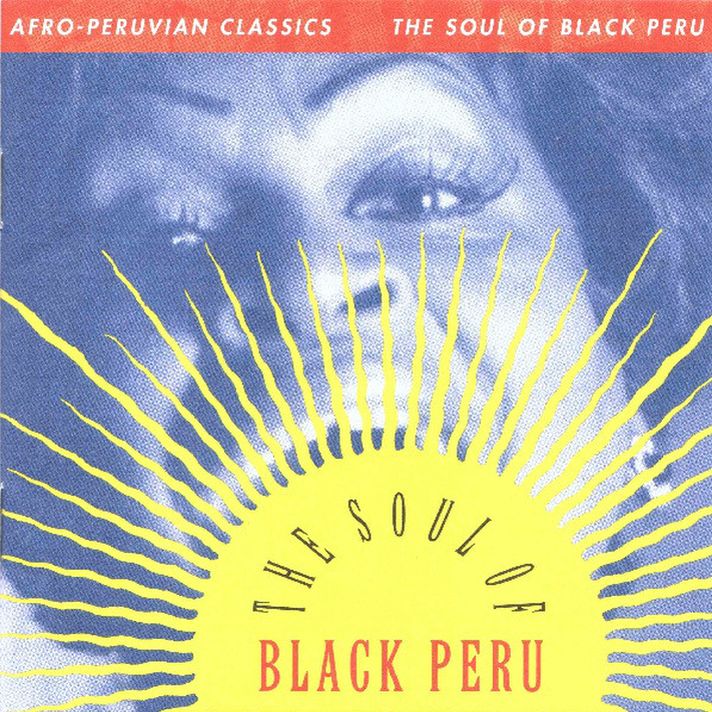
This is a great collection of Afro-Peruvian music collected by David Byrne for his Luaka Bop label. Peru is already known for its traditional Spanish/Indian music, with pan flutes, etc. This is very different. Peru, like most of the Americas, imported slaves from Africa at one time. This collection showcases the music of their descendants, a product of Spanish, American Indian and African influences. This fine album of Afro-Peruvian music features the voices of Susana Baca (in photo at right), Eva Ayllon and Peru Negro. Dance is what gives meaning to this music. You can feel it the first time you hear it. Afro-Peruvians dance during their suffering or their joy, at parties or funerals, at work or rest. In this culture the body asks for free and ample expression, without judgement.


VA - Afro-Peruvian Classics (The Soul of Black Peru) ( flac  316mb)

01 Susana Baca - Maria Lando
02 Manuel Donayre - Yo No Soy Jaqui
03 Cecilia Barraza - Canterurias
04 Lucila Campos - Samba Malato
05 Roberto Rivas & El Conjunto Gente Morena - Enciendete, Canela
06 Eva Ayllon - Azuca De Cana
07 Abelardo Vásquez & Cumanana - Prendeme La Vela
08 Chabuca Granda - Lando
09 Lucila Campos - Toro Mata
10 Peru Negro - Son De Los Diablos
11 Nicomedes Santa Cruz - No Me Cumben
12 Chabuca Granda - Una Larga Noche
13 Peru Negro - Lando
14 David Byrne - Maria Lando

VA - Afro-Peruvian Classics (The Soul of Black Peru) (ogg  145mb)

xxxxx xxxxx xxxxx xxxxx xxxxx

Apr 2, 2018

RhoDeo 1813 Nineteen84

Hello,


In many respects Orwell is ubiquitous and more relevant than ever. His once-visionary keywords have grotesque afterlives: Big Brother is a TV franchise to make celebrities of nobodies and Room 101 a light-entertainment show on BBC2 currently hosted by Frank Skinner for celebrities to witter about stuff that gets their goat. Meanwhile, Orwellian is the second-most-overused literary-generated adjective (after Kafkaesque). Orwell is the go-to thinker to account for our present woes – even though he is 68 years dead. Which, in the Newspeak of 1984, is doubleplusgood. ......'N Joy

xxxxx xxxxx xxxxx xxxxx xxxxx

BBC dramatisation of George Orwell's post-modern classic, published in 1949, concerning what the world may look like in 1984.

Winston Smith works for the Ministry of Truth. Sick and separated from his wife, he lives alone in a one-room flat in Victory Mansions in London, chief city of Airstrip One. Big Brother stares out from every poster, the Thought Police uncover every act of betrayal. When Winston finds love, he discovers that life does not have to be dull and deadening, and awakens to new possibilities.

Dramatised for radio by Jonathan Holloway, with Christopher Eccleston as Winston Smith, Pippa Nixon as Julia, and Tim Piggot-Smith as O’Brien.


Nineteen Eighty Four - George Orwell - Part 1 (mp3  52mb)

1 Nineteen Eighty Four - George Orwell - Part 1 56:57

xxxxx xxxxx xxxxx xxxxx xxxxx

previously

Hordes Of The Things 1 - The First Chronicle (mp3  25mb)
Hordes Of The Things 2 - The Second Chronicle (mp3  26mb)
Hordes Of The Things 3 - The Third Chronicle (mp3  26mb)
Hordes Of The Things 4 - The Fourth Chronicle (mp3  27mb)

xxxxx xxxxx xxxxx xxxxx xxxxx


Apr 1, 2018

Sundaze 1813

Hello,

Today one of the many projects of Daniel Myer, there are not many who have so many different projects with such variety and yet a surprisingly high quality.  Fans of Haujobb's ambient-side should have no problem finding their way here, as well as fanatics of the so-called clicks'n'-cut genre.   .... N'joy

xxxxx xxxxx xxxxx xxxxx xxxxx

Haujobb are part of the newest wave of electronic dance acts to come storming out of Europe. Along with such other notables as :wumpscut: and VNV Nation, Haujobb are bringing, if possible, an even newer surge of adrenaline to a genre that already seems expanding to burst.

Haujobb formed as a trio in 1993 in Germany, with B. Junemann being the third member to the current duo of Dejan Samardzic and Daniel Myer. Their first release was on cassette only, the now hopelessly out of print Drift Wheeler. This embryonic issue brought them to the attention of Off Beat records, who released their first CD, Homes and Gardens, later that same year. Haujobb's first German tour occurred in 1994, along with the American release of Homes and Gardens and their first single, Eye Over You.

In 1995, Haujobb attained its current configuration with the departure of B. Junemann. The duo went on to release their second CD, Freeze Frame Reality, and began doing remixes for other bands, including Front Line Assembly and Download. The Frames CD was released, which featured both new material and a number of remixes done by such luminaries as cEvin Key of Skinny Puppy/Download, Adi Newton of Clock DVA, and Mentallo and the Fixer. In the midst of all this activity, a second tour of Germany was successfully launched.

During 1996 the band took part in The Remix Wars Part 1 - :wumpscut: vs. Haujobb, in which each band remixed several tracks from each other's repertoire. It also saw their first full European tour, as well as their debut on America's Metropolis Records, with the highly successful Cleaned Visions single and their drum and bass influenced full length CD, Solutions for a Small Planet. In 1997 came the release of their double EP, Matrix, with one disc of new and remixed electronica material and one disc of samples, while 1998 saw the release of two side projects, Newt and Cleen; as well as the release of the single Less. The second Cleen product, Second Path, with the Haujobb electronica CD, Ninety-nine, both hit the street in early 1999. The remixes from that album, Ninety-nine Remixes, was released in late 1999.

The long awaited return of the architects of sound, Haujobb has finally occurred. Polarity marks the end of a two year hiatus for Haujobb, who take this release to the edge of electronic extremes and beyond. Quite possibly their best album ever, Polarity is packed with electro break beats, ambient structures, and tweaked intricacies that deliver a wide spectrum of sound to fill the quietest void or largest chasm. Embark on a kaleidoscopic journey as Haujobb lead you between extremes of Polarity.

After releasing the highly anticipated Polarity album in 2001, Haujobb returned eight months later with yet another new single, "Penetration". The single gave great incite into what to expect from the new album, Vertical Theory. As Daniel Myer, mastermind behind Haujobb, described the album "a little trance, a little EBM, a little industrial, a little ambient, and a little bit dance, but with that Haujobb 'feel'."

Almost two years after the release of the album Vertical Theory, Haujobb returned with an album of remixed and reinvented tracks. Highly sought after for their legendary remixes, Haujobb now has the favor returned to them by their friends including well known acts such as Glis, Seabound, and This Morn’ Omina. In addition, Vertical Mixes contained two new tracks and mixes from Haujobb themselves.

Haujobb stated that they were ending their musical career with a final concert at Amphi Festival (Cologne) 19/07/2008, although a recent blog post (dated May 22 2009) suggests that this is no longer the case and that the band is simply taking a break from music. In February 2009, Metropolis Records released the out of print Freeze Frame Reality as a digital only release. Frames-The Remix Album was digitally released the following May.

In 2011 Haujobb released a new album with the title "New World March" which according to the band uses more hardware, guitars, drums, and sound recordings compared to software based Vertical Theory of 2003. In 2013 Haujobb created their own production label, Basic Unit Productions, and began releasing other artists such as Div|ider, Blush Response, and Black Nail Cabaret. Basic Unit Productions also released two compilations under the title, "Frost". In September 2015, Haujobb released the minimal-wave influenced, "Blendwerk" on Basic Unit Productions in Germany and on Negative Gain Productions in the United States.

Today, both Daniel Myer and Dejan Samardzic continue to record music under the name Haujobb – the duo also briefly recorded as Dots+Dashes. Myer has several other projects of his own, including Architect, Clear Vision (initially a collaboration with Thorsten Meier) as well as a number of other short-lived electronic projects. Myer, along with Claire Voyant's Victoria Lloyd, form HMB, whilst Newt is a collaboration with Andreas Meyer of Forma Tadre. The most recent of Myer's side-projects is Destroid, also featuring Rinaldo Ribi Bite and Sebastian Ullmann.

xxxxx xxxxx xxxxx xxxxx xxxxx

If you pine for the glory days of industrial music when bands like Front 242 and Nitzer Ebb ruled the late-night MTV airwaves, then this is the band for you. Haujobb's sound is less assaultive than Nitzer Ebb's and just a bit more melodic than Front 242's, but the basic elements of vintage industrial dance music are all there: the Teutonic band name, the Teutonic accents, the digitally astringent Teutonic synthesizer beats, the cyber-dystopian design sense (here's a sample song title: "Sect2S-W"; here 's a sample song description: "RT=00:5:12:52 BPM=134"). Despite their best efforts, this duo manages to sound pretty human, though; there are actual melodies peaking through the jackboot rhythms, and those synthesizers, sterile as they may be, are often surprisingly pretty. This is an impressive return to form for a band that really needs to get into the studio more often.
'polarity' returns to what haujobb does best - industrial dance music. but if you've ever heard a single haujobb song, you know this is top-notch industrial dance music. after the debatable failure of haujobb's last release 'ninetynine', 'polarity' regresses back to the 'solutions…' era sound that many fans consider to be the band's pinnacle point. this isn't 'solutions…' part 2, but possibly the next logical step for "industrial" haujobb (as opposed to "ambient" haujobb). every track on 'polarity' plays like a gem, with huge dancefloor potential as well as inviting headphone accessibility. songs like 'unseeing', 'boom operator', 'last hero', and 'subsonic' contain delicious myer-brand basslines, heavy, razor-sharp snares, pounding bass kicks, and clever lyrics. as with the last cleaner album 'solaris', myer's vocals are more predominant and melodic, but by no means perfect. The fourth track 'demon', suffers from the vocals, leaving the intriguing rhythms somewhat out of reach. The rest of the album contains the music everything a haujobb fan could hope for: tight, complex dance structures, memorable harmonies, and surging basslines. 'polarity' is a strong piece of work, sure to please any haujobb fan. With a reflection on their industrial roots, haujobb comes back with a brilliant combination of accessible vocals, brilliant basslines, slick ambient moments, and captivating rhythms. This is at least a few years ahead of the current slew of VNV blueprints, standing firmly unmatched after 7 years of critical acclaim. As they've consistently done throughout the band's career, haujobb again defies the boundaries of innovation and proves to their critics and fans that they are truly the kings of the industrial dance sound. One of this year's best…


Haujobb - Polarity (flac 347mb)

01 Sect1S-E 0:45
02 Subsonic 5:12
03 Sect2N-E 0:15
04 Sinus Problem 4:55
05 Sect1S-W 0:25
06 Centuries In Me 4:27
07 Sect3N-N-E 0:32
08 Demon 4:53
09 Sect2S-W 0:23
10 Boom Operator 5:51
11 Sect5E 0:22
12 Last Hero 5:24
13 Sect4S-S-W 0:57
14 Unseeing 5:54
15 Sect4W 0:24
16 Violator 4:38
17 Sect7N-E 1:02
18 Your Pilot 5:16
19 Sect7S-S-W 0:38

Haujobb - Polarity (ogg  137mb)

xxxxx xxxxx xxxxx xxxxx xxxxx


Haujobb - Penetration EP (flac 382mb)

01 Penetration 4:17
02 Penetration (Floormix) 6:43
03 Course (Instrumental) 6:29
04 Penetration (Forma Tadre Rmx) 5:19
05 Penetration (Assemblage 23 Rmx) 6:11
06 Unseeing (Edit By Guido Le Frick) 4:46
07 Penetration (Future Fuck Rmx) 7:56
08 Penetration (Converter Rmx) 4:59
09 Dream Aid (Filtered Thru Assemblage 23) 5:58
10 Penetration (Amalgamous Rmx) 3:24

Haujobb - Penetration EP (ogg 141mb)

xxxxx xxxxx xxxxx xxxxx xxxxx

The best industrial bands, if they're commercially successful enough to stay in business long enough, eventually learn how to relax a bit and let themselves expand beyond the stylistic strictures of industrial's four-on-the-floor jackboot beats and Teutonic yelling. Vertical Theory marks Haujobb's tenth anniversary as a band and demonstrates that they have achieved that kind of maturity, a level of skill and self-confidence that allows them to explore everything from dubbed-out EBM to trancy dance music and a strange sort of ambient industrial. There is a nice variety of beats, sometimes within a single tune -- thudding house rhythms will suddenly give way to a funky breakbeat, and then back again. "Renegades of Noize" is an auspicious opener, combining a digital but warm and complex rhythmic texture with an almost melodic vocal line. "Noise Institute" starts off with a subtly jungly beat before lapsing into something a bit more gruff and housy; the dub-inflected "Slide" starts off in a cool industrial mode but eventually gets monotonous over the course of its six-minute length. What these songs are all missing, as usual, is anything approaching a real melody. That doesn't have to be a fatal flaw, if the beats and textures are interesting enough, and most of the time they are on this album.


Haujobb - Vertical Theory (flac 368mb)

01 Renegades Of Noize 5:04
02 S.adow 4:30
03 The Noise Institute 3:43
04 A Terrifying Truth 5:28
05 Metric 5:05
06 Concrete 5:03
07 Slide 5:59
08 Platform 5:10
09 Claim The Planet 4:12
10 Faith In Chaos 5:54
11 Penetration (Fuck The Floor) 4:50

Haujobb - Vertical Theory (ogg   141mb)

xxxxx xxxxx xxxxx xxxxx xxxxx

Industrial and EBM bands almost always benefit from the remix treatment, because the problem these kinds of bands run into isn't usually a lack of good raw material -- rather, their problem is usually that they all take the same, cookie-cutter approach to their raw material. Nicely crafted synthesizer textures, sturdy beats, and even the occasional interesting chord progression all get jammed into the same by-the-numbers death-disco rhythmic framework, and too often the musical results are completely interchangeable from one band to another. But if you set a gaggle of talented cut-and-paste artists on the master tapes, things can start to get interesting. That's what happens on this collection of remixes based on tracks from 2003's Vertical Theory album, which also includes a handful of what seem to be outtakes from the same sessions. (And actually, Haujobb had a head start anyway since their original material is unusually rhythmically and texturally varied to begin with.) The featured remix artists include Asche (whose surprisingly subtle, almost gentle treatment of Renegades of Noize is an album highlight), Glis (who brings a cool rhythmic sophistication to "Slide"), and Haujobb themselves, whose dark and minimalist mix of "Metric" is another highlight track.


Haujobb - Vertical Mixes  (flac 436mb)

01 Mind Crush 4:51
02 Renegades Of Noize (Remix) 6:18
03 Perpetual Motion 4:59
04 Metric (Remix) 5:20
05 Platform (Remix) 5:09
06 Vs. This Morn' Omina - We Are The Renegades Of Noize 4:23
07 Slide (Glis Remix) 4:59
08 Platform (Seabound Remix) 4:53
09 Metric (Hecq Reemiqs) 4:21
10 Renegades Of Noize (Asche Remix) 5:09
11 S_adow (Backlash Remix) 4:53
12 S_adow (Shok's Scrambled Egg Mix) 5:05
13 The Noise Institute (1994 Mix By Iszoloscope) 5:34

Haujobb - Vertical Mixes  (ogg 170mb)

xxxxx xxxxx xxxxx xxxxx xxxxx