Jan 17, 2012

RhoDeo 1203 Roots

Hello, we're still on that island with a huge place in the global music catalogue, Jamaica. A production hothouse and they say the Weed makes you slow and lazy-go figure. Without the ganja driven reggae music Jamaica would have remained a Caribbean backwater and dare i say would never have given us Bolt, the fastest man in the world.

Oops bit later posting been watching the Golden Globes, amazingly predictable this year and i'm hardly a big follower of the moving images industry, must be a bit psychic then or according to Sheldrake..picked up the results from the human consciousness field as i 'd been watching yesterdays recording.

To the matters at hand ..some great Dancehall stars

***** ***** ***** ***** *****

Frankie Paul is often referred to as Jamaica's Stevie Wonder, and not just because of his visual impairment; like Wonder, he was a talented multi-instrumentalist with a tremendous vocal range. He was also extraordinarily prolific; part of the first wave of dancehall artists, he started his recording career in earnest during the early '80s, and has since flooded the market with product, releasing countless singles and well over 30 albums. That's made his career difficult to track for all but the most ardent fans, but it's also ensured that he's never been too far out of the spotlight on a constantly changing reggae scene.

Paul was born Paul Blake in 1965. He was blind at birth, but an operation on a hospital ship succeeded in giving him a small visual capacity; he later went to New York to obtain a pair of high-powered glasses that helped even further. He attended a Salvation Army school for the blind, where he first began singing. When Stevie Wonder visited the school, Paul sang for him, and an impressed Wonder encouraged him to go into music. Paul learned the piano, drums, and guitar while still in school, and was most influenced as a singer by Dennis Brown in his early days. As Frankie Paul, he made his first recording, "African Princess," in 1980, when he was still just 15. In 1983, he appeared on two volumes in Channel One's Showdown series, one with Sugar Minott and the other with Little John. The former LP contained Paul's first major hit, the Henry "Junjo" Lawes-produced "Worries in the Dance," which aligned him with the emerging dancehall sound. Lawes also produced 1984's Pass the Tu-Sheng-Peng, whose title cut -- an ode to ganja -- was a huge, star-making hit in Jamaica.

Paul reached his prime in the mid-'80s, cutting excellent albums like the George Phang-produced Tidal Wave (1985) and Alesha (1987), and the Philip "Fatis" Burrell-produced Warning (1987). His hit singles included "Tidal Wave," "Alesha," "Cassanova," "Sara," "Fire Deh a Mus Mus Tail," "Slow Down," and many others. Paul continued to record for a variety of labels in the '90s, with LP highlights including 1991's Should I and 1994's Hard Work. To keep up his prolific recording pace, he came to depend heavily on covers, whether of reggae classics or contemporary American R&B material. He continued into the new millennium as a tremendously active presence on the reggae scene.

***** ***** ***** ***** *****

Henry "Junjo" Lawes, the producer as responsible as anyone for the inexorable rise of the toasters, was also instrumental in reinventing old talent (e.g. Johnny Osbourne) or bringing out new to stardom, like Frankie Paul. Paul linked up with the producer in 1984 for a clutch of stunning hits, culminating in that year's Pass the Tu-Sheng- Peng album, titled after one of his biggest. Although still in his teens, Paul exhibited an amazing vocal maturity, reminiscent, as was his style in places, of Dennis Brown. Lawes handed over a basket of his best riddims for the set, all laid down to perfection by the Roots Radics, many, of course, based on classic Studio One numbers. That includes the fabulous ganja pumping title track, a version of "Darker Shade of Black." That single's flipside, the equally classic "War Is in the Dance," was an original riddim, although it sounds like it came straight out of the rocksteady age. That song is themed around the violence and police raids proliferating through Kingston's sound systems, as is the "Jump No Fence" (aka "Curfew the Dance"). Virtually every track on this set is of almost equal high caliber. Obviously Paul would go on to record more masterpieces over the years, but so powerful was this set, that although he'd often equal it, he seldom surpassed it.


Frankie Paul – Pass The Tu-Sheng-Peng (flac 204mb)

01 Pass The Tu-Sheng-Peng 3:30
02 Jump No Fence 3:33
03 Hot Number 3:06
04 Hooligan 3:21
05 Only You 3:02
06 War Is In The Dance 3:04
07 Don't Worry Yourself 3:19
08 The Prophet 3:23
09 Them A Talk About 3:12
10 If You 3:15

***** ***** *****
Having recorded the Pass the Tu-Sheng-Peng album for Lawes in 1984, the next year, Paul linked with Phang for the follow-up, Tidal Wave. The title track broke over the dancehalls just like a tsunami, with a thumping version of the "Bobby Babylon" riddim. And it was the Taxi Gang's hefty, nigh earth-shattering, backings that gave this set their weight, alongside Paul's superb performances. Indeed the singer leaves one in little doubt that for him "Music Is the Staff of Life," and that he is the "King Champion," so self-confident he's willing to take on the government on "Beat Down the Fence," and Babylon itself on "Dem a Go Feel It." Of course, there's plenty of romance to be found here as well, from the pleading "Baby Come Home" to the gorgeous, rocksteady styled "Hold Me." Only 20, Paul already held the future in his hands, for this set and its predecessor cemented his stardom, and garnered considerable attention abroad. Many more fabulous recordings were to follow, but few artists had set the bar so high for themselves so early in their career.

Frankie Paul – Tidal Wave (flac 209mb)

11 Dem A Go Feel It 3:29
12 Beat Down The Fence 3:14
13 Baby Come Home 3:32
14 Music Is The Staff Of Life 3:49
15 She's Got Style 3:02
16 Tidal Wave 3:17
17 Your Love Is Amazing 3:10
18 King Champion 3:09
19 You Too Greedy 3:25
20 Hold Me 3:20

***** ***** ***** ***** *****

Kamoze made his recording debut in the early '80s with a 12" single "Trouble You a Trouble Me" on Taxi and found immediate success. He then began touring as part of the Taxi Connection International Tour with Yellowman and Half Pint. During this time, Kamoze was 6' tall, reed thin and appeared too frail to contain his powerful stage presence. He followed up his first album success with Pirate, but the recording received mixed reactions and wasn't as successful. Kamoze then retaliated with several hit singles recorded on his Slekta label. One of the biggest hits from this period was "Shocking Out" which was eventually picked up by the RAS label in 1988. In 1985, Kamoze had greater success with Settle with Me, which produced such hits as "C all the Police" and "Taxi with Me." By 1988, Kamoze's successes became intermittent and his career erratic. Kamoze suddenly disappeared from the music scene. He returned with a new, more aggressive image in 1994, signing to Sony and exploded back into the charts with "Here Comes the Hotstepper." The song made its debut on the compilation reggae album Stir It Up from Columbia, and then showed up on the soundtrack of Robert Altman's feature film Pret-A-Porter. Produced by Salaam Remi, it was released as a single in 1995 and spent two weeks at the top of Billboard's Hot Singles Chart, and nearly four months appearing on various other charts. Kamoze made a video for the song and with his beefy, well-muscled physique and long dreadlocks, no longer fit the description of the liner notes on his 1983 debut album that characterized him as a "pencil thin....disentangled....six-foot vegetarian." With the success of his new single, Kamoze was now a gangster and began a series of promotional tours in LA. Kamoze refused to categorize his music and remained open to singing a variety of songs from different sources, but he took a decade long break before surfacing again. When he did, it was with Debut, a 2006 album that featured rerecordings of his early hits.


Ini Kamoze – Ini Kamoze (flac 203mb)

01 Trouble You A Trouble Me 4:49
02 World-A-Music 5:51
03 Them Thing Deh 5:30
04 General 6:21
05 Wings With Me 4:58
06 Hail Mi Idrin 4:38


***** ***** ***** ***** *****

Jan 16, 2012

RhoDeo 1203 Burroughs

Hello, hope you'll had a good weekend I enjoyed watching the WK darts and seeing an unknown rookie outscoring and beating everyone and take the title ..one for the underdog. As announced last week, more from that man with the voice that rasps your brain, the man that gave Steely Dan and Soft Machine their name...the one and only William S. Burroughs.

xxxxx xxxxx xxxxx xxxxx xxxxx

The elder statesman of literature's Beat Generation -- and, by extension, of the American underground culture -- few figures outside of the musical sphere exerted a greater influence over rock & roll than novelist William S. Burroughs. A provocative, controversial figure famed for his unique cut-up prose aesthetic, Burroughs lived the rock lifestyle years before the music itself was even created; the ultimate outsider, he existed on the dark fringes of society in a haze of drugs, guns, and violence, remaining a patron saint of hipsterdom until his dying day. Ultimately, Burroughs' hold on the popular culture was extraordinary: few artists failed to credit him as an inspiration, and while bands like Steely Dan and the Soft Machine adopted their names from his turns-of-phrase, younger artists like Kurt Cobain and the Disposable Heroes of Hiphoprisy lined up to offer musical support for his occasional excursions into spoken word performing.

William Seward Burroughs was born February 5, 1914 in St. Louis, MO, the grandson of the founder of the Burroughs Adding Machine company. A homosexual bookworm with a fascination for guns and crime, he attended Harvard University, but largely rejected all the restraints of mainstream society, opting instead to pursue a life in New York City's underworld of organized crime. Upon becoming a heroin addict, Burroughs fell in with junkie drifter Herbert Huncke, leading to his introduction to other future Beat paragons like Jack Kerouac, Allen Ginsberg, and Lucien Carr; he also met Joan Vollmer, who became his common-law life. While older than the others, Burroughs had yet to begin writing as Kerouac and Ginsberg had; at first indifferent to literature, he finally completed 1953's Junky, an autobiographical tale of addiction published in pulp novel format by Ace Books. Queer, a similarly upfront examination of homosexuality, was rejected by the publisher and did not surface for several decades.

By the mid-'50s Burroughs, Vollmer, and their children had relocated to East Texas to live on a farm; as his descent into heroin addiction worsened, he found himself hounded by authorities, and eventually the family fled to Mexico. The marriage became the stuff of tabloid headlines when, attempting to impress friends with his shooting skills, Burroughs enlisted Vollmer to participate in a William Tell-like target demonstration; a faulty shot left Vollmer dead and sent Burroughs wandering the globe, finally drifting to Tangier. Following the success of their respective On the Road and Howl, both Kerouac and Ginsberg had become media sensations, with the Beat Generation emerging in full force; they tracked Burroughs down in Africa, finding him hopelessly addicted to heroin yet somehow able to write brilliant and wildly experimental fragments of prose. Kerouac began typing up the material and even gave it a title, Naked Lunch.

Upon its 1959 publication, Burroughs became a celebrity; the novel was the subject of a high-profile obscenity trial, and even today it remains his best-known and most influential book. Beginning with 1961's The Soft Machine, he began experimenting with a "cut-up" method of writing, literally cutting and pasting together various random fragments of text for maximum reader disorientation; in 1965, Burroughs began expanding into other forms of media, recording the LP Call Me Burroughs, a collection of spoken word readings of material culled from Naked Lunch and The Soft Machine. While remaining a prolific literary voice on the strength of work like 1971's The Wild Boys: A Book of the Dead and 1973's Exterminator!, aside from compilation appearances he did not issue another major recording prior to 1975's William S. Burroughs/John Giorno; Nothing Here Now But the Recordings, compiled by Psychic TV's Genesis P. Orridge, followed in 1981, as did another collaboration with Giorno, You're the Guy I Want to Share My Money With.

Always a major cult figure, by the late '80s Burroughs had become something of a pop culture icon, a symbol of decadence and ominous genius; a supporting role in Gus Van Sant's 1989 film Drugstore Cowboy brought him his widest mainstream exposure to date, and virtually every hipster worth his salt name-checked him as an influence. After 1987's Break Through in Grey Room, Burroughs recorded 1990's Dead City Radio, a collection of performances backed by Sonic Youth, John Cale, the NBC Symphony Orchestra, and others. In 1992, he guested on Ministry's "Just One Fix" single, and the following year recorded The 'Priest' They Called Him with Nirvana's Kurt Cobain. In 1993, Burroughs recorded his final LP, Spare Ass Annie and Other Tales, with the members of the Disposable Heroes of Hiphoprisy, and his sampled voice was also heard on recordings from diverse acts including the Jesus and Mary Chain, Laurie Anderson, and Material. With Tom Waits, he also co-wrote The Black Rider. The last major surviving figure of the Beat Generation, Burroughs died of a heart attack on August 2, 1997 in Lawrence, KS.


xxxxx xxxxx xxxxx xxxxx xxxxx


A collaboration between Burroughs, producer Hal Willner, and politico-rappers Disposable Heroes of Hiphoprisy. It features Burroughs reading excerpts from seven of his books set to music by the Heroes, mostly a slow, lazy funk that sounds like it was lifted from a '70s blaxploitation soundtrack. Highlights include the 16-minute, decidedly Burroughsian holiday treat "A Junky's Christmas" and "Words of Advice for Young People," which first appeared on the Smack My Crack collection, minus the music.


William S. Burroughs & Disposable Heroes Of Hiphoprisy - Spare Ass Annie (flac 232mb)

01 Interlude 1 (Wrinkled Earlobes Are A Sign Of Impending Heartattacks) 2:30
02 Spare Ass Annie 4:30
03 Interlude 2 (This Is Insane) 0:20
04 The Last Words Of Dutch Schultz (This Is Insane) 2:22
05 Interlude 3 (The Vultures Are Gone And Will Never Come Back) 0:17
06 Mildred Pierce Reporting (Old Sarge) 2:05
07 Dr. Benway Operates 2:45
08 Warning To Young Couples (Huntsmen's Hounds) 2:13
09 Did I Ever Tell You About The Man That Taught His Asshole To Talk? 6:18
10 Last Word 1:02
11 A One God Universe 3:32
12 Interlude 4 (Fletch Is Here) 0:36
13 The Junky's Christmas 15:54
14 Words Of Advice For Young People 4:41
15 Last Words 0:47

xxxxx xxxxx xxxxx xxxxx xxxxx

Although “The “Priest” They Called Him” might be the most obscure thing in Kurt Cobain’s discography, it’s probably the best selling musical collaboration of William S, Burroughs’s recording career. Basically, in 1992, Cobain contacted his hero, Burroughs about doing something together. Burroughs sent him a tape of a reading he’d done of a short story originally published in his Exterminator collection in 1973 and Cobain added some guitar backing based on “Silent Night” and “To Anacreon in Heaven.”


William S. Burroughs & Kurt Cobain- The Priest, They Called Him (flac 51mb)

01 - The 'Priest' They Called Him 9:42

xxxxx xxxxx xxxxx xxxxx xxxxx

elsewhere

William Burroughs - Junkie (audiobook) (186 min.89mb)

xxxxx xxxxx xxxxx xxxxx xxxxx

Jan 15, 2012

Sundaze 1203

Hello, the world is still spinning despite all the arrested development around, ah yes as if silly humans could make it stop. That said aren't things going faster and faster. A good reason to take some Sundaze...

xxxxx xxxxx xxxxx xxxxx xxxxx

My name is Evan. I make sounds. Rivers of music ancient & delicate flow through me....( Bluetech’s website)

"I’m really into plants and living things. Being aware of the currents of life, and acknowledging the intelligence and wisdom of growing things. If you only quiet the mind and listen with the heart, the Natural world has so much to teach. I’m an active dreamer, and gain music knowledge and direction from the dream sphere."


Evan Bartholomew has been one of the most active members in the digital music scene since day one, being a huge proponent of many indie artists' success online, then later going on to world recognition through a myriad of releases through his labels Native State Records and Silent Auction as well as scene stalwarts Waveform and Alpha Zero. Each year finds him getting better and better. His sound continues to develop and blossom and take on new forms as he explores the vast worlds of downtempo, psychill, and pure ambient. Also noteworthy is his Evan Marc project, taking the typically straightforward sounds of tech house and infusing them with equal portions of funk and complexity. Evan pays great attention to his sounds, his ideas, and his presentation, one of the most diverse and capable young producers around today.

Evan produces his unique style of digital downtempo from the West Coast of North America. Classically trained on the piano for public performing, Evan deviated from the traditional structure of classical music and being to relearn the instrument from an energetic and tonal perspective. This resulted in his interpretation of nature's expression of being, establishing a playing style that is dronal ambient, downtempo and improvisational. Explosions in technology and software have enabled him to explore the edges of contemporary music production, and a sound has developed which draws from the psychedelic community as well as the experimental/IDM community.

Evan Bartholomew, under the moniker Bluetech, produces his unique style of experimental noise from San Diego, CA. Classically trained on the piano for public performing, Bartholomew deviated from the traditional sounds and began to express the rhythms that sprouted from within him, and Bluetech was born. This resulted in his interpretation of nature's expression of being, a sound that is dronal ambient, downtempo, improvisational. He devoured the electronic potentials for musical expression and conveyed it in IDM, digidub, and psychedelic trance.

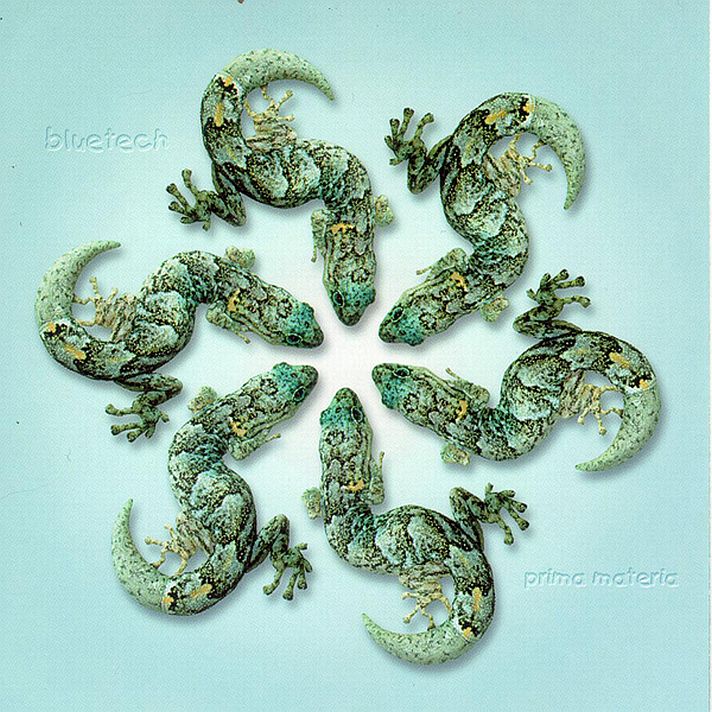
Bartholomew created and runs his own art collective in San Diego and does commercial sound design and production for both national and regional clients. He also writes and produces his own songs. "The Rubicon", "Prayers For Rain", and "Mezzamorphic" originally appeared on an EP released by Truffle Records, and brought the name Bluetech to a larger audience. In September 2003, these songs appeared on Bluetech's first album, Prima Materia, released by Waveform Records. It was followed by Elementary Particles and Sines & Singularities in 2005. Subsequently Evan went all out and released 11 albums 5 under the Bluetech moniker and 6 EP's in 6 years..and there's some great music in there. Without a doubt Bartholomew has become a leading light in the US electronic music scene, showing the way from one of our globes energetic nodes, beautiful Hawaii, his current residence.

xxxxx xxxxx xxxxx xxxxx xxxxx

Prima Materia is the full-length debut of Bluetech (aka Evan Bartholomew), who has made a name for himself with performances at the annual Burning Man festival and San Diego's Project Cathedral. For Materia, he builds IDM and ambient-influenced songs with the aid of the instrumental invention afforded by a Reaktor modular sound studio and a host of PC-based synths. This isn't an album of bass; rather, trebly rhythms ping and pong off one another as melodies form out of the ether. It's all very tasteful, but it's initially somewhat opaque, as the opening tracks tend to blend together with no real definition. Fortunately, Materia climbs out of its rut with a remix of Sounds from the Ground's "Triangle" as well as a whirring dub mix of "Prayers for Rain," which appeared in its original form on Bluetech's introductory EP for Truffle. Bluetech might have a ways to go, since his debut full-length's memorable moments are separated by stretches of sound-alike territory that are probably more navigable when one's mind is not as sharp. The edge of sleep, for instance, or after one has "fallen through the cracks of the world" that he references in his liner notes. Nevertheless, Prima Materia should appeal to fans of the Waveform label's famously spacy biorhythms.


Bluetech – Prima Materia (flac 363mb)

01 Leaving Babylon 6:43
02 Prophetic Sines 6:16
03 Triangle (Retriangulated) 7:02
04 Rubicon 5:57
05 Prayers For Rain (Dub Mix) 6:52
06 White Magnesia 5:40
07 7th Phase Dub 6:28
08 Burning Waters 6:23
09 Mezzamorphic 7:58
10 Desperate Ends 5:32
11 Cliffdiving 1:57

xxxxx xxxxx xxxxx xxxxx xxxxx

Elementary Particles sets up a totally relaxed start on this album. Floating vibes, with slow, dubby beats, echoing sounds and some beautiful sounds forming into a melody. Perfect opening on a chill out set. Then some relaxed dubby beats glide into the Alchemie Dub using plenty of ingredients great variation of melodies, sounds and dubby effects. Prayers For Rain goes into a different direction. It's a remix by J. Viewz (Jonathan Dagan) from Israel, who is one half of the famous duo called Violet Vision. Pretty experimental jazzy vibe with a lot of great variation. Overall, Elementary Particles is a relaxing, a rather mystic, psychedelic vibe all the way through, never get a boring moment.


Bluetech – Elementary Particles (flac 230mb)

01 Elementary Particles (Re-Edit) 8:12
02 Alchemie Dub 6:43
03 Cosmologic 7:32
04 Koinonea 6:30
05 Prayers For Rain (J.Viewz Remix) 4:59
06 Oleander 7:08
07 Worthy 3:05
-
xxxxx xxxxx xxxxx xxxxx xxxxx

This release clearly demonstrates the rich maturing of Evan’s style & taste, a ripening of delicious musical fruits so it seems.
Phoenix Rising still retains Bluetech’s intelligent signature sound, but has a slightly more mature and funkier undercurrent to his previous releases. Sophisticated, clean, intricately constructed, meticulous and spacious…with dashes of fat squelchy basslines, cheeky squeaky melodies, flamboyant sound swirls, orchestral treats, and smooth rolling beats. Each track is unique to the next, making this a fine array of diverse examples of Evan’s musical genius. Don't miss it.

Bluetech – Phoenix Rising (flac 271mb)

01 My Dear Friend Kronos 7:22
02 What The Night Reveals 6:19
03 Kingdom Of The Blind (Third I Mix) 5:21
04 A Delicate Mystery (New Life Mix)7:49
05 Riding The Sky Elevator 7:56
06 Phoenix Rising 8:54
07 Invocation (The Fire Within) 7:14

xxxxx xxxxx xxxxx xxxxx xxxxx

Jan 13, 2012

RhoDeo 1202 Grooves

Hello, today's artists have been up to the downslope and carved out their own niche in the globalmusic mind..PPP FFFunk from the start of the seventies onwards they laid their grooves on us, and even, as you can see at the bottom, if i posted several vinylrips 4 years ago (Rhotation Grooves 10 & 20), I think a further and deeper look into their discography is essential. So the coming weeks Fridaynght Grooves will be...

"A Parliafunkadelicment Thang"

xxxxx xxxxx xxxxx

It's back to the Parliament groove again today. The album Up for the Down Stroke was released in 1974, with Chocolate City following in 1975. Both performed strongly on the Billboard R&B charts and were moderately successful on the Pop charts. Parliament began its period of greatest mainstream success with the concept album Mothership Connection (1975), the lyrics of which launched much of the P-Funk mythology. The subsequent albums The Clones of Dr. Funkenstein (1976), Funkentelechy vs. the Placebo Syndrome (1977), and Motor Booty Affair (1978) all reached high on both the R&B and Pop charts, while Funkadelic was also experiencing significant mainstream success. Parliament scored the #1 R&B singles "Flash Light" in 1977 and "Aqua Boogie" in 1978.

The rapidly expanding ensemble of musicians and singers in the Parliament-Funkadelic enterprise, as well as Clinton's problematic management practices, began to take their toll by the late 1970s. Original Parliaments members Fuzzy Haskins, Calvin Simon, and Grady Thomas, who had been with Clinton since the barbershop days in the late 1950s, felt marginalized by the continuous influx of new members and departed acrimoniously in 1977. Other important group members like singer/guitarist Glenn Goins and drummer Jerome Brailey left Parliament-Funkadelic in the late 1970s after disputes over Clinton's management. Two further Parliament albums, Gloryhallastoopid (1979) and Trombipulation (1980) were less successful than the albums from the group's prime 1975-1978 period.

In the early 1980s, with legal difficulties arising from the multiple names used by multiple groups, as well as a shakeup at Casablanca Records, George Clinton dissolved Parliament and Funkadelic as recording and touring entities.

xxxxx xxxxx xxxxx


The album is considered to be one of the best in Parliament's catalog. It is a loose concept album warning the listener of falling into the 'Placebo Syndrome', which according to George Clinton is consumerism, and listening to disco music, which he saw as a simplification of funk music in attempt to gain commercial success. They simply poured it on for this amazing album, clearly one of its all-time best. At least one band named itself after a lyric -- Urge Overkill, taken from the song "Funkentelechy" itself -- while the amount of times this album has been sampled for the music is uncountable. Besides having an absolutely wonderful name, it contained at least three of the finest Parliament tunes ever, including arguably its signature song. "Flash Light," which closes Funkentelechy on a riotous high, has it all -- a brilliant fake ending, instant singalong value, a synth-bassline to kill for from Bernie Worrell, and so much more.

As the album ends, so too does it begin, with a stone-cold classic -- "Bop Gun (Endangered Species)." Starting with a brisk little guitar figure and beat, it turns into an instant party on all fronts, with great lead vocals and an addictive chorus, the Horny Horns and company hitting the grooves and blasting hard. Worrell's laser noises and shimmering keyboard leads and Cordell Mosson's monster bass squelches send everything all that much more over the top. "Funkentelechy" and "The Placebo Syndrome" both have plenty of goodness as well, while "Wizards of Finance" is an amusing retro diversion, helping make Funkentelechy the highlight it is. The album became Parliament's fourth consecutive gold album and second platinum album.


Parliament - Funkentelechy vs. the Placebo Syndrome (269mb)

01 Bop Gun (Endangered Species) 8:29
02 Sir Nose D'Voidoffunk (Pay Attention - B3M) 10:04
03 Wizard Of Finance 4:23
04 Funkentelechy 10:56
05 Placebo Syndrome 4:20
06 Flash Light 5:46

xxxxx xxxxx xxxxx

Motor Booty Affair was released in late 1978, it contains two of the group's most popular tracks, "Rumpofsteelskin" and "Aqua Boogie (A Psychoalphadiscobetabioaquadoloop)" which went to number one on the Billboard Black Singles chart. By this point Parliament was one of the most accomplished and intelligent bands in music. George Clinton's druggy and patently eccentric humor often obscured the enviable musicianship throughout. Motor Booty Affair is no doubt another classic album and the perfect follow-up to 1977's Funkentelechy Vs. the Placebo Syndrome. On Motor Booty Affair, Clinton decides to yuck it up more with a great underwater concept and a few of his stronger alter egos, including the rhythmically challenged Sir Nose D' Void of Funk and his friend Rumpofsteelskin.

The deft and airy "Mr. Wiggles" has Clinton taking on the persona of Wiggles, the "DJ of the affair" as he says: "Mr. Wiggles here on roller skates and a yo-yo/Acting a fool." The hypnotic "Rumpofsteelskin" has a great bassline and inventive and infectious background vocals. The closest thing to a ballad here is the astrologically savvy "(You're a Fish and I'm A) Water Sign." The well-produced "Aqua Boogie (A Psychoalphadiscobetabioaquadoloop)" with its handclaps and high-pitched basslines basically set the standards for the sound of R&B in the coming decade. Artist Overton Loyd prepared the cover of Motor Booty Affair. The main release consisted of a gate-fold album cover featuring a pop-up rendition of the city of Atlantis, with Loyd's artwork on the front and back covers.


Parliament – Motor Booty Affair ( 280mb)

01 Mr. Wiggles 6:43
02 Rumpofsteelskin 5:34
03 (You're A Fish And I'm A) Water Sign 4:41
04 Aqua Boogie (A Psychoalphadiscobetabioaquadoloop) 6:40
05 One Of Those Funky Things 3:45
06 Liquid Sunshine 4:22
07 The Motor-Booty Affair 5:14
08 Deep 9:09

xxxxx xxxxx xxxxx

GloryHallaStoopid was their penultimate album on the Casablanca Records label, and is another concept album which tries to explain that Funk was responsible for the creation of the universe ( P Funk mythology). It reuses samples from previous albums, notably the Mothership Connection and Funkentelechy vs. the Placebo Syndrome. Though Gloryhallastoopid boasts a couple great songs, "Big Bang Theory" and "Theme from the Black Hole," it's unfortunately one of the least essential Parliament-Funkadelic albums. In particular, the ten-minute "Party People" and the nine-minute "The Freeze (Sizzaleenmean)" rather plod on Shorter songs like "May We Bang You?" are better, but "Big Bang Theory" and "Theme from the Black Hole" are far and away the chief draw to Gloryhallastoopid.


Parliament – GloryHallaStoopid (Pin The Tale On The Funky) (289mb)

01 Prologue 0:47
02 (Gloryhallastoopid) Pin The Tail On The Funky 4:08
03 Party People 10:10
04 The Big Bang Theory 7:13
05 The Freeze (Sizzaleenmean) 9:01
06 Colour Me Funky 4:53
07 Theme From The Black Hole 4:39
08 May We Bang You? 4:43

xxxxx xxxxx xxxxx

Jan 12, 2012

RhoDeo 1202 Goldy Rhox 54

Hello, today the 54thpost of GoldyRhox, classic pop rock, in the darklight a UK artist, a lad insane, who started of this Goldy Rhox series. In the BBC's 2002 poll of the 100 Greatest Britons, he was ranked at number 29. Throughout his career, he has sold an estimated 140 million albums. In the UK, he has been awarded nine Platinum album certifications, 11 Gold and eight Silver, and in the US, five Platinum and seven Gold certifications. In 2004, Rolling Stone ranked him 39th on their list of the "100 Greatest Artists of All Time". That's not all, his career has also been punctuated by various roles in film and theater productions, earning him some acclaim as an actor in his own right.

***** ***** ***** ***** *****
Most of the albums i 'll post made many millions for the music industry and a lot of what i intend to post still gets repackaged and remastered decades later, squeezing the last drop of profit out of bands that for the most part have ceased to exist long ago, although sometimes they get lured out of the mothballs to do a big bucks gig or tour. Now i'm not as naive to post this kinda music for all to see and have deleted, these will be a black box posts, i'm sorry for those on limited bandwidth but for most of you a gamble will get you a quality rip don't like it, deleting is just 2 clicks...That said i will try to accommodate somewhat and produce some cryptic info on the artist and or album.

Todays mystery album was released in September 1980 by RCA Records. It was his final studio album for the label and his first following the so-called Berlin Trilogy. With it, however, he achieved what biographer David Buckley called "the perfect balance": as well as earning critical acclaim, the album peaked at #1 in the United Kingdom and restored his commercial standing in the United States. It was highly praised by critics, Record Mirror giving it a rating of seven stars out of five, while Melody Maker called it "an eerily impressive stride into the '80s" and Billboard reported that it "should be the most accessible and commercially successful LP of him in years". With hindsight many commentators consider todays mystery album to be "his last great album", becoming the "benchmark" for each later release.


Goldy Rhox 54 (flac 328mb)

Goldy Rhox 54 (ogg 113mb)


***** ***** ***** ***** *****

Jan 11, 2012

RhoDeo 1202 Aetix

Hello, Aetix delves up more sparks from that decade (77-87) that spawned so much new music the world now 25+ years later still loves what was produced in those independent days when the music scene for a short time freed themselves from unimaginative riskfree corporate control. A few years later and the suits once more regained distribution control, which they lost, this time forever, a decade later to a variety of internet channels.

Having lost almost all control it looks the music industry times are changing as the movie and publishing industry have thrown in their weight to stop their fat profits from eroding, and as the US government is controlled by corporate fascists these days, it looks the internet will be losing it's virginity as it's about to be raped by a bunch of fat sociopath bastards.

xxxxx xxxxx xxxxx xxxxx xxxxx


The Psychedelic Furs, whose name belies their punk-influenced music, were formed in England in 1977 by brothers Richard Butler (vocals) and Tim Butler (bass), along with saxophone player Duncan Kilburn and guitarist Roger Morris. By the time they released their self-titled debut album in 1980, the group had become a sextet, adding guitarist John Ashton and drummer Vince Ely. The Psychedelic Furs' debut, a self-titled album from 1980, was produced by Steve Lillywhite. The album quickly established the band on radio in Europe and was a #18 hit in the UK Albums Chart. It also found success in Germany, Italy, France, Spain and Australia. The US version of the album was resequenced, but failed to have a strong commercial impact..

Talk Talk Talk (1981) did better, produced two British singles chart entries, one of which was "Pretty in Pink," later also a hit in the U.S. when a new version was used as the title song of a film. Forever Now (1982) saw the band reduced to a quartet with the departure of Kilburn and Morris. The rest moved to the U.S., turned to producer Todd Rundgren, Ely left, and the remaining trio of the two Butlers and Ashton made Mirror Moves (1984), the biggest Psychedelic Furs hit yet.

By the mid 1980s, the band had become a staple on both US college and modern rock radio stations. Simultaneously, they were experiencing consistent mainstream success, placing several singles in the charts on both sides of the Atlantic.

The film Pretty in Pink helped spread their name further before the release of their next album, Midnight to Midnight (1987), which consequently got good sales. Book of Days (1989) marked the return of Vince Ely, but was a considerable commercial disappointment. World Outside (1991) also failed to find an audience. The Psychedelic Furs then folded up shop, and Richard Butler launched a new group, Love Spit Love. The band released two albums, 1994's Love Spit Love and 1997's Trysome Eatone with disapointing results, still Butler kept on. He began writing songs for a supposed solo effort as the '90s came to a close. Those sessions led to new songs with brother Tim and a subsequent Furs reunion in early 2000.

They tested the waters and their audience for a joint summer tour with the Go-Go's, and the reception was warm. A year later, the Psychedelic Furs -- now featuring Love Spit Love guitarist Richard Fortus and drummer Earl Harvin -- headlined their own club gigs across North America. Beautiful Chaos, a live album capturing some of the band's greatest hits from the last tour, was issued in November 2001.

Since then, lead singer Richard Butler has released an eponymous solo album, Richard Butler. The band continues to tour around the world. The current Psychedelic Furs touring line-up is Richard Butler, Tim Butler, Rich Good, Mars Williams, Amanda Kramer and Paul Garisto.

xxxxx xxxxx xxxxx xxxxx xxxxx

Emerging from the incipient post-punk London scene with a healthy fascination for late-'70s Bowie, the Furs arrive in a dense cloud on their debut. Richard Butler's Thin-White-Duke-after-smoking vocal rasp has a surprising appeal, serving up a wry, slightly detached series of lyrics on life. Production mainly comes from Steve Lillywhite, who smartly steers away from the soon-to-be-clichéd touches he would bring to U2's early work. "India" is a good example; it has a brooding, quiet beginning with strange telegraphic signals and turns into a brawling rocker. The record comes off as serious without being self-consciously deep, occasional toe-dipping into humorous aside, sometimes with appropriate if sarcastically delivered song quotes. "Wedding Song" is amusingly prescient as one of the first "white rockers go hip-hop" numbers of its kind, along with Blondie's "Rapture," though its inspiration could equally be dub.


The Psychedelic Furs – The Psychedelic Furs (flac 383mb)

01 India 6:21
02 Sister Europe 5:38
03 Imitation Of Christ 5:28
04 Fall 2:40
05 Pulse 2:37
06 We Love You 3:26
07 Wedding Song 4:19
08 Blacks/Radio 6:56
09 Flowers 4:10
Bonus Tracks
10 Susan's Strange 3:13
11 Soap Commercial 2:53
12 Mack The Knife (B-Side) 4:18
13 Flowers (Demo) 5:36

xxxxx xxxxx xxxxx xxxxx xxxxx

Furs' third album, Forever Now saw them recording over the pond and under the guidance of Todd Rundgren. Likely exercising the same controlling approach that he was notorious for, from his work with every act from the New York Dolls to XTC, Rundgren brought in legendary backup vocal duo Flo & Eddie as well as a cellist, two horn players, and himself on keyboards. The end result is simply fantastic, fusing the post-punk charge of the first two albums with a new synth-based approach that works wonders. Ashton's guitar often settles back in the mix a bit to allow Rundgren's wall of sound to come together fully, often with great success. The title track is a great example of this, an inspirational anthem where Ashton fully and appropriately lets go right at the end. The most well-known song is one that, for the Furs, was their most atypical single to date: "Love My Way." Butler's very Bowie-like vocals and lyrics slyly celebrate and ponder the triumphant synth rock scene of the time, while Rundgren's often quirky keyboards take the lead in place of Ashton's guitar. "Goodbye" has a brisk, horn-driven punch underscoring Butler's wickedly sour au revoir to a past love; "Sleep Comes Down" mixes Tim Butler's lovely bassline and Rundgren's piano; "President Gas" wryly takes a shot at Reagan while avoiding obvious platitudes.


The Psychedelic Furs - Forever Now ( flac 463mb)

01 Forever Now 5:35
02 Love My Way 3:33
03 Goodbye 3:56
04 Only You And I 4:25
05 Sleep Comes Down 3:51
06 President Gas 5:19
07 Run And Run 3:48
08 Danger 2:37
09 No Easy Street 4:06
Bonus Tracks
10 Yes I Do (Merry-Go-Round) 3:54
11 Alice's House (Early Version) 4:17
12 Aeroplane (b side) 3:25
13 I Don't Want To Be Your Shadow (b side) 3:50
14 Mary Go Round (Previously Unreleased Version Of "Yes I Do") 3:52
15 President Gas (Live/b side) 5:15
16 No Easy Street (Live) 5:37

xxxxx xxxxx xxxxx xxxxx xxxxx

Having made tentative inroads toward a wider American audience with Forever Now, the Psychedelic Furs' profile-raising and partial transformation continued with Mirror Moves. Very much a product of its mid-'80s time, Keith Forsey produced, his drum machine providing the beats while synths played an even more prominent role than before. It may not be the classic sound of the band but it is an often rewarding and inspiring listen. It didn't hurt that some of the band's best songs made an appearance here, either. Both "The Ghost in You" and "Heaven" balanced off a warm sound that managed to be radio-friendly on the one hand and surprisingly barbed on the other. Richard Butler's lyrics were some of his slyest and sharpest, a tone maintained throughout the album, while his one of a kind speak/sing clipped rasp kept things from being too lost even at the album's least inspired. Unlike the following Midnight to Midnight album, however -- where everything the Furs had going for them turned into a screeching halt -- Mirror Moves holds up fairly consistently. "Here Come Cowboys," with its combination guitar/string chug (or so it sounds!) and a brilliant slow descending chorus, and the driving, nervous piano and massed vocals on "Alice's House" are two particular winners. The secret highlight of the album is also its closer -- "Highwire Days," as brilliant a meditation on '80s-era political paranoia and fears as was done at the time. Butler's imagery is to the point without moralizing or dumbing down, while the tense arrangement suggests a more synth-based equivalent to the Chameleons, at once scaled for epic heights and almost uncomfortably close.


The Psychedelic Furs - Mirror Moves (flac 263mb)

01 The Ghost In You 4:17
02 Here Come Cowboys 3:57
03 Heaven 3:27
04 Heartbeat 5:17
05 My Time 4:27
06 Like A Stranger 4:00
07 Alice's House 3:53
08 Only A Game 4:13
09 Highwire Days 3:58

xxxxx xxxxx xxxxx xxxxx xxxxx

elsewhere re-upped too 17-05-20

The Psychedelic Furs - Talk Talk Talk ( 81 ^393mb)

xxxxx xxxxx xxxxx xxxxx xxxxx

Jan 10, 2012

RhoDeo 1202 Roots

Hello, we're still on that island with a huge place in the global music catalogue, Jamaica. A production hothouse and they say the Weed makes you slow and lazy-go figure. Without the ganja driven reggae music Jamaica would have remained a Caribbean backwater and dare i say would never have given us Bolt, the fastest man in the world.

***** ***** ***** ***** *****

Jacob Miller was born in Mandeville, Central Jamaica on May 4, 1952 to Joan Ashman and Desmond Elliot. At the age of eight he moved to Kingston, Jamaica where he grew up with his maternal grandparents. In Kingston, Miller began spending time at popular studios including Clement Dodd’s Studio One. There's no doubt though that Miller was a handful, star struck, and desperate to be a star himself. Coxsone Dodd gave him his first shot in 1968, when the youth recorded a few songs for the producer, including the single "Love Is the Message." It barely caused a ripple, but did catch the attention of Augustus Pablo, who gave the song airing at his Rockers Sound System. That wasn't enough to keep Dodd's interest, and Miller's career seemed to be over before it had even begun. However, Miller continued practicing, hanging around the studios, watching the stars, and jovially boasting about his talent to anyone who would listen.

In 1972, Pablo and his brother Garth Swaby launched their own Rockers label, initially a home for Pablo's own instrumentals, but soon branching out to vocal cuts. In 1974, Pablo brought Miller into Dynamic Studios to re-record "Message," resulting in the phenomenal "Keep on Knocking," one of the foundation stones of the new Rockers style. Over the next 18 months, the young singer cut five more songs for Pablo, each one a Rockers classic -- "Baby I Love You So," "False Rasta," "Who Say Jah No Dread," "Each One Teach One," and "Girl Named Pat" -- and all boasting seminal dubs from mixer King Tubby on the flip.

It was with these early singles, most deeply dread in theme, that Miller established his reputation. However, Rockers' finances precluded the constant recording that the young singer craved, and thus when he was approached by Inner Circle, Miller jumped on board. Circle already had a few singles to their credit, and had backed several singers in the past, before folding then rising anew in 1973 as a Top 40 covers band, plying their reggae-lite arrangements around the resort circuit. And then Miller arrived, creating the heaviest frontline in Jamaica's history, and some of the heftiest roots around.

It's difficult to draw a distinct line between Miller's solo career and his work with Inner Circle, virtually all were backed by at least some of Circle, with the lineup enhanced by members of the Revolutionaries. Miller preferred Rockers style, while Circle indulged in experimentation, delving into pop, soul, funk, and even disco.

Across 1975, the singer struck a deep chord with such classics as "Forward Jah Jah Children," "Tired Fe Lick Weed in a Bush," the Gussie Clarke-produced "Girl Don't Come," and "I Am a Natty" (a Joe Gibbs' produced cover of Bob Marley's "Soul Rebel"), even as Miller and Circle worked on their Trojan album Blame It on the Sun. The following year, Miller took second place at the Independence Song Festival with "All Night Till Daylight," and turned the soul masterpiece "Dock of the Bay" into a dread classic, amongst a slew of other fine releases.

Circle signed to Capital Records in 1976, unleashing Reggae Thing, and Ready for the World the following year. Miller's own solo album debut, Dread Dread, also appeared in 1978, showcasing both the lighter and heftier sides of the singer's oeuvre. Miller was featured in the film Rockers, alongside many other musicians including Gregory Isaacs, Big Youth and Burning Spear. In the movie, he plays the singer of a hotel house band, (in reality Inner Circle), who are joined on drums by the film's hero, Leroy "Horsemouth" Wallace and play a live version of Inner Circle's hit "Tenement Yard".

Before '76 was out, Miller had released two further solo albums, the crucial Killer Miller and the festive Natty Christmas. The former included a slew of classics, including "Forward Ever," "80,000 Careless Ethiopians," "Lamb's Bread Collie," and "Shaky Girl," the latter cut for Joe Gibbs. 1979's Wanted included another clutch, including such dread masterpieces as "Standing Firm," "Healing of the Nation," "Sinners," "Peace Treaty Style," and the smoky love song "I've Got the Handle."

Miller was now at the height of his powers, and with his charismatic stage presence, had even supplanted Marley as the island's most popular singer. Circle's phenomenal performance at the One Love concert brought the band a contract with the Island label, who released the hugely popular Everything Is Great, which spun off two British hit singles. In March 1980, Miller accompanied Marley and Island head Chris Blackwell to Brazil, to celebrate the opening of the label's new offices there. Meanwhile, the rest of Circle were preparing for their forthcoming American tour in support of the Wailers. The trio returned to Jamaica on the 21st, two days later on Sunday, March 23, 1980 Miller was killed at age 27 in a car accident on Hope Road in Kingston, Jamaica. Miller and Inner Circle had been preparing for an American tour with Bob Marley and the Wailers, and the next album, Mixed Up Moods, had been recorded before his death. Jamaica had lost one of the greatest singers of the age, long before his time.

***** ***** ***** ***** *****

There are those who argue that all reggae sounds the same, and that roots reggae, in particular, consists entirely of minor variations on a very small set of musical (and, Jah knows, lyrical) themes. Who Say Jah No Dread consists of the six songs Jacob Miller recorded with legendary producer Augustus Pablo, and the dub versions of those tunes, all of which were mixed by King Tubby; talk about a triple threat. This album is one of a few hard, compact gems of roots reggae, a classic so inarguable that even the most intransigent reggae skeptic might be won over by its dark, mystical charms. All of the rhythm tracks on this album have become classics, none more deservedly than the one on which "Baby I Love You So" is based, which also forms the basis of "King Tubby Meets Rockers Uptown," a dub version generally considered to be the finest example of dub ever created. Amazingly, every track lives up to that high standard. If your reggae collection consists of only five titles, this should be one of them.


Jacob Miller - Who Say Jah No Dread (flac 181mb)

01 Keep On Knocking + Knocking Version 6:08
02 False Rasta + Hungry Town Scanc 5:22
03 Baby I Love You So + King Tubby Meets Rockers Uptown 5:01
04 Who Say Jah No Dread + Jah Dread Dub 5:19
05 Each One Teach One + Version 5:09
06 Girl Name Pat + Pat Version 5:05

***** ***** ***** ***** *****
Released the same year the reggae singer's life was cut short by a car accident, the 1980 set Jacob Miller Lives On is one of those hastily thrown-together compilations that can't help but succeed thanks to the rich source material. At least that's the way the reggae faithful will see it, since almost everything here is pulled from the 12" releases Miller recorded for producer and label owner Joe Gibbs. . classics like "I Am a Natty," "I'm Just a Dread," and "Keep on Knocking" get to stretch their legs and extend their winning grooves.


Jacob Miller - Lives On (flac 160mb)

01 Fly Away 3:44
02 Shakey Girl 3:41
03 I Am A Natty 3:01
04 Keep On Knocking 2:40
05 You'll Live On 3:29
06 Just A Dread 2:56
07 Keep On Running 3:08
08 Back Yard Movements 3:13

***** ***** ***** ***** *****
These are the true greatest hits.


J. Miller and Inner Circle - Reggae Greats (flac 227mb)

01 Shaky Girl 3:07
02 Tenement Yard 2:39
03 Suzy Wong 2:21
04 Sinners 3:22
05 Healing The Nation 3:51
06 80,000 Careless Ethiopians 4:11
07 I've Got The Handle 3:11
08 Tired Fe Lick Weed In A Bush 3:04
09 Roman Soldiers Of Babylon 2:36
10 Standing Firm 4:11
11 All Night Till Daylight 3:26
12 Forward Jah Jah Children 3:20

***** ***** ***** ***** *****

Jan 9, 2012

RhoDeo 1202 Burroughs

Hello, one of the worlds biggest rockstars turned 65 today, he's semi retired these days, after all it's been 8 years since his latest album, Reality. Then again who's to say he won't delight us some more, Happy Birthday David Bowie ! Gosh i feel a Goldy Rhox coming up..

Ok today and next week not a new series but the attention is turned to that big counter culture poet William Burroughs.

xxxxx xxxxx xxxxx xxxxx xxxxx

The elder statesman of literature's Beat Generation -- and, by extension, of the American underground culture -- few figures outside of the musical sphere exerted a greater influence over rock & roll than novelist William S. Burroughs. A provocative, controversial figure famed for his unique cut-up prose aesthetic, Burroughs lived the rock lifestyle years before the music itself was even created; the ultimate outsider, he existed on the dark fringes of society in a haze of drugs, guns, and violence, remaining a patron saint of hipsterdom until his dying day. Ultimately, Burroughs' hold on the popular culture was extraordinary: few artists failed to credit him as an inspiration, and while bands like Steely Dan and the Soft Machine adopted their names from his turns-of-phrase, younger artists like Kurt Cobain and the Disposable Heroes of Hiphoprisy lined up to offer musical support for his occasional excursions into spoken word performing.

William Seward Burroughs was born February 5, 1914 in St. Louis, MO, the grandson of the founder of the Burroughs Adding Machine company. A homosexual bookworm with a fascination for guns and crime, he attended Harvard University, but largely rejected all the restraints of mainstream society, opting instead to pursue a life in New York City's underworld of organized crime. Upon becoming a heroin addict, Burroughs fell in with junkie drifter Herbert Huncke, leading to his introduction to other future Beat paragons like Jack Kerouac, Allen Ginsberg, and Lucien Carr; he also met Joan Vollmer, who became his common-law life. While older than the others, Burroughs had yet to begin writing as Kerouac and Ginsberg had; at first indifferent to literature, he finally completed 1953's Junky, an autobiographical tale of addiction published in pulp novel format by Ace Books. Queer, a similarly upfront examination of homosexuality, was rejected by the publisher and did not surface for several decades.

By the mid-'50s Burroughs, Vollmer, and their children had relocated to East Texas to live on a farm; as his descent into heroin addiction worsened, he found himself hounded by authorities, and eventually the family fled to Mexico. The marriage became the stuff of tabloid headlines when, attempting to impress friends with his shooting skills, Burroughs enlisted Vollmer to participate in a William Tell-like target demonstration; a faulty shot left Vollmer dead and sent Burroughs wandering the globe, finally drifting to Tangier. Following the success of their respective On the Road and Howl, both Kerouac and Ginsberg had become media sensations, with the Beat Generation emerging in full force; they tracked Burroughs down in Africa, finding him hopelessly addicted to heroin yet somehow able to write brilliant and wildly experimental fragments of prose. Kerouac began typing up the material and even gave it a title, Naked Lunch.

Upon its 1959 publication, Burroughs became a celebrity; the novel was the subject of a high-profile obscenity trial, and even today it remains his best-known and most influential book. Beginning with 1961's The Soft Machine, he began experimenting with a "cut-up" method of writing, literally cutting and pasting together various random fragments of text for maximum reader disorientation; in 1965, Burroughs began expanding into other forms of media, recording the LP Call Me Burroughs, a collection of spoken word readings of material culled from Naked Lunch and The Soft Machine. While remaining a prolific literary voice on the strength of work like 1971's The Wild Boys: A Book of the Dead and 1973's Exterminator!, aside from compilation appearances he did not issue another major recording prior to 1975's William S. Burroughs/John Giorno; Nothing Here Now But the Recordings, compiled by Psychic TV's Genesis P. Orridge, followed in 1981, as did another collaboration with Giorno, You're the Guy I Want to Share My Money With.

Always a major cult figure, by the late '80s Burroughs had become something of a pop culture icon, a symbol of decadence and ominous genius; a supporting role in Gus Van Sant's 1989 film Drugstore Cowboy brought him his widest mainstream exposure to date, and virtually every hipster worth his salt name-checked him as an influence. After 1987's Break Through in Grey Room, Burroughs recorded 1990's Dead City Radio, a collection of performances backed by Sonic Youth, John Cale, the NBC Symphony Orchestra, and others. In 1992, he guested on Ministry's "Just One Fix" single, and the following year recorded The 'Priest' They Called Him with Nirvana's Kurt Cobain. In 1993, Burroughs recorded his final LP, Spare Ass Annie and Other Tales, with the members of the Disposable Heroes of Hiphoprisy, and his sampled voice was also heard on recordings from diverse acts including the Jesus and Mary Chain, Laurie Anderson, and Material. With Tom Waits, he also co-wrote The Black Rider. The last major surviving figure of the Beat Generation, Burroughs died of a heart attack on August 2, 1997 in Lawrence, KS.

xxxxx xxxxx xxxxx xxxxx xxxxx

Break Through in Grey Room is a collection of William S. Burroughs' speeches and cut-up recordings performed and recorded between 1960 and 1976. Some are actual pieces, and others are discussions of the pieces, such as "Origin and Theory of the Tape Cut-Ups," which he read at Boulder's Naropa University in 1976. Burroughs' incredibly detached voice only sounds better with age. He seems to exist between two worlds, and he constantly jumps back and forth from the conscious to the subconscious. In fact, one can hardly tell at any time which world it is that he inhabits. The bulk of the disc is consumed by one cut-up piece entitled "K-9 Was in Combat With the Alien Mind-Screens," which Burroughs claims was the result of writing as an art form, attempting to catch up to the advanced world of collage painting. This was one of Burroughs' earlier collaborations with Ian Sommerville. The Brion Gysin piece that Burroughs uses as a sample ("Recalling All Active Agents") is a brilliantly textured two-track recording that was made at the BBC studios in 1960 utilizing the drop-in method that Burroughs speaks about. This method entails a tape recorder recording a different player whilst randomly speeding up, slowing down, reversing, and advancing the second player. What occurs is a blubbery and blurry mess of words that surprisingly creates new sentences and phrases. Here Burroughs claims, "When you cut into the present the future leaks out." Other tracks are simply found sound field recordings. One such piece, "Jojouka," features Ornette Coleman playing in the hills of Morocco, recorded in January of 1973. This is a thoroughly interesting record of all of the types of recordings in which Burroughs took part in during his 87-year life, and serves as the perfect introduction to the tape experiments of the most intriguing of all of the beat writers.


William S. Burroughs – Break Through In Grey Room (flac 161mb)

01 K-9 Was In Combat With The Alien Mind-Screens 13:29
02 Origin And Theory Of The Tape Cut-Ups 3:43
03 Recalling All Active Agents 1:25
04 Silver Smoke Of Dreams 4:50
05 Junky Relations 2:56
06 Joujouka (1) 1:30
07 Curse Go Back 1:12
08 Present Time Excersises 2:18
09 Joujouka (2) 0:43
10 Working With The Popular Forces 2:37
11 Interview With Mr. Martin 2:59
12 Joujouka (3) 1:26
13 Sound Piece 2:14
14 Joujouka (4) 2:39
15 Burroughs Called The Law 1:34

xxxxx xxxxx xxxxx xxxxx xxxxx

One of the best Burroughs recordings, Dead City Radio features the writer reading five previously unreleased pieces, along with selections from several of his books. The acerbic Burroughs wit is at its finest on many of these selections, and he even takes a shot at singing on one track. Musical contributors to this project include Sonic Youth, Donald Fagen, Lenny Pickett, Cheryl Hardwick, Chris Stein, and John Cale.


William S. Burroughs - Dead City Radio (flac 245mb)

01 William's Welcome ("What Are You Here For?") 2:03
02 A Thanksgiving Prayer 2:22
03 Naked Lunch Excerpts ("You Got Any Eggs For Fats?") / Dinner Conversation ("The Snakes") 7:16
04 Ah Pook The Destroyer / Brion Gysin's All-Purpose Bedtime Story 2:46
05 After-Dinner Conversation ("An Atrocious Conceit") / Where He Was Going 11:40
06 Kill The Badger! 2:42
07 A New Standard By Which To Measure Infamy 1:47
08 The Sermon On The Mount 1 ("WSB Reads The Good Book") 1:30
09 No More Stalins, No More Hitlers 1:00
10 The Sermon On The Mount 2 1:22
11 Scandal At The Jungle Hiltons 1:41
12 The Sermon On The Mount 3 1:23
13 Love Your Enemies 1:13
14 Dr. Benway's House 0:40
15 Apocalypse 9:05
16 The Lord's Prayer 0:45
17 Ich Bin Von Kopf Bis Fuss Auf Liebe Eingestellt ("Falling In Love Again") 2:30

xxxxx xxxxx xxxxx xxxxx xxxxx

elsewhere

William Burroughs - Junkie (audiobook) (186 min.89mb)

xxxxx xxxxx xxxxx xxxxx xxxxx

Jan 8, 2012

Sundaze 1202

Hello, after taking a week off thanks to the scheduling, getting started again is always a bit difficult, therefore setting off easy with a pair of 'chilling' samplers. N joy !

xxxxx xxxxx xxxxx xxxxx xxxxx

Released by the Aleph Zero label, Natural Born Chillers offers deeply intriguing psychedelic ambient electronic music from a carefully handpicked, and at times lesser-known, set of artists in this genre. In the past, Aleph Zero has hosted acclaimed artists including Bluetech and Shulman. The album opens with "Alaya" by Ishq, an extreme downtempo track of hypnotizing atmospheric moments without any percussion. The album then steps up the pace with "Shakti" by Anahata and "A New Philosophy" by Zen Mechanics. The fourth track, "Disconnect" by Jirah, is an album highlight. Tim McCall (Jirah) created a track similar to the sound he is best known for: energetic and atmospheric music that strolls along the divide between downtempo and brisk styles. The complete album offers rich sound palettes, despite being an electronic ambient album with a plethora of sampling techniques, Natural Born Chillers does not shy away from using traditional sounds, especially from the East. With the remix of "On Air," MIDIval PunditZ demonstrate their early influences and production capabilities that are easily groundbreaking, if at times missing from their latter albums. The album closes with the beautifully ambient "Under Water, Pt. 1" by Eastern Spirit. Compiled by DJ Shahar and Shulman, Natural Born Chillers showcases artists who have taken ambient music a step ahead toward richer, deeper, and cutting-edge sounds.


VA – Natural Born Chillers 1 (flac 489mb)

01 Ishq – Alaya 11:13
02 Anahata – Shakti 7:10
03 Zen Mechanics – A New Philosophy 11:19
04 Jirah – Disconnect 8:28
05 Agalactia – Monochrome Rainbow Pixie 9:10
06 Cosmic Fools – Be Yourself 6:31
07 J.Viewz – Estha 5:09
08 Son Kite – On Air (MIDIval PunditZ Remix) 6:11
09 Omar Faruk Tekbilek & Steve Shehan – Ya Bouy (Shulman Remix) 7:00
10 Eastern Spirit – Under Water (Part One) 6:29

VA – Natural Born Chillers 1 (ogg 195mb)

xxxxx xxxxx xxxxx xxxxx xxxxx

The second chapter of the Natural Born Chillers series took a long time to construct...
DJ Shahar and Shulman carefully picked the best tracks in order to bring you again a musical genre-breaking story that journeys through different musical landscapes and geographical territories. Expect hypnotic rhythms, dubby moves, psychedelic adventures and refreshing sounds with ventures into different corners of our globe and into other dimensions. Once again we invite you to come and give your mind the chance to chill out, relax, and project itself to other realms and mental soundscapes with deep powerful emotions and cutting edge sounds.


VA – Natural Born Chillers 2 (flac 490mb)

01 Hibernation – Hibernation 6:58
02 Bluetech – Prayers For Rain (Ott Remix) 8:57
03 3 Wise Monkeys – It's Gonna Rain 6:03
04 Majan – Explore It 7:59
05 Tau Kita – Flying In The Rain 12:00
06 Interlaced – Insologic 6:06
07 Agalactia with MIDIval PunditZ – Aatmatyaag 7:14
08 MIDIval PunditZ – Vande Maataram (Electro Indian Mix) 7:05
09 Outersect – Kali Ma 6:15
10 Pi – Numb 6:21
11 Eitan Reiter – Coffee 4:58
-
VA – Natural Born Chillers 2 (ogg 195mb)

xxxxx xxxxx xxxxx xxxxx xxxxx

Jan 6, 2012

Rhodeo 1201 Grooves

Hello, today's artists have been up to the downslope and carved out their own niche in the globalmusic mind..PPP FFFunk from the start of the seventies onwards they laid their grooves on us, and even, as you can see at the bottom, if i posted several vinylrips 4 years ago (Rhotation Grooves 10 & 20), I think a further and deeper look into their discography is essential. So the coming weeks Fridaynght Grooves will be...

"A Parliafunkadelicment Thang"

xxxxx xxxxx xxxxx

In 1975 Michael Hampton, a teen guitar prodigy, replaced Hazel as the premier lead guitarist in Parliament-Funkadelic, and was a major contributor to the next several Funkadelic albums. Funkadelic left Westbound in 1976 and moved to Warner Brothers. Their first album for Warner was Hardcore Jollies in 1976. Just before leaving Westbound, Clinton provided that label with a collection of recently recorded outtakes, which Westbound released as the album Tales of Kidd Funkadelic.

xxxxx xxxxx xxxxx

Expanding back out to a more all-over-the-place lineup -- about 15 or so people this time out -- Funkadelic got a bit more back on track with Standing on the Verge. Admittedly, George Clinton repeats a trick from America Eats Its Young via another re-recording of an Osmium track, namely leadoff cut "Red Hot Mama." However, starting as it does with a hilarious double soliloquy (with the first voice sounding like the happier brother of Sir Nose d'Voidoffunk) and coming across with a fierce new take, it's a good omen for Standing on the Verge as a whole. Eddie Hazel's guitar work in particular is just plain bad-ass; after his absence from Cosmic Slop, it's good to hear him fully back in action with Bernie Worrell, Cordell Mosson, Gary Shider, and the rest. In general, compared to the sometimes too polite Cosmic Slop, Standing on the Verge is a full-bodied, crazy mess in the best possible way, with heavy funk jams that still smoke today while making a lot of supposedly loud and dangerous rock sound anemic.


Funkadelic - Standing on the Verge of Getting It On (226mb)

01 Red Hot Mama 4:54
02 Alice In My Fantasies 2:26
03 I'll Stay 7:16
04 Sexy Ways 3:05
05 Standing On The Verge Of Getting It On 5:07
06 Jimmy's Got A Little Bit Of Bitch In Him 2:30
07 Good Thoughts, Bad Thoughts 12:17

xxxxx xxxxx xxxxx

One of Funkadelic's goofiest releases, Let's Take It to the Stage also contains more P-Funk all-time greats as well, making for a grand balance of the serious and silly. The targets of the band's good-natured wrath are, in fact, other groups -- "Hey, Fool and the Gang! Let's take it to the stage!" There's no mistaking the track that immediately follows makes it even more intense -- "Get off Your Ass and Jam" kicks in with one bad-ass drum roll and then scorches the damn place down, from guitar solo to the insanely funky bass from Bootsy Collins. It may only be two and a half minutes long, but it alone makes the album a classic. Hearing Collins' unmistakable tones is usually enough to get anything on the crazy tip, but "Be My Beach" just makes it all the more fun, as does the overall air of silly romance getting nuttier as it goes. "Good to Your Earhole" sets the outrageous mood just right -- it's one of the band's tightest monsters of funk, guitars sprawling all over the place even as the heavy-hitting rhythm doesn't let one second of groove get lost. Of course, there's also one totally notorious number to go with it, but "No Head No Backstage Pass" has one of the craziest rhythms on the whole album, not to mention lip-smackingly nutty lines delivered with the appropriate leer.


Funkadelic - Let's Take It to the Stage ( 209mb)

01 Good To Your Earhole 4:30
02 Better By The Pound 2:40
03 Be My Beach 2:35
04 No Head No Backstage Pass 2:36
05 Let's Take It To The Stage 3:32
06 Get Off Your Ass And Jam 2:00
07 Baby I Owe You Something Good 5:43
08 Stuffs And Things 2:11
09 The Song Is Familiar 3:05
10 Atmosphere 7:05

xxxxx xxxxx xxxxx

Funkadelic's major-label jump brought its version of life more into line with Parliament, though the crucial difference between the two -- Funkadelic's guitars vs. Parliament's horns -- remains intact. Eddie Hazel is missed, as always, but Gary Shider and Mike Hampton do fine work. Whoever peels off the concluding solo at the end of "Comin' Round the Mountain" deserves credit, even if it's sometimes flash for flash's sake. Similar exercises in feedback can be found on the title track and elsewhere, sometimes great, sometimes timekeeping. Still, after all, the album itself is dedicated "to the guitar players of the world," so it can't be said that George Clinton and company aren't keeping the proper focus on things. Generally, things are fairly light on Hardcore Jollies, though a remake of earlier highlight "Cosmic Slop" retains the sharp sentiments, even if it's not quite as strongly delivered as before (musically it's much more centered around the bass and drums, though things get duly crazed all around toward the end). Otherwise, the emphasis is on fairly clean jams and rhythms, with more lower-key goofiness than before but still merrily out there. If it's not truly gone and great like Maggot Brain or Let's Take It to the Stage, it's still good listening at its best moments. "If You Got Fun, You Got Style" makes for a better chat-up dancefloor appreciation than most, while "Soul Mate" balances out obvious "want you bad" sentiments with squirrelly lead vocals that don't quite fit the subject at hand. And who could knock the use of the "there's a place in France/where the ladies wear no pants" melody in "You Scared the Lovin' Outta Me"? Pedro Bell does some of his best work ever for the cover and inside art, while the accompanying short story is hilarious.


Funkadelic - Hardcore Jollies (267mb)

01 Comin' Round The Mountain 5:56
02 Smokey 6:08
03 If You Got Funk, You Got Style 3:07
04 Hardcore Jollies 5:01
05 Soul Mate 2:58
06 Cosmic Slop (Live) 6:30
07 You Scared The Lovin' Outta Me 6:28
08 Adolescent Funk 4:18

xxxxx xxxxx xxxxx

Jan 5, 2012

RhoDeo 1201 Goldy Rhox

Hello, today the 53rd post of GoldyRhox, classic pop rock, in the darklight a UK artist who once drummed for a successful symphonic band where he took over as the leadsinger no longer wanted to be part of the show, he once had so brilliantly created..duh To the surprise of the fans the band didn't collapse but found new footing thanks to our mystery artist and went on to score even some hit successes . in part because our mystery man had gone solo and started a series of highly commercial solo albums. According to Atlantic Records, his total worldwide sales as a solo artist, as of 2000, were 150 million. He has won numerous music awards throughout his career, including seven Grammy Awards, five Brit Awards—winning Best British Male three times, an Academy Award, and two Golden Globes for his solo work. In 2008, he was ranked the 22nd most successful artist on the "The Billboard Hot 100 Top All-Time Artists".

***** ***** ***** ***** *****
Most of the albums i 'll post made many millions for the music industry and a lot of what i intend to post still gets repackaged and remastered decades later, squeezing the last drop of profit out of bands that for the most part have ceased to exist long ago, although sometimes they get lured out of the mothballs to do a big bucks gig or tour. Now i'm not as naive to post this kinda music for all to see and have deleted, these will be a black box posts, i'm sorry for those on limited bandwidth but for most of you a gamble will get you a quality rip don't like it, deleting is just 2 clicks...That said i will try to accommodate somewhat and produce some cryptic info on the artist and or album.

Todays mystery album is his debut solo album, released in February 1981 on the Virgin label internationally and Atlantic Records in North America. The album includes a hit single, whose dark mood was inspired by the fallout of Collins' first marriage, as is most of the album. He decided to incorporate an R&B horn section, hiring the Phenix Horns, who played backup for Earth, Wind & Fire. He refused to listen to friends who had advised him not to use the horns and they would play a major role for most of his solo career.

He also used another then-controversial method in using drum programming rather than just live drum instrumentation despite his reputation as a drummer. Not all doom and gloom though there's a track too written for Jill Tavelman who later became his 2nd wife. Sales of the album reached five million alone in the United States and went five-times platinum in the United Kingdom and ten-times platinum in Canada. No solo tour was produced from this album and he would not perform live as a solo artist until 1982.


Goldy Rhox 53 (flac 249mb)

Goldy Rhox 53 (ogg 109mb)


***** ***** ***** ***** *****

Jan 4, 2012

RhoDeo 1201 Aetix

Hello, Aetix starts of this year on a hard edge, recharge those batteries that have been sapped during the holidaze, time to stand up and be counted, although that figure of speech has gotten a somewhat sinister connotation in these digital days. Adapted then for our age into; Stand Up and be anonymous !

xxxxx xxxxx xxxxx xxxxx xxxxx

Paul Ferguson was drumming for the Matt Stagger Band when he met Jaz Coleman (vocals, keyboards) in the late '70s. Coleman joined the band briefly, but soon he and Ferguson split to form Killing Joke in late 1978. The duo recruited bassist Youth (born Martin Glover Youth), who had previously played with the punk group the Rage, and guitarist Geordie (born Kevin Walker) to complete the Killing Joke's lineup.

They recorded their debut EP, Almost Red, with money borrowed from Coleman's girlfriend of the time. John Peel was impressed by the EP and offered the group a session on his show. In late 1979, they began the Malicious Damage record label with graphic artist Mike Coles as a way to press and sell their music, Island Records distributed the records, until Malicious Damage switched to E.G. Records in 1980. The songs on Killing Joke's early singles were primitive punk rock sometimes mixed with electronic ("Nervous System") and ("Turn to Red"). They quickly progressed this sound into something denser, more aggressive, and more akin to heavy metal, as heard on their first two albums, Killing Joke (1980) and the more abrasive What's THIS For...! (1981) The group began playing shows regularly throughout England and gained a reputation for being controversial. Their artwork often featured repulsive or inflammatory images, and after one of their concert posters pictured the Pope blessing legions of Nazis, the group was banned from performing a concert in Glasgow. Despite the controversy, the group began amassing a following of both punk and disco fans with hard-edged but danceable singles like "Psyche" and "Follow the Leader." The band released its second album, What's THIS For...!, in 1981.

After recording and releasing the group's third album, 1982's Revelations, Jaz Coleman -- who had developed an obsession with the occult -- decided that the apocalypse was near, so he left the group and ran away to Iceland with Geordie. Youth followed Coleman to Iceland shortly after his departure. After a few months with no sign of the end of the world, Youth returned to England and formed Brilliant with Ferguson. However, Ferguson left shortly after the group's formation and moved to Iceland with Killing Joke's new bassist, Paul Raven. Killing Joke's new lineup -- featuring Coleman, Geordie, Ferguson, and Raven -- worked in Iceland for a brief period. Soon, the group returned to England and recorded Fire Dances, which was released in 1983. It demonstrated a calmer, more straightforward band than the one showcased on the group's earlier records.

Killing Joke had developed a variation of new wave on their fifth album, Night Time (1985). They achieved mainstream success with the single "Love Like Blood", which peaked at #16 in the UK. The album itself reached #11 in the UK The music on Killing Joke's sixth album, Brighter than a Thousand Suns (1986), was mostly similar in sound and mood to "Love like Blood". While no less aggressive and heavy than their older work, Brighter than a Thousand Suns diverged musically in ways that lead to controversy among the public. In 1987, Coleman began plans for a solo record of unusual music, and he made demos of his songs, on which he performed with Geordie's assistance. The project ran way over budget and so, despite Coleman's objections, the record company decided that the music would be released under the name "Killing Joke" in order to best recoup the costs. The resulting album, Outside the Gate (1988), is Killing Joke's most controversial album, with opinion ranging from admiration to total disgust, owing to its synth-led sonics (experimentally, and disagreement over the quality of the material. It is not signature-sound Killing Joke, being built around Coleman's orchestral keyboards instead of Geordie's distinctive guitar riffs.

With Martin Atkins (drums ex PIL) and Paul Raven aboard Coleman/Geordie recorded Killing Joke's eighth album, the ferocious Extremities, Dirt & Various Repressed Emotions, released on the German Noise International label in 1990. It included some of the heaviest, noisiest and harshest music ever to appear on a Killing Joke record, although the progressive musical spirit of the previous two albums remained as well. Once again, the band toured Europe and North America, but by the middle of 1991 this promising new line up had imploded. Coleman emigrated to New Zealand to live on a remote Pacific island, and it looked as though Killing Joke was over for good.

3 years later...The reactivated Killing Joke released two strong and well-received albums on Youth's Butterfly Recordings label, Pandemonium and Democracy, which saw the band shift back to the simpler arrangements of their early albums. Pandemonium (1994) wove a metallesque ritualistic sound with mosh beats and loops After the Democracy tour, the band went on an extended hiatus. Coleman became Composer-in-Residence for New Zealand and Czech symphony orchestras. He starred in a czechfilm Rok ďábla (Year of the Devil). Coleman, Geordie and Youth reformed Killing Joke in 2002, and recorded their second self-titled album with producer Andy Gill, released to much acclaim in 2003 . Opting for simplicity and raw energy, the band recorded the new album in its basement rehearsal studio, going for live takes with the minimum of overdubs. The result was Hosannas from the Basements of Hell, released in April 2006 on Cooking Vinyl.

In October 2006, it was announced that Coleman had been chosen as Composer in Residence for the European Union. As Composer in Residence he will be commissioned to write music for special occasions. On October 20th 2007, Paul Raven died of heart failure prior to a recording session in Geneva, Switzerland. Killing Joke have announced a world tour commencing in September 2008. The band will be reuniting with their original lineup and they will be playing two nights per venue. The first night they will play their first two albums 'Killing Joke' and 'What's THIS For...!' in their entirety. The second night will feature the whole of 'Pandemonium' plus their early singles released on Island records. The tour will begin on September 11 in Tokyo and conclude in Chicago on October 14

At the time the cold metallic throb of Killing Joke was exciting and fresh. The harshly sung vocals riding over the pulsating synth lines of the opener "Requiem" have a vigor and passion that few imitators have managed to match. The precise riffs and tight rhythms found in songs like "Wardance" would influence a generation of hardcore musicians That such a bleak and furious album could have such a widespread influence is a testament to its importance, and becoming an underground classic

xxxxx xxxxx xxxxx xxxxx xxxxx

Since 1980, there have been a hundred bands who sound like this; but before Steve Albini and Al Jourgensen made it hip, the cold metallic throb of Killing Joke was exciting and fresh. The harshly sung vocals riding over the pulsating synth lines of the opener "Requiem" have a vigor and passion that few imitators have managed to match. The precise riffs and tight rhythms found in songs like "Wardance" would influence a generation of hardcore musicians. That such a bleak and furious album could have such a widespread influence is a testament to its importance. This is an underground classic and deserves better than its relative unknown status.


Killing Joke - Killing Joke (flac 382mb)

01 Requiem 3:45
02 Wardance 3:47
03 Tomorrow's World 5:30
04 Bloodsport 4:47
05 The Wait 3:42
06 Complications 3:08
07 S.O.36 6:52
08 Primitive 3:39
Bonus Tracks
09 Change 4:01
10 Requiem (Single Version) 3:47
11 Change (Dub) 4:00
12 Primitive (Rough Mix) 3:34
13 Bloodsport (Rough Mix) 4:50

Killing Joke - Killing Joke (132mb)

xxxxx xxxxx xxxxx xxxxx xxxxx

Marking the full return from the band's out-of-nowhere hiatus in 1982, Night Time, following after a couple of test-the-waters EPs, finds the reconstituted Killing Joke, with Paul Raven in on bass but otherwise unchanged, caught between their earlier aggression and a calmer, more immediately accessible approach. At this point, however, the tension between the two sides had a perfect balance, and as a result Night Time is arguably the quartet's freshest album since its debut, with a warm, anthemic quality now supplementing the blasting, driving approach that made the band's name, as songs like "Kings and Queens" demonstrate. Geordie Walker pulls off some jaw-dropping solos amid his fierce riffs -- check out his turns on the title track -- while Paul Ferguson mixes and matches electronic beats with his own very well (perhaps a little less intensely than before, but not by much). Jaz Coleman's experimentation with keyboards -- chopped-up vocal samples, calmer and sweet lead melodies -- is paralleled by his own singing, now mostly free of the treatments and echoes familiar from earlier days. He's got a great singing voice as it stands, and it's a treat to hear him let it flow forth without forcing it. "Eighties" turned out to be the retrospectively most well-known song, Love Like Blood was the breakthrough single in the U.K


Killing Joke – Night Time ( flac 519mb)

01 Night Time 4:55
02 Darkness Before Dawn 5:18
03 Love Like Blood 6:48
04 Kings And Queens 4:38
05 Tabazan 4:34
06 Multitudes 4:56
07 Europe 4:35
08 Eighties 3:50
Bonus Tracks
09 Eighties (Kid Jensen Session 17/4/84) 2:51
10 New Culture (Kid Jensen Session 17/4/84) 3:09
11 Blue Feather (Kid Jensen Session 17/4/84) 4:29
12 All Play Rebel (Kid Jensen Session 17/4/84) 3:18
13 A New Day (7") 4:10
14 The Madding Crowd 5:13
15 Blue Feather (Joke Mix) 3:59
16 Love Like Blood (Gestalt Mix) 5:12
17 Kings And Queens (Geordie's Dub Mix) 4:57

Killing Joke – Night Time ( ogg 180mb)

xxxxx xxxxx xxxxx xxxxx xxxxx

Brighter Than a Thousand Suns was a definite transformation from the days of "The Wait" and "Complications." The unexpected success of Night Time and new commercial pressures clearly came to bear. Still, the band hadn't changed any from Night Time, and even that lineup was three-quarters of the original incarnation of the group. The emphasis still focused clearly on volume and strong, full-bodied playing -- Geordie Walker, Paul Ferguson, and Paul Raven don't sound like they're holding back at all even if their individual performances are less on the edge. Jaz Coleman's newfound way around inspiring singing, meanwhile, pays off in dividends; though it's impossible to square the results here with his earlier hectoring and cutting rage, the warm, sweet passion that he brings to bear often transforms an OK track into a great one. "Adorations," the killer opening track and easily the album standout, is a perfect example of how this era of the group could make it all connect, Coleman's beautiful performance on the chorus and the overall ensemble effort making it the best anthem neither U2 nor Simple Minds ever wrote.


Killing Joke – Brighter Than A Thousand Suns (flac 516mb)

01 Adorations 4:28
02 Sanity 4:15
03 Chessboards 5:47
04 Twilight Of The Mortal 4:13
05 Love Of The Masses 6:07
06 A Southern Sky 4:38
07 Victory 3:57
08 Wintergardens 5:32
09 Rubicon 6:35
10 Goodbye To The Village 5:17
11 Exile 6:27
Bonus Tracks
12 Ecstasy 4:10
13 Adorations (Supernatural Mix) 6:40
14 Sanity (Insane Mix) 6:16

Killing Joke – Brighter Than A Thousand Suns (ogg 168mb)

xxxxx xxxxx xxxxx xxxxx xxxxx