Apr 9, 2014

RhoDeo 1414 Aetix

Hello, today's band were the first post-punk band to revel in the slow, sludgy sounds of Black Sabbath. Their music is oppressively slow and heavy, only without any of the silly mystical lyrics or the indulgent guitar solos; it's just one massive, oozing pile of dark slime. Their first record was released in 1987; they've released many albums since then, but it wasn't until 1993 that they went to a major label, thanks to their protégé, Kurt Cobain. While some may find them dull and repetitious, their place in rock history is interesting, even if considered to be just a footnote.   N'joy

xxxxx xxxxx xxxxx xxxxx xxxxx

The band formed in Aberdeen, Washington, the same town that produced Nirvana's Cobain and Krist Novoselic. Melvins were formed in early 1983 by Buzz Osborne (guitar/vocals), Matt Lukin (bass) and Mike Dillard (drums) who all went to Montesano Jr./Sr. High School in Montesano, Washington. In the beginning they played Cream and Jimi Hendrix covers, and also began playing fast hardcore punk. When Dillard left the band, Dale Crover took his place, and the band's rehearsals moved to a back room of Crover's parents house in Aberdeen, Washington. Soon afterward, they started to play songs slower and "heavier" than nearly anyone else at the time.

In 1985, C/Z Records was created to document the Washington music scene, the label released Deep Six, featuring four songs by Melvins. In 1986 the band released their debut, the Six Songs EP, on C/Z Records (later releases expanded and retitled this as 8 Songs, 10 Songs, and eventually 26 Songs in 2003 on Ipecac Recordings). The album was recorded live to a two track at Ironwood, February 8, 1986. In December 1986, they recorded their first full-length album, Gluey Porch Treatments, at Studio D in Sausalito, California. The album was released in 1987 on Alchemy Records. It was expanded again for the 1999 rerelease on Ipecac Recordings with some garage demos.

Crover played drums with Nirvana when they recorded a ten song demo on January 23, 1988 in Seattle, which later formed part of their debut LP Bleach, and played a live show in Tacoma later that day. Osborne would later introduce Cobain and Krist Novoselic to Dave Grohl. Later that year Osborne and Crover relocated to San Francisco, California. Lukin stayed and formed the band Mudhoney. Lori "Lorax" Black (daughter of Shirley Temple) replaced Lukin on bass. The band recorded Ozma in May 1989, and released it later that year. The album was produced by Mark Deutrom, who later joined the band on bass.

In 1990, the band recorded Bullhead, which marked a slower, more drone-oriented style for the band. The band then toured Europe; their January 23, 1991 show in Alzey, Germany was released by Your Choice Records as Your Choice Live Series Vol.12. When they returned to the U.S., they recorded the Eggnog EP, which was released the same year on Boner Records. Lorax left the band, and was replaced by Joe Preston. Preston appears on the Salad of a Thousand Delights (1992, Box Dog Video). Melvins then released three "solo" EPs, following the concept and imitating the cover artwork inspired by the four Kiss members' solo albums released in 1978. King Buzzo, Dale Crover, and Joe Preston were all released in 1992 on Boner Records. Later in 1992, they released the full-length album, Lysol, which had to be renamed Melvins because Lysol was a trademarked name. Preston departed from the band, and Lorax briefly rejoined.

For Nirvana and many other Seattle-area bands, The Melvins' sludge was inspirational; the younger bands took the Sabbath-styled heaviness of The Melvins, while adding an equally important pop song structure, which the group tended to lack. While all of their disciples became famous after Nirvana broke big in 1991 (including Mudhoney, which featured former Melvins bassist Matt Lukin), The Melvins only expanded their cult slightly.

When Nirvana's Nevermind became a massive, unexpected success, Melvins were one of many groups to benefit from Nirvana's support. They were signed by Atlantic Records, and their first major label release, 1993's Houdini, entered the Billboard Heatseekers chart at 29. Mark Deutrom replaced Lorax on bass shortly after the album's release. Melvins released their second album for Atlantic in 1994, Stoner Witch. Due to its experimental nature, Melvins took their next album, Prick, to Amphetamine Reptile Records. Record label conflicts prevented the band from releasing any records under the name "Melvins", so the album was released with the band name written in mirror. They returned to Atlantic one last time for 1996's Stag, which entered the Heatseekers chart at number 33. The band was dropped by Atlantic Records in 1997 after three albums.

The band signed with Amphetamine Reptile Records and released their next full-length album, Honky, in 1997. They recorded an August 1997 concert in Richmond, Melbourne, Australia as Alive at the F*ckerclub in 1998. The same year, Melvins opened for Tool. (A humorous picture on the Tool website depicts the Melvins along with the words "Melvins say...Tool Sux!" spelled out in lunch meat. The photo was taken while on tour with Tool in 2002 in Australia.) In 1998, the Melvins played the second stage at Ozzfest.

1999 saw the beginning of a partnership with Mike Patton's Ipecac Recordings, which began remastering and reissuing much of the band's back catalog. The band also released three full-length albums dubbed (and later packaged together as) The Trilogy: The Maggot, The Bootlicker, and The Crybaby. The latter featured a number of guest vocalists and musicians. Kevin Rutmanis, formerly of The Cows, was bassist during this era.

In 2001, the band returned to their experimental tendencies for Colossus of Destiny, a live set of synthesizer and sampler experiments presented as two tracks (one clocking in at 59:23 and the other at five seconds). The album was described approvingly by one critic as "more like avant-garde electro-acoustic than anything else." In 2004, Osborne and Crover toured to celebrate their 20th anniversary as a band, and also released an art book Neither Here Nor There. The book is a collection of art by creators of their cover art as well as friends of the band, and also contained retrospectives on the past twenty years of the Melvins. The book included a CD with selected tracks from their albums.

In 2004 Melvins collaborated with ambient artist Lustmord for Pigs of the Roman Empire and with Dead Kennedys singer Jello Biafra for Never Breathe What You Can't See and Sieg Howdy! released in 2004 and 2005 respectively. Never Breathe What You Can't See was supported by a mini-tour with Jello Biafra and Adam Jones from Tool. A planned European tour was canceled in early October 2004 reportedly due to unknown complications(drug abuse) involving Rutmanis. In June 2005, Rutmanis officially left the band with drug abuse rumored as the major cause. When Melvins toured with Jello Biafra in October and November 2005, David Scott Stone filled in on bass.

In early 2006, Crover confirmed rumors of the members of the band Big Business joining Melvins. Commenting on adding another drummer, Crover said this about Big Business drummer Coady Willis: "He's left-handed, so we want to do this 'mirror image' type of thing. We've kind of fused our two drum sets together, and we're going to try and do some crazy thing with it. We're sharing these big toms in between us." The merged bands toured the U.S. in the fall of 2006 in support of their album, (A) Senile Animal. The long rumoured (since 2003) remix CD Chicken Switch was released on September 29, 2009 via Ipecac Recordings. Unlike usual remix CDs where the remixer is given a single track to work with, for Chicken Switch each remixer was given a full album to work with and pull from to create their track. They released their follow up to Nude with Boots, entitled The Bride Screamed Murder, on June 1, 2010.

In early 2011 they had the unfortunate distinction of being on tour first in Christchurch, New Zealand at the time of the February 2011 Christchurch earthquake then in Tokyo, Japan at the time of the 2011 Fukushima earthquake and tsunami. Melvins also have a lineup called Melvins Lite (Buzz, Dale, and Trevor Dunn) that toured through parts of 2011. This line-up released an album entitled Freak Puke on June 15, 2012 on Ipecac Recordings. In 2012, Melvins Lite completed a record-breaking tour, having performed every night for 51 straight days, once in each of the 50 United States and once in the District of Columbia. The tour started on September 5 in Anchorage, Alaska and ended in Honolulu, Hawaii October 25, 2012.

Mixing things up even further, the band teamed up with a host of guests, including the likes of Jello Biafra and J.G. Thirlwell, for Everybody Loves Sausages, an album of covers that arrived in 2013. In 2013, Melvins are marking 30 years as a band with an extensive summer tour supported by Honky, Die Kreuzen and Negative Approach. Grunge pioneers Mudhoney will also join the band for two shows on the Melvins' 30th Anniversary tour. On August 5, 2013, Melvins announced a new album, titled Tres Cabrones, that reunites Buzz Osborne and Dale Crover with the band's original drummer Mike Dillard. Crover replaced Dillard in 1984 and has moved over to bass for the new album. Tres Cabrones was released on November 5, 2013 on the band's longtime label Ipecac.

xxxxx xxxxx xxxxx xxxxx xxxxx

Much has been said about the Melvins' formative years -- they inspired Kurt Cobain to start a band, they single-handedly invented grunge by slowing down punk rock to a snail's crawl (etc., etc.). But as evidenced by the majority of the songs that comprise Mangled Demos from 1983, there was very little metal in their sound at this time, as they started as a noisy punk band. Granted, they were one heck of a noisy punk band, as evidenced by such speed-of-light thrashers as "If You Get Bored," "I'm Dry," and "The Real You." But the biggest standout here is a great take of their early classic, "Set Me Straight," which obviously served as a blueprint for Nirvana's Bleach. Also included is a funny beginning bit, where the original Melvins' lineup was asked to play an Elks Lodge Christmas Broadcast, complete with observations from announcers that sound straight out of a Wide World of Sports broadcast from the '70s. Also, you get some extensive, yet uncredited, liner notes from Buzz Osborne (who has a bit of venom to vent regarding a certain member of Metal Church), as he explains what the suburbs of Olympia, Washington were like before the great grunge gold rush of the early '90s. With surprisingly good sound throughout (especially for a collection of "old mangled demos"), this is a must-have for Melvins addicts.


Melvins - Mangled Demos from 1983 ( flac 280mb)

01 Elks Lodge Christmas Broadcast 3:55
02 If You Get Bored - Live Radio 2:22
03 Forgotten Principles 1:09
04 Snake Appeal 1:59
05 Untitled (Flower Symbol) 1:08
06 If You Get Bored 1:33
07 Set Me Straight 2:31
08 Untitled (Star Symbol) 1:02
09 I'm Dry 1:35
10 Forgotten Principles 1:20
11 I Don't Know 1:35
12 Matt-Alec 3:00
13 The Real You 1:28
14 Run Around 1:45
15 Keep Away From Me 1:22
16 Untitled (3 Leaf Clover Symbol) 1:02
17 Bibulous Confabulation During Rehearsal 4:59
18 Untitled (Iron Cross Symbol) 1:21
19 Untitled (Pencil Symbol) 1:10
20 Matt-Alec 3:14
21 "Walter" 3:22
22 Untitled (Scissors Symbol) 0:23
23 Untitled (Airplane Symbol) 0:24

xxxxx xxxxx xxxxx xxxxx xxxxx

The second and last album done with Lukin keeps the Melvins' freak flag flying. Starting with the slow-as-hell "Eye Flys," which, if nothing else, shows off Osbourne's skill at monster soloing while Crover and Lukin play a rhythm that would be too slow even for funerals, Gluey Porch Treatments is, to a large extent, more of the same. Then again, with the possible exception of St. Vitus, not many other bands out there were embracing the love of sludge metal monstrosities as the threesome was (just compare it what Ozzy Osbourne himself was doing at the time). "Exact Paperbacks" alone would have eaten most purportedly loud groups for breakfast without even trying. The combination of sudden, herky-jerky thrash (but not thrash metal) and epic stomp and sprawl once again did wonders here. Meanwhile, Osbourne's attempts to remold the singing on "God of Thunder" into a new guise for the underground ("Bitten Into Sympathy" in particular sounds like the ultimate fusion of Gene Simmons' voice and Tony Iommi's riffs) means his voice once more sounds just ridiculously perfect. Drawn-out syllables at the end of lines descending into murk, bellowing half-understandable insanities, flanged warbles and squeals: It's all there. Crover has some great fun with drums at points -- check out the start of "Influence of Atmosphere," where the echo on his fills and pounds just makes it all the more nuttily dramatic, or the equally strong conclusion of "Leech." Besides the title track, other examples of the band's perverse wit via song title includes "Steve Instant Newman" and the perfectly descriptive "Heaviness of the Load." After being unavailable for years, Gluey Porch Treatments finally got rereleased in 2001 with a slew of demo cuts perfect for pounding your head further into your torso.


Melvins - Gluey Porch Treatments (flac 358mb)

01 Eye Flys 6:16
02 Echo/Don't Piece Me 2:51
03 Heater Moves And Eyes 3:52
04 Steve Instant Neuman 1:31
05 Influence Of Atmosphere 1:51
06 Exact Paperbacks 0:43
07 Happy Gray Or Black 2:01
08 Leeech 2:32
09 Glow God 0:51
10 Big As Mountain 0:57
11 Heaviness Of The Load 3:06
12 Flex With You 0:54
13 Bitten Into Sympathy 1:45
14 Gluey Porch Treatments 0:48
15 Clipping Roses 0:49
16 As It Was 2:51
17 Over From The Excrement 4:39
Unreleased Garage Demos
18 Echohead 0:32
19 Flex With You 0:58
20 Don't Piece Me 2:20
21 Bitten Into Sympathy 1:30
22 Exact Paperbacks 0:46
23 Glow God/Big As Mountain 1:55
24 Heaviness Of The Load 3:04
25 Happy Gray Or Black 1:59
26 Heater Moves And Eyes 4:29
27 Gluey Porch Treatments 0:52
28 Eye Flys 3:11
29 Clipping Roses 0:53

xxxxx xxxxx xxxxx xxxxx xxxxx

With Black in on bass and the band relocated to San Francisco, the Melvins started, in a subtle way, exploring and developing their already-trademark sound further. The genre-dipping and out-of-nowhere efforts of later years were still some distance off, to be sure, but moments like the vocal/drum-only part on "Oven" and the needle-thin feedback treatment punctuating "Revulsion/We Reach" (along with occasional chimes) show more chances already being taken. Osbourne's tribute to Ozzy reaches new heights throughout -- opening track "Vile" in particular blends that and the running Gene Simmons fascination into a twisted monster, insistent, unnerving, and threatening all at once. "Green Honey" is another great, one of the quicker songs (at least comparatively speaking) going off as a slightly echo-shrouded Osbourne fires off a few quick rambles. Crover once again is the band's not secret weapon, as the clattering start of "Agonizer" and the subtle but spot-on tempo shifts on "Claude" make clear. Black's bass playing is steady-as-it-goes enough not to get in the way of anything, and she and Crover make enough bedrock thump for Osbourne to let loose with both his pipes and his guitar. Whether it's the creepily calm start of "Let God Be Your Gardener," plucking rather than bulldozing forward for once, or the grinding do-not-pass-go attack of "Raise a Paw," Ozma is out for blood and gets it. Killer song titles this time out include "Ever Since My Accident" and "Cranky Messiah." The random what-the-hell moment is right at the end, though -- "Candy-O," a cover of the Cars song that shouldn't work but actually does the business. Also fun -- consider the lead-guitar melody of "Love Thing" and how it oddly resembles Pearl Jam's breakthrough hit "Alive" from a few years later.


Melvins - Ozma (flac 227mb)

01 Vile
02 Oven
03 At A Crawl
04 Let God Be Your Gardener
05 Creepy Smell
06 Kool Legged
07 Green Honey
08 Agonizer
09 Raise A Paw
10 Love Thing  
11 Ever Since My Accident
12 Revulsion / We Reach
13 Dead Dressed
14 Cranky Messiah
15 Claude
16 My Small Percent Shows Most
17 Candy-O

xxxxx xxxxx xxxxx xxxxx xxxxx

Apr 8, 2014

RhoDeo 1414 Roots

Hello,

Historically, the region of the Congo was a vast geographical area of equatorial Africa located in the tropical wet forest of Central Africa called Congolian forests. It also owes its name to the predominant ethnic group in the region, ruled by Kingdom of Kongo founded towards the end of the 14th century and extended from 1390 to 1914.

Although the span of rule of the kingdom varied, in its greatest extent, the Kingdom of Kongo reached from the Atlantic Ocean in the west to the Kwango River in the east, and from the Congo River in the north to the Kwanza River in the south. The kingdom largely existed from c. 1390 to 1891 as an independent state, and from 1891 to 1914 as a vassal state of the Kingdom of Portugal. The Congo River, its main river, flows through the region forming the Congo Basin.

Some groupings advocate a return to one Congolese homeland on the basis of the historical kingdom. Very notably, the Bundu dia Kongo movement advocates reviving the kingdom through secession from Angola, the Republic of the Congo, the Democratic Republic of the Congo, and Gabon. The nowadays geographic region spans across the Republic of the Congo (former French Congo), Democratic Republic of the Congo (former Zaïre/Belgian Congo), and the Angolan exclave of Cabinda (former Portuguese Congo) which lies (bizarly !) between the Republic and the Democratic Republic and produces lot's of oil. Ah yes big business making lots of money with Congolese resources.

Ok the coming weeks we're hearing about the music from this African jungle heart, it's a strange place for Westerners, life is cheap and emotions rise quickly. Religion and music deliver the much needed coherance  so for the coming 3 or 4 weeks we will present stars some of which have released many albums most of these never reached the Western public or even the great Discogs database. Today the "King of Rhumba Rock" is in the spotlights  .......N'joy

xxxxx xxxxx xxxxx xxxxx xxxxx

Papa Wemba, also known as the "King of Rhumba Rock," is one of Africa's most flamboyant and cosmopolitan musicians. He broke out of his native Democratic Republic of Congo to become one of the most internationally successful world music artists of the late 1980s and early 1990s. Long a hero in his native country with bands such as Zaïko Langa Langa, Isifi Lokole, and Yoka Lokole, Wemba reached superstar status there with his band Viva La Musica. After some time in Europe, Wemba set his sights on international acclaim, and achieved it with the group Molokai International. Still singing in his native tongue, he headlined Peter Gabriel's World of Music and Dance (WOMAD) tour and secured a global audience.

Papa Wemba was born Jules Shungu Wembadio Pene Kikumba on June 14, 1949, in the Kasai region of what was then known as the Belgian Congo, then later as Zaire, and now is called the Democratic Republic of Congo. He is a member Tetela tribe and was raised as a direct descendent of a long line of BaTetela warrior chieftains. He later earned full Tetela warrior chieftain status from the clan's elders for his contribution to music and culture. His family moved to the Congolese capital of Kinshasa when he was six. His mother, who died in 1973, was a "pleureuse," or professional mourner, hired to sing at funerals. Wemba counts his mother as one of his leading influences; he spent many days as a child watching her work. "If Mother was still alive, I would be rich in words and rich in melodies," he is quoted as saying on his official website. "She was my first teacher and my first audience." After his father's death in 1966, Wemba joined the choir of St. Joseph's Roman Catholic Church. He gave up religious music when he left the church, but counts it as an influence.

Wemba founded his own group, Zaïko Langa Langa, which became one of the nation's most popular youth bands of the Rhumba-rock movement. His singing style, influenced by American R&B, earned him the nickname "Presley." When President Mobutu Sese Seko launched his "Campaign of Authenticity"--modeled after China's Cultural Revolution--in 1971, Zaïko Langa Langa flourished. The campaign instituted a return to Zairian identity, and Zairians dropped their Christian names--Wemba stopped using his first name, Jules, as well as his nickname, Presley--and abandoned European-influenced music and fashion. Because Zaïko Langa Langa was thoroughly Zairian, they were supported by the president's campaign. Because they appealed to Zairian youth, they were tremendously successful and influential. On Wemba's website, the group's impact on Zaire's musical culture is even likened to that of the Sex Pistols on Britain in the late 1970s. Wemba recalled it as a heady and rebellious time, when he and his bandmates were experimenting with music. They used as many as six singers, and forsook traditional wind instruments for electric instruments and drum machines. Wemba composed many of the group's hit songs, including "Pauline," "C'est La Vérité," "Chouchouna," and "Liwa Ya Somo." The group disbanded in 1974, citing internal differences. He had brief success after founding the groups Isifi Lokole and Yoka Lokole over the next two years.

In 1977 Wemba established the village community of Molokai in Kinshasa, which he set up as a type of commune for musicians. He founded his own group, Viva La Musica, soon after. As leader of the commune, he took on the nickname "Papa." The name Viva La Musica comes from an album title of the same name by New York salsa star Johnny Pacheco, whom Wemba also counts as an influence. The new group debuted in February of 1977, at the height of the Campaign for Authenticity.

Wemba's new group was obviously influenced by Western culture, as least as far as fashion was concerned. This appealed to Zairean youth, but drew attention from government censors as well. "I decided to focus on the clothes--to be very well dressed," he said in an interview with the music magazine Straight No Chaser. The band members wore banned European-designed clothes in such nontraditional fabrics as velvet and denim. Each vocalist in the group donned a different color beret, and fans would wear the color of their favorite singer. To balance their flamboyant appearance and head off a conflict with censors, Wemba added some traditional touches. The group's percussionist used a lokole, a traditional drum made from a hollowed-out log, and the group's repertoire was built on folk rhythms. Wemba was not really trying to be sneaky--he actually backed Mobutu's campaign, and was a spokesman for a return to Africanism. One of Viva La Musica's first songs was dedicated to the first wife of President Mobutu, which likely did not hurt his cause. Less than a year after forming, Viva La Musica was named Best Orchestra, Papa Wemba Best Singer, and "Mère Supérieure" Best Song by Kinshasa's daily newspaper, Elima. The next two years saw an incredible wave of popularity for the group, fueled by a string of hit songs and dances, including "Moku Nyon Nyon," "Nyekesse Migue'l," and "Cou Cou Dindon."

After a 1977 trip to Paris, Wemba became convinced there was a market for Zairian music abroad. Because only state-sponsored musical acts were allowed to tour outside Zaire, however, there was little chance of finding it. So in 1979 Wemba took a six-month break from the band and headed to Paris to join the group Afrisa International. The collaboration produced such successful singles as "Ngambo Moko" and "Levres Roses." Wemba performed with Afrisa International on Zairian state television and toured with the group to Senegal, Germany, and France, building European connections all the while. "I'm speaking from the heart when I say that Paris has allowed me to go everywhere--to reach the summit of international show business."

By the time he returned to Zaire, Wemba's pro-Authenticity stance had changed--he had gotten a taste of Europe and liked it. He launched the youth movement Sapeur, or SAPE (Society of Poseurs and Persons of Elegance) as it was commonly known, which promoted clean living and education to African youth. The movement was also controversial, as it challenged the Authenticity campaign's strict dress code to allow European imports. Wemba thrilled Zairean teens when he flouted the dress code on live Zairian television in 1981, dressed head to toe in European designer duds. Viva La Musica took fashion-worship to a new level, even writing designer names into song lyrics. The song "La Firenze" is a tribute to Italy's fashion influence. The group's fans were, in fact, fanatical about the band's snubbing of the government dress code. Wemba's music remained grounded in tradition, however. One of Wemba's most popular songs, "Ana Lengo," was sung in the KiTetela dialect and sold half a million copies in Africa. The government press criticized Viva La Musica, which only increased their popularity. The group regularly played to crowds of more than 50,000 fans. Ultimately, "I'm much more of a singer ... but I love dressing up."

Wemba's increasingly frequent trips to Europe put a strain on the band, and four members left. In 1982, he recorded solo material with two of France's leading artists, which broadened his solo appeal. He was gone so long--six months--that Viva La Musica began recording without him and rumors spread that he was dead or in jail. Fans poured into the streets of Kinshasa upon his return. He immediately recorded the popular song "Eacutevénement," and released two songs recorded in Paris, "Matebu" and "Santa." Wemba's distance from the band proved too much--in 1982, ten of Viva La Musica's 19 frontline musicians left to start their own group.

By 1983 Wemba had pieced together a new lineup for Viva La Musica. The new group released "Rumba Rock--Frenchen" which began selling well in Europe. In response to this, Wemba returned to Belgium to record his first album of non-Zairean music, Malimba. In 1984 Wemba "decided to slam the door on Zaire," as he reminisced on his website. "I said to myself, I don't want to play music only for Zaireans anymore. I am going to play music for all humanity." In 1985 Belgian television produced a documentary on Wemba called Chef coutumier de la rumba rock (Chief of the rumba rock tribe). In 1986 he appeared in La vie est belle (Life is beautiful), the first feature film made in Zaire since 1960, the year of the country's independence from Belgium. In it he plays a young singer trying to make his way in Kinshasa.

Wemba then returned to music with the Viva La Musica album L'Esclave, on which he addresses slavery and racism. The releases appealed to both Wemba's diehard Zairian fans as well as his growing European base. Viva La Musica's 1986 Japanese tour expanded the group's audience into that region, as well. In Wemba's opinion, several of the Zairian musicians in Viva La Music were unable to adapt to the group's new international profile, and cuts were made. He believed, according to his website, that many Zairian musicians were "limited in their abilities to work with other non-African, musics. The only handicap of Zairian musicians is that they don't listen to music from outside of Zaire, like music that is done in Europe, the United States or other African countries."

After Wemba signed a solo worldwide management deal and he and several core Viva La Musica members relocated to Paris in 1987. His first solo world music album, Papa Wemba, was released in 1988. Fans and the remaining band members believed his solo career would eclipse that of the group, and that Viva La Musica's days were numbered. Indeed, Wemba formed a group of non-Zairian musicians he first called Viva, but later changed to Molokai International. In the late 1980s and early 1990s, the international spotlight began to shine on African music, and African artists such as Youssou N'dour and Baaba Maal found worldwide appeal. 1989 saw Wemba onstage in London and New York with Molokai International, and then on a world tour with Peter Gabriel's successful WOMAD tour. Wemba signed a solo record deal with Gabriel's Real World record label in 1991 that produced Le Voyager (1992), Emotion (1995), and Molokai (1998). Emotion was produced by Stephen Hague, who has produced records for such British pop acts as the Pet Shop Boys, Erasure, and New Order. Wemba was the opening act on Gabriel's 1993 Secret World tour and also performed on a string of charity concerts and recordings. He also has worked with an international cast of musicians that includes Gabriel, Eric Clapton, Stevie Wonder, Youssou N'dour, Lucky Dube, and South African vocalist Brenda Fasi. Despite his ever-widening appeal, Zairian purists criticized the watered-down crossover music he was making.

Wemba returned to Kinshasa in 1996, just before the fall of President Mobuto Sese Seko. He maintained the Europe-based members of Viva La Musica and Molokai International for his work abroad, but founded a new group of Zairian musicians, called Viva La Musica-Nouvelle Ecriture. "My original group is there for my Zairian fans who come to hear typical African sounds," he told Straight No Chaser. "But ... I formed another group to appeal to a different public." He earned an award for Best Artist at the first-ever All-African music awards in 1996, and later added the prefix "M'zee" (wise man) to his name. In 1999 Nouvelle Ecriture, Molokai International, old and new lineups of Viva La Musica, and even some members of Zaïko Langa Langa, played onstage together in Brussels and Paris. Also that year, Wemba was named chieftain of the Democratic Republic of Congo's Mongo ethnic group for his contributions to Congolese music and culture. He released M'Zee Fula-Ngenge in 2000 and Bakala Dia Kuba in 2001.

On 18 February 2003, suspected of being involved in a network that has allegedly smuggled hundreds of illegal immigrants from the Democratic Republic of Congo (former Zaire) into Europe, Papa Wemba was arrested at his home in Paris. He was eventually found guilty at some level in June 2003 and spent three and a half months in prison, an experience that, on his release after a €30,000 bail was posted, he declared had had a profound psychological effect on him. The singer claimed to have undergone a spiritual conversion in jail and even recounted this episode on his album Somo Trop (released in October 2003). Since he's released Muana Molokaï (2004), Ba Zonkion (2005), Cheeky Summer time - Collab with Father J (2004), Attention L'artiste (2006) and Notre Père Rumba (2010)


xxxxx xxxxx xxxxx xxxxx xxxxx

The word "Zaiko" is a portmanteau for the lingala phrase Zaire ya bankoko, meaning "Zaire of our ancestors", the meaning of the phrase "Langa Langa" is controversial; according to the band's website, it means "marvelous" or "almighty". Founded in the early 1969 , Zaiko Langa Langa survived into the 2000s (decade), and have been largely popular through the decades. Because of their "rebel" and "hippie" attitude, and their innovative approach to soukous, they became a symbol of the new generations of post-independence Zaire, and are sometimes compared to the Rolling Stones for their appeal on the Congolese youth.

The original lineup was composed of Papa Wemba, Mavuela Somo, Evoloko Lay Lay, Teddy Sukami, Oncle Bapius, Zamuangana le meilleur and Manuaku Waku (also known as Pépé Fely) and N'Yoka Longo. The sound of Zaiko Langa Langa was revolutionary with respect to the soukous tradition. They adopted a more up tempo beat, abandoned wind instruments and emphasized snare drums and lead electric guitars (and eventually also synthesizers). The percussion rhythms were adapted from traditional Congolese music and the sebene became more prominent.

The band has experienced several personnel changes, and a number of prominent soukous musicians have been in their lineup; examples are Bozi Boziana, Dindo Yogo, Evoloko Jocker, N'Yoka Longo and Bimi Ombale. Several soukous band formed as spin-offs of Zaiko Langa Langa; these include Isifi Lokole, Yoka Lokole, Viva La Musica, Langa Langa Stars, Zaiko Familia Dei, Basilique Loningisa, Choc Stars, Anti Choc, and Zaiko Nkolo Mboka. This large group of related bands is sometimes referred to as "Clan Langa Langa" (i.e., "the Langa Langa family").

In 2000, Zaiko Langa Langa were awarded by the Congolese Media Association as the best Congolese musical group of the 20th century. Despite new internal quarrels and personnel changes with the departure of Evoloko, Bozi and Djo Mali in 1981 to form Langa Langa Stars, Zaiko Langa Langa were successful throughout the 1980s. The band was touring Europe and Africa regularly and was the first Zairian band to visit Japan. At the end of the decade at the height of their glory and having establish themselves as legends in Zaire, the band experienced another major split, between the two leaders of the group Nyoka Longo and Bimi Ombale. The band was divided in two with every musician choosing his camp between the two leaders who were part of Zaiko since it creation. With Meridjo, Bapius, Matima, Zamuangana who were part of Zaiko from it creation staying with Nyoka Longo followed by Dindo Yogo and the band was called then Zaiko Langa Langa Nkolo Mboka, and was considered as the original Zaiko, to differentiate it from the band of Bimi Ombale which was called Zaiko Langa Langa Familia Dei and had Lengi Lenga, Ilo Pablo, JP Buse and the rest of the musicians that came in the 1980s. Later on, N'Yoka Longo's group reacquired the original name "Zaiko Langa Langa", which has maintained until today. N'Yoka Longo is still the leader of the group.


Zaiko Langa-Langa - Zaire-Ghana (flac  423mb)

01 Zaiko Wa Wa 8:36
02 Saloti 9:15
03 Bomwana 9:19
04 Astrida 9:35
05 Ma 9:17
06 Ngeli Ngeli 9:16
07 Zaiko Balawukidi 9:18

Zaiko Langa-Langa - Zaire-Ghana (ogg 153mb)

xxxxx xxxxx xxxxx xxxxx xxxxx

Wemba is probably the most famous and certainly the most flamboyant of the many graduates of Zaiko Langa Langa, the band that turned rumba into soukous with hard guitar and traditional rhythms and structures in the early '70s. His high, harsh voice cuts like it's serrated, and the harmonies are almost acrid sometimes, just like Nguando Milos's lead guitar lines, which break away from the merely engaging competition both sonically and melodically. An admirer of the old discursive song forms, Wemba milks soukous's bipartite conventions for something very much like drama--more than once I've assumed a piece was ending only to have it break into a perfectly inevitable aftermath.


Papa Wemba - L'Esclave (flac  501mb)

01 Esclave 9:08
02 Dieu voit tout 8:59
03 Mukaji wanyi 6:57
04 Zonga zonga 10:03
05 Efreka mandundu 6:57
06 Rendre a cesar 8:32
07 Bukavu dawa 10:58
08 Ufuku tanu 7:18

Papa Wemba - L'Esclave  (ogg 196mb)

xxxxx xxxxx xxxxx xxxxx xxxxx

At his New York dates of the past few years, the soukous sapeur seemed both enervated and inflated by the labor of Anglophone crossover, and he puts out so many records in Paris that some doubt he can remember one from the other. But here, at greater length than on any '80s album, he rings in his 50th year with superabundant pizzazz. The new touch--there's generally a new touch--is a xylophone. The old touches are the now sweet, now rich, now cutting leads, the varisized choruses, the assured shifts of tempo and mood, the synths emulating flutes and horns and innerspring mattresses.


Papa Wemba - M'zée Fula-Ngenge (flac  511mb)

01 Fula-Ngenge 7:10
02 Abu-Pia 6:48
03 Rubbin, Sephora Et Ruth 5:35
04 Bonjour Daddy 2:47
05 Phrase 4:58
06 M'Odikenda 5:37
07 Moperewe 7:07
08 O'koningana 3:35
09 Etaleli 5:48
10 Elongi Ya Jesus 6:04
11 Maria 4:38
12 Martina-B 6:16
13 Bibi, Muana Ya Shaba 6:16

Papa Wemba - M'zée Fula-Ngenge (ogg 175mb)

xxxxx xxxxx xxxxx xxxxx xxxxx


Apr 7, 2014

RhoDeo 1414 The Ring finale

Hello, for most British F1 fans the world is hole once more after their demi-god won today's race again, this time having to fend of his team mate who fortunately possesses less beserk than Hamilton has, otherwise both would have crashed out. Letting the other Mercedes engine pick up the win with Force India, this would have been some victory after loosing more than 2 seconds per lap on the leading Mercedes duo. Yes an outragous gap, luckily the cars behind had a good battle, plenty of overtaking the Ferrari's were impotent, Vettel might still have some adaption issues but I still reckon he'll be back later in the season. For the cyclists it was the Tour of Flanders day one of the toughest one day event on the calender 260 km over sometimes rough terrain and in the end it's always a tough guy that wins, it was Spartacus again who won for the third time, yes Cancellara showed once more his outstanding class.


Precious is no more, the fellowship is disbanded the ringbearers join the elves who return to their dimension, understanding that now the magical evil has been defeated, middle earth will soon be overrun by fast breeding humans assimilating all other species.... so endeth the quest of The Ring that would bind all others...

In 1981, the BBC again tackled "The Lord of the Rings", this time in a serial of twenty six 30-minute episodes.  This production was not a condensed version, although it does leave out a number of events. Still, it is about as faithful to the book as one could reasonably expect. The characterizations are excellent and music is very nicely done. The 26-part series was subsequently edited into 13 hour-long episodes broadcast from 17 July to 9 October 1982, restoring some dialogue originally cut for timing (since each hour-long episode is actually around 57 minutes, as opposed to 54 minutes for two half-hour episodes with overlaps and extra credits removed), rearranging some scenes for dramatic impact and adding linking narration and music cues. .  NJoy

xxxxx xxxxx xxxxx xxxxx xxxxx

In 1981 the UK radio station BBC Radio 4 broadcast a dramatization of J. R. R. Tolkien's The Lord of the Rings in 26 half-hour stereo installments. The radio series follows the plot of the original novel (revised 1951 version) very closely, except for the addition of The Tale Bearer, a narrator whose account of the story is often interrupted and embellished by the protagonist Bilbo Baggins in the role of secondary narrator. The 1981 trilogy was adapted for radio by Brian Sibley and Michael Bakewell.  It ws directed by Jane Morgan and Penny Leicester.  It is voiced by some very fine British actors including Ian Holm as Frodo, Michael Hordon as Gandalf and Peter Woodthorpe as Gollum among others.

 The 26-part series was subsequently edited into 13 hour-long episodes broadcast from 17 July to 9 October 1982, restoring some dialogue originally cut for timing (since each hour-long episode is actually around 57 minutes, as opposed to 54 minutes for two half-hour episodes with overlaps and extra credits removed), rearranging some scenes for dramatic impact and adding linking narration and music cues.

 The re-edited version was released on both cassette tape and CD sets which also included the soundtrack album (noticeably taken from a vinyl copy). Incidentally, episode 8 of the series, The Voice of Saruman was labelled as The Voice of Sauron on the cassette & CD box sets.

 Cast and credits

 Narrator: Gerard Murphy
 Frodo Baggins: Ian Holm
 Gandalf the Grey/Gandalf the White: Michael Hordern
 Aragorn (Strider): Robert Stephens
 Sam Gamgee: Bill Nighy
 Meriadoc Brandybuck (Merry): Richard O'Callaghan
 Peregrin Took (Pippin): John McAndrew
 Legolas: David Collings
 Gimli: Douglas Livingstone
 Boromir: Michael Graham Cox
 Galadriel: Marian Diamond
 Celeborn: Simon Cadell
 Arwen Evenstar: Sonia Fraser
 Saruman the White: Peter Howell
 Elrond: Hugh Dickson
 Bilbo Baggins: John Le Mesurier
 Gollum/Sméagol: Peter Woodthorpe

 Dramatisation: Brian Sibley and Michael Bakewell
 Music: Stephen Oliver
 Radiophonic sound: Elizabeth Parker
 Produced and directed by Jane Morgan and Penny Leicester

 xxxxx xxxxx xxxxx xxxxx xxxxx

Lord Of The Rings 13 - The Grey Havens (58:48  67mb)

13-01 Opening Titles 7:37
13-02 The Breaking of the Fellowship 6:15
13-03 What's Become of My Ring 23:57
13-04 Galadriel's Gift 12:24
13-05 The Last Ship 8:31

xxxxx xxxxx xxxxx xxxxx xxxxx
previously

Lord Of The Rings 01 - The Shadow Of The Past (56 min 65mb)
Lord Of The Rings 02 - The Black Riders (56 min 65mb)
Lord Of The Rings 03 - The Knife In The Dark (57 min 65mb)
Lord Of The Rings 04 - The Ring Goes South (55 min 63mb)
Lord Of The Rings 05 - The Mirror Of Galadriel (55 min 64mb)
Lord Of The Rings 06 - The Breaking Of The Fellowship (65mb)
Lord Of The Rings 07 - The Breaking Of The Fellowship (55:25 64mb)
Lord Of The Rings 08 - The Voice Of Saruman (56:42 65mb)
Lord Of The Rings 09 - The Two Towers (58:55 67mb)
Lord Of The Rings 10 - The Choices Of Master Samwise (59:07 68mb)
Lord Of The Rings 11 - The Battle Of Pelennor Fields (57:13  66mb)
Lord Of The Rings 12 - The Mount Doom (58:03  67mb)

re-ups
Lord Of The Rings 10 - 13 267mb

xxxxx xxxxx xxxxx xxxxx xxxxx

Apr 6, 2014

Sundaze 1414

Hello, bleep bleep           bleep bleep it's the black box and it's almost dead, and now like a Hollywood script it looks as if it's been located at the last possible moment...we'll see. Have to say the anglo american media make a lot of fuzz about this disappeared airplane considering there weren't that directly involved. Meanwhile the suprfast traders have been exposed in a book "Flashboys" where they found out with basicly parasitic behaviour thru which they scam more then 40 billion dollars from their sukker fellow traders just by being a few milli-second faster. Yes because 99% of a trades these days are these crazy computer algorhythms mad world

It takes perseverance to learn to make music your path may be winding and many a dissapointment is to be expected , one thing is certain todays artist has come a long way and he's voice is one well worth sharing...N'Joy

xxxxx xxxxx xxxxx xxxxx xxxxx

Martin Oude Kempers from Hengelo Netherlands (also known as Quantum Leap) kept himself in the seventies and eighties is principally engaged in Jazz, Latin and Funk. In 1984 he taught the Commodore 64 know and use that in combination with a simple drum sampeler and a sequencer. With this arrangement, backed by guitar, bass and vocals he performed live under the name CRO II during underground art events and in theater. In the second half of the eighties he discovered Acid House.
Much later he goes again with seriously producing music. In 1996 Kempers affix the label Emergency Broadcast his first 12 "album out called Secrets. This plate is used for the underground film The Rodriguez Brothers director Herbert Capelle. In 1998, the sequel comes out as a 12" record called Density. The success of this record resulted CRO II was seen live on Dutch festivals Noorderslag and Mystery Land.
Following this success Kempers operate under a different name, namely Quantum Leap. Under this name he brings the 12 "plate called Innerspace. After this record Kempers decides to close at a record label in 1999. Abroad adhere to this is the Frankfurt label called Electrolux and brings a debut album named Photo Play in 2000 The album Redsun. On these plates is to hear what calls Kempers "post techno soundscapes. " After the third album called Passion in 2002 to date is nothing is heard from him until he reappears in 2007 and since
he's 'operated' intensively sound research and development. In this context, his house and dub-tech was reformed into quantum StarDub project. The album trilogy ' the lost tracks - A retrospective album trilogy', includes three previously unpublished CDs (  The Future Is Now, Perfect Pace & Possible Flow) . it was released in 2010 on micro Lux. A quantum StarDub remix on the subsonic Park album "echoes from inside'"  appeared as well that year. Then, the StarDub debut album called "Indigo" appeared on elux records in 2011 .
xxxxx xxxxx xxxxx xxxxx xxxxx

The Frankfurt  Electrolux label is one of the welcome exceptions in the German techno and electronic landscape. Without making a fuss, they have been practicing for some time Visions in Music, which are the urge to extreme minimalism. Only the 4-creasing of  "Ambient Diaries ",  "Dub Backups ",  "Electrical Codes " and the "Space Night " compilations evidence of sufficient sense of musical diversification. Martin Oude Kempers aka Qantum Leap's debut "Photo Play" reflects accordingly the outstanding history of the label resist and thus also outlines the conceptual approach. Fotoplay hops into life with the breaks of the title track, but "Ultraviolet" actually gets a little rough. "Reflections" calms things down a bit, though, but it's "Interstellar" that really shines through, with its almost jazzy elements. Much of the album, though, settles into an upbeat electro that's a pleasant enough listen without ever really being spectacular. The speedy tech of "Shake Out" tries to rattle things up as does the guitar buzz on "Whirl," but Quantum Leap is at his best when he keeps things melodic, as with the jazz chords of "Innerglow." A must for fans of Deep Space Sound Of Frankfurt.


Quantum Leap - Fotoplay  (flac 427mb)

01 Fotoplay 7:21
02 Ultraviolet 7:04
03 Reflections 8:15
04 Interstellar 8:04
05 Mind Bending 6:39
06 Innerfunk 6:28
07 Shake Out 7:43
08 Innerglow 6:45
09 Whirl 6:41
10 Pacer 8:27

xxxxx xxxxx xxxxx xxxxx xxxxx

Redsun delivers minimal techno and downbeat, modern and abstract soundwaves. Absolute club compatibility.


Quantum Leap - Redsun (flac  394mb)

01 Tripwire 5:29
02 Mesmerize 6:11
03 Outward 7:44
04 Move 8:05
05 Electrifyze 6:24
06 Redsun 7:06
07 Galaxy 7:15
08 Intermission 6:37
09 Stretch 6:35
10 Scope 5:09

xxxxx xxxxx xxxxx xxxxx xxxxx

This album is definitely a highlight from the forge Electrolux. Very deep grooves. This album directly penetrates into the soul of the listener.
With his third full length Quantum Leap album, dutch mastermind Martin Oude Kempers once again introduces you to his trademark downbeat sound. The album title speaks for itself as 'Passion' creates a musical tension that rises constantly throughout the whole release. Bubbling basslines, haunting keys and swirling strings set the mood that can't fail to get under your skin and is sure to appeal to the discerning downbeat and lounge circles. Kicking of with the seminal 'Watch The Stone' and title tune 'Passion', Kempers fuses an electronic feel and robotic undertones with an incredible warm and organic vibe...


Quantum Leap - Passion (flac 395mb)

01 Watch This Stone 5:58
02 Passion 7:43
03 Wind Features 7:50
04 Naturalize 7:40
05 Glasshouse 6:18
06 Lights 6:04
07 Sunset Flight 6:36
08 Dark Angel 7:09
09 Tapestry 7:31
10 Flex 6:49

xxxxx xxxxx xxxxx xxxxx xxxxx

Apr 5, 2014

RhoDeo 1413 Beats

Hello, Count of St. Germain (fl. 17 ?–1784), who has been variously described as a courtier, adventurer, charlatan, inventor, alchemist, pianist, violinist and amateur composer. Giacomo Casanova describes in his memoirs several meetings with the celebrated and learned impostor. "This extraordinary man, intended by nature to be the king of impostors and quacks, would say in an easy, assured manner that he was three hundred years old, that he knew the secret of the Universal Medicine, that he possessed a mastery over nature, that he could merge diamonds. All this, he said, was a mere trifle to him. Notwithstanding his boastings, his bare-faced lies, and his manifold eccentricities, I cannot say I thought him offensive. In spite of my knowledge of what he was and in spite of my own feelings, I thought him an astonishing man as he was always astonishing me."

St. Germain is a legendary spiritual master of the ancient wisdom in the Theosophical and post-Theosophical teachings, as one of the Masters of the Ancient Wisdom, he is credited with near god-like powers and with longevity. It is believed that Sir Francis Bacon faked his own death on Easter Sunday, 9 April 1626, attended his own funeral and made his way from England to Transylvania where he found lodging in a castle owned by the Rakóczi family. There, on 1 May 1684, Bacon, by using alchemy, became an immortal occult master and adopted the name Saint Germain and became one of the Masters of the Ancient Wisdom, a group of beings that, Theosophists believe, form a Spiritual Hierarchy of planet Earth sometimes called the Ascended Masters. Thus, according to these beliefs, St. Germain was a mysterious manifestation of the "resurrected form" (or "resurrection body") of Sir Francis Bacon.

Some write that his name St. Germain was invented by him as a French version of the Latin Sanctus Germanus, meaning "Holy Brother." In the Ascended Master Teachings (but not in traditional Theosophy), the Master R, or the Master Rakóczi, also known as the Great Divine Director (a term introduced by Guy Ballard in the 1930s) is a separate and distinct being from St. Germain – the Master Rakoczi is regarded in the Ascended Master Teachings as a name used by the Great Divine Director when he was functioning as Saint Germain's teacher in the Great White Brotherhood of Ascended Masters. Saint Germain is the central figure in the Saint Germain Series of Books published by the Saint Germain Press. There are 20 Volumes in the Saint Germain Series of Books, which are also referred to as the "Green Books." Another work of great importance, the Comte de Gabalis, is said to be from the hand of Sir Francis Bacon before he Ascended and returned as Sanctus Germanus, the "Holy Brother Herman," or Saint Germain, first printed in 1670. Yes..he lives..on and on.


These months French rule the beats and they have plenty to offer even though not that much reaches the world as  the music scene is rather dominated by the Anglo - American music industry. Meanwhile the French enjoyed themselves in their own niche so to speak, and they did rather well. Today one of the leading figures on the French electro scene, Ludovic Navarre has forged an international reputation for his cutting-edge fusions of jazz, African rhythms and dance beats. St Germain's second album, "Tourist", proved to be a phenomenal hit worldwide and helped put the "French Touch" movement firmly on the musical map. ...    N'joy

xxxxx xxxxx xxxxx xxxxx xxxxx

Born in the early 70s, Ludovic Navarre, the son of an interior decorator, grew up in the chic Parisian suburb of Saint-Germain-en-Laye. Ludovic's first great passion in life was sport and the young boy spent most of his free time sailing, fun-boarding and rollerblading. However, young Ludovic's sporting career was cut short when he was involved in a serious moped crash at the age of 14. The accident left him bed-bound for two entire years and it was during his long period of convalescence that Ludovic discovered the joys of computer programming.

The teenage boy's computer skills would serve him well when he launched a career as a DJ in the early 80s. Inspired by the happening house sounds filtering over from Chicago and Detroit, Ludovic locked himself away in the studio and began mixing electronic music on his banks of computers and machines. Ludovic also went on to build up an impressive musical culture in his teenage years, listening avidly to blues and reggae, then moving on to discover soul, jazz and hip hop. His encyclopedical knowledge of music laid the foundation for the innovative fusion work he developed later in his career.

But when Ludovic launched his career as a DJ it was on the house scene that he first made his name. Locking himself away in a home studio at his mother's house in Versailles in the early 90s, the turntable whizzkid mixed up a deft fusion sound with an innovative house twist. And from 1991 onwards he began putting out his work under various pseudonyms such as Sub System and Deepside (the alias he used for the double act he formed with his friend Guy Rabiller). After that, Ludovic adopted a new series of aliases including Modus Vivendi, Soofle (a duo with Shazz) and DS. But whatever name he hid behind, his work remained the same – his electro-fusion sound always sought inspiration at the cutting-edge, soaking up ambient influences from Detroit, garage from New York and essential house beats from Chicago.

After a period of shifting from one alias to another, Ludovic finally settled on the name St Germain, releasing his first single ("French Trax") under this name in 1993. This new alias cleverly combined the name of Ludovic's hometown (St-Germain-en-Laye) with a reference to count Saint-Germain, a charismatic figure in the court of Louis XV, who was notorious for his double-crossing and lies...

St Germain confirmed his reputation on the burgeoning French electro scene by releasing his first album, "Boulevard", on Laurent Garnier's independent label F.Communications, in July 1995. The deft musical mix on this debut album caused as great a stir on the French jazz scene as it did in the electro world, blurring the boundaries between jazz and electro beats. In fact, "Boulevard" garnered rave reviews around the world, even in electro heartland in the States, and went on to sell a staggering 200,000 copies. Hailed as Best Dance Album of the Year in the U.K., "Boulevard" even found itself nominated at the U.K. Dance Music Awards.

Following his phenomenal success in the album charts, St Germain went on to make his first live appearance in December '95, performing at the famous "Transmusicales" festival in Rennes. Meanwhile, as his name gained celebrity status on the electro scene, remix invitations came flooding in from all quarters. St Germain went on to remix work by a diverse range of artists including everyone from Björk (1995) and the contemporary French composer Pierre Henry (1997) to Cape Verdean star Boy Ge Mendes (1998).

Strangely enough, as his name moved towards cult status in electro circles, St Germain was spending less and less time in the studio on his own account. Indeed, apart from his remix activities, the French mix-master went almost five years without producing a follow-up to "Boulevard". Uneasy with his new-found celebrity and restricted by his categorisation in the electro movement, Ludovic Navarre even reached the point where he considered dropping his St Germain pseudo and giving up music altogether. Then, in an abrupt about-turn, Ludovic decided what was missing in his work was the fusion element that had inspired him from the start of his career. Eager to meet other musicians and explore new musical horizons, St Germain decided to quit electro specialist label F.Com and sign to the legendary jazz label Blue Note instead. This led to him re-developing an exciting fusion edge to his work and working with real musicians such as Senegalese star Idrissa Diop and Jamaican guitarist Ernest Ranglin.

When St Germain's second album, "Tourist", came out in April 2000 the French mix-master took the world by storm with his cutting-edge fusion of house, jazz, reggae and African rhythms. Indeed, the sales of "Tourist" proved even more successful than "Boulevard", rocketing through the roof after the success of the first single release, "Rose Rouge", and hitting the 250,000 mark in France. But this was nothing compared to world sales. "Tourist" was released on the international market in September 2000 and by the summer of 2001 sales had topped 1.5 million!

Following the phenomenal success of "Tourist", St Germain was inundated with concert requests and he spent most of the latter part of 2000 touring intensively. Kicking off an extensive European tour in London on October 20th, the turntable king completed the French leg of his tour with a triumphant performance at the Olympia in Paris on November 9th. St Germain would return to play another show at the Olympia on April 6th 2001, before setting off to conquer dancefloors in the U.S., Asia and New Zealand.

Meanwhile, rave reviews from the critics continued to pour in and on February 17th 2001 St Germain found himself nominated at the "Victoires de la musique" awards - in three different categories! The fusion wizard went on to walk off with awards for "Best Jazz Newcomer of the Year", "Best Electronic Album" and "Best Live Show of the Year". St Germain kept up a hectic schedule throughout the summer of 2001, performing at some of Europe's top music events including the Nice Jazz Festival, the Paleo Festival in Switzerland, "Les Vieilles Charrues" and the Fourvière Festival in Lyons. At the end of August 2002, St Germain put an end to his impressive tour of 260 dates by performing a last concert in Hyde Park, London. In the two years following its release, his album "Tourist", which topped the 600,000 mark on the single French territory, sold more than 2 million copies around the world.

Since Ludovic Navarre aka St Germain has released the filmmusic EP, Chaos in 2002 and that's it. It looks he has taken the money and started living the good (family ?) life in the south of France..

xxxxx xxxxx xxxxx xxxxx xxxxx

Picture a world where each and every French dance band was unflinchingly bad; where every Air or Cassius or even Phoenix never existed since every homegrown, starving musician looked to somebody like ATB instead of St. Germain. Luckily, this is but a piece of fiction. Because Ludovic Navarre created such a saintly pseudonym, employing deep house, tittering breaks, and down-tempo attitudes that -- in over-simplistic terms -- virtually invented the entire French house movement that has crossed over more times than a Diana Ross impersonator. The question is, does being first make you any good? Taking cues from acid jazz and its chin-stroking underground, songs like "Deep in It" or "Street Scene (4 Schazz)" seem to shyly respond, "yes." It's only the preponderance of an odd sense of a Frenchman aping American black music that starts to cause the most alarm. The loose jazz excursions such as "Sentimental Mood" carries all the emotional weight of a sewing needle and the choice of blues samples (while being years before Moby even caught onto the idea) feels contrived. A landmark album? Yes. Boulevard has been looked upon as the "essential" piece of French house fans' record collections. Ah yes the French do get carried away with art sometimes, but here..must be that name !


St. Germain - Boulevard ( 398mb)

01 Deep In It 7:18
02 Thank U Mum (4 Everything You Did) 12:35
03 Street Scene (4 Shazz) 15:45
04 Easy To Remember 9:46
05 Sentimental Mood 10:20
06 What’s New? 7:50
07 Dub Experience II 3:47
08 Forget It 8:05

xxxxx xxxxx xxxxx xxxxx xxxxx

From Detroit to St. Germain shows us a little about the beginnings of Navarre's musical background. This album is more blues/house oriented, and was recorded on the heels of the techno explosion in Europe. With creative collaborations with other French DJ's on this album, we see a different side of St. Germain. The sound is less produced and funkier. Less jazz, more dance oriented. There are certainly highlights to the ablum including "Walk So Lonely", "Prelusion", "Move", and "Deep In It". Soul Salsa Soul is probably the lynch pin of the album with it's fusion of Latin jazz-rhythms and house music; it is the song (along with "Deep In It") which most closely resembles Navarre's current work. [NOTE: no other tracks from this album made it to his latest releases besides "Deep In It"]. The songs on this album which I enjoyed the most were those where Navarre collaborated with the musicians who appeared on his later releases. St. Germain fans will enjoy this album - primarily because of the straight-up house/dance music - as well as for the glimpse into the past which it provides. These 12 hard-to-find tracks recorded between 1992 and 1996 which not only highlight the man's prescient production skills but also remind us of how rapidly dance music has evolved in four years.


St. Germain - From Detroit to St Germain (flac 353mb)

01 Alabama Blues (1965 Mix) 8:27
02 Easy To Remember 9:39
03 The First Time 7:06
04 Jack On The Groove (by D.S.) 4:36
05 Dub Experience 4:24
06 IL(by.Deepside) 6:36
07 Percussion 7:00
08 Walk So Lonely 4:38
09 French (by Deepside) 5:45

St Germain - From Detroit to St Germain 2 (flac  459mb)

01 What's New 7:34
02 Move (by Nuages) 6:52
03 My Mama Said 5:24
04 Thank You Mum 12:34
05 Prélusion (by.Deepside) 7:12
06 How Do You Plead?  (by Soofle) 6:42
07 Deep In It 7:18
08 Soul Salsa Soul (Descarga Mix) 10:32
09 Modus Vivendi (Fade In Mix) (by Modus Vivendi) 9:11


xxxxx xxxxx xxxxx xxxxx xxxxx

Since the advent of acid jazz in the mid-'80s, the many electronic-jazz hybrids to come down the pipe have steadily grown more mature, closer to a balanced fusion that borrows the spontaneity and emphasis on group interaction of classic jazz while still emphasizing the groove and elastic sound of electronic music. For his second album, French producer Ludovic Navarre expanded the possibilities of his template for jazzy house by recruiting a sextet of musicians to solo over his earthy productions. The opener "Rose Rouge" is an immediate highlight, as an understated Marlena Shaw vocal sample ("I want you to get together/put your hands together one time"), trance-state piano lines, and a ride-on-the-rhythm drum program frames solos by trumpeter Pascal Ohse and baritone Claudio de Qeiroz. For "Montego Bay Spleen," Navarre pairs an angular guitar solo by Ernest Ranglin with a deep-groove dub track, complete with phased effects and echoey percussion. "Land Of..." moves from a Hammond- and horn-led soul-jazz stomp into Caribbean territory, marked by more hints of dub and the expressive Latin percussion of Carneiro. Occasionally, Navarre's programming (sampled or otherwise) grows a bit repetitious -- even for dance fans, to say nothing of the jazzbo crowd attracted by the album's Blue Note tag. Though it is just another step on the way to a perfect blend of jazz and electronic, Tourist is an excellent one.


St. Germain - Tourist (flac 514mb)

01 Rose Rouge 7:02
02 Montego Bay Spleen 5:41
03 So Flute 8:29
04 Land Of... 7:50
05 Latin Note 5:57
06 Sure Thing 6:22
07 Pont Des Arts 7:25
08 La Goutte D'Or 6:17
09 What You Think About... 4:48
10 Rose Rouge (Blaze Early Shelter Mix) 6:21 11 Sure Thing (Todd Edwards Deepline Remix) 7:18 12 Rose Rouge (Spiller Rouge Mix) 8:29


xxxxx xxxxx xxxxx xxxxx xxxxx

Apr 3, 2014

RhoDeo 1413 Goldy Rhox 154

Hello, today the 154th post of GoldyRhox, classic pop rock and a first in this series a back to back post of the same mystery artist. In the darklight is an American rock singer-songwriter who first rose to fame in the late 1960s as the lead singer of the psychedelic-acid rock band Big Brother and the Holding Company, and later as a solo artist with her own backing groups, The Kozmic Blues Band and The Full Tilt Boogie Band. She was one of the more popular acts at the Monterey Pop Festival and later became one of the major attractions to the Woodstock festival and the Festival Express train tour. She charted five singles, and other popular songs from her four-year solo career include "Down on Me", "Summertime", "Piece of My Heart", "Ball 'n' Chain", "Maybe", "To Love Somebody", "Kozmic Blues", "Work Me, Lord", "Cry Baby", "Mercedes Benz", and her only number one hit, "Me and Bobby McGee".

On October 4, 1970, producer Paul A. Rothchild became concerned when On October 4, 1970, producer Paul A. Rothchild became concerned when today's singer failed to show up at Sunset Sound Recorders for a recording session. Full Tilt Boogie's road manager, John Cooke, drove to the Landmark Motor Hotel in Hollywood where she was staying. He saw her psychedelically painted Porsche 356C Cabriolet in the parking lot. Upon entering her room, he found her dead on the floor beside her bed. The official cause of death was an overdose of heroin, possibly compounded by alcohol. Cooke believes that she had accidentally been given heroin that was much more potent than normal, as several of her dealer's other customers also overdosed that week. (More victims from the war on drugs).

She was well known for her performing abilities, and her fans referred to her stage presence as "electric". At the height of her career, she was known as "The Queen of Psychedelic Soul," and became known as Pearl among her friends. She was also a painter, dancer and music arranger. Rolling Stone ranked her number 46 on its list of the 100 Greatest Artists of All Time in 2004, and number 28 on its 2008 list of 100 Greatest Singers of All Time. She was inducted into the Rock and Roll Hall of Fame in 1995.

***** ***** ***** ***** *****
Most of the albums i 'll post made many millions for the music industry and a lot of what i intend to post still gets repackaged and remastered decades later, squeezing the last drop of profit out of bands that for the most part have ceased to exist long ago, although sometimes they get lured out of the mothballs to do a big bucks gig or tour. Now i'm not as naive to post this kinda music for all to see and have deleted, these will be a black box posts, i'm sorry for those on limited bandwidth but for most of you a gamble will get you a quality rip don't like it, deleting is just 2 clicks...That said i will try to accommodate somewhat and produce some cryptic info on the artist and or album.

Today's mystery album was released January 11, 1971 is the fourth studio album released by today's singer. The album has a more polished feel than the albums she recorded with Big Brother and the Holding Company and the Kozmic Blues Band due to the expertise of producer Paul A. Rothchild and her new backing musicians. Rothchild was best known as the recording studio producer of The Doors, and worked well with her, calling her a producer's dream. Together they were able to craft an album that showcased her extraordinary vocal talents. They used Sunset Sound Recorders in Los Angeles.

The Full Tilt Boogie Band were the musicians who accompanied her on the Festival Express, a concert tour by train of Canada, in the summer of 1970. Many of the songs on this album were recorded on the concert stage in Canada two months before she and the band started their Los Angeles recording sessions. All nine tracks that she sings on were personally approved and arranged by her. The mystery album features the number one hit "Me and Bobby McGee", on which she played acoustic guitar, written by Kris Kristofferson and Fred Foster; "Trust Me", by Bobby Womack, written for her; Howard Tate's "Get It While You Can", showcasing her vocal range; and the original songs "Move Over" and "Mercedes Benz," the latter co-written by today's artist, Bobby Neuwirth and Michael McClure.

Today's artist sang on all tracks except "Buried Alive in the Blues," which remained a Full Tilt Boogie instrumental because she died before adding vocals, but she approved the instrumental track. The recording sessions, starting in early September, ended with her untimely death on October 4, 1970. Her final session, which took place on Thursday, October 1 after a break of several days, yielded her a cappella "Mercedes Benz." The album cover, photographed by Barry Feinstein in Los Angeles, shows Joplin reclining on her Victorian Era loveseat with a drink in her hand. Today up for grabs a remastered version topped up with some rare pearls .....


Goldy Rhox 154   (flac 479mb)

Goldy Rhox 154   (ogg 181mb)


***** ***** ***** ***** *****

Apr 2, 2014

RhoDeo 1413 Aetix

Hello, He's back yes the dark overlord has landed. Darth Vader announced at the weekend he was running for Ukranian president in a bid to restore glory to the downtrodden nation. He was often seen on Kiev's Independence Square flanked by his loyal stormtroopers during the winter protests, has been chosen as the official candidate of the Ukrainian Internet party (UIP) "After winning intra-party primaries by a landslide, comrade Vader will be our party's candidate," said the UIP leader, Dmitry Golubov, who spent time in prison after being convicted of using the internet to run a credit card fraud scheme. Encased in black armour, with a black mask and cape, the party's Darth Vader has been involved in several political actions in the country. "I alone can make an empire out of a republic, to restore former glory, to return lost territories and pride for this country," Vader said in a party statement. The party said it had paid the required 2.5m hryvnia (£136,000=$200,000) registration fee for its unusual candidate.

Today's band made their debut on April 1, 1979 as a trio, performing at The Modern Theater. By 1981, the band signed a record deal with the Boston-based record label Ace of Hearts. Their debut recording was a single of Conley's "Academy Fight Song" backed with Miller's "Max Ernst" (titled after the dada artist). Rick Harte's layered production was far more refined than the band's ragged live performances, and the band initially objected to the single. However, the first pressing of the single sold out quickly, and the band thereafter trusted Harte's judgement.They took their name from a "Mission of Burma" plaque Conley saw on a New York City diplomatic building; he thought the phrase had a "sort of murky and disturbing" quality. Visionairy indeed. Anyway a very shortlived band who's seen an impressive 2nd live the past 12 years but this here is all about their first incarnation all in remastered and extended versions ....N'Joy

xxxxx xxxxx xxxxx xxxxx xxxxx

Of all the punk-inspired bands that came out of Boston in the early '80s, none were better than Mission of Burma. Arty without being too pretentious, capable of writing gripping songs and playing with ferocious intensity, guitarist Roger Miller, bassist Clint Conley, drummer Peter Prescott, and tape head Martin Swope galvanized the city's alternative rock scene, and despite a too-short existence, set a standard for excellence that has rarely been equalled -- a standard the band upheld when they unexpectedly reunited in 2002.

Burma's music is vintage early-'80s post-punk: jittery rhythms, odd shifts in time, declamatory vocals, an aural assault similarly employed by bands such as Gang of Four, Mekons, and Pere Ubu -- Burma's peers as well as their influences. Also conspicuously present in the mix was the proto-punk of the Stooges and Velvet Underground (with just a dash of Led Zeppelin and Roxy Music), bands that inspired Burma's darker songwriting impulses and tendencies toward longish, repetitive jams capable of boring holes into your skull. What Burma added was a sonic texture through the use of extreme volume. Roger Miller's guitar enveloped the band in thick, distorted, cascading chords, erupting into squealing solos and (intentional) squalls of feedback. With Prescott and Conley furiously bashing in support, the band's sound was extremely physical (ask anyone who saw them live) to the point of leaving the audience feeling slightly bruised and battered, but extremely happy.

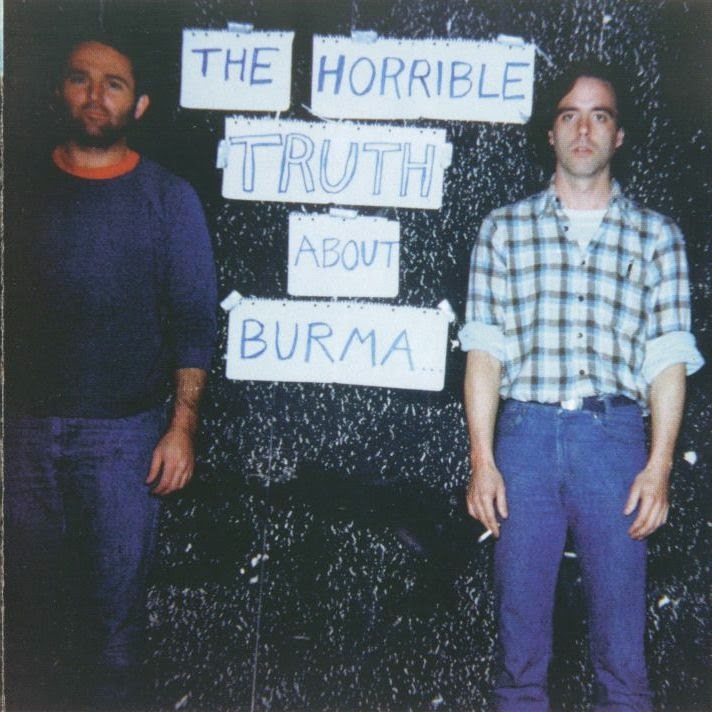
After releasing an explosive single ("Academy Fight Song," still one of punk rock's greatest songs) on Boston's then-hippest indie label, Ace of Hearts, Burma released two excellent records in just over a year: the Signals, Calls and Marches EP and their only full-length studio album, Vs. The former was poppier, but in a breathtakingly intense way; the latter dark and ominous, lacking in riff-heavy punch, but still delivering a wicked blast of aural chaos. Unbeknown to fans, this was the beginning of the end. The massive volume, a key element in Burma's sound, had taken its toll on the bandmembers, especially Miller, who developed a severe case of tinnitus that hastened the band's demise. (Always the trooper, Miller played the band's final tour wearing a protective headset used on shooting ranges to prevent his ears from absorbing more punishment.) After a bittersweet farewell tour in 1983, the shows were released as a live LP entitled The Horrible Truth About Burma, an occasionally thrilling example of their considerable stage prowess. Miller went on to a career as a solo artist with his non-touring band Birdsongs of the Mesozoic. Prescott formed the wonderful Volcano Suns, who released a half-dozen records all worth checking out, before starting Kustomized with ex-Bullet la Volta singer Yukki Gipe. Clint Conley produced the first Yo La Tengo record and then left the music business. He went on to work as a producer at Boston television station WCVB.

In 2002, Mission of Burma reunited and began playing reunion shows with Bob Weston of Shellac (and formerly Prescott's Volcano Suns bandmate) replacing Swope at the mixing board and tape manipulation. In an interview Miller relates that "when we approached Bob Weston to fill Martin's position, we told him he could use current digital technology which accomplishes Martin's antics in an easier fashion. However, Bob opted for maintaining the original integrity, and uses a tape deck." Weston began using a digital looping box from Electro-Harmonix in 2007 during live performances, but still uses actual tape loops in the studio. Weston regularly joins the band onstage during encores, playing bass while Conley plays second guitar.

A new album, ONoffON, was produced in 2004 by Bob Weston in conjunction with Rick Harte and the band, and released on Matador Records on May 4. The album finished 90th in the Village Voice Pazz & Jop critic's poll. They also released Snapshot, a live recording of the reunited lineup, through online digital channels. In September 2005, the band began recording their third studio album, tentatively titled (among other names) Aluminum Washcloth. Production duties this time were again handled by Bob Weston. Rechristened The Obliterati, the new album was released on Matador on May 23, 2006 and was named as the 33rd best record of 2006 by Pitchfork Media and placed 50th in the Pazz & Jop poll.

On March 18, 2008, Matador Records re-released remastered versions of Signals, Calls, and Marches, Vs., and The Horrible Truth About Burma. In a September 2008 interview with L.A. RECORD, Prescott explained that the sheer physical exertion involved in performing Mission of Burma songs meant that the band could only play together for a "couple more years at most." In March 2009 the band recorded 14 tracks for their fourth studio album entitled The Sound The Speed The Light, released October 6, 2009.  On January 23, 2012, Mission of Burma parted ways with Matador Records. The band's fifth album, Unsound was released on Fire Records on July 9, 2012, preceded by the single "Dust Devil"

xxxxx xxxxx xxxxx xxxxx xxxxx

One could argue that Mission of Burma's first 12" release, Signals, Calls and Marches, was the point where "indie rock" as a separate and distinct musical subgenre well and truly began. Mission of Burma's music had the brawn and the volume of hardcore punk, but with a lyrical intelligence and obvious musical sophistication that set them apart from the Southern California faster-and-louder brigade. Between Martin Swope's tape loops and Roger Miller's often tricky guitar lines, Mission of Burma may have seemed "arty" on the surface, but the bruising impact of "Outlaw" and "This Is Not a Photograph" made clear this band was not part of the skinny-tie "new wave" scene. And Mission of Burma were one of the first bands that gained a large enough following to attract the attention of major labels, but opted to remain on a small label of their own volition -- a move that would raise the "integrity" stakes for many acts in the years to come. Signals, Calls and Marches features Mission of Burma's best known song, the still-powerful "That's When I Reach for My Revolver," but it hasn't stood the test of time quite as well as the full-length album that would follow, Vs.; there are brief moments where the band still seems to be working out their obvious British influences, and "Outlaw" sounds stiffer than it needs to be. But Clint Conley and Roger Miller were already songwriters to be reckoned with, the band sounds passionate and powerful, and if Mission of Burma were not yet at the peak of their form, most bands blazing as many trails as this one did lost their footing a lot more often that Burma did on these six songs; Signals, Calls and Marches was as accomplished and impressive a debut as any American band would release in the 1980s. Rykodisc's 1997 CD reissue adds the band's fine first single, "Academy Fight Song" b/w "Max Ernst," as a bonus.


Mission Of Burma - Signals, Calls and Marches  (flac 179mb)

01 Academy Fight Song 3:10
02 Max Ernst 3:01
03 Devotion 3:42
04 Execution 2:22
05 That's When I Reach For My Revolver 3:54
06 Outlaw 2:35
07 Fame And Fortune 3:35
08 This Is Not A Photograph 1:57
09 Red 3:38
10 All World Cowboy Romance 5:12

xxxxx xxxxx xxxxx xxxxx xxxxx

The EP Signals, Calls and Marches suggested that Mission of Burma had the talent and vision to become one of America's great rock bands; the subsequent album Vs. proved beyond a doubt that the group had arrived and was fully realizing its potential. MOB's blend of punk rock fury and post-collegiate musical smarts had been honed to a razor-sharp point by the time Vs. was recorded, and they had fully worked through the British influences that occasionally surfaced on Signals, Calls and Marches, maturing into a band whose sound was as distinctive as anyone of its generation. Roger Miller's guitar work had gained greater depth and confidence in the year since Signals, the rhythm section of Clint Conley and Peter Prescott epitomized both strength and intelligence, and MOB were exploring trickier structures and more dramatic use of dynamics this time out; the subtle tension of "Trem Two" and the powerful midtempo angst of "Einstein's Day" were a genuine step forward in the group's development, while "The Ballad of Johnny Burma," "Fun World," and "That's How I Escaped My Certain Fate" made it clear that the band had lost none of its rib-cracking impact along the way. It's daunting to imagine just how far Mission of Burma could have taken its music had Roger Miller's hearing problems not caused the band to break up the following year, but regardless of lost potential, very few American bands from the 1980s released an album as ambitious or as powerful as Vs., and it still sounds like a classic. Rykodisc's remastered 1997 reissue sounds terrific and adds four solid bonus tracks.


Mission Of Burma - Vs  (flac 365mb)

01 Secrets 3:20
02 Train 3:28
03 Trem Two 4:06
04 New Nails 2:56
05 Dead Pool 4:04
06 Learn How 3:53
07 Mica 3:34
08 Weatherbox 3:25
09 The Ballad Of Johnny Burma 2:01
10 Einstein's Day 4:32
11 Fun World 3:39
12 That's How I Escaped My Certain Fate 2:00
13 Laugh The World Away 3:53
14 Forget 2:59
15 Progress 3:06
16 OK/No Way 1:57

xxxxx xxxxx xxxxx xxxxx xxxxx

Signals, Calls and Marches and Vs. proved that Mission of Burma were one of the best American bands to emerge in the wake of punk's first wave (and before the rise of indie rock), and no one who saw them live seems willing to dispute that they were a powerhouse on-stage. So no one could fault Mission of Burma for commemorating their final tour in 1983 with a live album, but the truth about The Horrible Truth About Burma is it simply isn't as strong as the studio recordings that preceded it; the performances are often superb, but the material on their final gesture lets them down. Mission of Burma chose to fill The Horrible Truth with songs that hadn't previously appeared on an album, which was a fine idea on paper, since the band wanted to preserve tunes that might otherwise be lost to the ages. But while there isn't a bad song to be found, the best original tunes are the ones that had already earned radio exposure in Boston as demos (in particular "Peking Spring" and "Dirt"), and while "Tremelo" and "Blackboard" were doubtless compelling performance pieces, as songs they don't scale the same heights as "That's When I Reach for My Revolver," "Einstein's Day" or "Fun World." (However, one wonders if Steve Albini was in attendance at the Chicago show where "Dumbells" was recorded, given its resemblance to his signature guitar style.) It seems significant that two of the strongest cuts are covers: a ferocious run-through of the Stooges' "1970," and a nearly nine-minute journey through "Heart of Darkness" by Pere Ubu. And while Mission of Burma are in strong, hard-hitting form throughout, they lack a bit of the fierce precision that made Vs. so memorable. The Horrible Truth About Burma is a fine souvenir for fans but not much of an intro for beginners; the home video release Live at the Bradford, shot at the band's final concert, does a superior job of capturing what made this group so compelling.


Mission of Burma - The Horrible Truth About Burma  (flac 356mb)

01 Tremelo
02 Peking Spring
03 Dumbells
04 New Disco
05 Dirt
06 Go Fun Burn Man
07 1970
08 Blackboard
09 He Is, She Is
10 Heart Of Darkness
Bonus
11 That's When I Reach For My Revolver
12 Weatherbox
13 Trem Two
14 Learn How

xxxxx xxxxx xxxxx xxxxx xxxxx

Apr 1, 2014

RhoDeo 1413 Roots

Hello,

Historically, the region of the Congo was a vast geographical area of equatorial Africa located in the tropical wet forest of Central Africa called Congolian forests. It also owes its name to the predominant ethnic group in the region, ruled by Kingdom of Kongo founded towards the end of the 14th century and extended from 1390 to 1914.

Although the span of rule of the kingdom varied, in its greatest extent, the Kingdom of Kongo reached from the Atlantic Ocean in the west to the Kwango River in the east, and from the Congo River in the north to the Kwanza River in the south. The kingdom largely existed from c. 1390 to 1891 as an independent state, and from 1891 to 1914 as a vassal state of the Kingdom of Portugal. The Congo River, its main river, flows through the region forming the Congo Basin.

Some groupings advocate a return to one Congolese homeland on the basis of the historical kingdom. Very notably, the Bundu dia Kongo movement advocates reviving the kingdom through secession from Angola, the Republic of the Congo, the Democratic Republic of the Congo, and Gabon. The nowadays geographic region spans across the Republic of the Congo (former French Congo), Democratic Republic of the Congo (former Zaïre/Belgian Congo), and the Angolan exclave of Cabinda (former Portuguese Congo) which lies (bizarly !) between the Republic and the Democratic Republic and produces lot's of oil. Ah yes big business making lots of money with Congolese resources.

Ok the coming weeks we're hearing about the music from this African jungle heart, it's a strange place for Westerners, life is cheap and emotions rise quickly. Religion and music deliver the much needed coherance  so for the coming 3 or 4 weeks we will present stars some of which have released many albums most of these never reached the Western public or even the great Discogs database. Today here 2 great old singers accompanied by top orchestra's .......N'joy

xxxxx xxxxx xxxxx xxxxx xxxxx

There's no doubt that Franco was, in every sense of the word, a big man in African music. Sometimes weighing in at 300 pounds, he also earned his nickname as "The Sorcerer of the Guitar," making it sing like no one before, with effortless, fluid lines. Also an accomplished composer and vocalist, Francois Luambo Makiadi remains a towering figure even in death, probably the greatest the Congo (later Zaire) has ever produced, and as the leader of the long-running O.K. Jazz group, he was one of the fathers of the modern Congolese sound.

Born in the rural village of Sona Bata, his family moved to the capital, Leopoldville, when he was still a baby. By the age of ten he was already the master of a homemade guitar in the Belgian colony. Within a few years he was exposed to both European music, from missionaries, and the Cuban sounds that began to spread like wildfire on the radio. He made his recording debut at 15 as part of the house band for the Loningisa label, where bandleader Henri Bowane dubbed him Franco, a name that would stick with him for the rest of his life. Although he was getting plenty of studio work he also formed a band, which debuted in 1955 at the OK Bar, whose name he took a year later, calling the band O.K. Jazz. Within a year they were challenging the established stars, Dr. Nico's African Jazz, as the Congo's top group. Like many musical heroes before and since, Franco had his brushes with authority throughout his career, and the first came in 1958 when he was jailed for a motoring offense; he was released to waiting crowds, who hailed him back.

In 1960 the Congo gained independence, and in the ensuing unstable political climate, Franco and O.K. Jazz, with its constantly changing personnel, headed off to Belgium to record. By 1965, with President Mobutu in power, things became better, and the band was without doubt the top name in the country, playing the Festival of African Arts in the newly-renamed capital, Kinshasa, the following year. Franco, as well as being a bandleader, guitarist, singer, and writer, proved to be a more than adept businessman, forming an empire to control his music, from the record company to spin-off bands (at one point he had two versions of O.K. Jazz -- a European one and a Zairean one). He didn't shy away from political issues on his songs, which resulted in his spending a few nights in jail several times when he displeased the authorities.

Throughout the '60s and '70s, Franco and his band toured and recorded constantly, although they never managed to crack America; a brief 1983 jaunt there didn't work out as hoped. In 1980, Franco was named a Grand Maitre, a huge Zairean honor, and thus became firmly entrenched as part of the ruling clique in a country that was undergoing massive economic problems. His writing style changed dramatically, switching to patriotic praise songs and tributes to rich fans -- a 180 degree turn from the younger man he had once been. He'd ballooned up in weight in his more mature years as well, although on-stage and in the studio he could still be an incandescent player and singer.

By 1987, rumors were circulating that Franco was sick, and certainly he was much slimmer. There was, perhaps, a hint in his solo recording from that year "Attention Na SIDA" ("Beware of AIDS") -- and the disease would kill him in 1989, sparking four days of national mourning in Zaire befitting a musical genius and one of the country's icons for over three decades. But he left a big legacy. Not only did he record hundreds of albums, where he and the band stretched out their material, but in O.K. Jazz he offered a launching pad for many artists, including Sam Mangwana, Papa Noel, Mose Fan Fan, and a host more. Ultimately, though, he had the vision to push the music forward, to have bands that could really play and develop the rumba style, and cope with it when it speeded up into soukous during the late '70s. And he was justifiably revered as a guitar god, even if he never became fully known in the West.

xxxxx xxxxx xxxxx xxxxx xxxxx


Franco Et Le T.P.O.K. Jazz - Le Grand Maitre (flac  490mb)

01 Mario (Non Stop) 5:34
02 Les On Dit 7:55
03 Tala Merci Bapesaka Na Mbua 11:00
04 La Bralima Est La Brasserie De L'an 2000 9:16
05 Nalobi Na Ngai Rien 8:17
06 C'est Dur La Vie D'une Femme Celibataire 8:54
07 Eperduement Te 12:10
08 Flora, Une Femme Difficile 10:21

xxxxx xxxxx xxxxx xxxxx xxxxx

The second and final volume of Franco & TPOK Jazz's retrospective is a fine document of their work during the 1980s. The late guitarist, singer, composer and bandleader François Luambo Makiadi—best known simply as Franco—remains an epic figure in African popular music. Referred to as Congo Colossus by his biographer Graeme Ewens, Franco ruled his nation’s music at a time when Congolese music ruled sub-Saharan Africa. During the heyday of Congolese rumba and soukous, many considered Congolese musicians to be Africa’s most sophisticated and professional; their reputation was due, in part, to the enormous size of the country (renamed Zaire during the regime of Mobutu Sese Seko and now the Democratic Republic of the Congo), as well as its prolific recording industry. The swirling, layered sound of numerous intertwining guitar lines known as sebene was especially innovative and influential. Franco and TPOK Jazz (Le Tout Pouissant Orchestre Kinshasa Jazz, or The All Powerful Kinshasa Jazz Orchestra) released a staggering amount of recordings: the liner notes to Francophonic estimate 1,250 releases. In short, Franco and TPOK Jazz were at the epicenter of a musical shockwave that swept Africa and continues to make waves two decades later.

Recordings like Francophonic provide a musical soundtrack to the dawn and early days of African national independence, and careful listeners can hear the gradual acceleration of influences and hybridization between disparate musical regions: African, Caribbean (“rumba”), and American (“jazz”) elements become so integrated and layered that it becomes nearly impossible to distinguish modern from traditional, or local from cosmopolitan. Welcome to music in the late 20th century. Franco’s most memorable contribution was as a bandleader, not necessarily as a virtuosic instrumentalist, nor as an especially creative songwriter. Like many bandleaders, part of Franco’s mystique lies in the ways his personal history and charisma intertwined with his music. The liner notes to Francophonic Vol. 2 by Ken Braun (provided in both English and French) do an admirable job of sketching historical and political contexts for Franco’s life and career in a sensitive, nuanced way—including some especially insightful, albeit brief, comments on Franco’s lyrics and wordplay.

There is no way for Francophonic to be representative of the vast body of recordings by Franco & TPOK Jazz, but the thirteen selections in Vol. 2 manage to cover a lot of ground over two and a half hours. The tracks are fairly long, averaging nearly 12 minutes in length, and they convey an important aspect of the band’s irresistible appeal: grooves that seem like they can go on forever without ever losing a dynamic forward motion. A mellow duet with Tabu Ley Rochereau named "Suite Lettre No. 1" opens the second disc with a beautiful example of OK Jazz’s long, close-harmony vocal lines—a signature part of their sound that can be heard throughout both volumes of Francophonic. Most often, though, the singers layer their disarmingly pretty sound on heavier, more dance-friendly grooves like "Nostalgie" and "Coopération," collaborations featuring Sam Mangwana in which Franco’s voice—relatively rough in its timbre and intonation—provides a contrasting texture.

And that is one of the most seductive, enduring aspects of Franco & TPOK Jazz: their music is filled to the brim with elegant contrasts. The sounds, the tunes and the arrangements are simultaneously dense and sparse, pretty and rough, complex and simple, sentimental and relentless, serious and light. The way these contrasts are made seamless is one of the things that make the sound of Franco & TPOK Jazz such a deep well for fans and musicians and an essential part of a golden age for Congolese music. Just as crucial as the first Francophonic compilation, Vol. 2 should not be overlooked.


Franco and; Le TPOK Jazz  ‎–  Francophonic Vol. 2 - I (flac  528mb)

01 Tokoma Ba Camarade Pamba 11:26
02 Bina Na Ngai Na Respect 17:28
03 Sandoka 12:53
04 Princesse Kikou 14:08
05 Nostalgie 10:00
06 Coopération 12:09

xxxxx


Franco and Le TPOK Jazz  ‎–  Francophonic Vol. 2 - II (flac  491mb)

01 Suite Lettre No. 1 10:17
02 Missile 7:33
03 Pesa Position Na Yo 9:22
04 Kimpa Kisangameni 10:07
05 Mario 13:36
06 Testament Ya Bowule 11:09
07 Sadou 8:17

xxxxx xxxxx xxxxx xxxxx xxxxx