Feb 19, 2014

RhoDeo 1407 Aetix

Hello, it's the westcoast coming up, Paisley Underground is an early genre of alternative rock, based primarily in Los Angeles, California, which was at its most popular in the mid-1980s. Paisley Underground bands incorporated psychedelia, rich vocal harmonies and guitar interplay in a folk rock style that owed a particular debt to The Byrds, but more generally referenced the whole range of 1960s West Coast pop and garage rock. The term "Paisley Underground" originated in late 1982, with a comment made by Michael Quercio of the band The Three O'Clock, during an interview with the LA Weekly alternative newspaper.

Paisley Underground bands frequently shared bills, socialized and collaborated. Members of Rain Parade, The Bangles, The Dream Syndicate and The Three O'Clock joined together to form Rainy Day, releasing an eponymous album of cover versions of songs by The Velvet Underground, Buffalo Springfield, Bob Dylan, The Beach Boys, Big Star, Jimi Hendrix, and The Who. As "Danny and Dusty," Steve Wynn of The Dream Syndicate and Dan Stuart of Green on Red made the album The Lost Weekend (A&M, 1985) backed by members of each band along with most of The Long Ryders. Clay Allison was an offshoot band composed of David Roback and Will Glenn (Rain Parade), Kendra Smith (The Dream Syndicate), Sylvia Juncosa (Leaving Trains) and Keith Mitchell (Monitor).


Todays band was associated with the Paisley Underground music movement; of the bands in that movement, according to the Los Angeles Times, it "rocked with the highest degree of unbridled passion and conviction". Though never commercially successful it met with considerable acclaim, especially for the songwriting and guitarplaying.  . . ....N'Joy

xxxxx xxxxx xxxxx xxxxx xxxxx

While attending the University of California, Davis, Steve Wynn and Kendra Smith played together (with future True West members Russ Tolman and Gavin Blair) in a band called the Suspects, the first 'New-Wave'-influenced band in the Davis music scene. After he moved back to Los Angeles, Wynn recorded a single called "15 Minutes" as his intended farewell to music. But while rehearsing in a band called Goat Deity (with future Wednesday Week sisters Kelly and Kristi Callan), Wynn met Karl Precoda, who had answered an ad for a bass player, and the two joined to form a new group, with Precoda switching to guitar. Smith came to play bass and brought in drummer Dennis Duck (Mehaffey), who had played in the locally successful Pasadena-based band Human Hands. Duck suggested the name "The Dream Syndicate" in reference to Tony Conrad's early 1960s New York experimental ensemble (better known as the Theater of Eternal Music), whose members included John Cale.

Dream Syndicate are at the foundation of contemporary alternative music simply because at the time when most bands were experimenting with new technology, the Syndicate deigned to bring back the guitar. Fronted by Steve Wynn (b. Feb. 21, 1960) and including Karl Precoda (guitar), Dennis Duck (drums), and Kendra Smith (bass), the band formed in Los Angeles after Smith and Wynn had relocated there from Davis, CA. They debuted with a self-titled, unbelievably Velvet Underground-like EP on Wynn's own Down There label. It was shortly off to Ruby/Slash for Days of Wine and Roses, the most lauded record on the college charts that year. The record has been cited as influential from artists as diverse as Kurt Cobain to the Black Crowes' Chris Robinson. Live, they had developed into an assaultive guitar band prone to jamming, which helped earn them the tag as leaders of L.A.'s paisley underground movement.

The band was signed to Slash Records, whose subsidiary Ruby Records released its debut and by far best-known album, The Days of Wine and Roses, in 1982. The next year saw the UK (Rough Trade Records) release of the album's lead track, "Tell Me When It's Over," as the A-side of an EP which also included a live cover of Neil Young's "Mr. Soul." Days of Wine and Roses "sent shockwaves through the American underground in the early 1980s", but MTV favored a different kind of music. Kendra Smith left the band and joined David Roback, formerly of the band Rain Parade, to form Opal. She was replaced in the Dream Syndicate by David Provost.

The Medicine Show was recorded in 1984 in San Francisco with producer Sandy Pearlman. It was met with mixed response by the college crowd. By this time, Smith had left the band and was replaced by Dave Provost on bass and Tom Zvoncheck on keyboards. Wynn took his cues from Neil Young & Crazy Horse on the record rather than Lou Reed (who was considered a preferable source at the time), and the rootsier sound caused a backlash with the fan base. The commercial failure of the album had contributed towards the group's temporary breakup. They opened tours for R.E.M. and U2 and released the 5-song EP This Is Not the New Dream Syndicate Album - Live (1984), the last record to feature Karl Precoda on guitar (who soon after left to pursue a career in screenwriting) and the first appearance of bassist Mark Walton. The band left A&M after the label rejected its demo for "Slide Away", later released on the semi-official It's Too Late to Stop Now.

In 1985, Wynn and Dan Stuart of Green on Red wrote 10 songs together which were recorded with Dennis Duck, among others, and released by A&M as Danny and Dusty: The Lost Weekend.

After a brief hiatus and, in the words of one reviewer, having taken "a trip through the major-label meat grinder", Wynn, Duck and Walton joined with Paul B. Cutler, who had produced the group's first EP and played guitar in the proto-Goth 45 Grave, to form the final version of The Dream Syndicate. They recorded two more studio albums, Out of the Grey (1986), produced by Cutler, and Ghost Stories (1988), produced by Elliot Mazer. A live album, Live at Raji's, was recorded in 1988 (also by Mazer) before Ghost Stories but released afterward. The band ceased to exist in 1989.

Posthumous releases include 3½; The Lost Tapes 1985–1988, a collection of unreleased studio sessions, and The Day Before Wine and Roses, a live radio performance recorded just prior to the release of the band's first album. Wynn has since recorded albums as a leader and with Gutterball (featuring the House of Freaks and Silo Bob Rupe) and is continuously collaborating with other musicians. His 1996 solo record had him backed by the Boston band Come. Smith went on to work in Opal with David Roback, a prototype version of his Mazzy Star, and has since recorded solo albums as well.

After a long hiatus from music, Karl Precoda reappeared in 1997 fronting the Last Days of May, a neo-psychedelic instrumental trio. Duck continued to work with Wynn as a touring drummer and bassist Mark Walton played with the Continental Drifters. A documentary of Dream Syndicate's last tour, Weathered and Torn, has been released on DVD. The reformed band (Wynn, Walton, Duck and Jason Victor, Wynn's longtime lead guitarist in the Miracle 3) played again on September 21, 2012, at Festival BAM, in Barcelona[6] and has continued with further limited performances in 2012 and 2013.[
In December 2013, The Dream Syndicate played two nights with three other reunited Paisley Underground bands — The Bangles, The Three O'Clock, and Rain Parade — at The Fillmore in San Francisco (Dec. 5) and The Fonda Theatre in Los Angeles (Dec. 6 benefit concert).

xxxxx xxxxx xxxxx xxxxx xxxxx

On the one hand, where the Dream Syndicate came from was so obvious that it almost hurt. The Velvet Underground was a clear touchstone (if not quite the original LaMonte Young ensemble the band name referred to), as were the Doors, the Byrds, and any number of blues and country traditions and more. Had they been around in the late '60s, one might have wondered whether they would have garnered much attention in comparison. But the early '80s was the band's time and place, and their fusions of all the above and more via punk-inspired energy achieved its own level of deserved attention. Capturing the original killer Wynn/Precoda/Smith/Duck lineup performing with inspiration throughout, The Days of Wine and Roses trumps the "paisley underground" tag the band was saddled with by being a great rock record, full on. While Wynn received the lion's share of attention thanks to his ghost-of-Lou Reed vocals and frontman status, arguably it's Precoda who is the real reason to listen in. Both his rave-ups and gentler shadings are phenomenal, as a random listen of songs like "Definitely Clean" and the sweet, Smith-sung "Too Little, Too Late" show. The Smith/Duck rhythm section grooves along fairly enough, at its best on the Krautrock-inspired chug of Precoda's composition "Halloween." Highlights include the romping "Then She Remembers," with a much more direct Wynn vocal that makes for good in-your-face fun, and the mid-tempo moodout of "When You Smile," Precoda's screeching feedback playing around the mix's edges. Concluding with the epochal title track, which builds to a frenetic climax not once but twice, The Days of Wine and Roses is a grand treat.


The Dream Syndicate - The Days Of Wine And Roses  (flac 408mb)

01 Tell Me When It's Over 3:32
02 Definitely Clean 3:30
03 That's What You Always Say 3:13
04 Then She Remembers 4:07
05 Halloween 6:10
06 When You Smile 4:15
07 Until Lately 6:50
08 Too Little, Too Late (Voc.Kendra Smith) 3:27
09 The Days Of Wine And Roses 7:34
Bonus Tracks
10 Sure Thing (Down There EP Version) 4:02
11 That's What You Always Say (Down There EP Version) 4:22
12 When You Smile (Down There EP Version) 3:10
13 Some Kinda Itch (Down There EP Version) 5:32
14 Too Little, Too Late (Rehearsal Version) 3:40
15 Definitely Clean (Rehearsal Version) 3:36
16 That's What You Always Say (15 Minutes) 3:57
17 Last Chance For You (15 Minutes) 2:39
 
xxxxx xxxxx xxxxx xxxxx xxxxx

In 1982, the Dream Syndicate seemed to come out of nowhere (actually Davis, CA, but close enough) to become the most talked about band in underground rock with their debut album The Days of Wine and Roses, recorded for the tiny but prestigious Ruby Records label when the group was all of nine months old. After waves of positive press, A&M Records signed the Dream Syndicate and they went into the studio with producer Sandy Pearlman, who spent five months in the studio guiding the band through their second LP. Given their sudden rise to success, the Dream Syndicate probably would have dealt with a certain amount of critical backlash no matter how their sophomore effort turned out, but Medicine Show was greeted with openly hostile reviews, largely because it sounded practically nothing like the album that sent tongues wagging two years earlier. Where The Days of Wine and Roses was a raw but passionate fusion of Highway 61-era Bob Dylan and the Velvet Underground at their most primal, Medicine Show sounded big and polished, but also dusty and weathered, with the terse, nose-thumbing lyrics of the debut replaced with dark, complex narratives full of bad luck and bad blood backed with booming drums and roaring guitars that were significantly more rockist than what Steve Wynn and Karl Precoda brought to their earlier recordings. Viewed in the context of Wynn's career, Medicine Show marks the spot where the lyrical themes and musical approach of his later work would first come into focus, but it still doesn't bear much resemblance to what the Dream Syndicate would create on their subsequent albums in its grand, doomy tone and obsessive but curiously unobtrusive production style. Medicine Show isn't a grand failure as its initial detractors claimed, but it isn't the triumph some revisionist fans imagine it to be, either; there are a few great songs scattered throughout (especially "Merrittville" and "Armed with an Empty Gun"), and once it works its way in, the 8:48 of "John Coltrane Stereo Blues" is as potent a guitar workout as anything this band would ever release. But in most respects, this finds Wynn and his bandmates reaching for something they couldn't quite grasp, and Tom Zvoncheck's keyboards, for all their drama, never really find their way into the music. Lots of bands let loose with a major-label budget for the first time have made lavish records that didn't quite work, but unlike most of them, Medicine Show doesn't sound like a grandiose waste of money. Instead, it's a widescreen guitar spectacle with the soul of a Jim Thompson paperback, and if it doesn't always work, enough of it does to make it worthy of serious reappraisal.


When "Tell Me When It's Over" begins with a solo piano fanfare that lasts close to a minute-and-a-half, you know you're not dealing with an ordinary, live Dream Syndicate recording, and this longish EP, featuring five tunes from a July 1984 concert in Chicago, captured the band in a transitional period. The Dream Syndicate were touring in support of the album Medicine Show, and the performances reflect the dark but spacious mood of those sessions; Tom Zvoncheck, who played piano and organ on the album, tagged along for the tour and his contributions take up a lot of space in the arrangements of what had always been a guitar band, and hearing this edition of the group make their way through "Tell Me When It's Over" (the only song that didn't originate on Medicine Show) shows just how far they'd traveled stylistically in the three years they'd been together. Compared to The Day of Wine and Roses (a live album that documents a show The Dream Syndicate played the week their debut album was released), This Is Not the New Dream Syndicate Album sounds remarkably bigger, tighter, and more confident, but the guitar interplay between Steve Wynn and Karl Precoda lacks the tense spark that marked their best work, and while the band seems more comfortable with the Medicine Show songs than they did in the studio, they also seem to be searching for ways to make them sound as dark and wired as they did on plastic (and Wynn seems to have responded by having a few cocktails). After this tour was over, Precoda would leave The Dream Syndicate, A&M would part ways with the group, and Paul Cutler's guitar work would take the band in a different aural direction for their next album, Out of the Grey; This Is Not the New Dream Syndicate Album … Live catches them near the end of one road, and while they don't seem to be lost, they do seem ready to take the next exit.


The Dream Syndicate - Medicine Show  (flac 526mb)

01 Still Holding On To You 3:40
02 Daddy's Girl 3:02
03 Burn 5:33
04 Armed With An Empty Gun 3:56
05 Bullet With My Name On It 6:20
06 The Medicine Show 6:29
07 John Coltrane Stereo Blues 8:47
08 Merrittville 7:20

Bonus (This is not the New Dream Syndicate Live Mini)
09 Tell Me When It's Over (Live) 5:18
10 Bullet With My Name On It (Live) 6:02
11 Armed With An Empty Gun (Live) 4:21
12 The Medicine Show (Live) 7:09
13 John Coltrane Stereo Blues (Live) 9:03

xxxxx xxxxx xxxxx xxxxx xxxxx

Like nearly everything released that year, Out of the Grey suffered from a touch of the post-new wave flu. But "50 in a 25 Zone" has that old, bluesy Syndicate spirit, as does "Now I Ride Alone," and Steve Wynn is still an exceptional vocal stylist, bringing heart and meaning to every word he writes. Out of the Grey was released in 1986 as the first studio album after the band was dropped from A&M Records due to disappointing sales after the release of the 1984 album This Is Not the New Dream Syndicate Album......Live!. The band pondered its future and even retired temporarily, while lead singer and songwriter Steve Wynn made a record with Dan Stuart (as "Danny & Dusty").The duo's album, Lost Weekend (1985), was produced by Paul B. Cutler, who has also produced The Dream Syndicate's eponymous first EP (1982). Jamming with Cutler, a guitar player, rekindled the desire in Wynn to bring the The Dream Syndicate together again. The band reformed after some personnel changes, most notably the replacement of lead guitarist Karl Precoda by Cutler The band's sound changed also, to a "considerably more aggressive, but simultaneously country-inflected outlook." The "more mainstream" sound, however, did not lead to commercial success.

The response to the album from fans and critics was positive, and after its release the band toured Europe before going on its first American tour in two years. Right after the release of the record, when the band seemed to be "back on track", the label, Big Time Records, folded, to the band's detriment—it went back into inactivity and Wynn played acoustic solo dates for a while.


The Dream Syndicate - Out Of The Grey ( flac 454mb)

01 Out Of The Grey 4:51
02 Forest For The Trees 4:38
03 50 In A 25 Zone 4:44
04 Boston 5:32
05 Blood Money 4:31
06 Slide Away 3:33
07 Dying Embers 4:57
08 Now I Ride Alone 4:32
09 Drinking Problem 3:32
10 Dancing Blind 4:47
11 You Can't Forget 2:47
Bonus Tracks
12 Let It Rain 3:57
13 Cinnamon Girl 3:02
14 Ballad Of Dwight Frye 5:43
15 Shake Your Hips 0:53
16 I Won't Forget 2:34
17 The Lonely Bull 1:58

xxxxx xxxxx xxxxx xxxxx xxxxx

Feb 18, 2014

RhoDeo 1407 Roots

Hello,

There can be few artists who have produced as many good albums throughout the late 70's, 80's and 90's as today's artist, whether with Juluka or later with Savauka. He is one of the best writers and performers of the last 20 years in any popular music form. ....N'joy

xxxxx xxxxx xxxxx xxxxx xxxxx

Johnny Clegg, born in Rochdale, England 7 June 1953 was raised in his mother's native land of Zimbabwe before emigrating to South Africa at the age of nine. By the age of 10 he had fallen in love with African, and in particular, Zulu, music. His first memories of Zulu music are of hearing street performer Mntonanazo, who performed frequently in his neighbourhood. At the age of 14, Johnny began to learn to play the guitar. Through his interest he met Charlie Mzila, a Zulu flat cleaner who played street music near Clegg's home. For two years Johnny learned the fundamentals of Zulu music and traditional Zulu Inhlangwini dancing with Charlie. Equipped with his guitar, Johnny accompanied Mzila to all the migrant labor haunts; from hostels to rooftop bars.

Later, while reading social anthropology at Wits University, Clegg formed a friendship with a migrant worker and musician named Sipho Mchunu (b. 1951, Kranskop, Natal, South Africa), and in 1972 the two began performing together as Johnny And Sipho, forming their first band, the sextet Juluka (Zulu for ‘sweat’) in 1976. They quickly developed an innovative fusion of fierce mbaqanga rhythms and universally appealing pop melodies. While most Africans responded with great enthusiasm to the sight of a white man immersing himself in Zulu music, the reaction of white South Africans was by and large hostile, and Juluka were engaged in a running battle with the authorities. They suffered from racist abuse, threats of violence and then an extreme shortage of available venues in a country where multi-racial gatherings were, to all practical purposes, forbidden.

Overcoming all these obstacles, the band scored their first hit with the single ‘Woza Friday’ in 1978, by which time they had built up a national following through their formidably powerful live appearances, which included wholly convincing displays of traditional Zulu indlamu (foot stamping) dancing by Clegg. They also succeeded in persuading the authorities to allow them to tour overseas, and in the early 80s performed in the UK, Europe and the USA, where their 1982 album Scatterlings, was released in 1984. During their lifetime, the group recorded seven albums, including the acclaimed debut Universal Men, a musical journey through the life of a Zulu migrant worker, before breaking up in 1985, following Mchunu’s decision to leave Johannesburg and the music business and return to the bush to run his family’s small cattle farm (1985 also brought a European Top 40 hit with ‘Scatterlings Of Africa’).

In 1986 Clegg re-emerged fronting a new group, Savuka (‘We Have Arisen’), which continued in the direction set out by Juluka and, in the increasingly liberal political climate of South Africa in the late 80s, found it much easier to tour both there and overseas. Clegg’s solo career had been launched in 1985 with Third World Child, but it was an album of the same name recorded by Savuka which became an international success, selling over a million copies. A sold out tour of France followed, before stints in the USA and Canada. In the process he became one of the first African stars to appear on The Johnny Carson Show. The 1989 recording Cruel, Crazy Beautiful World saw Clegg upgrade the band’s sound in a modern Los Angeles studio, though his lyrical concerns about South Africa, brilliantly extolled in ‘Woman Be My Country’ and the title track, remained undiluted.

Clegg recorded one further album with Savuka, 1993’s Heat, Dust And Dreams, which was informed by the ending of the apartheid system in South Africa and the assassination of former band member Dudu. Briefly reunited with Mchunu in the mid-1990s, Clegg reformed Juluka and toured throughout the world including a tour of the USA in 1996, on which King Sunny Ade was the opening act.

Clegg and his band often make an international tour during May–August (South African winter). However, the tours are usually limited to France and surrounding countries. In June 2004, Johnny Clegg toured North America for the first time in over eight years, doing 22 concerts in one month. Even though they had no albums for sale in North America during those eight years, and no significant media coverage, they filled most of their venues.

Clegg returned to North America with his band in July 2005, with dates booked throughout the U.S. and Canada. His new album One Life was remixed at Real World Studios in Bath, England, and released on October 30, 2006 in the UK. Clegg and Band toured Europe and North America in 2011 to a combined audience of 35,000. He has also announced that he will play in Western Sahara city of Dakhla, which has caused a campaign of rejection, as that concert is considered as a support for Moroccan occupation of Western Sahara. Clegg toured North America in 2012 and one venue in France to a combined audience of 70,000. In 2013 Clegg continues to tour with a stripped-down, storytelling version of his concerts. Johnny Clegg told Eyewitness News that he's developing a musical based on his life story and an autobiography is in the pipeline.

xxxxx xxxxx xxxxx xxxxx xxxxx

Third World Child is studio album by South African artist Johnny Clegg and his band Savuka, released in 1987 and produced by Hilton Rosenthal.Incorporating both Zulu and English lyrics, as well as political songs, it was the album which led Clegg to international fame. All songs were written by Johnny Clegg, except for Giyani in collaboration with V. Mavusa.

The song "Great Heart" was covered by Jimmy Buffett a year after its release for his album Hot Water.
"Asimbonanga (Mandela)" is an anthem already adopted by Joan Baez and others, while the title tune devastatingly discusses what it's like to be asked to "walk in the dreams of the foreigner."


Johnny Clegg and Savuka - Third World Child (flac  253mb)

01 Are You Ready? 4:03
02 Asimbonanga (Mandela) 4:51
03 Giyana 4:33
04 Scatterlings Of Africa 3:52
05 Great Heart 4:24
06 Missing 4:21
07 Ring On Her Finger 4:08
08 Third World Child 4:16
09 Berlin Wall 4:28
10 Don't Walk Away 4:24

xxxxx xxxxx xxxxx xxxxx xxxxx

A nice album of pieces, with almost lilting vocals coming from lead singer Johnny Clegg, from time to time almost reminiscent of some mixture of Dylan and Springsteen. The guitar work seems slightly influenced by reggae, which wouldn't be too surprising given the half-South African membership of the group. Heat, Dust And Dreams released in 1993, produced by Hilton Rosenthal, co-produced by Bobby Summerfield, received a 1993 Grammy Award nomination for Best World Music Album.

The album would be the final work of the band Savuka. It was made in honor of member Dudu Zulu, who had been assassinated in the last years of the apartheid. Most songs of album are heavily influenced by the end of this dark period of South African history. "These Days", "When the System has Fallen", "In My African Dream" and "Your Time Will Come" all express hope for the future, while songs like "The Promise" and "Foreign Nights" talk of the problems people still have to face. It is the only Savuka album to receive the same degree of critical acclaim as the Juluka albums such as Universal Men, African Litany, Work for All and Scatterlings. With Clegg's blessing, "The Crossing (Osiyeza)" was covered for the 2009 film Invictus.


Johnny Clegg and Savuka - Heat, Dust and Dreams (flac 347mb)

01 These Days 4:55
02 The Crossing (Osiyeza) 4:56
03 I Can Never Be (What You Want Me To Be) 4:00
04 When The System Has Fallen 4:46
05 Tough Enough 5:11
06 The Promise 4:38
07 Inevitable Consequence Of Progress 4:44
08 In My African Dream 4:33
09 Emotional Allegiance (Stand By Me) 4:23
10 Foreign Nights (Working Dog In Babylon) 4:00
11 Your Time Will Come 4:44
 
xxxxx xxxxx xxxxx xxxxx xxxxx

There can be few artists who have produced as many good albums throughout the late 70's, 80's and 90's as Johnny Clegg, whether as Juluka or in his later incarnation as Savauka. This anthology includes some of the best from both bands. Great tracks like Impi which combine a wonderful chorus with gripping factual story line about the defeat of a British Regiment by the Zulu army in 1881. It also has one of the truly great tracks of all time "Scatterlings of Africa". If not his manifesto (which was established long before his international fame), it makes his point, the mixing of rock and Zulu music, quite succinctly and wonderfully -- and he was doing it long before it became fashionable (indeed, while it was illegal under South Africa's apartheid laws). You can't say this is a perfect best-of, by any means, but it does include the lovely "Take My Heart Away" and "Great Heart," which would later be covered by Jimmy Buffett. The a cappella version of "Dela" highlights the gorgeous harmonies in a manner similar to Ladysmith Black Mambazo, while "Asimbonanga (Mandela)" is a tribute to the man who would be South Africa's new leader, and a real hero. So, with seminal Clegg material like "Waza Friday" and "Impi," it's  a very decent collection. Johnny Clegg & Savuka were always about more than the music, however; they put it together politically, too, a huge act of defiance that was reflected in the lyrics and sound. As the man said, think and dance.


Johnny Clegg , Juluka and Savuka - Anthology   (flac  520mb)

Johnny Clegg & Juluka
01 Universal Men 4:51
02 Impi 4:47
03 High Country 4:33
04 Woza Friday 4:07
05 Scatterlings of Africa 5:37
06 Bullets for Bafazane 3:57
07 Nans' Impi 3:23
08 Kilimanjaro 3:42

Johnny Clegg & Savuka
09 Orphans of the Empire 5:21
10 Great Heart 4:23
11 Take My Heart Away 4:16
12 Dela 4:26
13 Cruel, Crazy, Beautiful World 4:27
14 The Crossing 4:58
15 Africa (What Made You So Strong) 3:37
16 Asimbonanga (live) 4:43
17 Hambile/The Dance (live) 5:55

xxxxx xxxxx xxxxx xxxxx xxxxx

Feb 17, 2014

RhoDeo 1407 Ring 6

Hello, well i got 5 different external harddisks and i know now that they all have invented the wheel in their own way, go figure ! They didnt recognise the usefullness the standardized USB port brought us all...Nooo we will create our own way to connect to USB, we are unique and our customers need to see us in that light. That is, we solve a data interface not in a functional way but in a purely design/aesthetic way where form is more important than function. Yes beyond bizar isn't it, that purely technical datatransfer-reliability has to suffer from absurdities like 'our' version of the wheel, and thus all the unreliabilities that go with that..duh


In 1981, the BBC again tackled "The Lord of the Rings", this time in a serial of twenty six 30-minute episodes.  This production was not a condensed version, although it does leave out a number of events. Still, it is about as faithful to the book as one could reasonably expect. The characterizations are excellent and music is very nicely done. The 26-part series was subsequently edited into 13 hour-long episodes broadcast from 17 July to 9 October 1982, restoring some dialogue originally cut for timing (since each hour-long episode is actually around 57 minutes, as opposed to 54 minutes for two half-hour episodes with overlaps and extra credits removed), rearranging some scenes for dramatic impact and adding linking narration and music cues. .  NJoy

  xxxxx xxxxx xxxxx xxxxx xxxxx

In 1981 the UK radio station BBC Radio 4 broadcast a dramatization of J. R. R. Tolkien's The Lord of the Rings in 26 half-hour stereo installments. The radio series follows the plot of the original novel (revised 1951 version) very closely, except for the addition of The Tale Bearer, a narrator whose account of the story is often interrupted and embellished by the protagonist Bilbo Baggins in the role of secondary narrator. The 1981 trilogy was adapted for radio by Brian Sibley and Michael Bakewell.  It was directed by Jane Morgan and Penny Leicester.  It is voiced by some very fine British actors including Ian Holm as Frodo, Michael Hordon as Gandalf and Peter Woodthorpe as Gollum among others.

 The 26-part series was subsequently edited into 13 hour-long episodes broadcast from 17 July to 9 October 1982, restoring some dialogue originally cut for timing (since each hour-long episode is actually around 57 minutes, as opposed to 54 minutes for two half-hour episodes with overlaps and extra credits removed), rearranging some scenes for dramatic impact and adding linking narration and music cues.

 The re-edited version was released on both cassette tape and CD sets which also included the soundtrack album (noticeably taken from a vinyl copy). Incidentally, episode 8 of the series, The Voice of Saruman was labelled as The Voice of Sauron on the cassette & CD box sets.

 Cast and credits

 Narrator: Gerard Murphy
 Frodo Baggins: Ian Holm
 Gandalf the Grey/Gandalf the White: Michael Hordern
 Aragorn (Strider): Robert Stephens
 Sam Gamgee: Bill Nighy
 Meriadoc Brandybuck (Merry): Richard O'Callaghan
 Peregrin Took (Pippin): John McAndrew
 Legolas: David Collings
 Gimli: Douglas Livingstone
 Boromir: Michael Graham Cox
 Galadriel: Marian Diamond
 Celeborn: Simon Cadell
 Arwen Evenstar: Sonia Fraser
 Saruman the White: Peter Howell
 Elrond: Hugh Dickson
 Bilbo Baggins: John Le Mesurier
 Gollum/Sméagol: Peter Woodthorpe

 Dramatisation: Brian Sibley and Michael Bakewell
 Music: Stephen Oliver
 Radiophonic sound: Elizabeth Parker
 Produced and directed by Jane Morgan and Penny Leicester

 xxxxx xxxxx xxxxx xxxxx xxxxx


Lord Of The Rings 06 - The Breaking Of The Fellowship (65mb)

6-01 Breaking of the Fellowship 5:30
6-02 Boromir's Final Journey 16:09
6-03 Treebeard 19:15
6-04 Pity and the Precious 6:24
6-05 Smeagol's Promise 3:08
6-06 Gandalf the White 6:09

xxxxx xxxxx xxxxx xxxxx xxxxx
previously

Lord Of The Rings 01 - The Shadow Of The Past (56 min 65mb)
Lord Of The Rings 02 - The Black Riders (56 min 65mb)
Lord Of The Rings 03 - The Knife In The Dark (57 min 65mb)
Lord Of The Rings 04 - The Ring Goes South (55 min 63mb)
Lord Of The Rings 05 - The Mirror Of Galadriel (55 min 64mb)

xxxxx xxxxx xxxxx xxxxx xxxxx

Feb 16, 2014

Sundaze 1407

Hello,  bit of a crises here today , my main external HD no longer connected- it had been problematic now and then but today i just wouldnt connect, now all my admin and oggfiles are on one of the partitions, basicly there's 1,4 terabyte of data on the loose. Now im not despairing, maybe its a shitty cable(hopefully) whatever it will require more attention.

I wonder did anyone ever lost a win on thousands of a second before ? It happened today at the Olympics 105 seconds race split by 3 thousands, ridiculous stuff brought to you by the people that never race. I think we should demand our humanity back and refuse to acknowlege anything more then a tenth of a second which the human eye can register.

Yes most likely mindexpanding substances have been consumed during the creation of this music N'Joy

xxxxx xxxxx xxxxx xxxxx xxxxx

Elektrolux is one of the global top address for ambient music founded by last weeks artists: Alex Azary, Gabriel Le Mar and Pascal FEOS. It has released 194 titles thusfar and has two sublabels Liquid Lounge and Mikrolux focusing on the more club-oriented, electrofied, but also experimental efforts. The company is home in Frankfort Germany, meanwhile they renamed themselves as Elux as some global brands have taken it's internet space, think swedish household appliance company of that name.

Essential to the passion, philosophy and driving purpose of Elektrolux is the unity of sound and vision while demanding and requiring high-quality and innovative music productions. Elektrolux masters Chill Out and its sub-genres, e.g. Ambient, Experimental Electronic, Downbeat, Listening, Lounge, Elektro, Dub and House by creatively mixing the different genres. As of 2000 a dazzling musical library was created with the tracks released on more than one hundred CDs, compilations, maxi singles, ten DVD’s and with licensing all over the globe. Hundreds of national and international producers distinguish Elektrolux a fervent developer of the European music and media scene. Produced together with the British design expert Neville Brody the creative collaborations of artwork set new standards in CD design while being recognized as groundbreaking in design catalogues all over the world.

Five years after it's foundation, Elektroluxbuild up a strong reputation beyond the borders of Germany. The output of the Frankfurt based label ranges from Ambient and Electro to Dub, often incorporating other contemporary musical styles like House, Downbeat/Broken Beats or Drum'n'Bass. Many Elektrolux releases work in the Club while at the same time serving the need for musical experiments. The philosophy of the label, the unity of sound and vision, manifests itself not only in innovative high quality music, but also in the pretentious cover artwork.

The list of artists releasing on Elektrolux is long and incorporates projects from Germany as well as from the UK, the USA, the Netherlands and even Iceland. Acts like Full Moon Fashions (London) or the chill out specialists Aural Float (Frankfurt) have received international acclaim, the US-german experimental outfit Insect Jazz and multi media performers Supreme Particles have also released first class productions on Elektrolux. Germanys leading Electro artist, Anthony Rother, delivered a considerable club hit with his 12" "Redlight District", Dub Mix Convention produced one of the best german Dub longplayers so far. Other milestones of electronic music came from Frankfurt based projects Fresh Moods, Subtonal and Syrinx 2600 as well as Babel from Iceland, Apollo 440s DJ Harry K. and the Netherland's Quantum Leap.

 Since 1996, Elektrolux is cooperating with the south german TV station Bayerischer Rundfunk (BR), creating the well known audio visual "Space Night" project. Label mastermind Alex Azary is not only responsible for compiling the various artists series under the same title, he also takes part in the creation of the visual concept. The latest CD-, vinyl- and video-collaboration, "Space Night Vol. V - Earthviews VI", is well received by lovers of electronic music as well as TV night programme watchers. The soundtrack is released by Eastwest and Elektrolux, the tv special is shown every night on BR.

By the end of 1997 Elektrolux started the compilation series Ambient Diary, Elektro Codes and Dub Backups with not only artists from the Elektrolux stable but also associated projects. The success of the Volumes One was even topped by Volumes Two, which were released in late 1998. The whole series (so far six releases with 10 CDs) has become a standard in the collections of electronic music lovers.

After the success of the recently released debut album by The Sushi Club, the label has more new productions by acts like DJ Harry K., Autopilot, üNN, Drøn, Index ID and Syncromatic Dubsters on the agenda. Also upcoming are the Volumes Three of the Ambient Diary, Elektro Codes and Dub Backups compilations.

Elektrolux expanded the face of modern audiovisual entertainment beyond TV formats through a multitude of DVD releases and other interdisciplinary projects with performance and media artists, films, exhibitions (Centre Pompidou, Paris), research projects at universities (Swan-Lake-Award, ueNN + OSA = Strom) and by working together with companies like Mercedes, BMW, Audi, Alfa Romeo and Samsung.

xxxxx xxxxx xxxxx xxxxx xxxxx


VA - Dub Backups One (flac  423mb)

01 Dub Mix Convention - Realize Vers. 5:08
02 DJ Tricky Cris - Sound Surgery Part I 7:18
03 Tone Manipulators - Reasoning 4:42
04 Winston D. - Want To Dub 5:55
05 Aural Float Visits The Rootsman - The Calling 5:55
06 Dr. Scissors - Luxor 6:04
07 S.O.A.B. - She's Sexy (Harry K.'s Dub Mix) 6:24
08 Futuristic Dub Foundation - Wakoom 6:42
09 Aural Float - Dub Up The Virus 7:07
10 The Saafi Bros - Internal.Code.Error (Bandulu Remix) 5:58
11 The Weedselectors - Shiny-Dub 6:57
12 Dub Mix Convention Feat. Jah Meek - Each One Teach One 5:01

xxxxx xxxxx xxxxx xxxxx xxxxx


VA - Dub Backups Two-1 (flac  342mb)

101 Syncromatic Dubsters - Suncloud 5:07
102 Anthony Rother - Jesmo 9:29
103 üNN - For The Secondary 4:08
104 Funkstörung - .Dot 4:31
105 Subtonal - Xenharmonic 6:20
106 Ruxpin - Navigation Buoy 7:38
107 Mono Indians - Sky 6:16
108 Z-Plane - On A Journey 1:25
109 Syrinx - Swimming Son 6:20
110 Supreme Particles - Sektor A/B 7:15
111 Biogen - Afloat 6:17

xxxxx

VA - Dub Backups Two-2 (flac 284mb)

201 Global Youth - Connected Views 10:27
202 Unknown Origin - Place The Bass (Fresh Mood Remix) 7:52
203 Signal Theory - Feelin' Free 8:07
204 S.O.A.B. - The Calling 5:36
205 Flow.Machine - Hi-Z 4:32
206 Subtonal - Nightfall 4:34
207 Spirit Of Eden - Different Version 6:28
208 Fresh Moods - For Solo 007 6:11
209 Gabriel Le Mar - Slo Mo 7:08
210 Full Moon Fashions - Blattgrün 8:42


xxxxx xxxxx xxxxx xxxxx xxxxx

Feb 15, 2014

RhoDeo 1406 Beats

Hello, thanks for all the love, been watching a lot of Olympics today and I wasn't impressed. Curling beyond boring and I wonder how long Biathlon can be seen as a wintersport as these days missing one shot in 20 almost renders you chance-less,  it's become a shooting competition with some inbetween cruising on skies. Best drilled (by a German) shootists today the Bela Russian women. Bela Russ had a field day today as Alla Tsuper saw a sloppy jump with a good landing outscore the other 3 finalists that had great jumps with bad landings, risk aversion communist style awarded with a gold medal. These days there's Swiss superman on skies who, like his landsman Cancellara was on a bicycle, looks to be in a league of his own, Cologna was well beyond the others. The figure gays on skates had a competition on who could fall in the most dignified way, Japan's Hanyu won. And then there were the skeleton suicidal artists, for some strange reason UK women have the biggest need to go headfirst down the ramp, well it resulted in back to back Olympic gold..to the hysteric BBC commentators the war has been won...again.


These months the French rule the beats and they have plenty to offer even though not that much reaches the world as  the music scene is rather dominated by the Anglo - American industry. Meanwhile the French enjoyed themselves in their own niche so to speak, and they did rather well. Most of today's artists have been spotlighted here these last months, yes there's more that get lucky en France .. ....... N'joy

xxxxx xxxxx xxxxx xxxxx xxxxx

From French Touch To French Connection ! Once upon a time there was a sound, an electronic beat, shaking the heart of France. Many years after the worldwide success of Cerrone and Jean Michel Jarre, a new rhythm was coming from all parts of the country. Louder and louder, invading every night club and making more and more people dance. End of the eighties, the rock scene was exhausted, almost over. And it was like nobody could resist to that fresh flavour. Once upon a time, there was the French touch (as the British called them), time of glory where decades of new artists suddenly appeared on stage. Some of them were friends in the same school of Versailles. Others met in the same parties or were in the same network. All together, they share the same idea: to break the music walls and to create a new sound by mixing electro, rock and pop beats. It was hard to see them, hidden behind there laptops. But their names begin to travel all "around the world", from Europe to Japan. Laurent Garnier, Charles Schillings, Air, Etienne de Crecy, Alex Gopher, Cassius or Dimitri from Paris. Everybody was wondering who were those guys, creating this crazy music in secret basements? They never wanted to be stars. All they wished was to make the youth move, all nights, all days. It's hard to give a real definition of the movement. Cause at the beginning, the French touch was more about a spirit, a group of friends working together, having fun doing there job. Hi Note.


Various - French Electro Connection 1 ( flac 405mb)

01 Nouvelle Vague - Heart Of Glass 3:37
02 Rouge Rouge - Magnifique 4:42
03 Stephane Pompougnac Feat. Clémentine - Morenito (Bossa Mix) 5:15
04 Alex Kid - Nightshade 3:56
05 Emilie Simon - Sweet Blossom 3:47
06 Wise Feat. Nicolas Leroux - Home Sweet Home 4:44
07 OMR - Immobilized 4:18
08 Télépopmusik - Breathe 4:39
09 Air - Sufering On A Rocket (Radio Edit) 3:43
10 High Tone - Spacedunk 4:09
11 Château Flight - Superflight (Maurice Fulton Remix) 6:32
12 Agoria - Wrong Line 4:33
13 Laurent Garnier - Barbiturik Blues Lauren 6:21

Various - French Electro Connection 1  (ogg 151mb)

xxxxx

Various - French Electro Connection 2  (flac 471mb)

01 Michael Canitrot Feat. Ann Saunderson - Heart On The Line 6:03
02 Missill Feat. Edu-K - Kabrake 6:17
03 Justice - Phantom 4:57
04 Busy P - Rainbow Man 3:35
05 Bob Sinclar Feat. Gary Pine & Dollarman - Sound Of Freedom (Original Club Mix) 4:58
06 Charles Schillings - Spin It Right! 2:59
07 David Guetta Feat. JD Davis - The World Is Mine 3:35
08 The Penelopes - Together Song 5:37
09 Etienne De Crécy - Someone Like You (Fast Track Vocal Mix) 8:49
10 Vitalic - La Rock 01 5:26
11 Alex Gopher - Brain Leech 5:42
12 Joakim - I Wish You Were Gone 3:55
13 The Youngsters - Smile (Profil's Mix Edit) 5:05

Various - French Electro Connection 2   (ogg 159mb)

xxxxx xxxxx xxxxx xxxxx xxxxx

Ed Banger Records is a French electronic music record label run by Pedro Winter that was founded in 2003 as a division of Headbangers Entertainment. The label is home to French electronic acts Justice, Sebastian, Cassius, Uffie, Krazy Baldhead, DJ Mehdi, Mr Oizo, Mr. Flash, Vicarious Bliss, So Me, Feadz, Breakbot, DSL, Mickey Moonlight, Boston Bun and Pedro Winter himself, under the alias Busy P. Most of the Ed Banger Records video and album art is coordinated by So Me. The label enjoyed a dramatic rise in fame in early 2007 when a number of the artists signed to its roster found mainstream success, most notably French electronic group Justice, whose rework of "Never Be Alone" by now defunct electro-rock band Simian, entered the UK charts at #20. The track was a success in clubs worldwide. Album attached to Mixmag issue 202 | March 2008 (DJ Mix – DJ Mehdi (tracks: 1-5), Feadz (tracks: 6-10), Pedro Winter (tracks: 11-15)


Mehdi, Feadz, Pedro - Ed Banger Ménage-À-Trois  (flac 281mb)

Mehdi
1 Steed Lord - Dirty Mutha (DJ Mehdi Dirty Remix) 3:36
2 Ben Mono - Blind Sweep 2:41
3 Puzique - Don't Go 4:39
4 Bumblebeez - Dr. Love (Crookers Remix) 2:56
5 Surkin - White Knight 2:21
Feadz
06 Kazey & Bulldog - Give It Up 0:58
07 High Powered Boys - Hoes Get Down 1:31
08 Bobmo - Rock The 1:03
09 Feadz - Numanoid 3:04
10 Armand Van Helden - Je T'Aime (Switch Remix) (Ed Banger Edit) 0:14
Pedro
11 DSL - Invaders (Busy P Remix) 1:42
12 Justice - D.A.N.C.E. (Spank Rock & Mos Def Remix) 3:03
13 Das Pop - Fool For Love (SebastiAn Remix) 2:49
14 Smith N Hack - Space Warrior 2:43
15 Cool Kids - I Rock 8:37

Mehdi, Feadz, Pedro - Ed Banger Ménage-À-Trois    (ogg 101mb)

xxxxx xxxxx xxxxx xxxxx xxxxx

Feb 13, 2014

RhoDeo 1406 Goldy Rhox 147

Hello, today the 147th post of GoldyRhox, classic pop rock,  in the darklight a Scottish singer-songwriter best known for his solo hits "Baker Street" and "Right Down the Line", and for "Stuck in the Middle with You", recorded with the band Stealers Wheel.

He was born (16 April 1947) into a working-class family in Paisley, Renfrewshire, Scotland. His mother taught him both Irish and Scottish folk songs as a boy; later, he was influenced by the music of The Beatles and Bob Dylan. He joined the folk-pop group The Humblebums in 1969. After they disbanded in 1971, he recorded his first solo album, Can I Have My Money Back? Rafferty and Joe Egan formed the group Stealers Wheel in 1972, producing several hits, most notably "Stuck in the Middle with You". In 1978, he recorded his second solo album, which included "Baker Street", his most popular song. His next album, Night Owl, also did well. Guitarist Richard Thompson helped by performing on the track "Take The Money and Run", and the title track was a UK No. 5 hit in 1979. Subsequent albums, such as Snakes and Ladders (1980), Sleepwalking (1982), and North and South (1988), fared less well, perhaps due partly to Rafferty's longstanding reluctance to perform live, which he felt uncomfortable with.

He had married Carla Ventilla in 1970 and lived in Scotland with their daughter, Martha Mary, before moving to the south of England in the late 1970s, where they divided their time between their farm near the Kent–Sussex border and a home in Hampstead, London. His lengthy commutes from London to Scotland inspired a number of songs. His alcoholism caused his marriage to break up in 1990. Despite several attempts to better himself living in LA and Italy, alcohol became his undoing 4th of January 2011 he died of liver failure.

***** ***** ***** ***** *****
Most of the albums i 'll post made many millions for the music industry and a lot of what i intend to post still gets repackaged and remastered decades later, squeezing the last drop of profit out of bands that for the most part have ceased to exist long ago, although sometimes they get lured out of the mothballs to do a big bucks gig or tour. Now i'm not as naive to post this kinda music for all to see and have deleted, these will be a black box posts, i'm sorry for those on limited bandwidth but for most of you a gamble will get you a quality rip don't like it, deleting is just 2 clicks...That said i will try to accommodate somewhat and produce some cryptic info on the artist and or album.

Today's mystery album is the the 2nd  solo album from today's artist, and was released on 20 January 1978. Due to his tenure in the band Stealers Wheel and subsequent legal proceedings which prevented him from releasing any new solo recordings for the next three years. The album was strongly received, peaking at #1 in the US and going Platinum, as well as reaching #6 in the UK and achieving Gold status. "Baker Street", "Right Down the Line" and "Home and Dry" were successfully released as singles. "Baker Street" is widely regarded as Rafferty's signature song and by October 2010 had reached 5 million plays on British radio.
His song "Baker Street" was about how uncomfortable he felt in the star system, and what do you know, it was a giant world hit. The album went to No. 1 in America, and suddenly he found that as a result of his protest, he was a bigger star than ever. And he now had more of what he didn’t like. In a 2003 interview with The Sun (Scotland), he revealed just how profitable his biggest song had been: "Baker Street still makes me about £80,000 a year. It's been a huge earner for me. I must admit, I could live off that song alone' he reputedly loathed the 1992 dance music cover version of "Baker Street" by Undercover, but it earned him another £1.5 million, selling around three million copies in Europe and America. He never allowed "Baker Street" to be used for advertising, however, despite a number of lucrative offers. Here to grab the 95 remaster by Steve Hoffman.


Goldy Rhox 147  (flac 309mb) re-up

Goldy Rhox 147   (ogg 121mb)

***** ***** ***** ***** *****

Feb 12, 2014

RhoDeo 1406 Aetix

Hello, still stuck in Minneapolis ? Nah it's the westcoast coming up, Paisley Underground is an early genre of alternative rock, based primarily in Los Angeles, California, which was at its most popular in the mid-1980s. Paisley Underground bands incorporated psychedelia, rich vocal harmonies and guitar interplay in a folk rock style that owed a particular debt to The Byrds, but more generally referenced the whole range of 1960s West Coast pop and garage rock. The term "Paisley Underground" originated in late 1982, with a comment made by Michael Quercio of the band The Three O'Clock, during an interview with the LA Weekly alternative newspaper.

Paisley Underground bands frequently shared bills, socialized and collaborated. Members of Rain Parade, The Bangles, The Dream Syndicate and The Three O'Clock joined together to form Rainy Day, releasing an eponymous album of cover versions of songs by The Velvet Underground, Buffalo Springfield, Bob Dylan, The Beach Boys, Big Star, Jimi Hendrix, and The Who. As "Danny and Dusty," Steve Wynn of The Dream Syndicate and Dan Stuart of Green on Red made the album The Lost Weekend (A&M, 1985) backed by members of each band along with most of The Long Ryders. Clay Allison was an offshoot band composed of David Roback and Will Glenn (Rain Parade), Kendra Smith (The Dream Syndicate), Sylvia Juncosa (Leaving Trains) and Keith Mitchell (Monitor).


Today's artists were never a stable line up too informal perhaps however they did release some work of note. . ....N'Joy

xxxxx xxxxx xxxxx xxxxx xxxxx

Among the L.A. groups dubbed Paisley Underground (Dream Syndicate, the Bangles, Three O'Clock), Rain Parade were the closest to being the real deal for their use of psychedelic flourishes throughout their first album. Formed in Los Angeles in the early '80s, the group consisted of David Roback (vocals, guitar), Steven Roback (vocals, bass), Matt Piucci (vocals, guitar), Will Glenn (keyboards), and Eddie Kalwa (drums). Their first single, "What She's Done to Your Mind," was a certifiable hit on college radio, and the band quickly followed with a full-length LP for Enigma in 1983, Emergency Third Rail Power Trip..

The band was founded by college roommates Matt Piucci and David Roback in 1981, originally as The Sidewalks. David's brother Steven Roback joined the band shortly thereafter. David and Steven had been in a band called The Unconscious with neighbor Susanna Hoffs (who went on to lead the most famous of the Paisley Underground bands, The Bangles.) The band soon added Will Glenn and later Eddie Kalwa. They self-released their debut single, "What She's Done to Your Mind" on their Llama label in 1982. In 1983 they released the debut album Emergency Third Rail Power Trip on the Enigma/Zippo label.

David Roback left to form a new band, Opal, the rest of the band continuing to record as a four piece, releasing the mini-LP, Explosions in the Glass Palace in 1984. After a single, "You Are My Friend", Kalwa left, his replacement being Mark Marcum, and John Thoman (guitar, vocals) was added to the line-up. The band signed to Island Records, and a live album (Beyond The Sunset) recorded in Japan, and a third album, Crashing Dream, came out in 1985.

The band split in 1986, with Piucci going on to release the LP Can't Get Lost When You're Goin' Nowhere with Tim Lee under the band name Gone Fishin', and later joining Crazy Horse. The band reformed in 1988 to finish off a double album they had started, but it was never released. Steven Roback went on to form the band Viva Saturn whose releases appeared on the San Francisco label Heyday Records which was run at the time by Pat Thomas. (Pat Thomas made waves of his own in the Rochester New York band Absolute Grey). Cashing in releases Demolition (1991) Outtakes and unreleased material and Perfume River (2002) Live in New York, November 1984.

After making the album Rainy Day, featuring cover versions performed by various leading lights of the Paisley Underground, David Roback formed The Clay Allison Band and Opal with ex Dream Syndicate bassist Kendra Smith, and later formed Mazzy Star with Hope Sandoval.

The Rain Parade reformed in 2012, performing their comeback gig on December 20, 2012 at Cafe Du Nord in San Francisco on a sold out bill with Powder and The Bang Girl Group Revue. The current Rain Parade line-up includes original members Matt Piucci, Steven Roback and John Thoman, augmented by Mark Hanley, Alec Palao and former Game Theory drummer Gil Ray. In December 2013, Rain Parade played two nights with three other reunited Paisley Underground bands — The Bangles, The Dream Syndicate, and The Three O'Clock — at The Fillmore in San Francisco (Dec. 5) and The Fonda Theatre in Los Angeles (Dec. 6 benefit concert)

xxxxx xxxxx xxxxx xxxxx xxxxx

Rain Parade fashioned traditional, gentle psychedelic pop on Emergency Third Rail Power Trip, including the dreamy "What's She Done to Your Mind" and the Byrds-ish "This Can't Be Today" (with the Dream Syndicate's Kendra Smith). They were clearly way ahead of their time, and it would take years before sleepy music (à la founding Rain Parade member David Roback's Mazzy Star) would catch on. This record sounds no more made in the '80s than in the '60s or '90s.  Listeners who were enraptured by this band's first effort should enjoy this follow-up, even though principal member David Roback had already quit. Explosions In The Glass Palace mini , clocks in at a mere 20 minutes, but it's still superior to other recycled psychedelia from L.A.'s Paisley Underground. Layered guitars, special effects, droning vocals, catchy hooks -- they're all here. The Rain Parade never broke any barriers during their brief existence, but they really captured the spirit of '60s psychedelic rock better than most.


Rain Parade - Emergency Third Rail Power Trip + Explosions EP  (flac 372mb)

01 Talking In My Sleep 3:47
02 This Can't Be Today 4:35
03 I Look Around 3:05
04 1 HR ½ Ago 4:12
05 Carolyn's Song 4:05
06 What She's Done To Your Mind 2:55
07 Look At Merri 6:33
08 Saturday's Asylum 3:44
09 Kaleidoscope 5:34
10 Look Both Ways 3:06
Explosions In The Glass Palace
11 You Are My Friend 3:05
12 Prisoners 3:50
13 Blue 2:54
14 Broken Horse 3:42
15 No Easy Way Down 6:54

Rain Parade - Emergency Third Rail Power Trip + Explosions EP  (ogg 148mb)

xxxxx xxxxx xxxxx xxxxx xxxxx

This marvelous psychedelic trip from the eighties aged very well. The live-in-Japan Beyond the Sunset (originally released in Japan as Behind the Sunset — that's geography for you), which introduces a new drummer as well as a replacement for guitarist David Roback, is a mite redundant — five songs are from the two previous discs, with three more originals and covers of Television and Green on Red — but not badly executed. Recorded live at Shibuya Public Hall, Tokyo, Japan, December 16, 1984.


Rain Parade - Beyond The Sunset  ( flac 264mb)

01 Night Shade 2:50
02 Prisoners 3:26
03 This Can't Be Today 4:14
04 Blue 2:37
05 Eyes Closed 2:38
06 Ain't That Nothing 4:12
07 Don't Feel Bad 3:21
08 1 1/2 Hours Ago 4:17
09 No Easy Way Down 6:36
10 Cheap Wine 5:09

Rain Parade - Beyond The Sunset  (ogg 87mb)

xxxxx xxxxx xxxxx xxxxx xxxxx

The group's final album and its first for a major label was no way to end a career that started out so promising, but it did deliver in some areas. Vocalist/guitarist David Roback had left the band -- as had drummer Eddie Kalwa, leaving out some core elements that had managed to gel together so well on previous outings. Ultimately, the murky, psychedelic waters of previous releases had become elusive. Upon the first listen, the major flaw that you hear is the increase in production that results in waves of synthesizer accents that do little to add to the flavor of the group. The track "Depending on You" is certainly blessed with some strong guitar leads, but is marred by the shiny blasts of synthetics. Rain Parade's greatness arose out of excellent songs and guitar work, but also out of an adherence to a timeless sound. Modern embellishments did not suit them well. "Don't Feel Bad" is perhaps the biggest victim of this. The song is great with drums spiraling backwards, guitars fluttering up and down, the bass backtracking while still sounding nimble and flexible as the harmonies float -- but the stabs of synth and drum treatments turn the song into a relic of the time. The slower moments of the record work their charm. "My Secret Country" is a nice balance of acoustic guitars and harmonies but is ultimately muddied by an ending that creeps up too soon. It's "Fertile Crescent" that is probably the most perfectly realized song on the album, with its guitar jangle and a perfect harmony of build-up and release. "Only Business" also works well with its stripped-down and slightly broken approach that uses restraint in a way that could have suited a number of the other tracks on the album. It's an unfortunate ending (not unfortunately uncommon, either) that sees the group's final official release marred by a major label's input, distorting what should have been Rain Parade's greatest statement.


Rain Parade - Crashing Dream  (flac 219mb)

01 Depending On You 3:32
02 My Secret Country 3:15
03 Don't Feel Bad 3:19
04 Mystic Green 2:49
05 Sad Eyes Kill 3:16
06 Shoot Down The Railroad Man 3:23
07 Fertile Crescent 3:38
08 Invisible People 3:06
09 Gone West 3:44
10 Only Business 1:45

Rain Parade - Crashing Dream  (ogg 79mb)

xxxxx xxxxx xxxxx xxxxx xxxxx

Feb 11, 2014

RhoDeo 1406 Roots

Hello, we reach the most southern part of the continent today

xxxxx xxxxx xxxxx xxxxx xxxxx

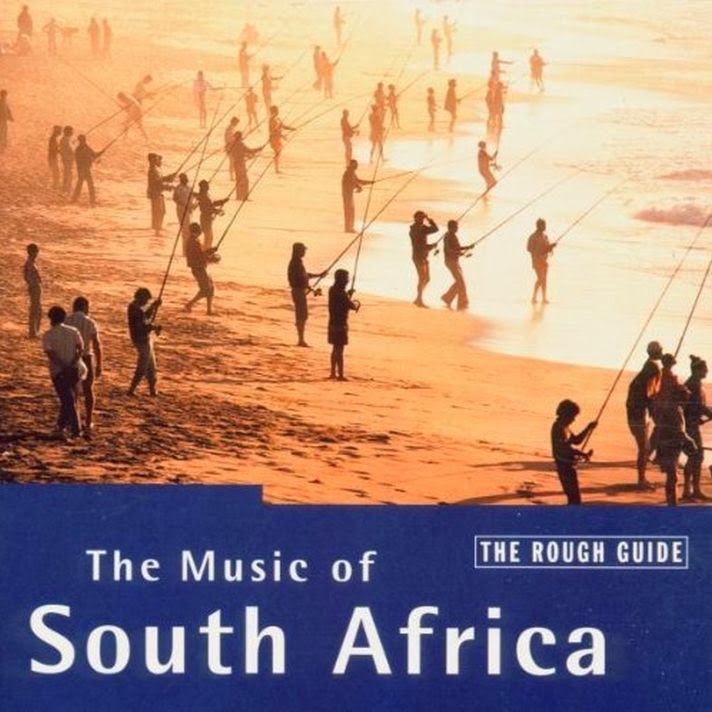
Yet another excellent compilation from the Rough Guide series, focuses on the musical traditions of South Africa, which have become fairly popular in the west in recent years. As one would expect, there is a track featuring the a cappella sounds of Ladysmith Black Mambazo, and the heavenly voice of singer Miriam Makeba, but South African music is far more diverse than just that. There are such famous South African performers as the Soul Brothers, Boyoyo Boys and Mahlathini & the Mahotella Queens, who all give excellent performances on this album. Reggae has its roots in African traditions, and this becomes more appearent after you hear the South African reggae stylings of Lucky Dube. Jazz also has its roots in the African continent, and this can be seen in such songs as "Jive Township", "Yaze Yangala", "Celebration" and "Groovin Jive No. 1". All of these, while uniquely African, feature a jazzy groove which cannot be denied. Its contaigous giving some insight into the diverse world of South African music in the late nineties.


VA - The Rough Guide To The Music of South Africa  (flac 448mb)

01 Izingqungqulu Zomhlaba - Nigizongena Kanjani 5:12
02 Mahlathini & The Mahotella Queens - Nyamphemphe 4:17
03 The Noise Khanyile & Jo'Burg City Stars - Groovin' Jive No. 1 8:09
04 Lucky Dube - House Of Exile 3:25
05 Yvonne Chaka Chaka - Motherland 4:52
06 Tebogo - My Kind Of Jazz 4:00
07 Spokes Mashiyane - Meva 2:52
08 African Jazz Pioneers - Jive Township 4:01
09 The Elite Swingsters - Yaze Yangala 4:40
10 Bheki Mseleku - Celebration 7:50
11 West Nkosi - Ungithatha Kanjani 4:19
12 Soul Brothers - Udlame 4:07
13 Boyoyo Boys - Tsotsi 2:33
14 Miriam Makeba & The Skylarks - Inkomo Zodwa 2:20
15 Solomon Linda's Original Evening Birds - Mbube 2:42
16 Ladysmith Black Mambazo - Kangivumanga 5:08

xxxxx xxxxx xxxxx xxxxx xxxxx

The first incarnation of Ladysmith Black Mambazo was "Ezimnyama" ("The Black Ones"), formed by Joseph Shabalala in December 1960. The members of the group were relatives (mostly brothers and cousins) of Shabalala, with many having sung with him while he was growing up on the farm where he was born. In 1964, Shabalala had a series of recurring dreams during his sleep, over a period of six months, featuring a choir singing in perfect harmony. Shabalala described this as a beautiful sound, and one not yet achieved by his group of the time. Shabalala entered the group into isicathamiya competitions, held on Saturday nights in the halls of hostels in Durban and Johannesburg. The group managed to win nearly every competition that was held. As a result, Shabalala decided to change the name of the group to be more descriptive of its talent. The name "Ezimnyama" was replaced by "Ladysmith Black Mambazo". The three elements of the new name were: the hometown of Shabalala's family, Ladysmith, KwaZulu-Natal; the black ox, considered to be the strongest farm animal; and mambazo, which means axe in the Zulu language, and is symbolic of the choir's ability to "chop down" the competition. Eventually, by the early 1970s, the group was forbidden to compete in the competitions because of their continual success. They were, however, welcome to perform without taking part in the competition itself.

Even if you don't speak Zulu, when they hit a low rumbling note, you can literally feel the power of their voices in your body.  "In Zulu singing there are three major sounds," Shabalala explains. "A high keening ululation; a grunting, puffing sound that we make when we stomp our feet; and a certain way of singing melody. Before Black Mambazo you didn't hear these three sounds in the same songs. So it is new to combine them, although it is still done in a traditional style. We are just asking God to allow us to polish it, to help keep our voices in order so we can praise Him and uplift the people."

The group has had an extremely prolific recording career, having released over 50 albums and collections, beginning with their debut, Amabutho, on Gallo Records in 1973. The group did not become well known outside of South Africa until Paul Simon asked them to perform on Graceland.  In 1988 Ladymith signed with Warner Bros. and issued a pair of albums, Journey of Dreams in 1988 and Two Worlds One Heart in 1990. A couple of best-of samplers appeared on Shanachie in 1992. The group switched back to Gallo for a series of 1990s releases, then moved to Wrasse for several albums, including 2000's In Harmony. No Boundaries, which featured the English Chamber Orchestra, appeared on Headsup Records in 2005, followed by a second album from the label, Long Walk to Freedom, in 2006. In 2007 Ilembe: Honoring Shaka Zulu was issued in South Africa with an American edition following in 2008.

The release of Nelson Mandela after 27 years imprisonment brought a celebratory album release - 1993's Liph' Iqiniso. Nelson Mandela (shortly after his release from prison) publicly stated that the members of Ladysmith Black Mambazo were "South Africa's cultural ambassadors". Ladysmith Black Mambazo accompanied the future President of South Africa to the Nobel Peace Prize ceremony in Oslo, Norway at the request of Nelson Mandela, in 1993. Mambazo sang again at President Mandela's inauguration in May 1994, and then later at his birthday celebrations. The album is both short (36 minutes) and decisive. The ten selections feature their trademark layered vocals, shimmering harmonies and producer/lead vocalist Joseph Shabbala's transcendent singing rising over the backgrounds. The tracks don't feature any spotlight numbers, but each has sections with memorable exchanges and appealing leads. If anything, the group's customary excellence has led fans to take them for granted.


Ladysmith Black Mambazo - Liph'iqiniso (flac  215mb)

01 Mus' Ukumbulal' Umuntu 2:50
02 Ayikh' Indaw' Enjengekhaya 3:34
03 Woza Ngihambe Nawe 3:25
04 Ekusen' Emathuneni 3:25
05 Ubuhle Beqabane 3:52
06 Umnjonj' Awusitholanga 3:26
07 Liph' Iqiniso 3:32
08 Akasekh' Engimzondayo 4:22
09 Abezizwe Ngeke Bayiqede 3:38
10 Isifikil' Inkululeko 3:50

xxxxx xxxxx xxxxx xxxxx xxxxx

The big band with no instruments who stole the show on Paul Simon's Graceland are back to prove that they are true masters of harmony, musicality and rhythm. This orchestra of brotherly voices takes us on a journey across the big country of Southern Africa. Dedicated to Headman Msongelwa Shabalala, a founder of the group in 1960, the album's title means 'the star and the wiseman.'

If you want to hear the voice of this young nation, sit back and listen to this eloquent, moving and uplifting virtuoso performance. The tracks on the album all written by the musical genius Joseph Tshabalala and dedicated to his late brother, Headman, make up an altogether stirring album of African rythms.


Ladysmith Black Mambazo - The Star And Wiseman  (flac 440mb)

01 Inkanyezi Nezazi (The Star & The Wiseman) 4:51
02 Diamonds On The Soles Of Her Shoes (feat.Paul Simon) 5:41
03 Swing Low Sweet Chariot (feat.China Black) 3:51
04 Knockin' On Heaven's Door (feat.Dolly Parton) 5:43
05 Kangivumanga (I Disagreed) 5:12
06 Sisesiqhingini (Everything Is So Stupid) 4:20
07 Homeless 3:56
08 Vulani Amasango 3:17
09 Abezizwe ('99 Remix By D-Influence) 3:30
10 Sibezwa Bekhuluma 3:29
11 Chain Gang (feat.Lou Rawls) 3:52
12 Yibolabafana 4:31
13 We Nhiziyo Yami 2:30
14 Siligugu Isiphambano 3:03
15 Rain, Rain Beautiful Rain 3:11
16 Ngelekele 2:45
17 Wonke Amehlo Azokumbona 2:58
18 AkehLulek'ubaba 4:21
19 Liph'Jqiniso 3:31
20 World In Union 95 (feat.PJ Powers) 3:54

xxxxx xxxxx xxxxx xxxxx xxxxx

Feb 10, 2014

RhoDeo 1406 The Ring 05

Hello, the winter olympics have really started, i was disappointed by the girls snowboard action, clearly they didn't consider it all very seriously it was fun, fun fun how different to the other athletes competing. They should receive chocolate medals..


In 1981, the BBC again tackled "The Lord of the Rings", this time in a serial of twenty six 30-minute episodes.  This production was not a condensed version, although it does leave out a number of events. Still, it is about as faithful to the book as one could reasonably expect. The characterizations are excellent and music is very nicely done. The 26-part series was subsequently edited into 13 hour-long episodes broadcast from 17 July to 9 October 1982, restoring some dialogue originally cut for timing (since each hour-long episode is actually around 57 minutes, as opposed to 54 minutes for two half-hour episodes with overlaps and extra credits removed), rearranging some scenes for dramatic impact and adding linking narration and music cues. .  NJoy

 xxxxx xxxxx xxxxx xxxxx xxxxx


In 1981 the UK radio station BBC Radio 4 broadcast a dramatisation of J. R. R. Tolkien's The Lord of the Rings in 26 half-hour stereo installments. The radio series follows the plot of the original novel (revised 1951 version) very closely, except for the addition of The Tale Bearer, a narrator whose account of the story is often interrupted and embellished by the protagonist Bilbo Baggins in the role of secondary narrator. The 1981 trilogy was adapted for radio by Brian Sibley and Michael Bakewell.  It was directed by Jane Morgan and Penny Leicester.  It is voiced by some very fine British actors including Ian Holm as Frodo, Michael Hordon as Gandalf and Peter Woodthorpe as Gollum among others.

The 26-part series was subsequently edited into 13 hour-long episodes broadcast from 17 July to 9 October 1982, restoring some dialogue originally cut for timing (since each hour-long episode is actually around 57 minutes, as opposed to 54 minutes for two half-hour episodes with overlaps and extra credits removed), rearranging some scenes for dramatic impact and adding linking narration and music cues.

The re-edited version was released on both cassette tape and CD sets which also included the soundtrack album (noticeably taken from a vinyl copy). Incidentally, episode 8 of the series, The Voice of Saruman was labelled as The Voice of Sauron on the cassette & CD box sets.

Cast and credits

Narrator: Gerard Murphy
Frodo Baggins: Ian Holm
Gandalf the Grey/Gandalf the White: Michael Hordern
Aragorn (Strider): Robert Stephens
Sam Gamgee: Bill Nighy
Meriadoc Brandybuck (Merry): Richard O'Callaghan
Peregrin Took (Pippin): John McAndrew
Legolas: David Collings
Gimli: Douglas Livingstone
Boromir: Michael Graham Cox
Galadriel: Marian Diamond
Celeborn: Simon Cadell
Arwen Evenstar: Sonia Fraser
Saruman the White: Peter Howell
Elrond: Hugh Dickson
Bilbo Baggins: John Le Mesurier
Gollum/Sméagol: Peter Woodthorpe

Dramatisation: Brian Sibley and Michael Bakewell
Music: Stephen Oliver
Radiophonic sound: Elizabeth Parker
Produced and directed by Jane Morgan and Penny Leicester

xxxxx xxxxx xxxxx xxxxx xxxxx


Lord Of The Rings 05 - The Mirror Of Galadriel (55 min 64mb)

5-01 Guide by Gollum 16:23
5-02 An Old Man In A Battered Hat 5:47
5-03 The Mirror Of Galadriel 13:38
5-04 O Lorien 9:41
5-05 The Temptation Of Boromir 10:04

xxxxx xxxxx xxxxx xxxxx xxxxx

previously,
Lord Of The Rings 01 - The Shadow Of The Past (56 min 65mb)
Lord Of The Rings 02 - The Black Riders (56 min 64mb)
Lord Of The Rings 03 - The Knife In The Dark (57 min 65mb)
Lord Of The Rings 04 - The Ring Goes South (55 min 63mb)

xxxxx xxxxx xxxxx xxxxx xxxxx
Feb 9, 2014

Sundaze 1406

Hello,  Teddy Ruxpin was known by children all around the world as the talking teddy bear. The toy was created by Ken Forsse and was a best seller in 1985 and 1986. Todays artist was 4 years old at the time..very sweet isnt it to name yourself after your first toy-friend. Forever together in the Google sphere....

Todays artist's kaleidoscopic broken beats and synth fueled, seemingly random but perfectly arranged, complex patterns pretty much define the sound of IDM today. Whether you were the follower of the genre since the early works of Aphex Twin and Autechre or continue to satisfy your jonesing trip for experimental electronica with sounds from Hecq and Access To Arasaka, Jonas Thor Gudmundsson's entry into the family will surely get your ears pricked. And pricked you'll get... Solid micro-programmed percussion, 303 acid lines and hallucinogenic passages awake the mind during its somber sleep and send the neurons firing across the entire surface of the mushy matter under the skull. N'Joy

xxxxx xxxxx xxxxx xxxxx xxxxx

Born in 1981 on that mystical iceland with a tiny population and a huge musical footprint, Jonas Thor Gudmundsson, better known as Ruxpin first started producing music at the age of 14. His first release Mission EP was released on Uni:Form Recordings 1999 and the same year his first LP entitled Radio was released on the same label. The highly acclaimed Elektrolux (Germany) imprint took notice of Radio and subsequently released his next two LPs (Midnight Drive & Avalon), alongside with one LP, Magrathea, on their sublabel Mikrolux. In late 2006 he released Elysium which was once again released via Elektolux's Mikrolux imprint. In early 2009 Gudmundsson's sixth full length entitled Where Do We Float From Here? was released digitally via n5MD's Enpeg Digital imprint but due to overwhelming demand a CD was released the following year on n5MD. Following that release came a free online release I Wonder if This is the Place, which featured remixes by artists such as Leon Somov, Galaktlan, Biogen, Ijo, Murya, Worm is Green and Aris, alongside additional tracks by Ruxpin himself. Beginning in 2011 Gudmundsson began work on a project with Fannar Asgrimsson titled Asonat and released an album and 2 EPs on n5MD in 2012. Straight on the heels of one of the Asonat EPs is the release of the new Ruxpin album This Time We Go Together due out May 28th on n5MD. Ruxpin has done various live shows with artists such as Múm, Biogen, Alex Paterson, Yagya, U-Ziq, Jega, Galaktlan and many more in Belgium, Iceland, Denmark, Russia, Lithuania, Israel, Netherland, Sweden, France, Netherland, Bulgaria, Latvia, Greece, Estonia and Catalonia.

xxxxx xxxxx xxxxx xxxxx xxxxx

Digital themes, hazy elektro arrangements and bright mid/downtempo grooves. Ruxpin delivers brief sparkling synthetic gems where airy pads float behind electronic melodies and intertwined phrases of great beauty and warmth. Beats are programmed affairs bringing together real drum sounds and an array of clicks, squirts, swishes and crackles. The music is strongly synthetic - little organic material interfering apart from the odd voice. There are tracks with a hint of melancholy where wistful leads juxtapose flickering techno percussion, others with an unself-conscious sense of rejoicing and some that simply revel in a carefree playfulness.


Ruxpin - Radio (flac  427mb)

01 Lokomotiv Beatbox 1:36
02 Longing 5:21
03 Dust My Credenza 6:37
04 Ewac Aurora 4:30
05 Monoliths 5:24
06 Japanese Liquid Wire 1:49
07 Infonic 7:16
08 Panorama 1:09
09 Wind Dancer 8:00
10 Scapegoat 5:00
11 Focus On The Sky 6:00
12 Mini Puzzle 2:45
13 Flying Russians Are Making Popcorn 6:13
14 Group Code 3:23
15 Night Shades 2:02
16 Personal Vendetta 5:19
17 Broadcast Ends... 1:55

xxxxx xxxxx xxxxx

His first album for Frankfurt's Elektrolux label, Jonas Thor Gudmundsson's Midnight Drive is a collection of chilled ambient rhythms and slow, abstract electronic twitch. Getting away from the naturalistic lounge and jazz of his contemporaries, Gudmundsson focuses on the synthetic, using the most artificial of processes to create one sustained feeling of somewhat pretentious low-watt introspection. Ruxpin's style is a perfect cross between Plaid and Boards of Canada. It's really super smooth, but not so ambient that you want to take a nap.


Ruxpin - Midnight Drive (flac 414mb)

01 Viewpoints 5:38
02 Midnight Drive 4:41
03 Headphones 5:27
04 Formations 6:19
05 Locoas 5:56
06 Grip 2:49
07 Above Sea Level 6:08
08 Exztra 1:32
09 Headspin 6:36
10 Watch The Packard 5:56
11 Palace Midas 7:02
12 Autocaz 5:32
 
xxxxx xxxxx xxxxx xxxxx xxxxx

Being only 21 years of age, producer Jonas Thor Gudmundsson is one of the real youngsters of the GEM family - yet with every further step in his career, he manages to prove that his huge potential is not to be underestimated. Having performed on the side of pop stars like Björk and Alex Paterson (The Orb), Jonas Thor has been keeping track of the pop business for some time now, and maybe with talents like him we are already seeing the dawn of a new generation in Skandinavian electronic music like Sigur Ros, Mùm or Royskopp. Today, the incredible talent of Ruxpin, to compose beautiful songs out of dreamy melodies and electronic grooves, can already only be witnessed with great admiration in each of the 15 tracks on "Magrathea" - sensitive melancholy and fragile romance in it's purest form. Music to build a planet to, music to savor.


Ruxpin - Magrathea (flac 468mb)

01 Ammanie 3:41
02 Movement Is Fragile 3:59
03 Still Frames 3:27
04 Moving Brela 5:21
05 Artifacts 3:23
06 Cylo 5:06
07 Passage 4:26
08 Himinborna Dis 5:30
09 Ekeia 5:03
10 Ljufa Lif 6:19
11 City Lights 3:43
12 Marglyttan 3:51
13 Two Sun Setting 4:46
14 Svefngalsi 5:45
15 Kafaradraumur 4:04

xxxxx xxxxx xxxxx xxxxx xxxxx