Dec 10, 2016

RhoDeo 1649 Grooves

Hello,

Today's artists are an American band that has spanned the musical genres of R&B, soul, funk, jazz, disco, pop, rock, Latin and African. They are one of the most successful bands of all time. Rolling Stone Magazine described them as "innovative, precise yet sensual, calculated yet galvanizing" and declared that the band "changed the sound of black pop" All month at Grooves..... ..... N'joy

xxxxx xxxxx xxxxx xxxxx xxxxx

Earth, Wind & Fire were one of the most musically accomplished, critically acclaimed, and commercially popular funk bands of the '70s. Conceived by drummer, bandleader, songwriter, kalimba player, and occasional vocalist Maurice White, EWF's all-encompassing musical vision used funk as its foundation, but also incorporated jazz, smooth soul, gospel, pop, rock & roll, psychedelia, blues, folk, African music, and, later on, disco. Lead singer Philip Bailey gave EWF an extra dimension with his talent for crooning sentimental ballads in addition to funk workouts; behind him, the band could harmonize like a smooth Motown group, work a simmering groove like the J.B.'s, or improvise like a jazz fusion outfit. Plus, their stage shows were often just as elaborate and dynamic as George Clinton's P-Funk empire. More than just versatility for its own sake, EWF's eclecticism was part of a broader concept informed by a cosmic, mystical spirituality and an uplifting positivity the likes of which hadn't been seen since the early days of Sly & the Family Stone. Tying it all together was the accomplished songwriting of Maurice White, whose intricate, unpredictable arrangements and firm grasp of hooks and structure made EWF one of the tightest bands in funk when they wanted to be. Not everything they tried worked, but at their best, Earth, Wind & Fire seemingly took all that came before them and wrapped it up into one dizzying, spectacular package.


White founded Earth, Wind & Fire in Chicago in 1969. He had previously honed his chops as a session drummer for Chess Records, where he played on songs by the likes of Fontella Bass, Billy Stewart, and Etta James, among others. In 1967, he'd replaced Redd Holt in the popular jazz group the Ramsey Lewis Trio, where he was introduced to the kalimba, an African thumb piano he would use extensively in future projects. In 1969, he left Lewis' group to form a songwriting partnership with keyboardist Don Whitehead and singer Wade Flemons. This quickly evolved into a band dubbed the Salty Peppers, which signed with Capitol and scored a regional hit with "La La Time." When a follow-up flopped, White decided to move to Los Angeles, and took most of the band with him; he also renamed them Earth, Wind & Fire, after the three elements in his astrological charts. By the time White convinced his brother, bassist Verdine White, to join him on the West Coast in 1970, the lineup consisted of Whitehead, Flemons, female singer Sherry Scott, guitarist Michael Beal, tenor saxophonist Chet Washington, trombonist Alex Thomas, and percussionist Yackov Ben Israel. This aggregate signed a new deal with Warner Bros. and issued its self-titled debut album in late 1970. Many critics found it intriguing and ambitious, much like its 1971 follow-up, The Need of Love, but neither attracted much commercial attention despite a growing following on college campuses and a high-profile gig performing the soundtrack to Melvin Van Peebles' groundbreaking black independent film Sweet Sweetback's Baadasssss Song.

Last Days and Time Dissatisfied with the results, White dismantled the first version of EWF in 1972, retaining only brother Verdine. He built a new lineup with female vocalist Jessica Cleaves, flute/sax player Ronnie Laws, guitarist Roland Bautista, keyboardist Larry Dunn, and percussionist Ralph Johnson; the most important new addition, however, was singer Philip Bailey, recruited from a Denver R&B band called Friends & Love. After seeing the group open for John Sebastian in New York, Clive Davis signed them to CBS, where they debuted in 1972 with Last Days and Time. Further personnel changes ensued; Laws and Bautista were gone by year's end, replaced by reedman Andrew Woolfolk and guitarists Al McKay and Johnny Graham. It was then that EWF truly began to hit their stride. 1973's Head to the Sky (Cleaves' last album with the group) significantly broadened their cult following, and the 1974 follow-up, Open Our Eyes, was their first genuine hit. It marked their first collaboration with producer, arranger, and sometime-songwriting collaborator Charles Stepney, who helped streamline their sound for wider acceptance; it also featured another White brother, Fred, brought in as a second drummer. The single "Mighty Mighty" became EWF's first Top Ten hit on the R&B charts, although pop radio shied away from its black-pride subtext, and the minor hit "Kalimba Story" brought Maurice White's infatuation with African sounds to the airwaves. Open Our Eyes went gold, setting the stage for the band's blockbuster breakthrough.

That's the Way of the World In 1975, EWF completed work on another movie soundtrack, this time to a music-biz drama called That's the Way of the World. Not optimistic about the film's commercial prospects, the group rushed out their soundtrack album of the same name (unlike Sweet Sweetback, they composed all the music themselves) in advance. The film flopped, but the album took off; its lead single, the love-and-encouragement anthem "Shining Star," shot to the top of both the R&B and pop charts, making Earth, Wind & Fire mainstream stars; it later won a Grammy for Best R&B Vocal Performance by a Group. The album also hit number one on both the pop and R&B charts, and went double platinum; its title track went Top Five on the R&B side, and it also contained Bailey's signature ballad in the album cut "Reasons." White used the new income to develop EWF's live show into a lavish, effects-filled extravaganza, which eventually grew to include stunts designed by magician Doug Henning. The band was also augmented by a regular horn section, the Phoenix Horns, headed by saxophonist Don Myrick. Their emerging concert experience was chronicled later that year on the double-LP set Gratitude, which became their second straight number one album and featured one side of new studio tracks. Of those, "Sing a Song" reached the pop Top Ten and the R&B Top Five, and the ballad "Can't Hide Love" and the title track were also successful.

Spirit Sadly, during the 1976 sessions for EWF's next studio album, Spirit, Charles Stepney died suddenly of a heart attack. Maurice White took over the arranging chores, but the Stepney-produced "Getaway" managed to top the R&B charts posthumously. Spirit naturally performed well on the charts, topping out at number two. In the meantime, White was taking a hand in producing other acts; in addition to working with his old boss Ramsey Lewis, he helped kickstart the careers of the Emotions and Deniece Williams. 1977's All n' All was another strong effort that charted at number three and spawned the R&B smashes "Fantasy" and the chart-topping "Serpentine Fire"; meanwhile, the Emotions topped the pop charts with the White-helmed smash "Best of My Love." The following year, White founded his own label, ARC, and EWF appeared in the mostly disastrous film version of Sgt. Pepper's Lonely Hearts Club Band, turning in a fine cover of the Beatles' "Got to Get You Into My Life" that became their first Top Ten pop hit since "Sing a Song." Released before year's end, The Best of Earth, Wind & Fire, Vol. 1 produced another Top Ten hit (and R&B number one) in the newly recorded "September."

1979's I Am contained EWF's most explicit nod to disco, a smash collaboration with the Emotions called "Boogie Wonderland" that climbed into the Top Ten. The ballad "After the Love Has Gone" did even better, falling one spot short of the top. Although I Am became EWF's sixth straight multi-platinum album, there were signs that the group's explosion of creativity over the past few years was beginning to wane. 1980's Faces broke that string, after which guitarist McKay departed. While 1981's Raise brought them a Top Five hit and R&B chart-topper in "Let's Groove," an overall decline in consistency was becoming apparent. By the time EWF issued its next album, 1983's Powerlight, ARC had folded, and the Phoenix Horns had been cut loose to save money. After the lackluster Electric Universe appeared at the end of the year, White disbanded the group to simply take a break. In the meantime, Verdine White became a producer and video director, while Philip Bailey embarked on a solo career and scored a pop smash with the Phil Collins duet "Easy Lover." Collins also made frequent use of the Phoenix Horns on his '80s records, both solo and with Genesis.

Bailey reunited with the White brothers, plus Andrew Woolfolk, Ralph Johnson, and new guitarist Sheldon Reynolds, in 1987 for the album Touch the World. It was surprisingly successful, producing two R&B smashes in "Thinking of You" and the number one "System of Survival." Released in 1990, Heritage was a forced attempt to contemporize the group's sound, with guest appearances from Sly Stone and MC Hammer; its failure led to the end of the group's relationship with Columbia. They returned on Reprise with the more traditional-sounding Millennium in 1993, but were dropped when the record failed to recapture their commercial standing despite a Grammy nomination for "Sunday Morning"; tragedy struck that year when onetime horn leader Don Myrick was murdered in Los Angeles. Bailey and the White brothers returned once again in 1997 on the small Pyramid label with In the Name of Love.

After 2003's The Promise, a mix of new material and fresh looks at classics, the group realigned with several top-shelf adult contemporary artists and released 2005's Illumination, which featured a collaboration with smooth jazz juggernaut Kenny G. The album was Grammy-nominated in the category of Best R&B Album. Earth, Wind & Fire continued to tour and made a show-opening appearance on American Idol's Idol Gives Back show in 2007. Three years later, Maurice and Verdine White, Bailey, Dunn, and McKay were inducted into the Songwriters Hall of Fame. The band released Now, Then & Forever, their first album in five years, in 2013. Three years later, on February 3, 2016, Maurice White died from the effects of Parkinson's disease at his home in Los Angeles; he was 74 years old.


xxxxx xxxxx xxxxx xxxxx xxxxx

Finally, after almost half a decade of serious dues-paying, Earth, Wind & Fire took off commercially with its fifth album, Open Our Eyes. EWF had been delivering great albums since 1971, but it wasn't until 1974 that the public proved genuinely receptive to Maurice White's mystical and unorthodox take on soul and funk. No longer would EWF enjoy only a small cult following. Thanks to treasures like "Kalimba Song," the gritty funk smoker "Mighty Mighty," and the unforgettable "Devotion," Open Our Eyes became EWF's first gold album and went to the top of the R&B charts. It's also interesting to note that with this album, singer Jessica Cleaves was gone, resulting in the first time EWF had an all-male lineup.


Earth Wind & Fire - Open Our Eyes    (flac  249mb)


01 Mighty Mighty 3:03
02 Devotion 4:50
03 Fair But So Uncool 3:40
04 Feelin' Blue 4:28
05 Kalimba Story 4:03
06 Drum Song 5:10
07 Tee Nine Chee Bit 3:45
08 Spasmodic Movements 1:51
09 Rabbit Seed 0:32
10 Caribou 3:26
11 Open Our Eyes 5:05

Earth Wind & Fire - Open Our Eyes  (ogg    97mb)

xxxxx xxxxx xxxxx xxxxx xxxxx

Earth, Wind & Fire has delivered more than its share of excellent albums, but if a person could own only one EWF release, the logical choice would be That's the Way of the World, which was the band's best album as well as its best-selling. Open Our Eyes had been a major hit and sold over half-a-million units, but it was World that established EWF as major-league, multi-platinum superstars. Fueled by gems ranging from the sweaty funk of "Shining Star" and "Yearnin' Learnin'" to the gorgeous ballad "Reasons" and the unforgettable title song, EWF's sixth album sold at least five-million units. And some of the tracks that weren't major hits, such as the exuberant "Happy Feelin'" and the gospel-influenced "See the Light," are equally powerful. There are no dull moments on World, one of the strongest albums of the '70s and EWF's crowning achievement.


Earth Wind & Fire - That's The Way Of The World   (flac  259mb)

01 Shining Star 2:50
02 That's The Way Of The World 5:45
03 Happy Feelin' 3:16
04 All About Love 5:30
05 Yearnin' Learnin' 3:41
06 Reasons 4:53
07 Africano 5:10
08 See The Light 5:30

Earth Wind & Fire - That's The Way Of The World  (ogg   97mb)

xxxxx xxxxx xxxxx xxxxx xxxxx

With That's the Way of the World having made Earth, Wind & Fire one of the best-selling soul bands of the 1970s, Maurice White and co. had no problem filling large arenas. As dynamic as EWF was on-stage, it's a shame that there isn't more documentation of the band's live show. Only one live EWF album was released by a major label in America, the superb Gratitude. First a two-LP set and later reissued on CD, Gratitude brilliantly captures the excitement EWF generated on-stage at its creative peak. Neither hardcore EWF devotees nor more casual listeners should deprive themselves of the joys of the live versions of "Shining Star" and "Yearnin' Learnin'." Maurice White is magnificent throughout, and Philip Bailey truly soars on extended versions of "Reasons" (which boasts a memorable alto sax solo by guest Don Myrick) and "Devotion." The album also introduced some excellent new studio songs, including the haunting "Can't Hide Love" and the uplifting "Sing a Song." One could nitpick and wish for live versions of "Evil," "Keep Your Head to the Sky," and "Kalimba Song," but the bottom line is that Gratitude is one of EWF's finest accomplishments.


Earth Wind & Fire - Gratitude  (flac 478mb)

01 Introduction By MC Perry Jones 0:22
02 Africano/Power 5:56
03 Yearnin' Learnin' 4:16
04 Devotion 4:53
05 Sun Goddess 7:54
06 Reasons 8:23
07 Sing A Message To You 1:19
08 Shining Star 4:55
09 New World Symphony 9:28
10 Interlude #1 0:15
11 Sunshine 4:16
12 Sing A Song 3:23
13 Gratitude 3:27
14 Celebrate 3:06
15 Interlude #2 0:27
16 Can't Hide Love 4:10

Earth Wind & Fire - Gratitude (ogg   167mb)

xxxxx xxxxx xxxxx xxxxx xxxxx

With That's the Way of the World having enjoyed multi-platinum success, Earth, Wind & Fire had a lot to live up to when the time came for another studio project. And the soul powerhouse didn't let anyone down (either commercially or creatively) on the outstanding Spirit, which boasted hits ranging from the optimistic "On Your Face" and the passionate funk classic "Getaway" to the poetic ballad "Imagination." Philip Bailey is as charismatic as ever on "Imagination" and the gorgeous title song. Maurice White's message and vision (an interesting blend of Afro-American Christianity and Eastern philosophy) was as positive and uplifting as ever, and as always, EWF expressed this positivity without being Pollyanna-ish or corny. And even if one didn't take EWF's calls for unity, hard work, self-respect, and faith in God to heart, they had no problem with their solid grooves.


Earth Wind & Fire - Spirit   (flac 254mb)

01 Getaway 3:47
02 On Your Face 4:34
03 Imagination 5:17
04 Spirit 3:12
05 Saturday Nite 4:03
06 Earth, Wind & Fire 4:41
07 Departure 0:27
08 Biyo 3:38
09 Burnin' Bush 6:48

Earth Wind & Fire - Spirit (ogg 94mb)

xxxxx xxxxx xxxxx xxxxx xxxxx

Dec 9, 2016

RhoDeo 1649 Re-Ups 80

Hello, a memorable day for Mick Jagger fathering another son with his 29 year old current girlfriend, can't get no satisfaction hmmmm...

These days i'm making an effort to re-up, it will satisfy a small number of people which means its likely the update will  expire relatively quickly again as its interest that keeps it live. Nevertheless here's your chance ... asks for re-up in the comments section at the page where the expired link resides, or it will be discarded by me. ....requests are satisfied on a first come first go basis. ...updates will be posted here  remember to request from the page where the link died! To keep re-ups interesting to my regular visitors i will only re-up files that are at least 12 months old (the older the better as far as i am concerned), and please check the previous update request if it's less then a year old i won't re-up.

Looka here another batch of 19 re-ups, requests fullfilled up to December 8th. There's much more to be had here. My tip here randomly pick an archive date and move up or down a few pages to older or newer posts, browse what you get there and maybe you'll find something of your liking or it may triggers a memory of what you'd really want and then do a search  ...N' Joy

xxxxx xxxxx xxxxx xxxxx xxxxx


6x wavetrain-4th-wagon Back in Flac ( Pylon - Gyrate Plus, Comsat Angels - Fiction, Comsat Angels - Land, Second Layer - World Of Rubber, still in ogg The Empty Quarter - The Empty Quarter + Delerium, B-Movie - Nowhere Girl EP)


3x Aetix Back in Flac ( The Gun Club - Fire of Love, The Gun Club - Miami , The Gun Club - The Las Vegas Story)


3x Aetix Back in Flac (Felt - Crumbling The Antiseptic Beauty, Felt - The Splendour Of Fear, Felt - The Strange Idols Pattern And Other Short Stories, Felt - Ignite The Seven Cannons)


4x Aetix Back In Flac (Throbbing Gristle ‎– Kreeme Horn, Throbbing Gristle - 2nd Annual Report, Throbbing Gristle - D.o.A. The Third And Final Report, Throbbing Gristle - 20 Jazz Funk Greats)


3x Aetix Back in Flac (Anne Clark - Joined Up Writing + The Sitting Room, Anne Clark - Pressure Points, Anne Clark - Hopeless Cases, Anne Clark - Changing Places)


The Earth got kissed goodbye by Greg Lake who died of cancer yesterday, he was the man whose voice introduced the world to  King Crimson and as if that ain't enough he introduced us to  Emerson, Lake & Palmer too . This here are three special uploads in honor of Greg Lake, the 21st Century Schizoid 'Lucky' Man who died yesterday.  He gave us this most enduring seasonal greeting too about how Christmas had deteriorated and was in danger of becoming yet another victim of crass corporate financial exploitation I Believe in Father Christmas


xxxxx xxxxx xxxxx xxxxx xxxxx


Dec 7, 2016

RhoDeo 1649 Aetix

Hello,

Today's artists are an English post-punk/new wave band, originally formed in Hornsey, London in 1978. The original line-up consisted of Indian-born lead singer and principal songwriter Bid (real name Ganesh Seshadri), Canadian guitarist Lester Square (real name Thomas W.B. Hardy), drummer John D. Haney and bass guitarist Charlie X. The band went through several bassists in the next few years, including Jeremy Harrington, Simon Croft and Andy Warren they broke up in 85 then reunited in 90, broke up again by 98 and then a decade later re united, currently a more stable stuation sees them releasing albums again, but this here is about their debut on the scene in the Aetix..  ......N'Joy

xxxxx xxxxx xxxxx xxxxx xxxxx

When the British art school punk band the B-Sides changed their name and direction to become Adam & the Ants, guitarist/vocalist Bid and guitarist Lester Square opted out to form their own group, the Monochrome Set. Founded in London in 1978, the band (also comprising ex-Gloria Mundi and Mean Street bassist Jeremy Harrington and former Art Attacks drummer J.D. Crowe) was quickly snapped up by the Rough Trade label, and during 1979 issued three singles -- "He's Frank," "Eine Symphonie des Grauens," and its signature number, "Monochrome Set" -- all completely different in content and stylistic approach.

Strange Boutique After former B-Sides bassist Andy Warren grew tired of life in Adam & the Ants, he rejoined bandmates Bid and Square, replacing Harrington. In 1980, the Monochrome Set released their debut album, the cabaret-flavored Strange Boutique, followed later that year by the singles "405 Lines" and "Apocalypso" as well as another, more accessible full-length effort, Love Zombies. Complete with new guitarist Foz, keyboardist Caroline Booth, and drummer Nick Wesolowski, they returned in 1982 with a cleaner, more melodic sound on the LP Eligible Bachelors; "The Jet Set Junta," a satiric jab at the Falklands Islands conflict, became a significant hit the next year. The compilation Volume, Contrast, Brilliance: Sessions & Singles, Vol. 1 also appeared in 1983.

Following the departure of Square, the Monochrome Set veered even closer to light pop fare on singles like 1985's "Jacob's Ladder"; the sound subsequently crystallized on the nostalgically themed LP The Lost Weekend. When the record met with a dismal commercial response, the group disbanded, only to re-form in 1989 around the nucleus of Bid, Square, and Warren along with new keyboardist Orson Presence. The 1990 album Dante's Casino did little to raise the Monochrome Set's chart visibility, but the band soldiered on, releasing Charade in 1993, Misere in 1994, and Trinity Road in 1995. They broke up in 1998 while Bid formed a new band, Scarlet's Well. In 2011, members of the Well joined a reunited Monochrome Set, which also featured Bid, Square, and Warren. Signed to the Disquo Bleu label, the band released Platinum Coils in 2012 and Super Plastic City in 2013. Spaces Everywhere (2015) found them on their new home of Tapete Records, the label that a year later would release Volume, Contrast, Brilliance: Unreleased & Rare, Vol. 2, a sequel to their 1983 set. The group stuck with Tapete for its next album, 2016's Cosmonaut, which featured Bid playing all the guitars due to the departure of Square. The band also welcomed John Paul Moran back on keyboards. Mike Slocombe, who had previously been in the band in 1990 and played on the Dante's Casino album, joined the band in September 2016, replacing Steve Brummel on drums.


xxxxx xxxxx xxxxx xxxxx xxxxx

Monochrome Set's debut album for Virgin followed the indie success of their singles "Alphaville," "Eine Symphonie Des Grauens," and "The Monochrome Set." By the time it was scheduled, Andy Warren (ex-Adam & the Ants) had replaced Jeremy Harrington on bass, and the lineup was completed by guitarist Lester Square (also ex-Ants), Indian-born vocalist/guitarist Bid, and former Art Attacks drummer J.D. Haney. Although it can't quite match Eligible Bachelors for songwriting, there are a number of superb, non-single album tracks that make this an essential purchase for fans -- especially "Ici les Enfants," "The Puerto Rican Fence Climber," and "The Lighter Side of Dating." Amid the austerity of post-punk England, and before we became awash with irony and archness, we needed a band who could raise their eyebrows and smirk at it all without ever being condescending (or maybe only a little bit condescending).


Monochrome Set - Strange Boutique (flac  230mb)

01 The Monochrome Set (I Presume) 5:13
02 The Lighter Side Of Dating 2:45
03 Espresso 3:14
04 The Puerto Rican Fence Climber 3:00
05 Tomorrow Will Be Too Long 3:00
06 Martians Go Home 2:04
07 Love Goes Down The Drain 2:29
08 Ici Les Enfants 3:09
09 The Etcetera Stroll 4:42
10 Goodbye Joe 2:43
11 The Strange Boutique 3:12

xxxxx xxxxx xxxxx xxxxx xxxxx

One of the classic, undiscovered albums of the early '80s, Eligible Bachelors is a tour de force of wit and musical imagination. It features some of the funniest songs ever committed to vinyl, kicking off with "Jet Set Junta," which, alongside bookend song "The Ruling Class," pillories the neuroses of the wealthy. "The Mating Game" is also deeply amusing as a cad's cynical guide to the opposite sex, with lyrics like, "Blond, brunette or redhead, black, yellow or white/They taste the same, in the mating game." But it's not all jokes. "The Midas Touch" is an exquisite slice of whimsy riding a near-perfect guitar riff, with an emotional reach that shames most peers of songwriter Bid. Whether or not the rear cover testimonial from Andy Warhol is genuine, the Monochrome Set had released an age-defining record here. It's a shame nobody else knew about it.


Monochrome Set - Eligible Bachelors (flac  262mb)

01 The Jet Set Junta 2:03
02 I'll Scry Instead 2:50
03 On The 13th Day 3:06
04 Cloud 10 3:30
05 The Mating Game 3:20
06 March Of The Eligible Bachelors 3:01
07 The Devil Rides Out 3:02
08 Fun For All The Family 3:45
09 The Midas Touch 4:53
10 The Ruling Class 2:45
11 The Great Barrier Riff 3:39

xxxxx xxxxx xxxxx xxxxx xxxxx

The Monochrome Set's curtain call before Bid launched a haphazard solo career, Lost Weekend offers "Jacob's Ladder," which was almost a hit single (heck, there was even a video). It was not to be, however, despite the move to Warners' subsidiary Blanco y Negro. The irony of the Monochrome Set was that they were always a small-budget band working on the most regal material. Still, there are several more great songs here, the best including "Letter from Viola," "Cargo," and "Wallflower" (also a single).


Monochrome Set - The Lost Weekend (flac 292mb)

01 Jacob's Ladder 2:58
02 Sugarplum 3:42
03 Cargo 3:43
04 Take Foz 3:13
05 Letter From Viola 4:33
06 Don't Touch 3:28
07 The Twitch 2:22
08 Wallflower 3:40
09 Starry Nowhere 3:49
10 Boom Boom 2:05
11 Cowboy Country 4:52
Bonus Tracks
12 Andiamo 3:13
13 Big Ben Bongo 3:17
14 Le Boom Boom 2:09
15 Yo, Ho, Ho And Three Bottles Of Wine 4:54
16 Wallflower (Saloon Bar Mix) 3:27

xxxxx xxxxx xxxxx xxxxx xxxxx

For all of the many sterling qualities the Monochrome Set exhibited over the years -- and truly, they were one of the most consistently enjoyable bands of the U.K. indie pop scene during their periods of activity, circa 1978-1985 and 1990-1995 -- they were absolutely maddening about their compilations. For one thing, the band released nine proper studio albums in their two incarnations, from 1980's Strange Boutique to 1995's Trinity Road, but more than half again that number of compilations have been released since the first, 1982's grab-bag of BBC radio sessions, early singles, and unreleased tracks Volume Contrast Brilliance. Many of these have mashed together re-recorded versions of familiar Monochrome Set songs (with no indication of their provenance) with outtakes, B-side rarities, and unexpected gems that have appeared nowhere else, but there has never been a truly comprehensive collection of Monochrome Set singles. Frankly, it seems highly unlikely that there ever will be one, because Virgin Records maintains control of the group's first two albums, Strange Boutique and 1981's Love Zombies, while Cherry Red has the reins to the rest of the catalog, barring 1985's misbegotten The Lost Weekend, a release for Warner Brothers' Blanco y Negro label that tried to turn the defiantly quirky group into mainstream pop stars. 1997's double-disc Chaps got past this problem by having the mid-'90s lineup of the band re-record the Virgin and Warner Brothers era material; it's simpler to just buy either Colour Transmission or Tomorrow Will Be Too Long: The Very Best of the Monochrome Set, either of which contains both Virgin albums in their entirety, and to ignore The Lost Weekend. With those caveats aside, 2008's The Independent Singles Collection is, at last, Cherry Red's attempt to make sense of the Monochrome Set's non-LP catalog. Lacking the rights to the Virgin and Warner Brothers material, The Independent Singles Collection therefore doesn't have gems like 1980's gorgeously spooky "Goodbye Joe" or 1985's "Wallflower" (the one gem from that era), nor does it contain any of singer/primary songwriter Bid's solo singles released during the group's late-'80s hiatus. But it does finally gather in one place the A- and B-sides of all of the band's independently released singles, from "He's Frank" (in both its original version from their 1978 debut single and the superior 1979 remake "He's Frank (Slight Return)") to 1995's "Kissy Kissy." This includes comparative rarities like the original single recording of 1982's "The Jet Set Junta," a different version than the more familiar take that has appeared on most previous compilations, including Volume Contrast Brilliance, and a number of lesser known flip sides that showcase the band's more experimental side. If someone was only planning to buy one Monochrome Set compilation, this should be the one.


Monochrome Set - Independent Singles Collection (flac 511mb)

01 He's Frank 2:37
02 Alphaville 2:56
03 Eine Symphonie Des Grauens 2:22
04 Lester Leaps In 2:38
05 The Monochrome Set 2:19
06 Mr Bizarro 3:31
07 He's Frank (Slight Return) 2:41
08 Silicon Carne 3:29
09 Fallout 2:55
10 The Mating Game 3:20
11 J.D.H.A.N.E.Y. 3:21
12 Cast A Long Shadow 3:20
13 The Bridge 3:06
14 The Jet Set Junta 2:03
15 Love Goes Down The Drain 2:41
16 Killing Dave 4:24
17 House Of God (Live) 3:42
18 Sweet Death 2:19
19 Forever Young 3:14
20 Hurting You 4:19
21 Little Noises 4:04
22 I Love Lambeth 3:45
23 Kissy Kissy 3:45
24 All Over 3:26
25 Closing Time 3:26

xxxxx xxxxx xxxxx xxxxx xxxxx

Earlier, Wavetrain 11

Monochrome Set - Love Zombies   (flac    217mb)

xxxxx xxxxx xxxxx xxxxx xxxxx


Dec 6, 2016

RhoDeo 1649 Roots

Hello,

The music of Brazil encompasses various regional music styles influenced by African, European and Amerindian forms. After 500 years of history, Brazilian music developed some unique and original styles such as samba, bossa nova, MPB, sertanejo, pagode, tropicalia, choro, maracatu, embolada (coco de repente), mangue bit, funk carioca (in Brazil simply known as Funk), frevo, forró, axé, brega, lambada, and Brazilian versions of foreign musical genres, such as Brazilian rock and rap.


Today's artist is was born Astrud Evangelina Weinert, the daughter of a Brazilian mother and a German father, in the state of Bahia, Brazil. She was raised in Rio de Janeiro. She married João Gilberto in 1959 and emigrated to the United States in 1963, residing in the U.S. from that time. Astrud and João divorced in the mid-1960s and she began a relationship with her musical partner, American jazz saxophone player Stan Getz.... N'Joy

xxxxx xxxxx xxxxx xxxxx xxxxx

The honey-toned chanteuse on the surprise Brazilian crossover hit "The Girl From Ipanema," Astrud Gilberto parlayed her previously unscheduled appearance (and professional singing debut) on the song into a lengthy career that resulted in nearly a dozen albums for Verve and a successful performing career that lasted into the '90s. Though her appearance at the studio to record "The Girl From Ipanema" was due only to her husband João, one of the most famed Brazilian artists of the century, Gilberto's singular, quavery tone and undisguised naïveté propelled the song into the charts and influenced a variety of sources in worldwide pop music.

Born in Bahia, Gilberto moved to Rio de Janeiro at an early age. She'd had no professional musical experience of any kind until 1963, the year of her visit to New York with her husband, João Gilberto, in a recording session headed by Stan Getz. Getz had already recorded several albums influenced by Brazilian rhythms, and Verve teamed him with the cream of Brazilian music, Antonio Carlos Jobim and João Gilberto, for his next album. Producer Creed Taylor wanted a few English vocals for maximum crossover potential, and as it turned out, Astrud was the only Brazilian present with any grasp of the language. After her husband laid down his Portuguese vocals for the first verse of his and Jobim's composition, "The Girl From Ipanema," Astrud provided a hesitant, heavily accented second verse in English.

Not even credited on the resulting LP, Getz/Gilberto, Astrud finally gained fame over a year later, when "The Girl From Ipanema" became a number five hit in mid-1964. The album became the best-selling jazz album up to that point, and made Gilberto a star across America. Before the end of the year, Verve capitalized on the smash with the release of Getz Au Go Go, featuring a Getz live date with Gilberto's vocals added later. Her first actual solo album, The Astrud Gilberto Album, was released in May 1965. Though it barely missed the Top 40, the LP's blend of Brazilian classics and ballad standards proving quite infectious with easy listening audiences.

Though she never returned to the pop charts in America, Verve proved to be quite understanding for Astrud Gilberto's career, pairing her with ace arranger Gil Evans for 1966's Look to the Rainbow and Brazilian organist/arranger Walter Wanderley for the dreamy A Certain Smile, a Certain Sadness, released later that year. She remained a huge pop star in Brazil for the rest of the 1960s and '70s, but gradually disappeared in America after her final album for Verve in 1969. In 1971, she released a lone album for CTI (with Stanley Turrentine) but was mostly forgotten in the U.S. until 1984, when "Girl From Ipanema" recharted in Britain on the tails of a neo-bossa craze. Gilberto gained worldwide distribution for 1987's Astrud Gilberto Plus the James Last Orchestra and 2002's Jungle.

Gilberto received the Latin Jazz USA Award for Lifetime Achievement in 1992, and was inducted into the International Latin Music Hall of Fame in 2002. In 1996, she contributed to the AIDS benefit album Red Hot + Rio produced by the Red Hot Organization, performing the song "Desafinado" along with George Michael. Although she did not officially retire, Gilberto announced in 2002, that she was taking "indefinite time off" from public performances.


xxxxx xxxxx xxxxx xxxxx xxxxx

One of Gilberto's less impressive '60s Verve outings, primarily due to the more pop-oriented song selection. Much of this is just standard pleasant Gilberto: offhand vocals and a sumptuous Brazil pop-cum-U.S. orchestration feel (Ron Carter and Toots Thielemans are among the sidemen). And some of the pop choices work well, particularly Tim Hardin's gorgeous "Misty Roses." No vocals or arrangements, however, could save the criminally wrong-headed military march of "A Banda (Parade)," or the exasperatingly coochie-coochie duet between Gilberto and her six-year-old son on the Lovin' Spoonful's "You Didn't Have to Be So Nice." Which makes it all the more surprising when the next and concluding track, "Nao Bate O Corocao," has Gilberto cutting loose with confident, sassy scats, as she rarely did before or since. The CD reissue improves matters by adding five bonus cuts from A Certain Smile a Certain Sadness, recorded in 1966 in more authentically bossa nova-style arrangements, anchored by organist Walter Wanderley.


Astrud Gilberto - Beach Samba (flac 275mb)

01 Stay 2:41
02 Misty Roses 2:36
03 The Face I Love 2:06
04 A Banda (Parade) 2:07
05 Oba, Oba 1:59
06 Canoeiro 1:32
07 I Had The Craziest Dream 2:25
08 Bossa Na Praia (Beach Samba) 2:48
09 My Foolish Heart 2:47
10 Dia Das Rosas (I Think Of You) 2:21
11 You Didn't Have To Be So Nice 2:41
12 Nao Bate O Coracao 1:35
Bonus Tracks
13 Goodbye Sadness 3:34
14 Call Me 3:20
15 Here's That Rainy Day 2:44
16 Tu Meu Delirio 3:39
17 It's A Lovely Day Today 2:39

Astrud Gilberto - Beach Samba      (ogg  107mb)

xxxxx xxxxx xxxxx xxxxx xxxxx

While assembled from seemingly disparate sessions arranged by Eumir Deodato, Don Sebesky, and Pat Williams, Windy nevertheless proves one of Astrud Gilberto's most consistent and sublime efforts, artfully straddling the division between Brazilian bossa nova and American sunshine pop. Credit the aforementioned arrangers for much of the LP's appeal -- from a percolating rendition of the Association's title cut to a neo-classical reinvention of the Beatles' "In My Life," the songs possess a lithe, shimmering beauty that perfectly complements Gilberto's feathery vocals. Still, she can't quite skirt the cloying sweetness that undermines so many of her mid-period Verve LPs -- son Marcelo, who first joined his mother on the previous Beach Samba for an excruciating duet version of the Lovin Spoonful's "You Didn't Have to Be So Nice," resurfaces here for a reading of The Jungle Book's "The Bare Necessities," proving yet again that children should be seen and not heard.


Astrud Gilberto - Windy   (flac  174mb)

01 Dreamy 2:05
02 Chup, Chup, I Got Away 2:04
03 Never My Love 2:37
04 Lonely Afternoon 3:16
05 On My Mind 2:41
06 The Bare Necessities 2:39
07 Windy 2:45
08 Sing Me A Rainbow 2:05
09 In My Life 2:35
10 Crickets Sing For Anamaria 1:35
11 Where Are They Now? 3:09

     (ogg   mb)

xxxxx xxxxx xxxxx xxxxx xxxxx

Astrud Gilberto had begun tackling '60s vocal pop crossovers on her Windy album from earlier in 1969, but her final record (of three) from that year found her stretching out not just on material but on arrangements. The production and arrangements by Brooks Arthur and Albert Gorgoni, respectively, attempt to push Gilberto into the type of groovy "now sound" that everyone from Harry Nilsson to Andy Williams was employing in the late '60s. Of course, Gilberto was an easy fit for this type of sound, and the only missteps here come when the songs don't fit her occasionally limited talents. "Light my Fire" is at the top of that list, while the Bee Gees' "Holiday" and Nilsson's "Don't Leave Me, Baby" appear very high as well. Highlights do crop up, with the opener "Beginnings" working very well except for its long coda, and the one Brazilian song, "Let Go (Canto de Ossanha)" charting the perfect balance between timeless pop and late-'60s crossover appeal.


Astrud Gilberto - September 17 1969   (flac  269mb)

01 Beginnings 8:08
02 Holiday 3:11
03 Here There And Everywhere 2:25
04 Light My Fire 2:54
05 Let Go (Canto De Ossanha) 3:05
06 Let's Have The Morning After (Instead Of The Night Before) 4:04
07 Think Of Rain 2:46
08 A Million Miles Away Behind The Door 2:27
09 Love Is Stronger Far Than We 3:40
10 Don't Leave Me Baby 2:30
11 Summer Sweet 6:29

Astrud Gilberto - September 17 1969    (ogg  99mb)

xxxxx xxxxx xxxxx xxxxx xxxxx

Astrud's voice and laid-back delivery are better here then on her earlier (and better-known) Verve albums. Stanley Turrentine is all over this record, and his solos are soulful, strong, and melodic as always. However, the real treasures of this ablum though are the outstanding arrangements by Eumir Deodato, who once again proves he is the master of this type of music. Nearly every track is full of interesting, complex, yet beautiful instrumentation. He blends mellow low strings with lots of Fender Rhodes electric piano, plenty of electric and acoustic guitar, and a wide variety of Brazilian percussion instruments. It's just a rich tapestry of sound that never fails to intrigue


Astrud Gilberto - Gilberto With Turrentine (flac  257mb)

01 Wanting Things 2:35
02 Brazilian Tapestry 5:10
03 To A Flame 3:17
04 Solo El Fin (For All We Know) 3:10
05 Zazueira 3:40
06 Ponteio 3:35
07 Travelling Light 3:25
08 Vera Cruz 5:05
09 Historia De Amor (Love Story) 3:29
10 Where There's A Heartache 3:10
Bonus Tracks
11 Just Be You 2:29
12 The Puppy Song 3:21
13 Polytechnical High 2:48

Astrud Gilberto - Gilberto With Turrentine  (ogg 107mb)

xxxxx xxxxx xxxxx xxxxx xxxxx


Dec 5, 2016

RhoDeo 1649 Monty 7

Hello,


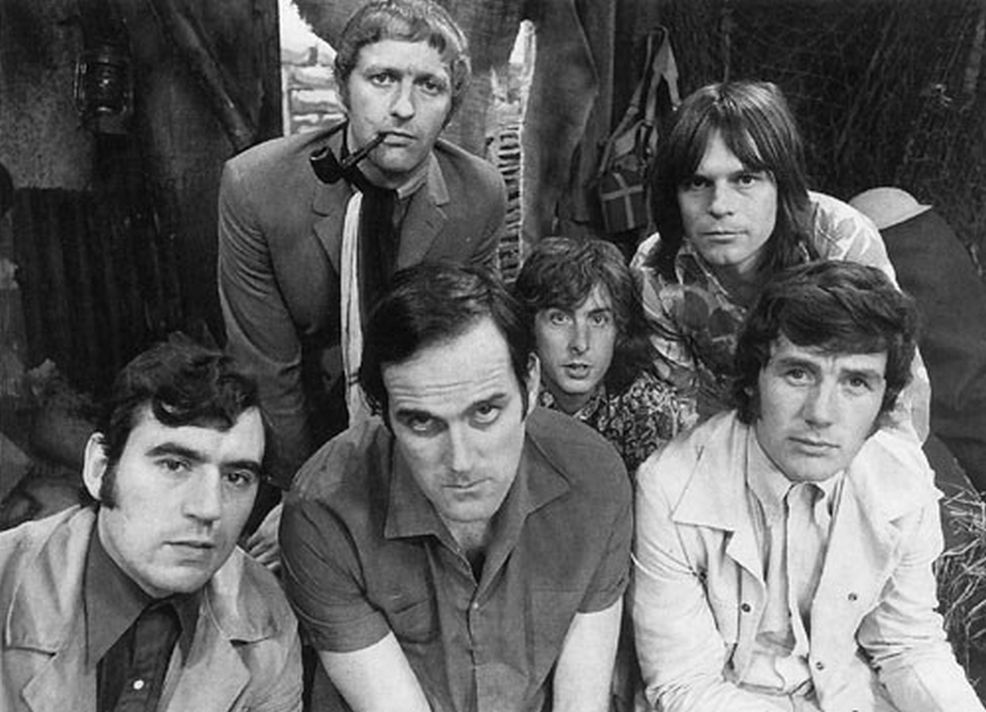
Monty Python (sometimes known as The Pythons) were a British surreal comedy group who created the sketch comedy show Monty Python's Flying Circus, which first aired on the BBC on 5 October 1969. Forty-five episodes were made over four seasons. The Python phenomenon developed from the television series into something larger in scope and impact, including touring stage shows, films, numerous albums, several books, and a stage musical. The group's influence on comedy has been compared to the Beatles' influence on music. ..N'Joy

xxxxx xxxxx xxxxx xxxxx xxxxx

Fusing the topical satire of David Frost with the surreal outlandishness of The Goon Show, the Monty Python's Flying Circus troupe formed in England in 1969. Comprised of British performers John Cleese, Michael Palin, Eric Idle, Terry Jones, and Graham Chapman, along with American animator Terry Gilliam, the group emerged as an international cult phenomenon, honing its singular blend of broad slapstick, edgy black comedy, and social commentary in a string of successful television programs, films, and albums.


After meeting during a taping of the British children's series Do Not Adjust Your Set, the Pythons officially took shape in May 1969 when the BBC contracted the group to produce its own 13-week program. Monty Python's Flying Circus, a weekly sketch comedy series, premiered that October; after becoming a major hit throughout Europe, the troupe recorded 1970's Monty Python's Flying Circus LP, a set of new performances of television material recorded in front of a live audience (including their legendary "dead parrot" sketch, "The Pet Shop"). Their film debut, And Now for Something Completely Different -- a collection of highlights from the series -- followed in 1971.

Another Monty Python Record, released in the U.K. in 1971, made its American debut the following year; for most U.S. fans, the album was their first exposure to the troupe -- the BBC series did not begin appearing on public television outlets for several more months. After 1972's Monty Python's Previous Record, a mixture of original routines and TV material featuring "Eric the Half a Bee," "The Argument Clinic," and "Embarrassment/A Bed-Time Book," the group issued 1973's Matching Tie and Handkerchief, which featured a "trick track" gimmick whereby the second side contained separate grooves both featuring entirely different material; playing randomly depending upon where the needle dropped, the gimmick effectively created a "side three."
A 1973 British tour yielded Live at Drury Lane, released in 1974 to coincide with the film Monty Python and the Holy Grail; the movie's companion record, The Album of the Soundtrack of the Trailer of the Film of Monty Python and the Holy Grail, a reprise of screen material along with new skits, did not appear until the next year. After 1976's Live! At City Center, a long hiatus followed before the group reunited for the 1979 feature and soundtrack Monty Python's Life of Brian.


Monty Python's Contractual Obligation Album appeared in 1980, followed by the 1982 concert film Live at the Hollywood Bowl. The 1983 feature Monty Python's the Meaning of Life was the last official group project, although the troupe members subsequently reunited on occasion; most famously, Cleese and Palin teamed in the hit comedy A Fish Called Wanda, while Gilliam's directorial efforts like Time Bandits, Brazil, and The Adventures of Baron Munchausen all prominently featured other Python alumni. Sadly, Graham Chapman died of cancer on October 4, 1989.


xxxxx xxxxx xxxxx xxxxx xxxxx

Soundtrack album for arguably the Python's best film (or at least their most controversial, talky, and profound). The group's take on the biblical epic focuses on Brian (Graham Chapman), mistaken for the messiah by a group of easily impressed locals. All the best bits from the movie are here, including the "Sermon on the Mount" (as misheard by "Mr. Big Nose"); the People's Liberation Front of Judea (or is it the Judean People's Liberation Front?); Brian's impromptu preaching ("He's making it up as he goes along!"), and the concluding song, "Always Look on the Bright Side of Life," sung by the cast as they hang crucified. The album offers little apart from the clips from the film, except for some studio banter between a producer (Eric Idle) and a useless announcer (Graham Chapman).


xxxxx

with

Eric Idle
Graham Chapman
John Cleese
Michael Palin
Terry Gilliam
Terry Jones


701 Life of Brian (flac  231mb)


Monty Python's Life Of Brian (Side 1) 25:12

Introduction
Brian Song
Three Wise Men
Brian Song (Continued)
Sermon On The Mount (Big Nose)
Harry The Haggler
Stoning
Ex-Leper
You Mean You Were Raped? (Nortius Maximus)
Link
In The Amphitheatre (Loretta)
Short Link
Romans Go Home
Missing Link
Revolutionary Meeting
Very Good Link/Ben
Audience With Pilate
Meanwhile

Monty Python's Life Of Brian (Side 2) 26:47

The Prophets
Beard Salesman
Lobster Link
Brian's Prophecy
Lobster Link II
The Hermit (Simon The Holy Man)
He's Not The Messiah
Sex Link
He's A Very Naughty Boy
Lighter Link
Pilate Sentences Brian
Nisus Wettus
Pilate With The Crowd (Welease Woger)
Nisus Wettus With The Jailers
Release Brian
Not So Bad Once You're Up
Reg Salutes Brian
Cheeky Is Released
Always Look On The Bright Side Of Life
Closing


xxxxx xxxxx xxxxx xxxxx xxxxx

Previously

101 Another Monty Python Record (flac  212mb)
201 Monty Python's Previous Record (flac  194mb)
301 Matching Tie and Handkerchief (flac  159mb)
401 Live at Drury Lane (flac  275mb)
501 Monty Python and the Holy Grail (flac  191mb)
601 Contractual Obligation Album (flac  190mb)

xxxxx xxxxx xxxxx xxxxx xxxxx

Dec 4, 2016

Sundaze 1649

Hello,

American composer (and native New Yorker) Steve Reich has been writing the definitive city soundtrack for 40 years. From his early tape pieces "Come Out" and "It's Gonna Rain", to his now classic minimalist works-- though Reich would certainly scoff at the term-- Drumming and Music For 18 Musicians, to more recent works bother greater in scope and somehow conventionally attractive (Tehillim, Different Trains, The Desert Music), he's invented a sound that nails both the intricate detail and speed-ridden blur of some abstract "downtown." Where Philip Glass's music from the 1960s and 70s is vaguely futuristic and precise, Reich's is warm. Where Terry Riley, who never felt a particularly strong allegiance to the minimal aesthetic in the first place, is boundless and organic, Reich is brainy, propulsive, and hardened to the interiors of a metallic landscape. I read someone call him the "greatest living American composer," and though any all-encompassing title is debatable, you'd be hard pressed to find a more fitting example of individualism and stubborn will so often identified with this place....... N'Joy

xxxxx xxxxx xxxxx xxxxx xxxxx

A highly influential avant-garde composer and one of the key founders of the minimalist school of music, Reich has embraced a wide variety of musical styles and interests, forging from them a unique synthesis.

Reich took piano lessons as a youngster, but his first big musical revelations came at 14, when he encountered the music of Bach and Stravinsky. He also had his first exposure to bebop, and immediately started learning drums and playing in a jazz band with friends. He played on weekends while studying at Cornell, which he entered at age 16 and where he received a degree in philosophy, specializing in the work of Wittgenstein. In 1957, he entered Juilliard, studying with William Bergsma and Vincent Persichetti (and meeting fellow student Philip Glass). Here Reich first heard 12-tone music; he got a further dose of it during graduate studies at Mills College in Oakland, working with Luciano Berio and Darius Milhaud, and eventually earning his master's degree.

At about that time Reich met Terry Riley, who was in the process of writing In C (1964). Reich played in its premiere, and In C's tonal approach and use of repeating patterns had a big influence on Reich's own music. In turn, Reich suggested the use of the eighth note pulse, which is now standard in performance of the piece. Reich had been experimenting with tapes, creating loops of speech and layering them, allowing the layers to move in and out of sync with one another. His early works It's Gonna Rain (1965) and Come Out (1966) led to similar experiments with live performers, the first of which was Piano Phase for two pianos (1967). Back in New York, Reich and Glass formed an ensemble to perform their music (1968-1971). Several of those players later formed Steve Reich and Musicians, which has toured the world many times over.

In 1970, Reich studied for several weeks at the University of Ghana. His encounter with Ghanaian music and dance inspired his ambitious work Drumming (1970). Encounters with Indonesian gamelan music in 1973-1974 at Seattle and Berkeley were equally significant, and broadened Reich's rhythmic and timbral palette. His most significant composition of the time was Music for 18 Musicians (1974-1976), a large and colorful work which brought Reich worldwide recognition.

In the mid-'70s, Reich started taking Torah classes with his future wife, video artist Beryl Korot. He also studied traditional Jewish cantillation and incorporated it into his psalm settings, Tehillim (1981). Several chamber and orchestral works followed in the 1980s. For Different Trains (1988, a Grammy winner), Reich used a digital sampler to record speaking voices and derived the rhythmic and melodic ideas of the piece from those voices. Reich knew that Different Trains was going to lead to some kind of new documentary form incorporating both video and music. Collaborating with his wife for the first time, the two completed their theater work The Cave in 1993. They continued to explore the combination of music and video with Three Tales (1998-2002).

Music for 18 Musicians [Nonesuch 1998] By the end of the 21st century's first decade, the lasting significance of Reich's music was being recognized worldwide. After 1998's new recording of Music for 18 Musicians won a Grammy, Reich received honorary doctorates and awards from Juilliard, Budapest's Franz Liszt Academy and other schools; the 2007 Polar Music Prize; the 2009 Pulitzer Prize for Music (for Double Sextet); and, in 2012, an American Academy of Arts and Letters Gold Medal for Music. On March 5, 2013 the London Sinfonietta, conducted by Brad Lubman, at the Royal Festival Hall in London gave the world premiere of Radio Rewrite for ensemble with 11 players, inspired by the music of Radiohead. The programme also included Double Sextet for ensemble with 12 players, Clapping Music, for two people and four hands featuring Reich himself alongside percussionist Colin Currie.

In 2013 Reich received the US$400,000 BBVA Foundation Frontiers of Knowledge Award in contemporary music for bringing a new conception of music, based on the use of realist elements from the realm of daily life and others drawn from the traditional music of Africa and Asia. In September 2014, Reich was awarded the "Leone d'Oro" (Golden Lion for Lifetime Achievement in Music) from the Venice Biennale. In March 2016, Reich was awarded an Honorary Doctorate by the Royal College of Music in London at the ripe old age of 79 years.

xxxxx xxxxx xxxxx xxxxx xxxxx

The Cave is a December 1994 piece featuring the Steve Reich Ensemble (conducted by Paul Hillier) in collaboration with video/text writer Beryl Korot. The story concerns the only place in the world where both Jews and Muslims are allowed to worship, a mosque in Hebron supposed to be the Cave of the Patriarchs where Abraham and many of his descendants were buried. Reich's ensemble includes four vocalists, four percussionists, three vocalists and a five-piece string section. The work begins with regimented percussion and follows through short spoken-word parts and longer sung passages. In several of the spoken-word parts, the harmonics are echoed in the string section (one of Reich's most recognizable and appealing devices), and although the content may be uninteresting to those not familiar with the ongoing Israeli-Arab differences, The Cave is a fascinating piece.


Steve Reich 09 Excerpts from The Cave    (flac  302mb)

01 Act 1 (Part I) 2:58
02 Act 1 (Part II) 1:33
03 Act 1 (Part III) 4:42
04 Act 1 (Part IV) 2:32
05 Act 1 (Part V) 2:36
06 Act 1 (Part VI) 5:25
07 Act 1 (Part VII) 3:27
08 Act 1 (Part VIII) 1:20
09 Act 1 (Part IX) 4:30
10 Act 2 (Part I) 4:40
11 Act 2 (Part II) 5:19
12 Act 3 (Part I) 6:29
13 Act 3 (Part II) 4:23
14 Act 3 (Part III) 4:40
15 Act 3 (Part IV) 4:04
16 Act 3 (Part V) 4:28
17 Act 3 (Part VI) 8:42

xxxxx xxxxx xxxxx xxxxx xxxxx

This recording brings together three disparate styles on one record showcasing Reich's compositional work. Opening with "Proverb," a piece for voices and a mixed ensemble, the disc begins on a somber note. The complete text of the piece is the following line from Ludwig Wittgenstein: "How small a thought it takes to fill a whole life!" This line is sung very, very slowly, note by note with style and chord structure hearkening back to medieval harmonization. Electric organs double the singers. The centerpiece of the record is "Nagoya Marimbas," with a sound reminiscent of Reich's marimba work from the '60s and '70s, and for fans of this era of Reich's work it is a pleasant surprise to hear another piece in this style again. Marimba parts themselves are significantly more complex here, showing Reich's continuing development even when returning to old haunts. The final piece, "City Life," is a kickback to an earlier composition style, utilizing sounds in the natural environment (or in this case the urban environment) to generate musical material. Rather than using manipulated magnetic tape, however, Reich uses what he calls the "extended idea of prepared piano" -- the electronic keyboard sampler. Unlike experiments using tape, this piece was recorded live and can be easily reproduced live on-stage. Sampled sounds come in the form of speeches at political rallies, car horns, pile drivers, and sounds from fire-department radios during the first World Trade Center bombing. Using a car horn to replace the sound of a clarinet is, it must be said, pretty darn cool. This record shows Reich playing with different styles -- it is a transitional point in his career -- which leaves the cohesiveness of the recording off-balanced. But seeing the forest for three different kinds of trees, the new works are exciting and musically satisfying.


Steve Reich 10 Proverb - Nagoya Marimbas - City Life  (flac  180mb)

01 Proverb 14:09
02 Nagoya Marimbas 4:35
City Life
03 Check It Out 5:51
04 Pile Drive - Alarms 3:53
05 It's Been A Honeymoon - Can't Take No Mo 4:46
06 Heartbeats - Boats And Buoys 3:58
07 Heavy Smoke 4:42

xxxxx xxxxx xxxxx xxxxx xxxxx

Steve Reich continues his exploration of counterpoint and phasing with Triple Quartet, a commission piece for the Kronos Quartet dating to 1999. For this piece (a suite in three movements), Kronos recorded two quartet scores, then played along with the tape, resulting in the Triple Quartet. Originally inspired by Bela Bartok's Fourth Quartet, the movements alternate fast, slow, and fast, with thick contrapuntal melodies rising and falling throughout. "Electric Guitar Phase" began life as "Violin Phase" in 1967. For this version, Dominic Frasca plays four electric guitar parts designed to set up phasing patterns. The initial melody (which almost sounds like the intro to a Van Halen tune) is doubled on a second guitar, then gradually sped up so that the second guitar winds up one eighth note ahead of the original melody. As other guitar parts are added in, the melody constantly changes subtly, the end result being a fascinating mixture of stasis and evolution. "Music for Large Ensemble," originally dating to 1977, is for a group approaching 30 players and is reminiscent of "Music for 18 Musicans" (also from the same time period), while "Tokyo/Vermont Counterpoint" is originally from 1981 and is performed by only one player performing multiple parts. For this piece, the original arrangement for flutes and piccolos is scored for MIDI marimba and xylophone. The natural duration of the notes was shortened in order to maintain the clarity of the composition, but the piece still shares a sonic kinship with "Six Marimbas." Triple Quartet is another beautiful offering from Steve Reich. It would also serve as a fine introduction to his work, as it surveys each of his four active decades as a composer and touches on the various styles and processes he's been interested in since moving away from pure musique concrète. Highly recommended.


Steve Reich - Triple Quartet  (flac  277mb)

Triple Quartet, for 3 string quartets
01 First Movement 7:10
02 Second Movement 4:04
03 Third Movement 3:33

04 Electric Guitar Phase (arr. of Violin Phase) 15:20
05 Music for a Large Ensemble14:58
06 Tokyo/Vermont Counterpoint, for MIDI marimba 9:04

xxxxx xxxxx xxxxx xxxxx xxxxx

The composer's first new work since 2002's Three Tales finds him working with choral and orchestral elements, but is as rhythmically driven as anything he's done in years. Urban activity: buses moving; keypads clicking; bikers cutting off cabs; window washers scaling up a half completed skyscraper; the distant wail of an ambulance siren, and its sudden pitch modulation as it zooms past, carrying a rush of wind and a trail of receipts, wrappers, or the rare leaf; the clang of the subway; cash registers opening, closing, opening; everyone is counting something: time, money, appointments, each other; the whistle of a traffic cop and hundreds of half-heard conversations in the street. The flurry of the city isn't something best described as "beautiful" so much as alive, unstoppable, cruel, and complex.

You Are (Variations). is Reich's first album of new material since the not altogether warmly received Three Tales (2002). If the composer has suffered complaints from critics of lacking ambition in recent years, he hasn't let that affect his writing: You Are is prime Reich, using choral and orchestral elements similarly to older pieces like Tehillim and The Desert Music, but seeming as rhythmically driven as anything he's done in years. Harmonically, he sticks to majors and relative minors (that is, a minor key that utilizes the same notes as a major one, but starts from a different point in the scale)-- a common Reich device-- thereby blurring the line between different tonalities. He uses a choir to impart text translated from Hasidic mystical verse: "You are wherever your thoughts are", "Explanations come to an end somewhere," and the idea of saying "little and do much". Words are repeated and spread out over great lengths, so the end effect is not one of narrative but of words as purely musical ingredients. The closing track is Reich's Cello Counterpoint, featuring cellist Maya Beiser (Bang On a Can) overdubbed eight times to create a surprisingly dense string ensemble. As Reich points out in the insert, the cello is great because its capable of resonating clearly in a very wide range-- this piece was actually written for a full string octet, but its marked accents and interweaving melodies sound great all performed by one person.


Steve Reich - You Are (Variations)  (flac  184mb)

You Are (Variations)
01 You Are Wherever Your Thoughts Are 13:14
02 Shiviti Hashem L'Negdi (I Place The Eternal Before Me) 4:15
03 Explanations Come To An End Somewhere 5:24
04 Ehmor M'Aht, V'Ahsay Harbay (Say Little And Do Much) 4:04

05 Cello Counterpoint 11:31

xxxxx

Steve Reich's 2007 Double Sextet, which won the 2009 Pulitzer Prize, is given its first performance by eighth blackbird, the group for whom it was written. For most of his career, Reich has constructed his music with canons using matched pairs of instruments, and he writes that when he was presented with the request from eighth blackbird, he felt he could only write the piece for two identical ensembles, with the live players performing to an accompaniment they had previously recorded, creating the effect of two antiphonal sextets. It's that version that's played here, although both Reich and the ensemble agree that an ideal live performance would feature 12 players. That is somewhat less of an issue in a recording of the piece than in a concert setting, but it is in fact easy to imagine that the give and take of two live sextets could produce subtly different results. Except for conventionality of the instrumentation -- Pierrot ensemble plus percussion -- the Double Sextet doesn't particularly break new ground for Reich, but it's the territory of Eight Lines and Music for Eighteen Musicians in which he's endlessly inventive, and it's loads of fun to hear him so happily and imaginatively at play. Like many of his instrumental works, it's in three movements -- fast, slow, fast -- as is his 2008 2x5 for a double quintet of rock instruments, also recorded for the first time with players from Bang On A Can playing against a recording of themselves. Both works are bright and frisky, saturated with contrapuntal zigzagging, but the Double Sextet is the subtler and more substantial. They receive absolutely top-notch virtuoso performances by their respective ensembles and should certainly delight the composer's fans and listeners who enjoy the cross-pollination of rock and classical that is Reich's specialty. Nonesuch's sound is immaculate and beautifully engineered.


Steve Reich - Double Sextet, 2x5    (flac  188mb)

Double Sextet 22:18
01 Eighth Blackbird Fast 8:39
02 Eighth Blackbird Slow 6:43
03 Eighth Blackbird Fast 6:56
2x5 20:32
04 Bang On A Can Fast 10:12
05 Bang On A Can Slow 3:12
06 Bang On A Can Fast 7:08

xxxxx xxxxx xxxxx xxxxx xxxxx

Dec 3, 2016

RhoDeo 1648 Grooves

Hello,

Today's artists are an American band that has spanned the musical genres of R&B, soul, funk, jazz, disco, pop, rock, Latin and African. They are one of the most successful bands of all time. Rolling Stone Magazine described them as "innovative, precise yet sensual, calculated yet galvanizing" and declared that the band "changed the sound of black pop" All month at Grooves..... ..... N'joy

xxxxx xxxxx xxxxx xxxxx xxxxx

Earth, Wind & Fire were one of the most musically accomplished, critically acclaimed, and commercially popular funk bands of the '70s. Conceived by drummer, bandleader, songwriter, kalimba player, and occasional vocalist Maurice White, EWF's all-encompassing musical vision used funk as its foundation, but also incorporated jazz, smooth soul, gospel, pop, rock & roll, psychedelia, blues, folk, African music, and, later on, disco. Lead singer Philip Bailey gave EWF an extra dimension with his talent for crooning sentimental ballads in addition to funk workouts; behind him, the band could harmonize like a smooth Motown group, work a simmering groove like the J.B.'s, or improvise like a jazz fusion outfit. Plus, their stage shows were often just as elaborate and dynamic as George Clinton's P-Funk empire. More than just versatility for its own sake, EWF's eclecticism was part of a broader concept informed by a cosmic, mystical spirituality and an uplifting positivity the likes of which hadn't been seen since the early days of Sly & the Family Stone. Tying it all together was the accomplished songwriting of Maurice White, whose intricate, unpredictable arrangements and firm grasp of hooks and structure made EWF one of the tightest bands in funk when they wanted to be. Not everything they tried worked, but at their best, Earth, Wind & Fire seemingly took all that came before them and wrapped it up into one dizzying, spectacular package.


White founded Earth, Wind & Fire in Chicago in 1969. He had previously honed his chops as a session drummer for Chess Records, where he played on songs by the likes of Fontella Bass, Billy Stewart, and Etta James, among others. In 1967, he'd replaced Redd Holt in the popular jazz group the Ramsey Lewis Trio, where he was introduced to the kalimba, an African thumb piano he would use extensively in future projects. In 1969, he left Lewis' group to form a songwriting partnership with keyboardist Don Whitehead and singer Wade Flemons. This quickly evolved into a band dubbed the Salty Peppers, which signed with Capitol and scored a regional hit with "La La Time." When a follow-up flopped, White decided to move to Los Angeles, and took most of the band with him; he also renamed them Earth, Wind & Fire, after the three elements in his astrological charts. By the time White convinced his brother, bassist Verdine White, to join him on the West Coast in 1970, the lineup consisted of Whitehead, Flemons, female singer Sherry Scott, guitarist Michael Beal, tenor saxophonist Chet Washington, trombonist Alex Thomas, and percussionist Yackov Ben Israel. This aggregate signed a new deal with Warner Bros. and issued its self-titled debut album in late 1970. Many critics found it intriguing and ambitious, much like its 1971 follow-up, The Need of Love, but neither attracted much commercial attention despite a growing following on college campuses and a high-profile gig performing the soundtrack to Melvin Van Peebles' groundbreaking black independent film Sweet Sweetback's Baadasssss Song.

Last Days and Time Dissatisfied with the results, White dismantled the first version of EWF in 1972, retaining only brother Verdine. He built a new lineup with female vocalist Jessica Cleaves, flute/sax player Ronnie Laws, guitarist Roland Bautista, keyboardist Larry Dunn, and percussionist Ralph Johnson; the most important new addition, however, was singer Philip Bailey, recruited from a Denver R&B band called Friends & Love. After seeing the group open for John Sebastian in New York, Clive Davis signed them to CBS, where they debuted in 1972 with Last Days and Time. Further personnel changes ensued; Laws and Bautista were gone by year's end, replaced by reedman Andrew Woolfolk and guitarists Al McKay and Johnny Graham. It was then that EWF truly began to hit their stride. 1973's Head to the Sky (Cleaves' last album with the group) significantly broadened their cult following, and the 1974 follow-up, Open Our Eyes, was their first genuine hit. It marked their first collaboration with producer, arranger, and sometime-songwriting collaborator Charles Stepney, who helped streamline their sound for wider acceptance; it also featured another White brother, Fred, brought in as a second drummer. The single "Mighty Mighty" became EWF's first Top Ten hit on the R&B charts, although pop radio shied away from its black-pride subtext, and the minor hit "Kalimba Story" brought Maurice White's infatuation with African sounds to the airwaves. Open Our Eyes went gold, setting the stage for the band's blockbuster breakthrough.

That's the Way of the World In 1975, EWF completed work on another movie soundtrack, this time to a music-biz drama called That's the Way of the World. Not optimistic about the film's commercial prospects, the group rushed out their soundtrack album of the same name (unlike Sweet Sweetback, they composed all the music themselves) in advance. The film flopped, but the album took off; its lead single, the love-and-encouragement anthem "Shining Star," shot to the top of both the R&B and pop charts, making Earth, Wind & Fire mainstream stars; it later won a Grammy for Best R&B Vocal Performance by a Group. The album also hit number one on both the pop and R&B charts, and went double platinum; its title track went Top Five on the R&B side, and it also contained Bailey's signature ballad in the album cut "Reasons." White used the new income to develop EWF's live show into a lavish, effects-filled extravaganza, which eventually grew to include stunts designed by magician Doug Henning. The band was also augmented by a regular horn section, the Phoenix Horns, headed by saxophonist Don Myrick. Their emerging concert experience was chronicled later that year on the double-LP set Gratitude, which became their second straight number one album and featured one side of new studio tracks. Of those, "Sing a Song" reached the pop Top Ten and the R&B Top Five, and the ballad "Can't Hide Love" and the title track were also successful.

Spirit Sadly, during the 1976 sessions for EWF's next studio album, Spirit, Charles Stepney died suddenly of a heart attack. Maurice White took over the arranging chores, but the Stepney-produced "Getaway" managed to top the R&B charts posthumously. Spirit naturally performed well on the charts, topping out at number two. In the meantime, White was taking a hand in producing other acts; in addition to working with his old boss Ramsey Lewis, he helped kickstart the careers of the Emotions and Deniece Williams. 1977's All n' All was another strong effort that charted at number three and spawned the R&B smashes "Fantasy" and the chart-topping "Serpentine Fire"; meanwhile, the Emotions topped the pop charts with the White-helmed smash "Best of My Love." The following year, White founded his own label, ARC, and EWF appeared in the mostly disastrous film version of Sgt. Pepper's Lonely Hearts Club Band, turning in a fine cover of the Beatles' "Got to Get You Into My Life" that became their first Top Ten pop hit since "Sing a Song." Released before year's end, The Best of Earth, Wind & Fire, Vol. 1 produced another Top Ten hit (and R&B number one) in the newly recorded "September."


1979's I Am contained EWF's most explicit nod to disco, a smash collaboration with the Emotions called "Boogie Wonderland" that climbed into the Top Ten. The ballad "After the Love Has Gone" did even better, falling one spot short of the top. Although I Am became EWF's sixth straight multi-platinum album, there were signs that the group's explosion of creativity over the past few years was beginning to wane. 1980's Faces broke that string, after which guitarist McKay departed. While 1981's Raise brought them a Top Five hit and R&B chart-topper in "Let's Groove," an overall decline in consistency was becoming apparent. By the time EWF issued its next album, 1983's Powerlight, ARC had folded, and the Phoenix Horns had been cut loose to save money. After the lackluster Electric Universe appeared at the end of the year, White disbanded the group to simply take a break. In the meantime, Verdine White became a producer and video director, while Philip Bailey embarked on a solo career and scored a pop smash with the Phil Collins duet "Easy Lover." Collins also made frequent use of the Phoenix Horns on his '80s records, both solo and with Genesis.

Bailey reunited with the White brothers, plus Andrew Woolfolk, Ralph Johnson, and new guitarist Sheldon Reynolds, in 1987 for the album Touch the World. It was surprisingly successful, producing two R&B smashes in "Thinking of You" and the number one "System of Survival." Released in 1990, Heritage was a forced attempt to contemporize the group's sound, with guest appearances from Sly Stone and MC Hammer; its failure led to the end of the group's relationship with Columbia. They returned on Reprise with the more traditional-sounding Millennium in 1993, but were dropped when the record failed to recapture their commercial standing despite a Grammy nomination for "Sunday Morning"; tragedy struck that year when onetime horn leader Don Myrick was murdered in Los Angeles. Bailey and the White brothers returned once again in 1997 on the small Pyramid label with In the Name of Love.

After 2003's The Promise, a mix of new material and fresh looks at classics, the group realigned with several top-shelf adult contemporary artists and released 2005's Illumination, which featured a collaboration with smooth jazz juggernaut Kenny G. The album was Grammy-nominated in the category of Best R&B Album. Earth, Wind & Fire continued to tour and made a show-opening appearance on American Idol's Idol Gives Back show in 2007. Three years later, Maurice and Verdine White, Bailey, Dunn, and McKay were inducted into the Songwriters Hall of Fame. The band released Now, Then & Forever, their first album in five years, in 2013. Three years later, on February 3, 2016, Maurice White died from the effects of Parkinson's disease at his home in Los Angeles; he was 74 years old.


xxxxx xxxxx xxxxx xxxxx xxxxx

The debut for the nine-member Earth, Wind & Fire was as assured as that of any rock band from the '60s and early '70s. Already fluent with the close harmonies of the classiest soul groups, the deep funk of James Brown, and the progressive social concerns and multiple vocal features of Sly & the Family Stone, the group added (courtesy of auteur Maurice White) a set of freewheeling arrangements, heavy on the horns, that made Earth Wind and Fire one of their finest albums -- the artistic equal of their later hits, if not on the same level commercially. Unlike the work of most early funk bands, the songwriting was as strong and focused as the musicianship; the record boasts a set of unerringly positive compositions, reflecting the influence of the civil rights movement with nearly every song urging love, community, and knowledge as alternatives to the increasing hopelessness plaguing American society. The stop-start opener "Help Somebody," the deep funk extravaganza "Moment of Truth," and the sweet ballad "Love Is Life" were unified in their pursuit of positivity, while even the potentially incendiary title "Fan the Fire" was revealed in a peaceful context: "The flame of love is about to die/Somebody fan the fire." And the instrumental closer, "Bad Tune," is hardly a cast-off; the furious kalimba work of Maurice White and wordless backing vocals combine to create an excellent piece of impressionist funk.


Earth Wind & Fire - Earth, Wind & Fire    (flac  193mb)

01 Help Somebody 4:02
02 Moment Of Truth 3:07
03 Love Is Life 5:12
04 Fan The Fire 5:16
05 C'Mon Children 3:21
06 This World Today 3:40
07 Bad Tune 5:22

   (ogg    mb)

xxxxx xxxxx xxxxx xxxxx xxxxx

The ambitions of Earth, Wind & Fire only increased after their stellar debut, and the group brought an abstract sense of composition to their sophomore record, The Need of Love. The opener, a ten-minute piece named "Energy," is proof enough, with several extended passages inspired by everything from free jazz as well as in-the-pocket funk like Kool & the Gang. The next song up, "Beauty" is also positive and intriguing, though in an overly similar groove as "Fan the Fire" from the first album. The closer, a cover of Donny Hathaway's gloriously funky "Everything Is Everything," does justice to the original (and that's saying a lot). Compared to the debut, The Need of Love lacks a sense of exuberance as well as a passel of solid songs and performances.


Earth Wind & Fire - The Need Of Love  (flac 195mb)

01 Energy 9:40
02 Beauty 4:15
03 I Can Feel It In My Bones 5:07
04 I Think About Lovin' You 5:59
05 Everything Is Everything 6:46

  (ogg   mb)

xxxxx xxxxx xxxxx xxxxx xxxxx

Earth, Wind & Fire were nothing if not ambitious, and by the time of their third album they had forged an individual sound by absorbing nearly everything that had gone before them in the previous ten years. It was as if they were trying to encapsulate every eclectic foray pursued by Motown, from catchy, rhythmic pop to churning funk, and even from Stevie Wonder singing borrowed folk songs like "Blowin' in the Wind" (here, Philip Bailey did "Where Have All the Flowers Gone") to the schmaltzy, string-filled pop that spelled legitimacy to Motown. Not only that, they wanted to incorporate Sly & the Family Stone's horn-filled, gutbucket R&B and some of the fusion style of Weather Report. On Last Days and Time, they succeeded in pulling all that into their orbit, but they hadn't yet managed one crucial thing: they hadn't learned to write hits. That would come next.


Earth Wind & Fire - Last Days And Time   (flac  248mb)

01 Time Is On Your Side 3:41
02 Interlude #1 0:23
03 They Don't See 3:31
04 Interlude #2 0:23
05 Make It With You 3:26
06 Power 8:17
07 Remember The Children 4:03
08 Interlude #3 0:52
09 Where Have All The Flowers Gone 4:52
10 I'd Rather Have You 4:40
11 Mom 5:51

Earth Wind & Fire - Last Days And Time  (ogg   92mb)

xxxxx xxxxx xxxxx xxxxx xxxxx

As phenomenally popular as Earth, Wind & Fire was from the mid-'70s to the early '80s, it's easy to forget that the band was hardly an overnight success. With Head to the Sky -- EWF's fourth album overall, second with Philip Bailey, and second for Columbia -- Maurice White's very spiritual and ambitious brand of soul and funk was starting to pay off commercially. The Latin-influenced "Evil" became the soulsters' biggest hit up to that point, and material ranging from the hauntingly pretty title song (which boasts one of Bailey's finest performances ever) to the jazz fusion gem "Zanzibar" is just as rewarding. The lineup White unveiled with Last Days and Time was working out beautifully; Bailey was clearly proving to be a major asset. Also worth noting is the presence of singer Jessica Cleaves, who left after this album and, several years later, resurfaced in George Clinton's eccentric female group the Brides of Funkenstein. EWF still had what was basically a cult following, but that was beginning to change with Head to the Sky. And when EWF took off commercially in 1974 and 1975, many new converts went back and saw for themselves just how excellent an album Head to the Sky was.


Earth Wind & Fire - Head To The Sky   (flac 222mb)

01 Evil 4:57
02 Keep Your Head To The Sky 5:08
03 Build Your Nest 3:16
04 The World's A Masquerade 4:47
05 Clover 5:21
06 Zanzibar 13:00

Earth Wind & Fire - Head To The Sky (ogg 84mb)

xxxxx xxxxx xxxxx xxxxx xxxxx