Feb 17, 2016

RhoDeo 1607 Aetix

Hello,


Today's artists were an industrial music group from London, one of the most important and influential early industrial music acts. Their approach was marked by the use of "found" material, re-constructed to better serve their purpose, of making "more" with "less"......N'Joy

xxxxx xxxxx xxxxx xxxxx xxxxx

More expressly political than their German counterparts Einstürzende Neubauten, Test Department followed the same tack: A creative use of the ethos in which diverse objects (including large amounts of scrap metal and power tools) can be used as instruments. The group formed in the London suburb of New Cross in 1981. The core members of the group were Graham Cunnington, Paul Jamrozy, Jonathan Toby Burdon, Paul Hines and Angus Farquhar. Other members who played with the group at various times included Alistair Adams, Neil Starr, John Eacott, Andy Cowton, Tony Cudlip, David Coulter, Gus Ferguson and Martin King. Comedian Vic Reeves played bass in an early incarnation of the band. The band signed to Some Bizzare Records, a label connected acts like Depeche Mode Soft Cell, PTV, Foetus, Swans. The slides and film for Test Dept multi-media events were made by visual director Brett Turnbull.

Their discography spans a wide variety of influences and styles, including a collaboration with the South Wales Striking Miners Choir in support of the miners' strike of 1984. They were particularly notable for complex and powerful percussion, as well as high-energy live performances. Like the German band Einstürzende Neubauten, another Some Bizzare Label signing with whom they are often compared, Test Dept used unconventional instruments such as scrap metal and industrial machinery as sound sources; however, Test Dept's use of these objects was far more rhythmic than was Neubauten's, and was often accompanied by film and slide shows. The group were noted for large-scale events in unusual site-specific locations, such as Waterloo station, Cannon Street station, Stirling Castle and the disused St Rollox Railway Works in Glasgow.

The band's album The Unacceptable Face of Freedom was praised by a music reviewer for The New York Times, claiming the album was notable for a "sophisticated use of sound-collage techniques and the helter-skelter momentum of its cyclical rhythms
In later years the band's music became less industrial and took on many of the properties of techno. The band's political stance was energised by the passing of the Criminal Justice and Public Order Act 1994.

The band split up in 1997, but its former members have continued to work in the fields of art and culture. Angus Farquhar re-established the ancient Gaelic Beltane Fire Festival, held yearly on the night before/morning of the first of May on Edinburgh's Calton Hill. Farquhar also formed NVA, an innovative theatre company specialising in large-scale site-specific events. Cunnington, who suffers from chronic rheumatoid arthritis, produced a one-man show in 1996 called Pain, recounting his experiences as a sufferer from this condition. Jamrozy works as an artist under the name of Satellitic. Gus Ferguson teaches music to orphans in Kathmandu, and young buddhist monks in Northern India..

xxxxx xxxxx xxxxx xxxxx xxxxx

Originally released as a cassette in 1983, TD's second release after their original cassette (History - Strength Of Metal In Motion) and including some of the tracks from that release. It was a collection of live material and a few tentative studio dabblings. Capturing the raw energy of the groups early performances it features recordings of some of the groups first underground events. The legendary Arch 69 show under Waterloo station on a saturday afternoon was followed up by the nearby Titan Arch show a few months later. This time the Metropolitan Police raided the venue and arrested the entire audience and the group for organising an illegal event. TD's reputation for the risky and unpredictable was forged and they continued to utilise industrial sites and found locations whenever and wherever possible.

Their use of primitive drumming and monotonous waves of metallic noise meant that the group was unappreciated when the songs that comprise this compilation were originally recorded (1982-1983). The music is rabidly primal and earthy, which is quite an accomplishment since that's not what one usually associates with today's industrial rock. Since all of the songs are similar in approach and sound, it's impossible to pick out particular highlights; it sounds as if it's one long song broken up by flashes of silence. Still, fans of today's industrial sounds should really check out where it all originated.


Test Dept. - Ecstacy Under Duress (flac  398mb)

01 Hunger 3:59
02 Compulsion 5:12
03 In Uniform 6:15
04 Slow Hunger 4:01
05 Spring Into Action 2:31
06 Gdansk 7:50
07 Shockwork 2:57
08 Efficiency 12:13
09 On Pain 4:44
10 Beating Retreat 9:07
11 Untitled 1:28

xxxxx xxxxx xxxxx xxxxx xxxxx

Beating a Retreat was TD's debut LP after signing to the Some Bizzare stable, originally released as a double vinyl box set through Phonogram. The record company could not handle the politics of the group and it proved to be their last release for a major label. It was also the name of TD's first illegal performance at Arch 69 which although sparsely attended on a Saturday lunchtime was to send shockwaves through the underground scene, TD had most definately arrived.

This Test Dept thing knows the power of doubt and the paralysis born of fear, gestures in awe of it, works in wonder of it, can't get to grips with it but, crucially won't succumb to it. Unique in todays pop depression, it confronts the cynicism adopted against the innefectiveness of our individual wills. That TD exist at all, after Thatcher's Falklands death-blow to our belief that public desire dictates anything, is a miracle indeed. The British collective's first album shows them with a better range of industrial percussion and more of a sense of rhythm than their only true contemporary, Einsturzende Neubaten.


Test Dept. - Beating a Retreat (flac  193mb)

01 Fall From Light 4:33
02 Kick To Kill 6:13
03 Sweet Sedation 4:12
04 Spring Into Action 4:15
05 Plastic 4:55
06 Inheritance 3:42
07 Cold Witness 7:11

 (ogg   mb)

xxxxx xxxxx xxxxx xxxxx xxxxx

These recordings were made at the Berlin  'Atonal' Festival and the Kampnagel, Hamburg in 1985, and are a powerful document of the flowering of TD into a potent force. The 'Atonal' Festival was a showcase for the most radical and uncompromising acts in Europe & was recorded at the old SS HQ the Tiergarten in the centre of old West Berlin.


Test Dept. - Atonal and Hamburg “Live” (flac 294mb)

Atonal
01 The Fall From Light 4:09
02 Total State Machine 8:25
03 Shockwork 4:00
04 Gdansk 5:57
Hamburg
05 Kick To Kill 6:01
06 Fist 3:53
07 51st State Of America 7:33

xxxxx xxxxx xxxxx xxxxx xxxxx

Though they've jettisoned much of the pounding steel percussion of their early material in favor of martial drums, a few synthesizers and some tape music, The Unacceptable Face of Freedom remains more focused on social critique of the British government and unfair union practice in keeping with their previous album. Released on Some Bizzare in 1986 it was the second 'Ministry of Power' collaboration. It involved the artist Malcolm Poynter whose sculptures formed the basis for the award winning album cover. His work used toy soldiers and guns to sculpt large scale figures such as his awesome 'Horsemen of the Apocalypse'.

It was also the name of a massive event held at BR's Bishobsbridge Maintenance Depot at Paddington to commemorate the demise of the Greater London Council (undemocratically abolished by Margaret Thatchers Tory Government because of its radical programme), it was the beginning of a flowering relationship between the 'Railway Children' and the National Railways. Decorated with Sculpture from Malcom Poynter, dance from legendary choreographer Jacob Marley and the Company of Cracks, poetry from the radical miner Alan Sutcliffe, script by playwright Jonathan Moore, directed by Teddy Kiendl, set designed by Tom Dixon (now head designer at Habitat), banners by 53rd State Banner Co, brass played and conducted by John Eacott of Big Band Loose tubes and 360 degrees audio and visuals from infamous soundman 'Mad' Jack Balchin and acclaimed directors Brett Turnbull and Martine Thoquenne, gymnastics and pyrotechnics from Ra Ra Zoo. It was a truly awsome underground event featuring the cream of talent of a generation. The Ministry of Power was born. It was the first ever 'rave' in the UK and is still the benchmark for large scale site specific work in Britain.


Test Dept. - The Unacceptable Face Of Freedom (flac 329mb)

01 Fuckhead 5:37
02 51st State Of America 4:04
03 Comrade Enver Hoxha 5:00
04 Fist 3:35
05 Statement 4:24
06 The Crusher 4:04
07 Victory 4:09
08 Corridor Of Cells 7:58
09 The Unacceptable Face Of Freedom - Face 1 4:22
10 The Unacceptable Face Of Freedom - Face 2 5:30
11 The Unacceptable Face Of Freedom - Face 3 6:40

xxxxx

12" dancefloor single Faces Of Freedom 1,2 & 3. released under the pseudonym TDA (Taking and Driving Away). Featuring Neutrament (Face 1); Rico (Face 2). Test Dept's formation in 1981 in the decaying docklands of South London, was an urgent reaction to the materialistic drift and reactionary conservatism of the prevailing musical and political culture. TD rejected the conventional and developed a style that reflected the decay of their surroundings scavenging the unregenerated wastelands for raw materials, and transforming found industrial items into designed, sculptural instruments. Suitably armed they forged a hard rhythmic sonic battery, fusing found sound samples and cutting edge electronics in the construction of a dynamic physical totality. Their infamous sonic assaults were challenging and demanding for audience and performers alike, a test of physical endurance that journeyed through the sonic pain threshold and into a cathartic energy release. The 'Stakhanovite Sound' was a furnace that forged an attitude of total collective commitment, embracing the spirit of punk with an avant revolutionary sensibility that sought to challenge the status quo. It was the antithesis of commercial record industry values. Extreme Conditions Demand Extreme Responses.


Test Dept. - The Faces Of Freedom EP (flac 101mb)

01 The Faces Of Freedom 1 4:22
02 The Faces Of Freedom 2 5:30
03 The Faces Of Freedom 3 6:39

xxxxx xxxxx xxxxx xxxxx xxxxx

Feb 16, 2016

RhoDeo 1607 Roots

Hello,

Anyone wanting to learn about the amazing history of Brasilian music will want this. The 4 album's cover a huge range of musical styles, artists, regions and eras of Brasil. It's a big country and is as varied and diverse as they get. The music of Brasil exemplifies this great diversity and is so original and distinct that thankfully we get to appreciate their diversity as well ....N'Joy

xxxxx xxxxx xxxxx xxxxx xxxxx

The popular music of the U.S. had its sources in the European folk and salon music of the colonists and in Black African musics brought over by slaves. Brazilian music is similar in derivation but with at least two significant differences. First, Brazil’s European influence came primarily from Portugal and Southern Europe instead of the British Isles. If that suggests to you less marching and more dancing, you would be right. And, secondly, the music of the indigenous peoples remained an influence in Brazil, whereas such music was almost totally ignored in the U.S. So, there are ingenious musical instruments like the berimbau, an arched bow with a gourd resonator whose single string is played with a stick. (The Brazilian slave trade may have plundered different parts of Africa than the American trade, and so brought different African musics to Brazil, but I am by no means knowledgable on that subject.) The result is a tradition of popular music in Brazil that is every bit as rich and varied as that of the U.S., but has taken off in different directions. Instead of ragtime there is, let’s say, chôro; instead of blues, samba; instead of country, forró; instead of jazz, bossa nova; instead of rock, MPB (música popular brasiliera). I don’t mean to imply these musics are all that similar, but merely to show that Brazilian music is a gallimaufry comparable to that of the U.S. And, of course, Brazilian music has influenced the music of the U.S., from Carmen Miranda to the bossa nova (which in turn was heavily influenced by American "cool" jazz). Even avant rocker Arto Lindsay (who was raised in Brazil) has recorded  O Corpo Sutil (the Subtle Body), which would fit comfortably in a collection of modern Brazilian music.

With such a variety, where to get started? How about a tidy introduction to four major styles of Brazilian music? Okay, here it is. (Yes, it came out three years ago and we are just getting around to reviewing it. But, that doesn’t make it less interesting.) This collection was produced by Jack O’Neil, who has done a superb job finding exemplary recordings and putting them together in truly listenable albums. Many of these recordings have never before been released in the U.S., so even if you are a fan of Brazilian music, there will be some pleasant surprises here. O’Neil has the rare knack of putting together compilations like this so they do not deteriorate into hurkey-jerky randomness. Each of these albums, while focusing on a major style of Brazilian music, also works simply as an album of great music. The four CDs are available as a boxed set with a very informative booklet or separately, in which case all you get is a track list. If you don’t spring for the whole set, I’d suggest you contact Blue Jackel and see if they will sell you the booklet–it’s well worth it. You can put a CD on for company while driving in your car or puttering around the house, but with the booklet, you can sit, listen, read and learn.

The transfer of all these different recordings to CD is mostly well done. O’Neil has done an excellent job adjusting the volume level (and, I think, judiciously equalizing the frequency range) from track to track, so that there is little of the jarring change of sound that can occur on some compilations. But there is also, on my system at least, a very minor tizz to the high-frequencies that puts a hint of an edge on some of the vocals and makes the drums sound a little more like sheets of metal than frame and skin. I suspect this is not due to the original source recordings, since it occurs on many of the tracks; perhaps it is an artifact of the particular analog-to-digital converter used. It is not a big problem–you probably won’t even notice it unless you listen to the set as closely and as many times as I have!–but it is a mar on an otherwise exemplary production.

xxxxx xxxxx xxxxx xxxxx xxxxx

 On the "Folk and Traditional" album, we get a fast introduction to the roots of Brazilian music. This disk has the greatest variety of the four, encompassing field recordings as well as recordings by popular Brazilian artists from the first half of the century. The disk starts out, confounding expectation, with a 1941 recording by Carmen Miranda, she of the towering fruit basket headdresses. The song is a tribute to the Brazilian spirit ("I have in my body the scent of the samba") with an utterly infectious beat, playing Miranda’s energetic vocals over a simple background of guitar, percussion and chanted vocals, and a superb single-string guitar solo. Other highlights of the disk are two recordings of the wonderfully rough-voiced Wilson Moreira, one of which is a chôro by Pixinguinha, one of Brazil’s great popular composers. Chôro is late 19th century style mixing Portuguese harmonies with African call-and-response structure, played on guitars and other folk instruments with European trumpets and saxophones, and featuring improvisation. Sounds like a description of early jazz? You bet, but chôro has a purely Brazilian beat. And, like jazz, what is interesting is not the sources of the invention but the beauty of the result. A transcendent field recording of a Candomblé ceremony takes us right to the heart of Black Brazil. The Candomblé religion combines elements of African Spiritualism and Portuguese Catholicism. This is a vibrant live recording, with sweat and incense hanging heavy in the humidity. There is also a superb recording of a berimbau played by Papete, demonstrating the astonishing variety of sounds this simple instrument can create. If you have heard Airto Moreira on one of his recordings with or without his wife, Flora Purim, you may know the berimbau. Papete is one of the original virtuosos, who yields nothing to Airto.


Brasil, A Century of Song, Folk & Traditional (flac 337mb)

01 Carmen Miranda - Ella Diz Que Tem 2:45
02 Com Fon-Fon e Sua Orchestra - Deixa Esta Mulher Sofrer 2:54
03 Orquestra Brasilia - Yao 3:43
04 Adoniran Barbosa - Fica Mais Um Pouco, Amor 3:47
05 1976 - Candomble '76 3:12
06 Wilson Moreira - Okolofe 4:16
07 Xavantinho - Gente Que Vem de Lisboa/Peixinhos Do Mar 3:10
08 Papete - Berimba 9:02
09 Jacob Pick Bittencourt - Noites Cariocas 5:42
10 1976 - Samba da Viola '76 2:00
11 DP - Ciranda Do Norte 6:23
12 Luiz Gonzaga - Vira E Mexe 2:46
13 Geraldo Azevedo - Pega Fogo, Coracao 3:17
14 Luiz Vieira - Estrela Miuda 3:01
15 Jorge Degas / Zezé Motta - Semba 4:17

Brasil, A Century of Song, Folk & Traditional (ogg   151mb)

xxxxx xxxxx xxxxx xxxxx xxxxx

Carnaval in Rio de Janiero is the great party that occurs before Lent, the equivalent of Mardi Gras in New Orleans. And what is a party without music? During carnaval, musical troupes (the "escolas du samba," or samba schools) take to the streets of Rio for competition and partying. Guitars, batucada (batteries of percussion) and group singing are the order of the day. If the "Folk and Traditional" album is a real mixture, the "Carnaval" album is a much of a muchness, but that is probably appropriate for a nonstop party like Carnaval. Great for your next outdoor summer party.


Brasil, A Century of Song, Carnaval  (flac  376mb)

01 Bigode - Batuques de Samba 2:08
02 Paulinho da Viola - Cenarios 2:53
03 Jorge Lucas / Roberto Ribeiro - Brasil Berco Dos Imigrantes 3:34
04 Julinho - Cerca de Bakel 2:44
05 Neguinho Da Beija-Flor - Criacao Do Mundo Na Tradicao Nago 4:46
06 Movimento De Compositores Da Baixada Fluminense - Minha Infancia 3:03
07 Aroldo Melodia - O Amanhã 4:06
08 Old Guard of Portela - Fui Condenado 2:44
09 Genaro Da Bahia - Lendas Do Abaeté 3:09
10 Cartola - Nao Posso Viver Sem Ela 2:43
11 G.R.E.S. Unidos De Vila Isabel - Macunaima 4:19
12 G.R.E.S. Unidos De Vila Isabel - Contos de Areia 3:27
13 Raizes Do Pelo - Reggae Sem O Peter 3:52
14 G.R.E.S. Unidos De Vila Isabel - Onde Canta O Sabia 3:45
15 Unidos de Vila Isabel - Sonho de Um Sonho 4:07
16 Grupo Fundo de Quintal - A Batucada Dos Nossos Tantas 3:20
17 Grupo Art Popular - O Canto da Razao 3:25

Brasil, A Century of Song, Carnaval    (ogg   158mb)

xxxxx xxxxx xxxxx xxxxx xxxxx

If you are of a certain age, you remember the bossa nova era. As far as that goes, in the what-goes-around-comes-around ’90s, we all know bossa nova. Created by Brazilian musicians influenced by American jazz–especially the "cool" sound of musicians like Stan Getz and Gerry Mulligan–bossa nova brought the street samba indoors to the night club. Composed, sophisticated and definitely cool, bossa nova took the world by storm mostly through derivative versions by everyone from Getz to Eydie Gorme. On the third album, you can hear the real stuff. The album appropriately starts with "A Felicidade," a tune from the movie  Black Orpheus (set during Carnaval) by bossa nova’s great composer Antonio Carlos Jobim. Jobim was probably the best known Brazilian musician worldwide, and the composer of dozens of wonderful tunes, including "One Note Samba," "Desafinado," "The Waters of March" and, of course, "The Girl from Ipanema." Also appropriately, the tune is sung by the great João Gilberto. Gilberto’s low-key delivery might remind you of Michael Franks, Boz Scaggs or J.J. Cale, all of whom I am sure have listened hard to him. But what makes him inimitable is his rhythmic artistry, which never fails to astound me. In "A Felicidade," listen to the way Gilberto, accompanying himself on guitar, places his syllables both ahead and behind the beat with the feel of a dancer. The rhythmic placement of his notes is utterly logical, yet I can’t predict where they will fall. He makes Franks and crew sound like heavy-footed plodders. The next two songs, performed by J.T. Meirelles and Beth Carvalho, make the bossa nova connection to the street samba clear, as does "Oh, What a Sight" by Oscar-Castro Neves, which incorporates a recording of a samba school into a complex bossa nova composition. The rest of the album moves more toward the "cool" sound, with both well-known bossa nova stars like Sylvia Telles (a gorgeous rendering of Jobim’s "Dindi"), Chico Barque, Toquinho Horta and Vinícius de Moraes as well as lesser known performers who are no less worth hearing.


Brasil, A Century of Song, Bossa Nova Era (flac 364mb)

01 João Gilberto - A Felicidade 2:54
02 Chico & Sergio Batera - O Orvalho Vem Caindo 5:54
03 Beth Carvalho - So Quero Ver 2:57
04 Sylvia Telles / Rosinha de Valença - Dindi 2:50
05 Antônio Carlos / Jocafi - Desacato 3:41
06 Chico Buarque de Hollanda - Ela Desatinou 3:10
07 Toquinho e Vinicius - Canto de Ossanha 2:50
08 Elizeth Cardoso / Ciro Monteiro / Cyro Monteiro - Quando Eu Penso Na Bahia 2:57
09 Quarteto em Cy - Pedro Pedreiro 2:41
10 Toninho Horta / Robert Ribairo - Aqui, Oh! 5:00
11 Oscar Castro-Neves / Imperio Sertano - Oh What a Sight 3:12
12 Jorge Arena / Chico Batera / Edú Lobo - Finale: Berimbau/Cuica/Cavaquinho/Tristeza 7:57
13 Baden Powell - Pescador 9:22
14 Leila Pinheiro - Rapaz de Bem 3:22
15 Beijo-Coralusp Groupo - Vrap 3:44
16 Leny Andrade - Rio 3:08

Brasil, A Century of Song, Bossa Nova Era  (ogg   mb)

xxxxx xxxxx xxxxx xxxxx xxxxx
Ignited by the cultural movement called "tropicalismo" in Spanish-speaking South America or "tropicália" in Brazil, MPB, or Música Popular Brasileira, was Brazil’s musical contribution to the rock era. The final album strongly features Milton Nascimento, who is considered by many to be Brazil’s finest living musician. Milton is truly gifted, with a great voice and compositional skills, and astonishingly wide-ranging musical interests, from indigenous folk songs to rock to jazz and beyond. He has recorded many superb albums and he wrote the introduction to this set’s booklet. Here he is appropriately represented by three songs, befitting his importance. (I am a big fan.) The rest of the album gives a good representation of the wide variety of MPB. Highlights for me are Gal Costa’s exotic "É d’Oxum," Jorge Ben Jor’s infectious "O Dia Que O Sol Declarou O Sue Amor Pela Terra" and Ivan Lins’ sensous "Clareou" (there’s the berimbau again). Even with all the treasures, though, the wealth of MPB (and Brazilian music in general) is suggested by some of the great performers who are not represented here: Elis Regina, Caetano Veloso, Gilberto Gil, Maria Bethânia and Djavan, for example. Subjects for further research (see below) once you digest all this fine set has to offer.


Brasil, A Century of Song, Musica Popular Brasileira (flac 415mb)

01 Milton Nascimento - Gira, Girou 3:42
02 Tavinho Moura - Cade O Boi 2:55
03 Gal Costa - E d' Oxum/La Aguiba Oxum Aura Olu Adupe 5:25
04 Clara Nunes - Ilu Aye 3:30
05 Beth Carvalho - Coisinha Do Pai 3:02
06 Alcione - Sumiu, Jacare 3:12
07 Milton Nascimento - Cravo E Canela 2:31
08 Simone - Povo da Raça Brasil 2:56
09 Jorge Ben - O Dia Que O Sol Declarou O Sue Amor Pela Terra 3:45
10 Ivan Lins - Clareou 5:29
11 Edú Lobo - Nego Maluco 4:24
12 Joyce - Feminina 3:25
13 Marisa Monte - Esta Melodia 6:47
14 Daniela Mercury / Olodum - Swing da Cor 3:38
15 Tony Mola - Bragada 3:20
16 Exalta Samba - Caravial/Chuva Danada 3:48
17 Milton Nascimento - Vera Cruz 6:35

Brasil, A Century of Song, Musica Popular Brasileira  (ogg   173mb)

xxxxx xxxxx xxxxx xxxxx xxxxx

Feb 15, 2016

RhoDeo 1607 Watchmen 03

Hello, a nasty highcourt judge is dead, i assume he's been shown the error of his ways up there, yeah well what do you expect from a reactionairy catholic. Meanwhile Republicans are falling over them selves telling the US public they will do everything to prevent Obama naming a new High Court Judge afraid as they are the 5-4 balance of power in their favor might shift towards a more liberal court. Yes Republicans are there for you, sadly most Americans don't watch the parade of halfwits vying for the Republican nomination, worse they seem to keep voting for these idiots.


Watched any great books lately? Now you can. The most celebrated graphic novel of all time that broke the conventional mold continues to break new ground. Watchmen illustrator Dave Gibbons oversees this digital version of the graphic novel that adds limited motion, voice and sound to the book's strikingly drawn panels. All 12 chapters of the story are here, nearly 5 hours spanning everything from the mysterious demise of the Comedian to the crisscrossed destinies of loosely allied superheroes to their fateful impact on the world. Be in the know. Be watching. With Watchmen: The Complete Motion Comic.... N'Joy

xxxxx xxxxx xxxxx xxxxx xxxxx

A critical and commercial success, Watchmen is highly regarded in the comics industry and is frequently considered by several critics and reviewers as comics' greatest series and graphic novel. In time, the series has also become one of the best-selling graphic novels ever published. Watchmen was the only graphic novel to appear on Time's 2005 "All-Time 100 Greatest Novels" list, where Time critic Lev Grossman described the story as "a heart-pounding, heartbreaking read and a watershed in the evolution of a young medium." It later appeared on Time's 2009 "Top 10 Graphic Novels" list, where Grossman further praised Watchmen, proclaiming "It’s way beyond cliché at this point to call Watchmen the greatest superhero comic ever written-slash-drawn.


The Watchmen: Motion Comic is a 2008 American animated short film series of motion comics for web and television based on the DC comic book series Watchmen, written by Alan Moore and illustrated by Dave Gibbons. The series consists of twelve abridged 25–30 minute segments, each based on and sharing a name with one of the twelve chapters of the book. Both male and female characters are voiced by actor Tom Stechschulte. It was released on DVD in March 2009 to coincide with the Watchmen movie’s release.

xxxxx xxxxx xxxxx xxxxx xxxxx

In October 1985, during the Soviet invasion of Afghanistan and on the eve of nuclear war, a depressed Rorschach, one of several outlawed vigilante superheroes, begins to investigate why all former masked superheroes are either dead or have declined. When another one of his former colleagues is murdered, the outlawed but no less determined masked vigilante Rorschach sets out to uncover a plot to kill and discredit all past and present superheroes. As he reconnects with his former crime-fighting legion--a disbanded group of retired superheroes, only one of whom has true powers--Rorschach glimpses a wide-ranging and disturbing conspiracy with links to their shared past and catastrophic consequences for the future.


Watchmen The Motion Comic 03 The Judge of All the Earth... (avi  233mb)

03 The Judge of All the Earth... 25:31

Doctor Manhattan's relationship with Laurie Juspeczyk erodes and he discovers that many of his colleagues have contracted terminal cancer. Doctor Manhattan exiles himself to Mars.

xxxxx xxxxx xxxxx xxxxx xxxxx

previously

Watchmen The Motion Comic 01 At Midnight, All the Agents... (avi  233mb)
Watchmen The Motion Comic 02 Absent Friends... (avi  233mb)

xxxxx xxxxx xxxxx xxxxx xxxxx

Feb 14, 2016

Sundaze 1607

Hello,

Today's artist is a New York student of electronic music influenced by experimentalists John Cage and Terry Riley, Kim Cascone later moved to San Francisco and founded the Silent label. The label was best known for recordings by Cascone projects PGR, Heavenly Music Corporation, Thessalonians and Spice Barons as well as a 1992 tribute to acid named Fifty Years of Sunshine (featuring Nurse with Wound, Psychic TV, Hawkwind, Timothy Leary). After his frenetic release schedule of the early '90s, Cascone took time out to work as a sound engineer for Thomas Dolby's Headspace studios. He returned to active recording with 1999's Blue Cube, his first album as Kim Cascone. Cathode Flower followed later that same year and was followed in 2001 by Residualism on Ritonell through Mille Plateaux.

xxxxx xxxxx xxxxx xxxxx xxxxx

American composer and sound designer Kim Cascone may be more recognizable in his former role as head of Silent Records, the label he founded in the mid-'80s, but his recordings as Spice Barons, Thessalonians, PGR, and, most often, Heavenly Music Corporation or his own name, have been equally as visible. A soundtrack composer throughout the early '80s before striking out on his own, Cascone formally studied electronic music arrangement and composition at the Berklee College of Music in the early '70s before studying in with Dana McCurdy at Manhattan's New School in 1976. Subsequently working as assistant musical supervisor under director David Lynch on both Twin Peaks and Wild at Heart.

Cascone left Hollywood for San Francisco in the mid-'80s to pursue solo composition, forming Silent Records in 1986 after self-releasing his first PGR album, Silence. Though far more abrasive and conflicted than much of his later work, PGR's use of texture and compositional chance is a constant throughout the whole of Cascone's oeuvre. A number of PGR titles followed -- both on Silent and the RRRecords, Noctovision, and Permis de Construire labels -- and Cascone has since gone on to record primarily as Heavenly Music Corporation, releasing the bulk of his work through Silent. Deriving the name from the seminal recording by Brian Eno and Robert Fripp on their 1973 collaboration No Pussyfooting, HMC's focus, with some exceptions, has been on beatless ambient, beginning in 1993 with In a Garden of Eden (composed just prior to the birth of Cascone's son, Cage), and working through a series of releases in the mid-'90s. Working toward increasingly abstract aural sculptures, HMC's dabbling with the club culture most new ambient composers look to for inspiration has stretched no further than the sparse rhythms that pervade Consciousness III and some of Lunar Phase, with the lion's share of his material drawing from early electronic and musique concrète composers such as Morton Subotnick, John Cage, and Luciano Berio.

In 1996 Cascone sold Silent Records and Pulsoniq Distribution to work as a sound designer/composer for Thomas Dolby's company Headspace. After Headspace, Cascone went on to serve as the Director of Content for Staccato Systems, a spin-off company from CCRMA, Stanford University where he co-invented an algorithm for realistic audio atmospheres and backgrounds for video games called Event Modeling.[6] He returned to making music in 1999 and has since been releasing records using his own name[7] on various labels as well as his own label, anechoic (named after his last Heavenly Music Corporation release), which he established in 1996. Cascone has released more than 40 albums of electronic music since 1984 and has recorded/performed with Merzbow, Keith Rowe, Tony Conrad, Scanner, John Tilbury, Domenico Sciajno and Pauline Oliveros among others.

In academic writing, Cascone is known for his paper The Aesthetics of Failure, which outlined the use of digital glitches and systemic failure in the creation of post-digital and laptop music. He is also on the Advisory Board of the academic sound journal Interference based in Dublin, Ireland. Want to know more about Kim's path to creationAmbient Music in Csound

xxxxx xxxxx xxxxx xxxxx xxxxx

As the last documentation of PGR, which has now evolved into the Heavenly Music Corporation, The Chemical Bride is an aural equivalent of alchemy, the transmutation of sound through light and dark forces. Eight tracks of viscous audio concrete, ranging from the sinister drones of "Headful of Blue Sun" to the slightly less sinister gaseous ambience of "Oceanic & Atmospheric." "PGR's Kim Cascone consistently creates distinctive and appealing ambient works. This album, with its beautiful otherworldly sounds and interesting compositions, is no exception."


PGR - The Chemical Bride (flac 294mb)

01 The Sound Wall 5:15
02 Headful Of Blue Sun 8:30
03 The Data Egg 6:03
04 Oceanic & Atmospheric 13:21
05 Sulphur (Flowers Sublimed) 9:14
06 The Chemical Bride 8:31
07 Signalling Through The Flames 5:05
08 Born Tying Knots 8:50

xxxxx xxxxx xxxxx xxxxx xxxxx

"What has always been our strength, our excitement, is the spices around us. From the taste of ginger, to the crisp sound of autumn leaves beneath a gentle walk, to the pulsating white of a full moon. Spices are everywhere, forever weaving." -- Don Falcone of Spice Barons

The barons of ambient have returned to their first full length album. The Spice Barons have been on the tongues of ambient connoisseurs since their breakthrough track "Spice of God" on the first From Here to Tranquility compilation. Since that time they have also had work on the John C. Lilly "E.C.C.O." CD, and on their side projects on the "Unidentified Floating Ambience" compilation CD. The high tech gurus continue in their quality-before-gimmicks approach to create only the best in spiced soundwaves.


Spice Barons - Future Perfect State  (flac  276mb)

01 Future Perfect State (Persian Songbird Mix) 6:08
02 Bioluminous 6:38
03 Cheebah 7:09
04 Accidentia In Moonlight 6:21
05 Aromatique 6:04
06 Anthurium 4:31
07 Moondragon (Early Phase) 6:04
08 Voyager (And What Did You Think Of The First Episode?) 6:16
09 White Moon (Full Moon Mix) 8:03

xxxxx xxxxx xxxxx xxxxx xxxxx


Kim Cascone's first release following the dissolution of his popular Heavenly Music Corporation project is also a revisiting of some of the sonic territories of his earlier work as PGR. The album began as a single track to accompany Cascone's contribution to a book of essays about computer music development platform Csound, edited by Richard Boulanger, and expanded into a full-length CD at the behest of Boulanger and others who figured he was onto something. An exploration of themes combining bleeding edge digital technology with rootings about in computer music's prehistory -- Cascone used Csound to create acoustical models of early electronic instrument specs -- blueCube is a musical expostulation on the "alchemical space" specific to composing with machines, and is some of his most enthralling work to date.


Kim Cascone - Blue Cube [ ] (flac 187mb)

01 Blue Cube [ ] 3:13
02 Polychromatic-Cloud 1 4:56
03 Bubble Warp 3:31
04 Sonicon 1-2 3:35
05 Mono Space 4:23
06 Timbre Trees 3:53
07 Atmosquare 10:55
08 Stgiga 2 10:28

xxxxx xxxxx xxxxx xxxxx xxxxx

"This record, build in two parts, combines the work of Kim Cascone and Robin Rimbaud aka Scanner.
This is not any randomatic improvisation, it is more the result of a an intention, the envy to create a circular collaboration based on exchanges -- Scanner > Cascone > Scanner > Cascone > Scanner progressing in order to achieve the perfect structure.
The result is in the vein of the best Oval and Fennesz pieces."


Kim Cascone and Scanner - The Crystalline Address (flac 231mb)

01 Behavioural Sink 20:04
02 Atavistic Endeavor 20:34

xxxxx xxxxx xxxxx xxxxx xxxxx

This album was created from recordings made in Madrid, on October 3, 2003. These recordings were later subjected to processing in order to create a continuum of recognizability - from sounds heard in our everyday surroundings to those heard only in our minds ear. This recording was mixed with the intent of creating an impression of Madrid rather than a documentation of an actual sonic environment.


Kim Cascone - Gravity Handler (flac 295mb)

01 Gravity Handler 48:22

xxxxx xxxxx xxxxx xxxxx xxxxx

Feb 13, 2016

RhoDeo 1606 Grooves

Hello,


Today's artists are an American funk/soul band, which was at its peak in the late 1970s through the mid 1980s. The members of the group met as mostly freshmen at Tuskegee Institute (now Tuskegee University) in 1968, and signed with Motown in November 1972, having first caught the public eye opening for The Jackson 5 while on tour. Renowned for the R&B hits "Just to Be Close to You," "Easy," and "Brickhouse," to name but a few, Commodores were one of the top bands during their long tenure at Motown. The group is credited with seven number one songs and a host of other Top Ten hits on the Billboard charts, and their vast catalog includes more than 50 albums. .  ... N'joy

xxxxx xxxxx xxxxx xxxxx xxxxx

The members of Commodores, all of whom attended Tuskegee Institute in Alabama, came together as a result of two groups disbanding: the Mystics and the Jays. Initially formed to simply play music as a pastime and to meet girls, the lineup consisted of William King (trumpet), Thomas McClary (guitar), Ronald LaPread (bass), Walter "Clyde" Orange (drums), Lionel Richie (saxophone), and Milan Williams (keyboards). The members nearly went stir-crazy trying to pick a name for the group, but with no success. As a last resort, Orange gave King a dictionary and told him to pick a name -- that name was the Commodores. With Clyde Orange the only learned musician in the group, Commodores began spreading their music throughout their base, which included Tuskegee, Montgomery, and Birmingham, AL.

 After success securing dates in their own backyard, the band ventured to New York City for a gig at Smalls Paradise. Told, in so many words by the club owner, that their sound was not happening, the self-contained band was nevertheless called back to the club to fill in for a last-minute cancellation. That night the Tuskegee alumni performed before a standing-room-only crowd -- most of which were friends and family of the band. Unaware of the planned crowd, the owner booked the band for two more weeks.

Commodores' long association with Motown began as a result of a tour opening for the Jackson 5. That opportunity occurred in 1971, when the group auditioned in New York City for an unknown yet high-profile gig. Two weeks later, they made their first appearance in the prized support slot, and didn't give it up for more than two years. Their excellent shows naturally led to a deal with Motown, and they debuted with the up-tempo instrumental dance cut "Machine Gun." Written by Milan Williams, its Top Ten outing gave the group immediate attention. It was followed by the Top 20 single "I Feel Sanctified," which led to their third single -- and first number one record -- in "Slippery When Wet." Inside of 17 weeks, the septet was rocking the airwaves with their brand of Southern funk, spiced with an animated vocal delivery courtesy of Lionel Richie and Clyde Orange.

 In September of 1976, they released "Just to Be Close to You," their second number one single and a number seven pop hit. The Top Ten hit "Fancy Dancer" followed, and then came "Easy." Different from their other tunes, "Easy" was very serene and not nearly as soulful or funky as the band's other tunes. Nonetheless, it claimed the number one spot on the charts, and it paved the way for the style of ballads the group became known for. One exception to the ballad-heavy approach was "Brickhouse," the song that soon became the group's anthem. The arrangement and candid vocal lead by Clyde Orange was complemented by the evenly saturated percussive and rhythmic attack, and it cracked the Top Ten at number four. Two consecutive number one singles would follow: the dance cut "Too Hot ta Trot" and the placid number "Three Times a Lady." And then there was "Still," the last number one for the group with Richie as a member. In 1981, Richie recorded "Endless Love" with Diana Ross. The song peaked at number one for seven and nine weeks, respectively, on the Billboard R&B and pop charts. Its success was a prelude to what Richie enjoyed upon his 1982 exit from the group.

 In the absence of Richie, the group promptly courted tenor J.D. Nicholas (formerly of Heatwave) and ended up recording their biggest hit. Penned by Clyde Orange, "Nightshift" paid tribute to the late soul singers Marvin Gaye and Jackie Wilson. For four consecutive weeks it topped the charts, and it also won the group their only Grammy.

Commodores finally left Motown in 1985. Consequently, the group signed with Polydor the same year and had another swing at the Top Ten with "Goin' to the Bank." During the '90s, the band was reduced to a core of three: Orange, King, and Nicholas. The threesome were nearly as active as they'd ever been, performing around the world and managing their own label, Commodore Records.

xxxxx xxxxxxxxxx xxxxx xxxxx

Before the Commodores started having major adult contemporary hits like "Three Times a Lady," "Easy," and "Still," they were happy to be a full-time funk/soul band. The Southerners became increasingly pop-minded in the late '70s, but when their debut album, Machine Gun, came out in 1974, their music was unapologetically gritty. This was, without question, a very promising debut -- Lionel Richie and his allies really hit the ground running on sweaty funk items like "Young Girls Are My Weakness," "The Bump," "Gonna Blow Your Mind," and the single "I Feel Sanctified." These songs aren't funk-pop or sophisticated funk -- they're hardcore funk. What you won't find on Machine Gun are a lot of sentimental love ballads. In the late '70s, the Commodores became as famous for their ballads as they were for their funk and dance material, but believe it or not, there are no ballads to be found on this consistently funky, mostly up-tempo debut. As much as this LP has going for it, Machine Gun isn't the Commodores' best or most essential album. Machine Gun is rewarding, but their subsequent albums Caught in the Act (1975), Movin' On (1975), and Hot on the Tracks (1976) are even stronger.


Commodores - Machine Gun  (flac 239mb)

01 Machine Gun 2:39
02 Young Girls Are My Weakness 3:01
03 I Feel Sanctified 3:45
04 The Bump 4:09
05 Rapid Fire 3:01
06 The Assembly Line 5:09
07 The Zoo (The Human Zoo) 3:06
08 Gonna Blow Your Mind 5:42
09 There's A Song In My Heart 2:41
10 Superman 2:38

xxxxx xxxxxxxxxx xxxxx xxxxx

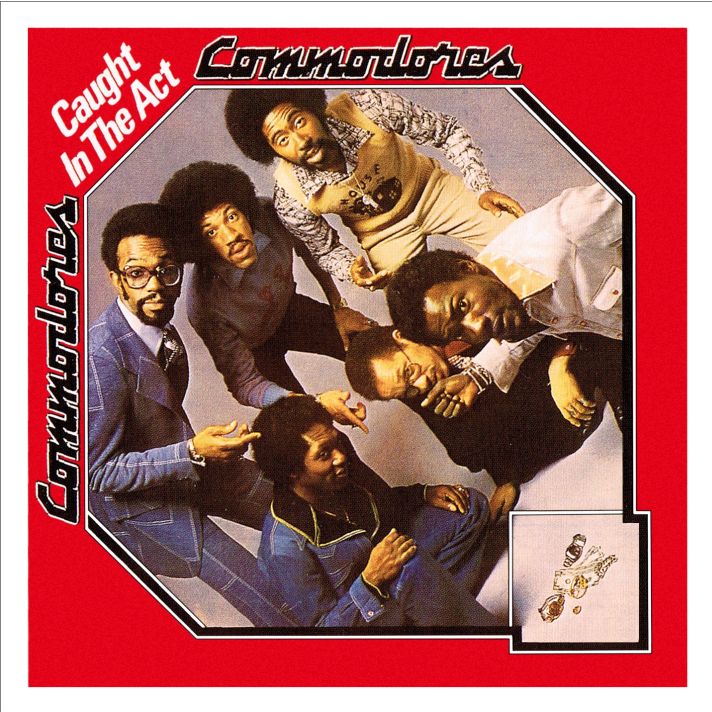
The sophomore slump wasn't a problem for the Commodores. The band's first album, Machine Gun, was quite promising, but its sophomore album, Caught in the Act, is even stronger. This superb 1975 LP, which the Commodores produced and arranged with James Carmichael, is more diverse than its mostly up-tempo predecessor. There are plenty of up-tempo funk gems; anyone with a taste for hard, sweaty 1970s funk won't be disappointed by "Look What You've Done to Me," "Wide Open," or the hit "Slippery When Wet," which soared to number one on Billboard's R&B singles chart and urges unfaithful husbands to give up their adulterous ways. But Caught in the Act, unlike Machine Gun, doesn't neglect slower material; "You Don't Know That I Know" and "This Is Your Life" are first-rate soul ballads. Excellent from start to finish, Caught in the Act is among the Commodores' finest albums.


Commodores - Caught In the Act  (flac  231mb)

01 Wide Open 3:30
02 Slippery When Wet 3:19
03 The Bump 2:52
04 I'm Ready 3:22
05 This Is Your Life 5:52
06 Let's Do It Right 3:44
07 Better Never Than Forever 3:49
08 Look What You've Done To Me 3:54
09 You Don't Know That I Know 6:33
10 Wide Open (Reprise) 1:00

xxxxx xxxxx xxxxx xxxxx xxxxx

RnB purists have often argued that the Commodores did their most essential work before 1977. It was in 1977 that they crossed over to the pop/adult contemporary audience in a major way with "Easy," and subsequent hits like 1978's "Three Times a Lady" and 1979's "Still" (both of which reached number one on Billboard's pop singles charts) certainly weren't the work of R&B snobs. Of course, Lionel Richie never claimed to be an R&B purist, although it is safe to say that the Commodores were still a hardcore funk/soul band when their third album, Movin' On, came out in 1975. From an R&B standpoint (as opposed to a pop or adult contemporary standpoint), this is one of their most essential releases. Those who love hard, gutsy 1970s funk can't go wrong with horn-powered gems like "Mary, Mary," "(Can I) Get a Witness," "Gimme My Mule," and "Hold On"; however, the song that Movin' On is best remembered for is the laid-back, gospel-drenched hit "Sweet Love." Written by Richie, "Sweet Love" is one of those secular soul tunes that isn't really gospel but borders on it; when Richie belts out the lyrics, "You got to keep on searching/harder/day by day," you feel like you're in the front row during an AME church service. And even though Movin' On is an LP that R&B purists rave about (rightly so), you can't say that it was ignored by pop audiences -- "Sweet Love" was a number two R&B hit, but it also reached number five on Billboard's pop singles chart.


Commodores - Movin' On  (flac 201mb)

01 Hold On 3:16
02 Free 3:54
03 Mary, Mary 4:08
04 Sweet Love 6:31
05 (Can I) Get A Witness 5:01
06 Gimme My Mule 5:05
07 Time 3:21
08 Cebu 4:48

xxxxx xxxxx xxxxx xxxxx xxxxx

The Commodores' early years were spent on the Southern funk circuit, where their energetic, catchy tunes, and keyboard-oriented funk made them both a college and a radio staple. They scored seminal hits with "Brick House" and "Slippery When Wet," although it became apparent quite early that lead vocalist Lionel Richie also had a bright future as a solo balladeer, with such tunes as "Easy" signaling his future on adult contemporary and Quiet Storm/urban contemporary radio. This collection highlights early up-tempo and ballad hits.


Commodores - Commodores (Zoom)  (flac 263mb)

01 Squeeze The Fruit 3:00
02 Funny Feelings 4:51
03 Heaven Knows 4:41
04 Zoom 6:43
05 Won't You Come Dance With Me 3:47
06 Brick House 3:27
07 Funky Situation 3:39
08 Patch It Up 3:58
09 Easy 4:16

xxxxx xxxxx xxxxx xxxxx xxxxx

Feb 12, 2016

RhoDeo 1606 Goldy Rhox 248

Hello, today the 248th post of GoldyRhox, classic pop rock in the darklight is the original motion picture soundtrack for the 1978 American musical romantic comedy film directed by Randal Kleiser and produced by Paramount Pictures. The film is an adaptation of Warren Casey and Jim Jacobs' 1971 musical of the same name about two lovers in a 1950s high school.

In the summer of 1958, Sandy Olsson meets local boy Danny Zuko at the beach while on vacation and they soon fall in love. As the summer comes to an end, Sandy worries about returning home to Australia and never seeing Danny again, but he assures her that it is only the beginning for them. On the first day of their senior year at Rydell High, Danny, the leader of a greaser gang known as the T-Birds, meets with his fellow T-Birds, Kenickie (2nd-in-command and Danny's best friend), Sonny, Doody, and Putzie, and they all catch up on what they did over the summer. Danny briefly mentions that he met a girl. Sandy, meanwhile, must enroll at Rydell after an apparent change in her parent's plans but is unaware of Danny's presence, as is he of hers. Sandy has made friends with Frenchy, a member of the Pink Ladies, an associated female counterpart to the T-Birds. Frenchy introduces Sandy to fellow Pink Ladies Rizzo, Jan, and Marty. Rizzo, the group's leader, notes she looks "too pure to be Pink".


***** ***** ***** ***** *****

Most of the albums i 'll post made many millions for the music industry and a lot of what i intend to post still gets repackaged and remastered decades later, squeezing the last drop of profit out of bands that for the most part have ceased to exist long ago, although sometimes they get lured out of the mothballs to do a big bucks gig or tour. Now i'm not as naive to post this kinda music for all to see and have deleted, these will be a black box posts, i'm sorry for those on limited bandwidth but for most of you a gamble will get you a quality rip don't like it, deleting is just 2 clicks...That said i will try to accommodate somewhat and produce some cryptic info on the artist and or album.

***** ***** ***** ***** *****

Today's mystery album was The soundtrack was released in April 14, 1978, two months ahead of the film's release. The cover gives credit to, and prominently features, the two stars of the film—John Travolta and Olivia Newton-John—although they only appear on seven of the 24 tracks. The remainder of the album is sung by various cast members and Sha Na Na, a group who performed many of the 1950s numbers in the film. The title track was recorded by Frankie Valli, who had no other connection with the film.

The most successful songs from the soundtrack were written specifically for the film. They included the Billboard number-one hits "Grease", "You're the One That I Want" and the number-three, Academy Award-nominated "Hopelessly Devoted to You".[4] In the UK, the album proved even more successful where "You're the One That I Want" and "Summer Nights" reached No.1 for nine and seven weeks respectively, while "Grease", "Hopelessly Devoted to You" and "Sandy" all became top three hits. The soundtrack album hit the top of the charts in the U.S. during the summer of 1978, replacing The Rolling Stones' Some Girls. In the UK, it remained at the top of the charts for 13 consecutive weeks. As of 2011, "You're the One That I Want" and "Summer Nights" are still among the 20 best-selling singles of all time in the UK (at Nos.6 and 19 respectively).

It is the second best-selling album ever released and top-selling soundtrack in history with 44.7 million copies sold worldwide. Here today its 2003 remaster with an instrumental singalong  ...N'Joy


Goldy Rhox 248   (flac 406mb)
Goldy Rhox 248 bonus   (flac 251mb)

Goldy Rhox 248   (ogg 148mb)
Goldy Rhox 248 bonus   (ogg 95mb)


***** ***** ***** ***** *****

Feb 10, 2016

RhoDeo 1606 Aetix

Hello, so mr Sanders won a big victory tonight against establishment candidate Hilary Clinton, not even 6 months ago this man was ignored by mainstream media, after all he was a leftwing nut. But then he makes a lot of sense and he's getting a big podium now. Alas even if he would make it to the white house his enemies -the 1% will find it easy to find idiots trying to kill him, and lets not forget the military, plenty of nut cases there as well (think pentagon attack 9/11). Meanwhile a 27$ campaign contribution will bring the world a political revolution..


Today's artist Die Form is a French post-industrial and electronic band formed in 1977-78. The name 'Die Form' means '(the) form/shape' in German, like the Bauhaus diary and is a play on the English homonym 'deformed' and on the French homonym 'difforme' (deformed). .....N'Joy

xxxxx xxxxx xxxxx xxxxx xxxxx

Die Form is the primary project of the French electronic musician and multimedia artist Philippe Fichot. He began by recording a number of experimental cassette releases, starting with Die Form 1 in 1977, and with the first Die Form vinyl release ('Die Puppe') appearing in 1982. Whilst the project was still in its infancy, the underlying concepts were still evident - a combination of esoteric electronic experiments with an underlying theme of erotism, death and other 'taboo' subjects, apparent in both the music and the album artwork, which Philippe also produces. Other early projects of Philippe Fichot included Krylon Hertz, Mental Code, Camera Obscura, Eva-Johanna Reichstag, Hurt and Fine Automatic.

'Some Experiences With Shock' followed in 1984, with the project taking a direction towards a more commercial sound on 1986's 'Poupée Mécanique'. The project then consolidated its experimental and melodic sides on 'Photogrammes', before introducing vocalist (and model) Eliane P. on the 1990 album 'Corpus Delicti', who remains with the project to this day. The next release, 1992's 'Confessions' saw a club hit in 'Silent Order', with sister album 'Ad Infinitum' (which originated from the same recording sessions) released a year later.

The next 'Die Form' releases saw the poetic, emotional side of their sound richen via 'The Trilogy of Passions', starting with 'Suspiria De Profundis' in 1994, followed by 'L'âme électrique' the following year. 1997's 'Duality' does not complete the trilogy, Phillipe Fichot choosing to leave the project open-ended. The 'Histories' compilation discs appeared in 1998, with the next album 'Extremum/XX' appearing in 2000. Then followed the 'diptych' of 'InHuman' (2004) and 'ExHuman' (2006), continuing their release of interrelated concept albums.

"The Bach project" was released in January 2008, an album obviously devoted to Bach. Die Form first presented this work live during the annual Bach Days in the German city of Leipzig, where they got invited. Die Form has created a new show for this project with the German dancer Sabine Seume.

Die Form left Trisol to join Out of Line in late 2008. A new single, "Her[t]z Frequenz", was released in October 2008, followed by the "Best of XXX" in November 2008 (a compilation with reworked and remastered songs from the past 30 years). In 2009, "Noir Magnétique" saw Die Form back in a club-oriented sound. The album was made available on CD only, with a special edition limited to 999 copies in a box with a 7" single and extra artwork. Die Form created a new show with Laina Fischbeck on stage. In March 2010, a vinyl boxset compilation of early K-Cassette material was released on Vinyl-On-Demand. In 2011, a double-CD digipak limited edition of Sombre Printemps ("Ambient & Film Music 1+2") has been released on Out Of Line.

xxxxx

Philippe Fichot is the creator of Die Form, and has been a photographer for more than 43 years. His work is almost always in black & white, described as being, "an exploration of the subconscious of eroticism and of the dark poetry of the human body." An artist whose work continually seeks to expose the ultimate beauty, he has mastered the use of light and shade, as well as darkroom manipulation, to an extreme degree. Each photograph is timeless, like seen through old mirrors, and an esthetic offense bordering on the prohibited. The figures float between life and death in obscure fluids - perhaps drowned, or perhaps sleeping and always exposed to the eye of the voyeur. Eroticism (and sex) are in this case not excuses for exhibitionism, but a reflex of the soul which emerges from obscurity : absolute phantoms whose sensitive image commences to exist...

All these dream visions are projections of the theatre of the spirit. They are put on stage with precision and then reprocessed in the dark room by hand, engendering an unknown, microscopical and abstract reality under the surface of the picture. The ultimate dimension of passing time emerges... petrified beauty, a soiled and diaphanous icon.

xxxxx xxxxx xxxxx xxxxx xxxxx

The voluntary experience of pain is inherently human. It arises from the tragic and desperate foresight of the man who admits the obvious reality of death. It is no longer pretending that destiny that is reserved to others. Feigned or instinctive truth that man immediately raises as premise: since death will be, we will not be. Why then fear what we will never be confronted? This is not so much death that the idea of death that we should approach only because it is the source of our unalterable heavier lamentations. We try, in strategists to hide in our mind and Youth, supreme alliance manages to feed this decisive lie. However, time does its work every day and weighs on our conscience. The dead also. It is therefore not to suffer the pangs of waiting in this naive passivity that makes us vainly hope for mercy. Death, it is only the living who suffer and if "another day another life" 1, no one should forget that this is a life less.  Certainly, "philosophize, c is to learn to die "2 but there is an alternative expressed by Photogrammes: pain. This choice pushed to its climax annihilate not only what it produces but also any sensory expression. This absence is sensitive physiologically what brings us the most reasons that make us psychologically deny death. This is a quest ataraxie constantly renewed a state that is outside of consciousness: I have lost your eyes 3, ie the permeable medium that betrays being, feeling, feeling, in a word ending , life. The experience of pain is in this context a supposed knowledge of death, the materialization of the eternal unknown, a perception that goes astray. It is the execrable morphine calms evil without cure, physical violence for spiritual peace. Finally, it is unnecessary to mirror the girl with dead eyes 4. No need? No.


Photogrammes does a good job of creating a balance between the intense noise of the early work and the smoother, female-vocal dominated music of Poupee and Corpus. Production values are strong, with a good dynamic range. Stand-out tracks include "Will You Live Again?" "Long-Term Survivor," and "Experiment With Tears." If you are only familiar with DF's more techno-inspired work, this may take some getting used to, as it is definitely an industrial album, with a harder, more minimalist edge to it. But I think this is some of DF's most mature and interesting music (once again, speaking from a pre-Confessions standpoint). Overall, a solid album, and an excellent bridge between the harsh experimentalism of DF's past and the lush techno-goth that would be their future.


Die Form - Photogrammes (flac  343mb)

01 Remission 5:20
02 I Have Lost Your Eyes 4:48
03 Will You Live Again? 4:50
04 Long-Term Survivor 5:15
05 Sadia 3:40
06 Experiment With Tears 4:06
07 Shadows Of Death 4:18
08 Cathodic Funeral 4:10
09 Praise Of Stake 3:51
10 Immaculée 5:46 .

Die Form - Photogrammes  (ogg   122mb)

xxxxx xxxxx xxxxx xxxxx xxxxx

One of the most famous works of industrial fetish bdsm avantgarde kult, composed and performed by Philippe Fichot between 1989 and 1991: naive melodies and childish voices meet up in a harsh contrast with rough cyclic rhythmic gloominess, darkwave severance and other-dimensional psychedelia, delving up into continuous madness Now the album of 1990 in a new design and new remixes. Also this re-release comes back in beautiful digipack therefore offers all photo collectors back a newly designed booklet. "Corpus delicti" is one of the "catchy" The Shape Album is characterized by techno and electro-heavy sounds and includes with "Savage logic" and "Slavsex" two tracks, which at that time were able to cause a stir in the clubs and at the same time the first of Eliane were vocally supported. "Corpus delicti" is likely to be interesting to the form newcomers, since it hasn't trailed so experimentally far as its predecessors.


Die Form - Corpus Delicti 2 (flac  322mb)

01 Slavesex 3:58
02 Chains Of Love 4:22
03 Erector Muscle Stimulus II (Remix) 3:53
04 Ordinator II (Remix) 4:44
05 Beyond The Bridge 4:15
06 Analogic (Remix) 4:46
07 Steelknife II (Revoiced Mix) 4:18
08 Teufel Im Leibe (Revoiced Mix) 4:17
09 Power Of Persuasion 3:45
10 Corpus Delicti 4:02
11 Savage Logic (Revoiced Mix) 4:19

Die Form - Corpus Delicti 2  (ogg   119mb)

xxxxx xxxxx xxxxx xxxxx xxxxx

Marquis de Sade (2 June 1740 – 2 December 1814), was a French aristocrat, revolutionary politician, philosopher, and writer, famous for his libertine sexuality. His works include novels, short stories, plays, dialogues, and political tracts; De Sade is best known for his erotic works, which combined philosophical discourse with pornography, depicting sexual fantasies with an emphasis on violence, criminality, and blasphemy against the Catholic Church. He was a proponent of extreme freedom, unrestrained by morality, religion, or law. The words sadism and sadist are derived from his name.

Les Cent Vingt Journees de Sodome was written in 1785. Sade wrote The 120 Days of Sodom in the space of thirty-seven days in 1785 while he was imprisoned in the Bastille. Being short of writing materials and fearing confiscation, he wrote it in tiny writing on a continuous, twelve-metre-long (39.37 feet) roll of paper, made up of individual small pieces of paper smuggled into the prison and glued together. It tells the story of four wealthy male libertines who resolve to experience the ultimate sexual gratification in orgies. To do this, they seal themselves away for four months in an inaccessible castle in Saint-Martin-de-Belleville, France, with a harem of 46 victims, mostly young male and female teenagers, and engage four female brothel keepers to tell the stories of their lives and adventures. The women's narratives form an inspiration for the sexual abuse and torture of the victims, which gradually mounts in intensity and ends in their slaughter. The work went unpublished until the early twentieth century.

D.F. Sadist School is a side profect of Die Form.
“For students of the extreme this educational aid should not be missed. In this side-project you will experience experimental chill out phases, as you learn the values of experimentation, and the importance of relaxation, after the rigors of the previous.”


D.F. Sadist School - Les Cent Vingt Journees de Sodome (flac 287mb)

01 Viola Porpora 2:32
02 Sector Of Hell 6:40
03 The Scavenger 6:36
04 Autolyse 8990 3:53
05 Café Morgue 13:26
06 La Femme Sans Tête 8:31
07 X-Zone 4:03
08 La Fille Aux Yeux Morts 8:15

D.F. Sadist School - Les Cent Vingt Journees de Sodome   (ogg 111mb)

xxxxx xxxxx xxxxx xxxxx xxxxx


Feb 9, 2016

RhoDeo 1606 Roots

Hello, finally after months adrift in the doldrums we've reached the Brailian shores just in time for carnival....


In 1974 the prestigious Discos Marcus Pereira decided to record the repertoire that marked the path of the direct Rio samba schools from the source. Mangueira, Portela, Imperio Serrano and Salgueiro are the most important of the early 70 's They were chosen , each has a unique album here. Within this historical review can be found Carlos Cachaça, Nelson Sargento, Monarco, Dona Ivone Lara and many other masters. A valuable collection  .....N'Joy

xxxxx xxxxx xxxxx xxxxx xxxxx

The samba is a sub-genre of modern samba emerged in Rio de Janeiro in the decade of 1930, made specifically for the parade of a samba school. Every year, the samba schools often promote internal competitions, where several songs are presented to the public in their courts, where at the end, usually between the months of September and October, one of them is chosen as official samba theme for Carnival next year . Sometimes the option is to merge two or more sambas-plot that is to the liking of school members.

The samba champion packs to school during the preparation phase, technical trials to be presented in the carnival parade. For a Samba is considered samba-plot, it should portray the plot chosen by the school carnival committee (not to be confused with plot theme). The samba is one of the items used in the trial of the parades of the schools. The evolution of school much depends on the progress of samba and its development on the promenade: some schools prefer to leave the calmer samba, other busier, or even more romantic! It all depends on your parade style that can change costumes for carnival.

Samba schools that traditionally present with a very large number of components generally use a faster beat to accelerate the movement of revelers in the street and keep the harmony of the whole. Until 1947 the samba schools sang during the show, two or three sambas that made no allusion to the plot. Composed of a previously ready chorus, and during the parade, were made improvisations. In 1946, the institution at the time, organized the parades of the samba schools, banned improvisation, requiring all used the samba-plot, which had already emerged, eventually being sung by some schools. Became famous this year's samba school case Delight Serrinha, who rehearsed the samba-plot "the San Francisco Conference" (authored by Silas olive and Mano Décio da Viola), but when the show turned out to present a samba the yard, which led the school to poor

Among the questions posed by a samba school during carnival, the most important of them is the samba-plot, where it is a snapshot of the history of the college present. It appeared in Rio de Janeiro in mid-1930 by presentation of a samba school that brought the news to the catwalk. The success was so great that other associations have joined the model. The choice of the samba-plot is made through internal competitions in schools, where the songs are presented. But choosing the samba is made ​​by the listening public, namely school members themselves. Often, when two sambas dispute the classification, the leaders choose to merge them in order to achieve better results, a more harmonious and rich rhythm. The lyrics of the samba-plot may be interpretative or descriptive, and the descriptive features the subject in great detail.

The melody should be lively and contagious, with striking features, own school which has, beyond good taste
as the joint letter. It is important that the harmony of melody facilitates the corner, because in this way promotes the learning of the letter and contagious the audience, singing fervently, making the most beautiful sight. In the event of breakdown in the sound truck during the presentation of some samba school, the members will be responsible for pulling the samba until the end of the parade, in total harmony with the battery drums to ensure they do not lose points.

In fact, a crash sound car does not cause loss of points, but if the members do not take the paper handles, it will lead to such losses. Therefore, it is important that all components participate in the testing in order to sustain the school if any problem at the time of the parade. The harmony and integration become perfect when the group is well rehearsed. Of sambas-plot, will be evaluated by the judges: the letter, the suitability of the same to the plot, good taste and poetic richness, the meshing of the verses to the melodies, the built-in rhythm to lyrics, the musical harmony, ease letter and music, among others.

There are always those sambas that, each year, are remembered at dances, parties and carnival celebrations as the best ever written and sung since 1932, when it happened the first parade of the Rio schools. Whether through symbolize the breaking of barriers in the world of samba or the inventiveness of his verses and melodies, they went down in history as carnival classics. To warm your revelry with the best of samba, elected our top 10, we share with you below. Listen, recall old times and good romping!

xxxxx xxxxx xxxxx xxxxx xxxxx

Rio samba school founded on April 28, 1928, on the hill of the hose. The Recreation Club Samba School Mangueira is proud to have as founders; Carlos Cachaça, Cartola and Zé Espinguela. Before the school's founding in the Morro da Mangueira had already Gras beads, among which stood out "Warriors of the Mountain" and "Trumps the hose." Besides the cords, had ranches that allow the participation of women in the processions, the use of allegories, plots and standard door. In the history of the carnival was the first to hold a unique marking the first deaf on drums.

The school symbol, the deaf is the samba; its laurels, the victories; the crown, the imperial district of Saint Kitts; and the stars, titles. The school has in its history, 18 titles and a super championship won in the year of inauguration of the Sambadrome in 1984. The Jamelão singer, who did not like being called puller, was the interpreter of the 1949 school sambas to 2006. One of the most old (though not the first) of the samba schools of Rio.


Historia das Escolas de Samba - Mangueira  (flac 173mb)

01. Padeirinho - A mais querida 02:13
02. Nelson Sargento - Cântico à natureza 02:50
03. Carlos Cachaça - Vingança 01:34
04. Padeirinho - O grande Presidente 02:35
05. Preto Rico - Lendas do Abaeté 02:19
06. Cartola - Vale do Sao Francisco 02:49
07. Grupo Mangueira - Imagens Poéticas de Jorge de Lima 02:23
08. Cartola - Todo o tempo que eu viver 02:33
09. Jurandir - Mercadores e suas tradições 03:21
10. Carlos Cachaça  - Homenagem 02:56
11. Cartola - Chega de demanda 01:26
12. Velha Baiana - Velha Baiana 02:50

 (ogg 00mb)

xxxxx

The Portela name comes from the time of colonial Brazil when the then Irajá parish, during the eighteenth and nineteenth centuries was a region occupied by productive sugar mills, including the Mill of Portela between the Treasury Camp to Rio das Pedras. - what is known today as Madureira (Lourenço Madureira, one of the most famous traders of his time)
With the crisis of the economic model based on labor, slave labor throughout the nineteenth century, the region was slowly going into crisis. After the Proclamation of the Republic of Brazil and the urban reforms that resulted in much of expulsion of population living in the center of Rio de Janeiro, many ended up fleeing to the farthest regions of the center, occupying the hills and old estates, including, the old Mill of Portela. With the changes in Rio de Janeiro, hitherto region of Rio das Pedras inherit the name of the nearby river, named the sanitarian Oswaldo Cruz that wiped out yellow fever in the city.
The region of Oswaldo Cruz was occupied mostly by former slaves in Minas Gerais and former State of Rio de Janeiro (which did not include the city of Rio de Janeiro, autonomous federal district) and, during the process of cleaning the center of Rio, did not receive basic assistance from the government, why there was no water or common electricity in the most affluent neighborhoods in Rio. Access and movement of the residents was also hampered by huge Walloons. The main route of the region was the road Portela, who inherited the old mill name. Among the social problems, the residents of Oswaldo Cruz manifested themselves culturally in religious festivals, drumming and jongo, past heritage and slave ancestors, something which would influence the history of Portela.


Historia das Escolas de Samba - Portela (flac  228mb)

01. Manacéia - Brasil de ontem 02:17
02. Francisco Santana - Hino à velha guarda da Portela 02:58
03. Alvaiade - O mundo é assim 02:29
04. Alvaiade - O quitandeiro 03:00
05. Alvaiade - Brasil, Pantheon de glórias 03:21
06. Monarco - Sentimentos 02:42
07. Mestre Marçal - Macunaíma 03:40
08. Casquinha - Recado 02:45
09. Walter Rosa - Rio, capital eterna do Samba 02:30
10. Alcides Lopes e Alvaiade - Falem de mim 02:06
11. Monarco - De Paulo da Portela a Paulinho da Viola 02:55
12. Alcides Lopes - Cidade Mulher 03:00

Historia das Escolas de Samba - Portela  (ogg   98mb)

xxxxx

Was founded on March 5, 1953 from the union of two samba schools in the Morro do Salgueiro: Blue and White and When I Say. The States Willow, third existing school in that area and had as main representative the samba Joaquim Pants Larga, did not agree with the merger and, therefore, missed out. Later he disappeared. In his first parade, with the theme "Pilgrimage to Bahia" in 1954, the Academic Willow surprised the audience and achieved third place, ahead of Portela.
The first president of the Willow was Paulino de Oliveira and in the years that followed, school dared to deal with scenarios that they put the black highlighted, and not as extras. It is striking example of this new style, Ship Slave (1957). But it was in 1958, under the presidency of Nelson Andrade, the college adopted the motto that brings to this day: neither better nor worse, just a different school. Nelson Andrade was responsible for the way the carnival Fernando Pamplona for Willow in 1960, ushering in a major change in school look. Pamplona has created a team of it, the couple Dirceu and Marie Lousie Nery, Arlindo Rodrigues and Nilton Sá, revolutionized the aesthetics of parades of schools samba.Essa trend was reinforced with the arrival of Fernando Pamplona and later Arlindo Rodrigues, they rescued black characters that have enriched the history of Brazil, although they were slightly portrayed in textbooks, as Zumbi dos Palmares (Palmares - 1960), Xica da Silva (Xica da Silva - 1963) and King Chico (Chico Rei - 1964) . in the 1970s, the school embodies the young artist Joãosinho Thirty, who was a student of Pamplona, in memorable shows 1971 Feast for a King Black (samba composed of Zuzuca, with the carnival Joãosinho Thirty with which obtains its 5th title and the championship in 74/75 with king of France in haunt Island (samba composed in 1974 by Joe Di and Trickster having as carnivalesque Thirty Joãosinho that earned him his 6th title of the carnival) and king Solomon's mines (samba compound in 1975 by Nininha Rossi, Dauro Ribeiro, Zé Mário Pinto and stone and with the carnivalesque Thirty Joãosinho with which he won his 7th title).

Rebuilding in 2007 Willow went in search of their roots to find in East Africa, the history of Candaces, black queens who ruled the Empire Meroe seven centuries before Christ. Everything seemed perfect for a victory - or at least the runner-up. The school made ​​a brilliant show and left acclaimed by the public and the press as a postulant for the title. This expectation lasted only until the reading of the first notes on Ash Wednesday. Inexplicably jurors gave poor grades to school. Away from the championship battle, Willow finished the investigation in 7th place. In 2008, speaking of the city of Rio de Janeiro, the Willow won the runner-up.
After the runner-up, Willow held elections for the choice of the executive board responsible for school command in the triennium 2008-2010. The winner was the candidate of the situation, Regina Celi Fernandes Duran, second woman in history to preside over the school.


História Das Escolas De Samba - Salgueiro (flac 252mb)

01. Geraldo Babão - Morro inspiração 02:54
02. Noel Rosa de Oliveira - Chica da Silva 03:28
03. Geraldo Babão - Nega, o que queres de mim 03:16
04. Pindonga - Casa do pequeno jornaleiro 03:37
05. Romário - Bahia 02:12
06. Geraldo Babão - Homenagem a Antenor Gargalhada 02:37
07. Sam Rodrigues - O segredo das minas do Rei Salomao 03:44
08. Noel Rosa de Oliveira -  Quilombo dos Palmares 02:47
09. Pindonga - Imperatriz do Samba 03:37
10. Geraldo Babão - Historia do Carnaval 04:27
11. Noel Rosa de Oliveira - Assim não é legal 03:13
12. Iracy Serra - Sambista 03:07

História Das Escolas De Samba - Salgueiro   (ogg 107mb)

xxxxx xxxxx xxxxx xxxxx xxxxx

While many schools have only window, the Empire Serrano has mirror. If sees, appreciates, it dignifies. He is less interested in "appears" and more interested in "being what it is." Thank God! Mirror that reflects to transmit their ancestral knowledge, his shrine lessons, principles and fundamentals. The Empire Serrano is a giant who does not give in easily to the ripple of modern times. Being large, it has with himself and his supporters that sacred commitment to preserve the richness of its history. Touching and charming that your journey! For this, the school picked up a lot. He picked up back there when he broke the hegemony of the great and became a glance great too. Caught when his poet-symbol, Silas de Oliveira, was called to testify on some samba praised freedom in days of political dictatorship. He picked up, too, when this story began sponsoring the carnival. When he opened his book to tell the story of a businessman, in the distant 1997, there Empire understood that distance themselves from their historical verve does not match its flag. I could hardly imagine that after that incident, the error would become the rule, and it would be the last bastion of samba to fight and resist against invasive fury of sponsored themes, personalities and foreign elements to samba. Today penalized are those who do not surrender to marketing. But since "Imperian faith not tired," the fight're purchased, and the Empire does not give up. The Empire is so. It has its peculiarities. It is a capital school, imperative male ... "The" Empire is a man with H! "A child's green hope not run from a fight / Come fight!" - Proclaims in one of his poetic and self-explanatory verses. And even though our children and our children's children one day begin to lose the reference that takes a samba school parade of leading a people to sing with tears a samba-plot; and even if one day lose the notion that the spectacle of the samba schools can grow without losing its fundamental roots ... suffice someone look, wherever you are parading the Empire Serrano


História Das Escolas De Samba - Império Serrano (flac  246mb)

01. Avarase - Sou Imperial 02:36
02. Dona Ivone Lara - Os cinco bailes da historia do Rio 03:10
03. Jorginho Peçanda - Não chore, amor 02:24
04. Dona Ivone Lara - Amor inesquecível 03:18
05. Avarase - Antônio de Castro Alves 02:35
06. Jorginho Peçanha - Heróis da liberdade 03:01
07. Avarase - Zaquia Jorge, estrela do subúrbio, vedete de Madureira 03:00
08. Jorginho Peçanha - Aquarela Brasileira 03:27
09. Mestre Fuleiro - Minhas primaveras 03:35
10. Dona Ivone Lara - Glórias e graças da Bahia 03:18
11. Wilson Diabo - Nordeste, seu povo, seu canto e sua glória 03:46
12. Jorginho Peçanha - Meu drama (senhora tentação) 03:30

História Das Escolas De Samba - Império Serrano  (ogg   101mb)

xxxxx xxxxx xxxxx xxxxx xxxxx