May 19, 2015

RhoDeo 1520 Re-Ups 16

Hello,

Storage maybe dirt cheap these days -compared to 5 years ago, but the hosts are much more money orientated and look at turnover and notice that keeping data longer than 1 month isn't making them money. Thus the coming months i'm making an effort to re-up, it will satisfy a small number of people which means its likely the update will  expire relativly quickly again as its interest that keeps it live. Nevertheless here's your chance ... asks for re-up in the comments section prefarbly at the page where the expired link resides....requests are satisfied on a first come first go basis. As my back up ogg hard disk is nonresponsive currently, i most likely will post a flac instead~for the the pre medio 2011 posts~ but i would think that is not really a problem...updates will be posted here and yes sign a name to your request and please do it from the page where the link died!

You can still put in your request and should i've missed your first request please remind me


More new updates here

Cluster & Neu NOW in Flac ( Neu, Grosses Wasser, Curiosum)

Tuxedomoon Solo efforts Now in Flac (alas without the Reininger vinyl rips)


3 Jansen, Barbieri & Karn Back in Flac (Beginning to Melt, Ism, Playing In A Room With People)


3x Richie Hawtin NOW in Flac
(Plastikman-Consumed, Decks, EFX & 909, Sound Of  3rd Season)


3x George Clinton  Back in Flac (Computer Games, Cinderella Theory, Hey Man, Smell My Finger)


3xISHQ Back in Flac (Emerald, And Awake, Skyspaces)


4x Evolution of Dub Back in Flac (3xJoe Gibbs, Sly n Robbie)


3x Morocco Back in Flac (Rough Guide to music of, Tajine Electrik, Rough guide to Rai)

xxxxx xxxxx xxxxx xxxxx xxxxx

May 18, 2015

RhoDeo 1520 Empire Strikes 10

Hello,

This week the final episode of the Empire will Strike Back !...not to worry The Jedi Will Return

A long time ago in a galaxy far far away...................

At first, the idea seems bizarre, even ridiculous. Star Wars, a movie best known for its vistas of alien worlds and epic battles, as a 13 part radio drama? Well, unless you have the cold heart of a Sith, Star Wars did indeed translate well from the silver screen to radio, thank you very much. Yes, Star Wars' visual effects are a big part of the magic of the saga, but the heart and soul of George Lucas' galaxy far, far away are the characters and the storyline. And while the movie is satisfying on its own, the radio dramatization written by the late Brian Daley takes us beyond the movie....beyond the screenplay...and even beyond the novelization.

xxxxx xxxxx xxxxx xxxxx xxxxx

This landmark production, perhaps the most ambitious radio project ever attempted, began when Star Wars creator George Lucas donated the story rights to an NPR affiliate. Writer Brian Daley adapted the film's highly visual script to the special demands and unique possibilities of radio, creating a more richly textured tale with greater emphasis on character development. The success of the first series led to a 10-part, four hour 15 minute series based on the 1980 film The Empire Strikes Back, again written by Daley and directed by Madden. The series debuted on NPR on February 14, 1983.

Like the preceding series, The Empire Strikes Back expands on the movie's story by incorporating new scenes. Examples include an Imperial attack on a Rebel convoy set before the film's opening scene and a tense conversation between Solo and Skywalker while the two are stranded in the Hoth wastelands.

National Public Radio's promoted the series in part by getting Craig Claiborne to create his version of Yoda's rootleaf recipe, which the Jedi Master serves Luke in the hut on Dagobah. The recipe ran in magazines and newspapers across the country.
Billy Dee Williams reprised Lando Calrissian, and John Lithgow played Yoda at the same time Madden was directing Lithgow in the play Beyond Therapy. Hamill and Daniels returned to voice Skywalker and C-3PO.

xxxxx xxxxx xxxxx xxxxx xxxxx

It was recorded in 1982 at A&R Studios, New York City

With among others:
Mark Hamill as Luke Skywalker
Perry King as Han Solo
Ann Sachs as Princess Leia Organa
Billy Dee Williams as Lando Calrissian
Bernard Behrens as Obi-Wan Kenobi
Brock Peters as Lord Darth Vader
John Lithgow as Yoda
Anthony Daniels as C-3PO
James Eckhouse as Beta
Peter Friedman as Dak
Ron Frazier as Deck Officer
Merwin Goldsmith as General Rieekan
Peter Michael Goetz as Ozzel
Gordon Gould as Veers
Paul Hecht as The Emperor
Russell Horton as 2-1B
James Hurdle as Controller
Nicholas Kepros as Needa
David Rasche as Piett
Alan Rosenberg as Boba Fett
Jay O. Sanders as Imperial Pilot
Don Scarino as Wedge
Ken Hiller as Narrator


The Empire Strikes Back 10 Clash Of Lightsabres (mp3  25mb)

2-10 Clash Of Lightsabres 27:35


xxxxx xxxxx xxxxx xxxxx xxxxx

previously

The Empire Strikes Back 01 Freedom's Winter (mp3  24mb)
The Empire Strikes Back 02 The Coming Storm (mp3  24mb)
The Empire Strikes Back 03 A Question Of Survival (mp3  23mb)
The Empire Strikes Back 04 Fire And Ice (mp3  24mb)
The Empire Strikes Back 05 Millennium Falcon Pursuit (mp3  24mb)
The Empire Strikes Back 06 Way Of The Jedi (mp3  25mb)
The Empire Strikes Back 07 New Allies (mp3  25mb)
The Empire Strikes Back 08 Dark Lord's Fury (mp3  23mb)
The Empire Strikes Back 09 Gambler's Choice (mp3  23mb)


A New Hope 101 A Wind to Shake the Stars (mp3 25mb)
A New Hope 102 Points of Origin (mp3 25mb)
A New Hope 103 Black Knight, White Princess (mp3 25mb)
A New Hope 104 While Giants Mark Time (mp3 25mb)
A New Hope 105 Jedi That Was Jedi To Be (mp3 25mb)
A New Hope 106 The Millenium Falcon Deal (mp3 25mb)
A New Hope 107 The Han Solo Solution (mp3 25mb)
A New Hope 108 Death Star's Transit (mp3 26mb)
A New Hope 109 Rogues, Rebels And Robots (mp3  26mb)
A New Hope 110 The Luke Skywalker Initiative (mp3  26mb)
A New Hope 111 The Jedi Nexus (mp3  25mb)
A New Hope 112 The Case For Rebellion (mp3  25mb)
A New Hope 113 Force And Counter Force (mp3  25mb)

xxxxx xxxxx xxxxx xxxxx xxxxx

May 17, 2015

Sundaze 1520

Hello,


Today a composer/sound artist currently located in Berlin. His music is based on sound manipulation created with acoustic instruments and field recordings..... N'joy

xxxxx xxxxx xxxxx xxxxx xxxxx

Field Rotation was founded 2008 by the electronic music composer and producer Christoph Berg in Kiel, northern Germany. Experimenting with electronic and classical elements this project combines floating soundscapes with electroacoustic colours to create minimalistic soundtracks renouncing of visual..


As this is yet another artist that shy's the limelight and thinks it not done to have a somewhat decent biography at his website we'll have to make do with this 'oversight' an interview he gave..

Hey Christoph, it was nice finally meeting you in Berlin during the Denovali music festival. How long have you been living in Berlin and how do you like it?
The pleasure was mine! I’m still impressed that you made it to Berlin just for a (cold) weekend of concerts, music and shopping for vinyl. I moved to Berlin one and a half years ago and actually I didn’t regret that decision for a single day yet. The city is so special and absolutely different to the place I lived before. I think that it would take more than one life to visit all the bars, venues, clubs, galleries, museums – and it would surely cost a fortune as well.

Sometimes when I listen to music it’s hard to tell whether it was played live or sourced from another source. Watching you perform live opened my eyes to the fact that you actually play piano and the stringed instruments  How long have you been playing and are you classically trained?
I’ve been classically trained on the violin since my childhood and played a lot of classical music: solo concerts as well as being a member of several chamber music ensembles, string orchestras, youth symphony orchestras and festival orchestras. My (serious classical) piano lessons started relatively late but with a higher intensity then as a teenager. I later joined a Big-Band (that focused on Funk and Soul music) as the piano and organ guy. Looking back like that makes me wonder how I got all that managed or whether I’m just getting old…

On your latest release, ‘Fatalist: The Repetition of History’, you invited Aaron Martin to play the cello. How did this collaboration come into play?
As you know, Aaron is a really experimental and open-minded musician whose music I enjoyed a lot over the past years. When I worked on this last album I was in the need of some low strings and some experimental techniques and always had his specific cello sound in mind for some parts of the album so that I just decided to shoot an email over to Topeka to check whether he’d be up for that – and hell yeah, he was! He delivered even more fantastic stuff than I originally asked for. It’s so brilliant to work with him and I’m looking forward to presenting a split release with Aaron later this year.

So is there a particular separation in your mind from the works that you record under your Field Rotation moniker versus your real name?
The main separation lies in the intensity of using electronics, I’d say. I’m trying to work with nearly no electronics and effects on my chamber music project under my born name, composing music that I can perform as a one man ensemble through just looping myself on stage. The Field Rotation moniker is a project that is sort of a personal musical playground without borders or limitations. So one day it can be a weird drone piece, the other day I’m coming up with some electronic stuff and then again electroacoustic music with classical references.

You’ve released albums on Fluid Audio, hibernate, and now Denovali – how do you decide which label to work with?
The decision which label to work with always depends on my gut feeling and whether the ideas of the label and myself can be connected in a way that makes sense for both of us. Usually it’s not only my decision, both parties have to agree. But so far I really can’t complain, I even made new friends that way!

I would say that your music is very melancholic, and it is why I connect with it deeply. Is there a particular atmosphere that you try to capture with your sound?
This is a really tough question. I don’t think that there’s a particular atmosphere that I try to capture with my work in general. But every single piece (or regarding “And tomorrow I will sleep”: the complete album) aims to picture something. I really like the idea to give myself a theme to work on. A theme perfectly serves as a frame. And I often need a frame to make sure that I’m not losing track of the original project. But I would agree that my music – at least mostly – is very melancholic. Sometimes it’s intended, sometimes it’s just happening.

I know that this may be an open-ended question that is hard to fulfill, but could you briefly describe your process of composition?
If I had a certain process of composition it would be much easier to describe. But it always depends on the project, the complexity of composition and also the grade of patience I have. So it’s very rare that I’m sitting down to score an idea first. Especially since I had to find out once that there was nearly nothing left of the original score when I finished the project. Also writing scores can be very time-consuming so that I’m sometimes afraid of just forgetting parts of my idea before I was able to capture it on paper. That’s why I preferred to directly record my ideas lately. This way also produces a lot of rejects but then again these can be used for some weird effects, samples, pitches, stretches or clicks and cut material. In my opinion it’s the most economical way of production if you are able to recycle stuff that otherwise would have been a complete waste of time and energy. Once a project starts to take shape I usually have to put it aside for a while before I have an idea how to continue or how to complete it. Then again, I still have a composition for two pianos in the drawer for years now that needs an orchestral transcription and certainly some adjustments and additions here and there. So in a case like that scoring is an essential part of the process of composition. I wanted to start working on that transcription this or next year, we’ll see. Maybe I’ll have much more to talk about when this work is done…

Who and what are you influenced and inspired by?
This may be another open-ended question actually so I’ll try to keep it short and without dropping names as this possibly would be endless. I’m may be mostly influenced by all the pieces I had to work on for my violin and piano lessons and all the symphonies and orchestral works I played as a member of the various ensembles and orchestras I already mentioned before. It always was a very detailed work, to know every single note, how it fits to a phrase and how this phrase is then connected to the piece as a whole. This working method heavily influenced me – not just regarding the way how I compose and perform music but also regarding the view I have on music when I’m just listening to it. The only exception seems to be that I’m not really caring about virtuosity anymore.

And lastly, can you tell us what have been working on lately?
I already mentioned that I’m currently working on a split release with Aaron Martin that will be released later this year. Furthermore I won’t work on any other new things than collaborations and remixes for a while due to time issues through my daily job that won’t allow me to focus on a complex and time-consuming project like a new full length album.

xxxxx xxxxx xxxxx xxxxx xxxxx

Field Rotation presented one of the most perfect albums of decade. Beautiful electronic glitchscapes with various acoustic elements. Field Rotation is a project with a rare sense of elegant beauty. The subtle classical threads that twine through these digital arrangements imbue the music with a dignity and grace that immediately lifts Licht und Schatten above the norm. The melodic content is relatively minimal, yet these sparse soundtracks are highly emotive, heavy with atmosphere and most inviting. Melancholy acoustic guitar hangs over heaving synthetic pads in melodic calm, whilst in other passages tense string swells ebb and flow in dramatic shadow. Plaintive piano and transmission fragments alternate with string snatches upon a bed of sonic breeze, the crunch of footfalls rises and falls behind days-end glow, faint arpeggios morph across rhythmic electronica. Once the understated beats roll in, the music almost sighs at times with a restrained serenity. Click-ridden scratchy rhythms and soft crackle adorn the more regular beats that drive some of the recordings, some pieces have no beat for the most part or none at all. Licht und Schatten has an otherworldly quality about it, a sublime soft focus warmth. Most pieces have a gentle solemnity, a wistful nature - that beautiful sadness that tugs at the heart.


Field Rotation - Licht Und Schatten (Light and Shadows) (flac 369mb)

01 Abendrot 9:09
02 Polarlicht 11:00
03 Lichtermeer 6:45
04 Lichtbrechung 7:09
05 Mondfinsternis 8:29
06 Tiefflug 9:14
07 Schlafwandler 5:16
remixed
08 Schlafwandler (Tagträumer) 4:27
09 Mondfinsternis (Zweiter Teil) 4:12
10 Polarlicht (Nordlichter) 2:40

xxxxx xxxxx xxxxx xxxxx xxxxx

"Christoph Berg built this world throughout a two-year period, with the stated aim of integrating the literary traits of Kafka and Hemingway into an auditory form, seamlessly blending cinematic character with a subtle and mature melodic personality".

Acoustic Tales is the first of two album released in 2011 by German producer and composer Christoph Berg, best known as Field Rotation. Although 2009 Licht Und Schatten technically could be considered as Field Rotation's first album, Acoustic Tales is to be the artist's first full-length, with the follow-up, And Tomorrow I Will Sleep, being released just a few months later. Field Rotation's music is usually downtempo and minimal, exploring textures, moods and atmosphere in a very abstract way, reminiscent of artists like Jacaszek and Murcof. The music is not devoid of soul and warmth, but it does its best to hide it. Acoustic Tales is a notable exception.

 Field Rotation present eleven "acoustic tales" to us, compositions in which his love for classical music is explored for the first time on record. The album feels more like a classical-influenced album with electronic influences, than a electronic record with classical undertones. Does it makes a difference? Well, if you are put off by the "electronic" tag, this album does not really sound like one, despite the use of occasional samples, synths and sparse loops. The focus is on the acoustic elements of the music --piano, string instruments, organ--; the electronic bits are mainly used for texture and for enhancing the atmosphere. The records sounds modern and experimental, yet the focus is on harmony, progression and timbre, making it clear how well Berg understands the spirit behind the classical composition style. He is not only capable of creating electronic music, but also can write music for different instruments (be it synthesized or human-played) and make excellent arrangements. "Acoustic Tale 4" features a great performance by cello player Danny Norbury, but what makes the composition so fantastic is the delicate and tasteful arrangement, the way Field Rotation manipulates and gives the track its final form. He is not trying to break new ground as much as to create a delightful record that flows smoothly and evokes a sense of a serene, contemplative beauty. The music is slow-paced and keeps the rhythmic elements to a minimum, but now and then Berg knows how to introduce a little tension and a dramatic feel, making the music feel very human, even fragile at some spots. This is a trait that is practically absent in other Field Rotation albums and is very welcome on here.

Acoustic Tales is an intimate record that is best enjoyed alone and undisturbed, letting the beautiful soundscapes to be appreciated with all its subtleties and in complete detail. Despite the melancholic tone that dominates the work, the final impression is that of an overcome pain, this serenity of mind, a sense of being in peace with this world, looking at everything from the distance. This music is never forceful: it asks for a passive, silent surrendering, but once you gave in, it closes the doors around you and deservedly demands your complete attention.


Field Rotation - Acoustic Tales  (flac 319mb)

01 Acoustic Tale 01 (Introduction) 8:27
02 Acoustic Tale 02 5:16
03 Acoustic Tale 03 4:20
04 Acoustic Tale 04 (With Danny Norbury) 7:16
05 Acoustic Tale 05 8:43
06 Acoustic Tale 06 6:35
07 Acoustic Tale 07 (Inspired By Franz Kafka) 4:53
08 Acoustic Tale 08 (Dedicated To Sergei Rachmaninoff) 5:06
09 Acoustic Tale 09 7:26
10 Acoustic Tale 10 6:19
11 Acoustic Tale 11 (Appendix) 4:13

xxxxx xxxxx xxxxx xxxxx xxxxx

Sombre, soporific ambient compositions by Kiel, Germany's Christoph Berg. As Field Rotation Christoph's sound sweeps from the melancholic chimes and stereo drift of the title track to gloomier, more haunting spaces redolent of Thomas Köner enriched with heavy-hearted strings on 'A Dimly Haze (Asleep Pt.1)', while 'Shoreline (Adrift, Dreaming)' is full of new dawn promise defined by his shivering, dewy string arrangements. Deeper in, the darker aura of 'A Dimly Haze (Asleep Pt.2)' briefly recurs, before the gravity defying suspension of 'Slumber' and the LP's defining piece, an expansive tract entitled 'Swayed By The Wind (Awakening)'. For fans of The Boats, Fennesz, Tim Hecker…

Why Things Are Different presents a three-part, twenty-minute suite comprised of acoustic instruments, field recordings and electronic processing. The Hibernate label has become a go-to resource for music of this ilk, and Why Things Are Different provides a fitting elegy for one of the label's sub-strands. Introducing this short-form triptych, 'When The Clouds Clear' hovers with an air of warmth that suggests a brass sound source; rich, horn-like tones extend across the piece before a more brittle, digital sound begins to strobe across the stereo field, lending a slightly psychedelic tremolo effect. Second piece 'Never Build A Bridge Into Nothingness' arrives swathed in jets of hiss, before coarse distorted passages swoop in - much in the vein of Fennesz or Tim Hecker. Occupying a vast frequency range, set closer 'Sleepless' hovers magisterially over nine-and-a-half minutes, booming with sub-bass presence and a strange, almost inert minor key sensibility. It's a huge, drifting slab of sound that finds Berg in fine voice, fashioning something comparable to the discerning drone sculptures of Celer.


Field Rotation - And Tomorrow I Will Sleep  (flac  246mb)

01 And Tomorrow I Will Sleep 7:46
02 A Dimly Haze (Asleep Pt. 1) 12:33
03 Shoreline (Adrift, Dreaming) 5:01
04 A Dimly Haze (Asleep Pt. 2) 3:08
05 Slumber 3:13
06 Swayed By The Wind (Awakening) 17:07
Why Things Are Different (EP)
07 When The Clouds Clear 5:56
08 Never Build A Bridge Into Nothingness 5:03
09 Sleepless 9:31

xxxxx xxxxx xxxxx xxxxx xxxxx


May 16, 2015

RhoDeo 1519 Grooves

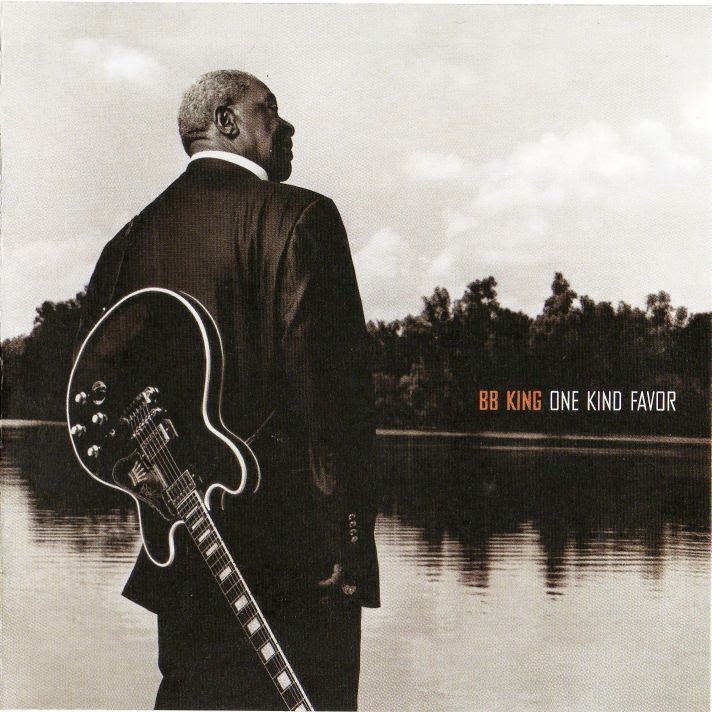
Hello, another death in the music scene has me change today's planned posting.  BB King, one of this planet's greatest guitarists has died. 89 years old he has had a full life, from rags to acclaim, he sure made his mark....

Universally hailed as the reigning king of the blues, the legendary B.B. King is without a doubt the single most important electric guitarist of the last half century. His bent notes and staccato picking style have influenced legions of contemporary bluesmen, while his gritty and confident voice -- capable of wringing every nuance from any lyric -- provides a worthy match for his passionate playing. Between 1951 and 1985, King notched an impressive 74 entries on Billboard's R&B charts, and he was one of the few full-fledged blues artists to score a major pop hit when his 1970 smash "The Thrill Is Gone" crossed over to mainstream success (engendering memorable appearances on The Ed Sullivan Show and American Bandstand). Since that time, he has partnered with such musicians as Eric Clapton and U2 while managing his own acclaimed solo career, all the while maintaining his immediately recognizable style on the electric guitar.... N'joy

xxxxx xxxxx xxxxx xxxxx xxxxx

The seeds of Riley B. King's enduring talent were sown deep in the blues-rich Mississippi Delta, where he was born in 1925 near the town of Itta Bena. He was shuttled between his mother's home and his grandmother's residence as a child, his father having left the family when King was very young. The youth put in long days working as a sharecropper and devoutly sang the Lord's praises at church before moving to Indianola -- another town located in the heart of the Delta -- in 1943.

Country and gospel music left an indelible impression on King's musical mindset as he matured, along with the styles of blues greats (T-Bone Walker and Lonnie Johnson) and jazz geniuses (Charlie Christian and Django Reinhardt). In 1946, he set off for Memphis to look up his cousin, a rough-edged country blues guitarist named Bukka White. For ten invaluable months, White taught his eager young relative the finer points of playing blues guitar. After returning briefly to Indianola and the sharecropper's eternal struggle with his wife Martha, King returned to Memphis in late 1948. This time, he stuck around for a while.

King was soon broadcasting his music live via Memphis radio station WDIA, a frequency that had only recently switched to a pioneering all-black format. Local club owners preferred that their attractions also held down radio gigs so they could plug their nightly appearances on the air. When WDIA DJ Maurice "Hot Rod" Hulbert exited his air shift, King took over his record-spinning duties. At first tagged "The Peptikon Boy" (an alcohol-loaded elixir that rivaled Hadacol) when WDIA put him on the air, King's on-air handle became "The Beale Street Blues Boy," later shortened to Blues Boy and then a far snappier B.B.

King had a four-star breakthrough year in 1949. He cut his first four tracks for Jim Bulleit's Bullet Records (including a number entitled "Miss Martha King" after his wife), then signed a contract with the Bihari Brothers' Los Angeles-based RPM Records. King cut a plethora of sides in Memphis over the next couple of years for RPM, many of them produced by a relative newcomer named Sam Phillips (whose Sun Records was still a distant dream at that point in time). Phillips was independently producing sides for both the Biharis and Chess; his stable also included Howlin' Wolf, Rosco Gordon, and fellow WDIA personality Rufus Thomas.

The Biharis also recorded some of King's early output themselves, erecting portable recording equipment wherever they could locate a suitable facility. King's first national R&B chart-topper in 1951, "Three O'Clock Blues" (previously waxed by Lowell Fulson), was cut at a Memphis YMCA. King's Memphis running partners included vocalist Bobby Bland, drummer Earl Forest, and ballad-singing pianist Johnny Ace. When King hit the road to promote "Three O'Clock Blues," he handed the group, known as the Beale Streeters, over to Ace.

It was during this era that King first named his beloved guitar "Lucille." Seems that while he was playing a joint in a little Arkansas town called Twist, fisticuffs broke out between two jealous suitors over a lady. The brawlers knocked over a kerosene-filled garbage pail that was heating the place, setting the room ablaze. In the frantic scramble to escape the flames, King left his guitar inside. He foolishly ran back in to retrieve it, dodging the flames and almost losing his life. When the smoke had cleared, King learned that the lady who had inspired such violent passion was named Lucille. Plenty of Lucilles have passed through his hands since; Gibson has even marketed a B.B.-approved guitar model under the name.

The 1950s saw King establish himself as a perennially formidable hitmaking force in the R&B field. Recording mostly in L.A. (the WDIA air shift became impossible to maintain by 1953 due to King's endless touring) for RPM and its successor Kent, King scored 20 chart items during that musically tumultuous decade, including such memorable efforts as "You Know I Love You" (1952); "Woke Up This Morning" and "Please Love Me" (1953); "When My Heart Beats like a Hammer," "Whole Lotta' Love," and "You Upset Me Baby" (1954); "Every Day I Have the Blues" (another Fulson remake), the dreamy blues ballad "Sneakin' Around," and "Ten Long Years" (1955); "Bad Luck," "Sweet Little Angel," and a Platters-like "On My Word of Honor" (1956); and "Please Accept My Love" (first cut by Jimmy Wilson) in 1958. King's guitar attack grew more aggressive and pointed as the decade progressed, influencing a legion of up-and-coming axemen across the nation.

In 1960, King's impassioned two-sided revival of Joe Turner's "Sweet Sixteen" became another mammoth seller, and his "Got a Right to Love My Baby" and "Partin' Time" weren't far behind. But Kent couldn't hang onto a star like King forever (and he may have been tired of watching his new LPs consigned directly into the 99-cent bins on the Biharis' cheapo Crown logo). King moved over to ABC-Paramount Records in 1962, following the lead of Lloyd Price, Ray Charles, and before long, Fats Domino.

In November of 1964, the guitarist cut his seminal Live at the Regal album at the fabled Chicago theater and excitement virtually leaped out of the grooves. That same year, he enjoyed a minor hit with "How Blue Can You Get," one of his many signature tunes. "Don't Answer the Door" in 1966 and "Paying the Cost to Be the Boss" two years later were Top Ten R&B entries, and the socially charged and funk-tinged "Why I Sing the Blues" just missed achieving the same status in 1969.

Across-the-board stardom finally arrived in 1969 for the deserving guitarist, when he crashed the mainstream consciousness in a big way with a stately, violin-drenched minor-key treatment of Roy Hawkins' "The Thrill Is Gone" that was quite a departure from the concise horn-powered backing King had customarily employed. At last, pop audiences were convinced that they should get to know King better: not only was the track a number-three R&B smash, it vaulted to the upper reaches of the pop lists as well.

King was one of a precious few bluesmen to score hits consistently during the 1970s, and for good reason: he wasn't afraid to experiment with the idiom. In 1973, he ventured to Philadelphia to record a pair of huge sellers, "To Know You Is to Love You" and "I Like to Live the Love," with the same silky rhythm section that powered the hits of the Spinners and the O'Jays. In 1976, he teamed up with his old cohort Bland to wax some well-received duets. And in 1978, he joined forces with the jazzy Crusaders to make the gloriously funky "Never Make Your Move Too Soon" and an inspiring "When It All Comes Down." Occasionally, the daring deviations veered off-course; Love Me Tender, an album that attempted to harness the Nashville country sound, was an artistic disaster.

Although his concerts were consistently as satisfying as anyone in the field (King asserted himself as a road warrior of remarkable resiliency who gigged an average of 300 nights a year), King tempered his studio activities somewhat. Nevertheless, his 1993 MCA disc Blues Summit was a return to form, as King duetted with his peers (John Lee Hooker, Etta James, Fulson, Koko Taylor) on a program of standards. Other notable releases from that period include 1999's Let the Good Times Roll: The Music of Louis Jordan and 2000's Riding with the King, a collaboration with Eric Clapton. King celebrated his 80th birthday in 2005 with the star-studded album 80, which featured guest spots from such varied artists as Gloria Estefan, John Mayer, and Van Morrison. Live was issued in 2008; that same year, King released an engaging return to pure blues, One Kind Favor, which eschewed the slick sounds of his 21st century work for a stripped-back approach. A long overdue career-spanning box set of King's over 60 years of touring, recording, and performing, Ladies and Gentlemen...Mr. B.B. King, appeared in 2012. On May 26, 2013, King appeared at the New Orleans Jazz Festival.

King was married twice, to Martha Lee Denton, 1946 to 1952, and to Sue Carol Hall, 1958 to 1966. The failure of both marriages has been attributed to the heavy demands made on the marriage by King's 250 performances a year. It is reported that he has fathered 15 children and, as of 2004, had 50 grandchildren. He lived with Type II diabetes for over 20 years and was a high-profile spokesperson in the fight against the disease, appearing in advertisements for diabetes-management products.

On October 3, 2014, not feeling well enough, King had to stop his live performance at the House of Blues in Chicago, Illinois. A doctor diagnosed King with dehydration and exhaustion, and the eight remaining shows of his ongoing tour had to be cancelled. After the cancellation, King announced on October 8, 2014, he was back at home to recuperate. On May 1, 2015, after two hospitalizations caused by complications from high blood pressure and diabetes, King announced on his website that he was in hospice care at his home in Las Vegas, Nevada,[63] where he died on May 14, 2015. His cause of death is a series of small strokes.

xxxxx xxxxx xxxxx xxxxx xxxxx

B.B. King is not only a timeless singer and guitarist, he's also a natural-born entertainer, and on Live at the Regal the listener is treated to an exhibition of all three of his talents. Over percolating horn hits and rolling shuffles, King treats an enthusiastic audience (at some points, they shriek after he delivers each line) to a collection of some of his greatest hits. The backing band is razor-sharp, picking up the leader's cues with almost telepathic accuracy. King's voice is rarely in this fine of form, shifting effortlessly between his falsetto and his regular range, hitting the microphone hard for gritty emphasis and backing off in moments of almost intimate tenderness. Nowhere is this more evident than at the climax of "How Blue Can You Get," where the Chicago venue threatens to explode at King's prompting. Of course, the master's guitar is all over this record, and his playing here is among the best in his long career. Displaying a jazz sensibility, King's lines are sophisticated without losing their grit. More than anything else, Live at the Regal is a textbook example of how to set up a live performance. Talking to the crowd, setting up the tunes with a vignette, King is the consummate entertainer. Live at the Regal is an absolutely necessary acquisition for fans of B.B. King or blues music in general. A high point, perhaps even the high point, for uptown blues.


B. B. King - Live At The Regal  (flac  225mb)

01 Every Day I Have The Blues 2:27
02 Sweet Little Girl 4:15
03 It's My Own Fault 3:25
04 How Blue Can You Get 3:00
05 Please Love Me 2:55
06 You Upset Me Baby 2:20
07 Worry, Worry 6:21
08 Woke Up This Mornin' 1:42
09 You Done Lost Your Good Thing Now 4:10
10 Help The Poor 2:35

xxxxx xxxxx xxxxx xxxxx xxxxx

Completely Well was B.B. King's breakthrough album in 1969, which finally got him the long-deserved acclaim that was no less than his due. It contained his signature number, "The Thrill Is Gone," and eight other tunes, six of them emanating from King's pen, usually in a co-writing situation. Hardliners point to the horn charts and the overdubbed strings as the beginning of the end of King's old style that so identifiably earmarked his early sides for the Bihari Brothers and his later tracks for ABC, but this is truly the album that made the world sit up and take notice of B.B. King. The plus points include loose arrangements and a small combo behind him that never dwarfs the proceedings or gets in the way. King, for his part, sounds like he's having a ball, playing and singing at peak power. This is certainly not the place to start your B.B. King collection, but it's a nice stop along the way before you finish it.


B.B. King - Completely Well (flac 316mb)

01 So Excited 5:34
02 No Good 4:35
03 You're Losin' Me 4:54
04 What Happened 4:41
05 Confessin' The Blues 4:56
06 Key To My Kingdom 3:18
07 Cryin' Won't Help You Now 6:30
08 You're Mean 9:39
09 The Thrill Is Gone 5:30

xxxxx xxxxx xxxxx xxxxx xxxxx

B.B. King has cut a lot of albums since the success of Live at the Regal. And, like the live shows they document, none of them are any less than solid and professional, hallmarks of King's work aesthetic. But every so often B.B. truly catches fire; his playing and singing comes up an extra notch or two, and the result is a live album with some real sparks to it. Live in Cook County Jail is one of those great concerts that the record company was smart enough to be there to capture, documenting B.B. firing on all cylinders in front of an audience that's just damn happy for him to be there. Possibly the best live version of "The Thrill Is Gone" of all its many incarnations, and rock solid renditions of classics like "Everyday I Have the Blues," "How Blue Can You Get?," "Sweet Sixteen" and a great medley of "3 O'Clock Blues" and "Darlin' You Know I Love You." Live at the Regal is still the champ of King's live output, but many say this runs a close second, and they just may be right.


B.B. King - Live In Cook County Jail (flac 229mb)

01 Introduction 1:50
02 Everyday I Have The Blues 1:43
03 How Blues Can You Get 5:09
04 Worry, Worry, Worry 9:57
05 3 O' Clock Blues / Darlin' You Know I Love You 6:15
06 Sweet Sixteen 4:20
07 The Thrill Is Gone 5:31
08 Please Accept My Love 4:02

B.B. King - Live In Cook County Jail (ogg 96mb)

xxxxx xxxxx xxxxx xxxxx xxxxx

It's been so long since B.B. King stepped outside of his comfort zone that One Kind Favor comes as a bit of a shock. Unlike so many albums he's cut in the wake of the crossover success of The Thrill Is Gone way back in 1970, the sound is stripped-back, not splashy, there is not a reliance on guest stars, and the repertoire is pure blues -- and these are all songs that he's never recorded before, including three tunes by his longtime idol Lonnie Johnson. Credit for the concept must be given to producer T Bone Burnett, who applies a similar neo-rootsy aesthetic to One Kind Favor that he did to his production of Robert Plant and Alison Krauss' Raising Sand -- an approach that's grounded in tradition but has a smoky, smeary veneer that's thoroughly modern. One Kind Favor has a noir-ish flair but it doesn't dwell on darkness, even if it takes its title from a line in Blind Lemon Jefferson's "See That My Grave Is Kept Clean," a song that would seem to carry some import for the 82-year-old King. He may be approaching his twilight years but brooding has never been B.B.'s style -- he's too generous, too open-hearted in both love and loss, so he's naturally disinclined to turn this album into a meditation on morality. Instead, One Kind Favor is a celebration of life with all of its ups and downs, filled with heartbreak but also great joy, which is precisely what B.B. King's best music always has been. And this is indeed one of King's best latter-day albums, thanks to its sterling selection of 12 songs and the supple support of drummer Jim Keltner, pianist Dr. John, and bassist Nathan East, who give B.B. plenty of room for both his guitar and voice. Even if King winds up returning to his familiar slick, star-studded sound somewhere down the line, having an album as earthily elegant as One Kind Favor in his canon provides a fitting coda for one of the great musical careers of the 20th century.


B.B. King - One Kind Favor (flac 333mb)

01 See That My Grave Is Kept Clean 4:49
02 I Get So Weary 4:17
03 Get The Blues Off Me 4:30
04 How Many More Years 3:10
05 Waiting For Your Call 6:02
06 My Love Is Down 5:25
07 The World Gone Wrong 4:24
08 Blues Before Sunrise 4:21
09 Midnight Blues 3:49
10 Backwater Blues 7:36
11 Sitting On Top Of The World 3:41
12 Tomorrow Night 5:00

xxxxx xxxxx xxxxx xxxxx xxxxx

May 14, 2015

RhoDeo 1519 Goldy Rhox 209

Hello, today the 209th post of GoldyRhox, classic pop rock in the darklight are an Irish rock band were founded one night in late December 1969 in Dublin, Ireland, when Belfast guitarist Eric Bell met up with organist Eric Wrixon in a pub and found that they shared an ambition to form a group. Both musicians had previously played with Them, fronted by Van Morrison. The same night, they went to see the band Orphanage, which featured vocalist Phil Lynott and drummer Brian Downey. Bell and Wrixon introduced themselves after the gig and suggested the four of them form a band together. Lynott and Downey were aware of Bell's good musical reputation, and agreed with the condition that Lynott play bass guitar as well as sing, and that they perform some of his own compositions. Lynott assumed the role of frontman and led them throughout their recording career of twelve studio albums. After Lynott's death in 1986, various incarnations of the band have emerged over the years based initially around guitarists Scott Gorham and John Sykes, though Sykes left the band in 2009. Gorham later continued with a new line-up including Downey.

Lynott, the band's de facto leader, was composer or co-composer of almost all of the band's songs, and the first black Irishman to achieve commercial success in the field of hard rock music. They boasted some of the most critically acclaimed guitarists throughout their history, with Downey and Lynott as the rhythm section, on the drums and bass guitar. As well as being multiracial, the band drew their members not only from both sides of the Irish border but also from both the Catholic and Protestant communities during The Troubles.

The band played their final UK concert before their break-up at the Reading Festival on 28 August 1983, which was eventually released in 1992 as their BBC Radio One Live in Concert album. The last concert came in Nuremberg on 4 September, at the Monsters of Rock festival, after which the band members went their separate ways..

***** ***** ***** ***** *****
Most of the albums i 'll post made many millions for the music industry and a lot of what i intend to post still gets repackaged and remastered decades later, squeezing the last drop of profit out of bands that for the most part have ceased to exist long ago, although sometimes they get lured out of the mothballs to do a big bucks gig or tour. Now i'm not as naive to post this kinda music for all to see and have deleted, these will be a black box posts, i'm sorry for those on limited bandwidth but for most of you a gamble will get you a quality rip don't like it, deleting is just 2 clicks...That said i will try to accommodate somewhat and produce some cryptic info on the artist and or album.

Today's mystery album is the seventh studio album by today's Irish mystery band, released 16 October 1976. This album was written and recorded while bassist/vocalist Phil Lynott was recovering from a bout of hepatitis that put him off the road halfway through the previous Jailbreak tour. Once Lynott had returned to the UK from the aborted US tour in June 1976, he spent time in hospital in Manchester recovering from hepatitis. He had an acoustic guitar with him and wrote the songs for today's mystery album during June and July. After his release from hospital, Lynott joined the other members of the band and travelled to Munich in August to record the album at Musicland Studios with producer John Alcock.

Early in the recording process, it became clear that neither the band nor the production team were happy with the studios or the recording process, and they experienced particular trouble obtaining a satisfactory drum sound. On 6 August, they abandoned the sessions and returned to Ramport Studios in Battersea (where the previous Jailbreak album had been recorded), and Olympic Studios in Barnes, London. Guitarist Brian Robertson has said that there was plenty of material from which to choose for the album, up to eight or nine tracks apart from the ten that appeared on the final album. However, Alcock claims that the album suffered because Lynott needed more time to finish the songs, and that some tracks, like "Boogie Woogie Dance", were not strong enough to make the album.
It proved to be the last album on which Robertson featured as a full member of the band, as the personality clashes between him and Lynott resulted in Robertson being sacked, reinstated, and later sacked again.

The mystery album reached No.11 in the UK charts, sold enough for that golddisc The single "Don't Believe a Word" reached No.12 in the UK and No.2 in Ireland.

Thin Lizzy used their usual cover artist, Jim Fitzpatrick, to design the sleeve for Johnny the Fox, but he was asked to provide the finished design before the album was given a title. When Lynott asked him for something Celtic, but not the usual kind of Celtic rock design, Fitzpatrick drew a complicated neo-gothic Celtic border with a disc in the centre, left blank for the title and central design. When the deadline was approaching and he grew desperate to finish it, he asked Lynott for any idea of a title to inspire him. An earlier Fitzpatrick design had the same border with the figure of a warrior in the centre, but both Lynott and Fitzpatrick felt that the fox represented a sort of "outsider" character, much like the panther on the cover of their 1974 album, Nightlife.

On 24 January 2011, a new remastered and expanded of today's mystery album was released. This new edition is a 2-CD set, with the original album on disc one, and bonus material on disc two. It should be noted that only the bonus material on disc two has been remastered in 2010 (despite what it says on the back of the CD booklet). Disc one uses the same remaster as the 1996 edition. New remasters were made, but scrapped at the last minute before the release, for reasons unknown. Well it's up for grabs here...N'Joy


Goldy Rhox 209   (flac 468mb)

Goldy Rhox 209    (ogg 165mb)


***** ***** ***** ***** *****

May 13, 2015

RhoDeo 1519 Aetix

Hello,

Today a New York duo, one veered of to become a hugely successfull soundtrack composer, enter his name into the IMDb and  be amazed of his output since 1986 after he made his first inroad into the music scene with an album that got neglected well we know know what a mess Factory rec was but hey it did open the door to Hollywood.Enough said here's something to .... N'Joy

xxxxx xxxxx xxxxx xxxxx xxxxx

One of the forgotten links in the story of Manchester, England's Factory label, Thick Pigeon was an arty duo from New York that consisted of Stanton Miranda (bass, vocals) and Carter Burwell (percussion, effects, vocals). Prior to forming the group, Miranda was a background member in the New York music scene, having played with Kim Gordon in CKM and with Rhys Chatham's Arsenal. A series of three 1982 singles -- two for Crepuscule and one for Operation Twilight -- predated their debut album. Miranda and Burwell recorded the album, Too Crazy Cowboys, for Factory in 1983, with key assistance from New Order's Gillian Gilbert and Stephen Morris. After the album's late-1984 release, Burwell went into a successful career as a soundtrack composer, starting with the Coen Brothers' Blood Simple. Though they never used the Thick Pigeon name again, Miranda and Burwell worked together on a 1991 album for Crepuscule, which was released under the name Miranda Dali. Miranda continued to record sporadically (including a version of "Love Will Tear Us Apart" for the Joy Division tribute A Means to an End), but she also became involved with Hollywood as an actor, with roles in The Silence of the Lambs, Souvenir, Married to the Mob, and Something Wild. In 2003, the LTM label reissued Too Crazy Cowboys with several bonus tracks appended.

Miranda Stanton, her first band was CKM in New York with Kim Gordon of Sonic Youth, where she played drums, but she's best known for her recordings as Stanton Miranda, Miranda Dali and Thick Pigeon. She achieved some notice for her single "Wheels Over Indian Trails" (produced by Stephen Morris and Gillian Gilbert from New Order) and her later cover of "Love Will Tear Us Apart" by Joy Division. She also guested on recordings by the Durutti Column. Miranda had a brief acting career, appearing in the Jonathan Demme films, Something Wild, Married to the Mob and Silence of the Lambs. She also played the lead role in the little known art-house film Souvenir (1999), which was directed by Michael H. Shamberg. She continues to work on small scale musical projects. Working as blythe dahl she has released instrumental tracks online which are available for license through Pump Audio/Getty Images. She also participated in the web collaboration "Empty Rooms with Casual Sounds"

xxxxx xxxxx xxxxx xxxxx xxxxx

"The decidely unattractively-named Thick Pigeon were a little-known minimalist duo who operated on the fringes of synth music and art rock. Yet the two protagonists have developed extremely impressive CVs over time. Instrumentalist Carter Burwell has gone on to provide soundtrack work for around 50 motion pictures whilst singer Stanton Miranda has worked with Durutti Column and Sonic Youth not to mention being a fully-fledged actress. The 1984 debut album, 'Too Crazy Cowboys' was no mere side-project either; recorded with Stephen Morris and Gillian Gilbert of New Order fame (one listen to the instrumental 'Nuns + Soldiers' proves this), it tells the story of a fascinating off-the-wall act. Billy Swan's hitherto uptempo 'I Can Help' is reworked into a glacial, nightmarish soundscape which bears little in common with the original. Furthermore, 'Fred + Andy' suddenly moves from eerie minimalism into a cover of 'Moon River'. Throughout a mood of unsettling drama is present with the excellent 'Jess + Bart' perhaps being their defining moment. Oddly, this album is a considerably less dated affair than many of today's current crop of electro-clash revivalists. "


Thick Pigeon - Too Crazy Cowboys  (flac 318mb)

01 Troglodytes 3:16
02 Sudan 4:16
03 Crime 3:39
04 Help 2:48
05 Fred + Andy 6:19
06 Misuse 3:36
07 Nuns + Soldiers 3:16
08 DB 3:33
09 Babcock + Wilcox 3:43
10 Jess + Bart 4:50
11 Hank 3:11
-
12 Wheels Over Indian Trails 5:13
13 Wheels Over Indian Trails (Version) 4:59
14 Pope 4:26

xxxxx xxxxx xxxxx xxxxx xxxxx

Miranda Dali is the very definition of a lost classic. Though Carter Burwell is best known for his Hollywood film scores, the albums he created with Stanton Miranda as Thick Pigeon prove that he mastered experimental art rock before he moved onto mainstream success. And Miranda Dali is perhaps the easiest introduction to the duo's warped blend of minimalist keyboards, haunting themes and vocals, and agit-rock. Thick Pigeon's formula is a killer one. Miranda's simultaneously spooky, confident, and sweet voice is the perfect instrument for her mundane yet off-kilter poetic subject matter. Whether she's singing warnings to birds that they should stay awake or detailing a broken relationship, her delivery is always perfectly off-key yet soothing. Burwell's arrangements are a gorgeous foil. He blends exotic keyboard patterns, hazy and distant guitar squalls, and loads of found sounds into fiercely addictive art symphonies. "The duo probably wasn't meant to work on paper, happily the expected clash of egos did not materialise on record and 1991's 'Mirandadali' represented another fine album's worth of material. Despite seven years passing since the 'Too Many Cowboys' debut, the follow-up plotted a similar course. For a man used to scoring film music, Carter Burwell avoided big cinematic gestures; eerie minimalist electronica dominates whilst Miranda Stanton trills, whispers and - of course - sings her heart out.Thick Pigeon deserves far more attention for helping to spawn and perfect a genre of music that inspired artists like the Art of Noise, His Name Is Alive, Land of the Loops, Helium, Life Without Buildings, and a wealth of others. Thick Pigeon's timeless music would be equally at home in an art installation or scoring a listener's summer, and Miranda Dali deserves more acclaim and certainly a place in more CD collections.


Miranda Dali - Miranda Dali  (flac 180mb)

01 Riding 3:19
02 Amerika 3:41
03 One 1:57
04 Breathe 3:47
05 Bird 2:00
06 Gerty 3:32
07 L.D. 3:39
08 Angels 4:54
09 Wrong 3:00
10 St. G. 5:04

xxxxx xxxxx xxxxx xxxxx xxxxx

Probably one of a very few soundtrack composers to idolize Iggy Pop, Carter Burwell is best known for his work with the Coen Brothers, having scored every one of their films through the year 2010. By turns haunting and dark or quirky and experimental, Burwell's eclectic music has graced films in a wide variety of genres, and he's used the occasional big-studio project to finance his work on a number of groundbreaking independent films. Born November 18, 1955 in New York, Burwell took piano lessons as a child and learned to play blues guitar as a teenager. He studied architecture and fine arts at Harvard, but wasn't considering music as a career; upon graduating, he first worked in a biology lab, then as an animator, while playing in punk bands by night for fun.

 A mutual friend referred him to the Coen Brothers, who were seeking a composer for their 1984 debut feature, Blood Simple. They all hit it off, and Burwell was employed for The Coens' next project, the kidnapping caper Raising Arizona (1987); Burwell blended samples with a variety of thematic source materials. The Coens' 1990 gangster film, Miller's Crossing, was Burwell's first fully orchestrated work, and he attracted more attention for 1991's groundbreaking Barton Fink; he composed only 20 bars of music, which were then treated with various sound effects and reshaped throughout the film by sound designer Skip Lievsay.

Burwell's workload increased steadily as the '90s progressed, and he began taking on more mainstream film projects: Doc Hollywood (1991), Wayne's World 2 (1993), and Airheads (1994), among others. He won wide acclaim for his work on 1995's Rob Roy, which kicked off the most prolific period of his career -- over 35 films in the next five years. Among the highlights were the thriller Conspiracy Theory (1997), The Jackal (1997), Gods and Monsters (1998), the fictionalized glam rock chronicle Velvet Goldmine (1998), Spike Jonze's bizarre Being John Malkovich (1999), and the Gulf War epic Three Kings (1999). In addition to his film-scoring activities, Burwell has also played accordion and synthesizer with eclectic new age artists like Gabrielle Roth and David Hykes' Harmonic Choir. Burwell remained in-demand through the 2000s and 2010s, reteaming with director Spike Jonze on the music for Adaptation and also scoring several installments of the Twilight Saga movie series, among his many projects.


Carter Burwell - Raising Arizona and Blood Simple (flac 204mb)

Raising Arizona
01 Introduction - A Hole In The Ground 0:32
02 Way Out There (Main Title) 1:53
03 He Was Horrible 1:26
04 Just Business 1:13
05 The Letter 2:24
06 Hail Lenny 2:12
07 Rasing Ukeleles 3:37
08 Dream Of The Future 2:25
09 Shopping Arizona 2:43
10 Return To The Nursery 1:27
Blood Simple
11 Crash And Burn 2:38
12 Blood Simple 3:30
13 Chain Gang 4:45
14 The March 3:30
15 Monkey Chant 1:02
16 The Shooting 2:48
17 Blood Simpler 1:21

xxxxx xxxxx xxxxx xxxxx xxxxx

May 12, 2015

RhoDeo 1519 Re-Ups 15

Hello,

Storage maybe dirt cheap these days -compared to 5 years ago, but the hosts are much more money orientated and look at turnover and notice that keeping data longer than 1 month isn't making them money. Thus the coming months i'm making an effort to re-up, it will satisfy a small number of people which means its likely the update will  expire relativly quickly again as its interest that keeps it live. Nevertheless here's your chance ... asks for re-up in the comments section prefarbly at the page where the expired link resides....requests are satisfied on a first come first go basis. As my back up ogg hard disk is nonresponsive currently, i most likely will post a flac instead~for the the pre medio 2011 posts~ but i would think that is not really a problem...updates will be posted here and yes sign a name to your request and please do it from the page where the link died!

You can still put in your request and should i've missed your first request please remind me


More new updates here

3x Jansen & Barbieri (Japan) Back in Flac in Flac  ( Worlds + Other, Catch The Fall, Stories Across Border)

Shriekback Tench-Care Back in Flac


3 dub, Bunny Lee, Chin Loy Back in Flac (King Of Dub, Dub Will Change, Aquarius Dub)


3x Marconi Union Back in Flac
(Under Wires and Searchlights, Distance, A Lost Connection)

4x Meat Beat Manifesto  NOW in Flac (Storm The Studio, Subliminal Sandwich, Ruok, Mutations)


xxxxx xxxxx xxxxx xxxxx xxxxx

May 11, 2015

RhoDeo 1519 Empire Strikes 09

Hello, well Rosberg won the grand Prix of Spain today, without much stress Hamilton had to follow Vettel 's Ferrari for half the race but a successful undercut at the boxstops had Vettel back to third and that was it. The Toro Rosso youngbloods who had qualified so well 5 and 6 clearly didn't have the race pace or likely had to keep the engine from blowing as it had done in previous races 9th and 11th their 'reward' and a car that reached the finish...


This week the Empire will Strike Back !

A long time ago in a galaxy far far away................... today the penultimate episode of the Empire Strikes Back

At first, the idea seems bizarre, even ridiculous. Star Wars, a movie best known for its vistas of alien worlds and epic battles, as a 13 part radio drama? Well, unless you have the cold heart of a Sith, Star Wars did indeed translate well from the silver screen to radio, thank you very much. Yes, Star Wars' visual effects are a big part of the magic of the saga, but the heart and soul of George Lucas' galaxy far, far away are the characters and the storyline. And while the movie is satisfying on its own, the radio dramatization written by the late Brian Daley takes us beyond the movie....beyond the screenplay...and even beyond the novelization.

xxxxx xxxxx xxxxx xxxxx xxxxx

This landmark production, perhaps the most ambitious radio project ever attempted, began when Star Wars creator George Lucas donated the story rights to an NPR affiliate. Writer Brian Daley adapted the film's highly visual script to the special demands and unique possibilities of radio, creating a more richly textured tale with greater emphasis on character development. The success of the first series led to a 10-part, four hour 15 minute series based on the 1980 film The Empire Strikes Back, again written by Daley and directed by Madden. The series debuted on NPR on February 14, 1983.

Like the preceding series, The Empire Strikes Back expands on the movie's story by incorporating new scenes. Examples include an Imperial attack on a Rebel convoy set before the film's opening scene and a tense conversation between Solo and Skywalker while the two are stranded in the Hoth wastelands.

National Public Radio's promoted the series in part by getting Craig Claiborne to create his version of Yoda's rootleaf recipe, which the Jedi Master serves Luke in the hut on Dagobah. The recipe ran in magazines and newspapers across the country.
Billy Dee Williams reprised Lando Calrissian, and John Lithgow played Yoda at the same time Madden was directing Lithgow in the play Beyond Therapy. Hamill and Daniels returned to voice Skywalker and C-3PO.


xxxxx xxxxx xxxxx xxxxx xxxxx

It was recorded in 1982 at A&R Studios, New York City

With among others:
Mark Hamill as Luke Skywalker
Perry King as Han Solo
Ann Sachs as Princess Leia Organa
Billy Dee Williams as Lando Calrissian
Bernard Behrens as Obi-Wan Kenobi
Brock Peters as Lord Darth Vader
John Lithgow as Yoda
Anthony Daniels as C-3PO
James Eckhouse as Beta
Peter Friedman as Dak
Ron Frazier as Deck Officer
Merwin Goldsmith as General Rieekan
Peter Michael Goetz as Ozzel
Gordon Gould as Veers
Paul Hecht as The Emperor
Russell Horton as 2-1B
James Hurdle as Controller
Nicholas Kepros as Needa
David Rasche as Piett
Alan Rosenberg as Boba Fett
Jay O. Sanders as Imperial Pilot
Don Scarino as Wedge
Ken Hiller as Narrator


The Empire Strikes Back 09 Gambler's Choice (mp3  23mb)

209 Gambler's Choice 24:34


xxxxx xxxxx xxxxx xxxxx xxxxx

previously

The Empire Strikes Back 08 Dark Lord's Fury (mp3  23mb)
The Empire Strikes Back 07 New Allies (mp3  25mb)
The Empire Strikes Back 06 Way Of The Jedi (mp3  25mb)
The Empire Strikes Back 05 Millennium Falcon Pursuit (mp3  24mb)
The Empire Strikes Back 04 Fire And Ice (mp3  24mb)
The Empire Strikes Back 03 A Question Of Survival (mp3  23mb)
The Empire Strikes Back 02 The Coming Storm (mp3  24mb)
The Empire Strikes Back 01 Freedom's Winter (mp3  24mb)

A New Hope 101 A Wind to Shake the Stars (mp3 25mb)
A New Hope 102 Points of Origin (mp3 25mb)
A New Hope 103 Black Knight, White Princess (mp3 25mb)
A New Hope 104 While Giants Mark Time (mp3 25mb)
A New Hope 105 Jedi That Was Jedi To Be (mp3 25mb)
A New Hope 106 The Millenium Falcon Deal (mp3 25mb)
A New Hope 107 The Han Solo Solution (mp3 25mb)
A New Hope 108 Death Star's Transit (mp3 26mb)
A New Hope 109 Rogues, Rebels And Robots (mp3  26mb)
A New Hope 110 The Luke Skywalker Initiative (mp3  26mb)
A New Hope 111 The Jedi Nexus (mp3  25mb)
A New Hope 112 The Case For Rebellion (mp3  25mb)
A New Hope 113 Force And Counter Force (mp3  25mb)

xxxxx xxxxx xxxxx xxxxx xxxxx

May 10, 2015

Sundaze 1519

Hello, the first big cycle tour started today, Giro D' Italia 3 weeks of fun although not always under the sun. Contador who proclaimed his ambition to win not just the Giro but the Tour De France as well this year, ambitious. His team started well in todays time trail cruzing with 54km to place 2 after winners Orica Greenedge, now the thing is to stay on your bicycle and if falling is inescapable to not break anything (serious). In Spain another GP this weekend and Hamilton didn't make the pole this time, apparently Rosberg does better with his (pregnant) wife watching, over taking is difficult on the Barcelona circuit and the wind apperently makes life a little more difficult for the guys who besides guiding the wheel need to adjust this or that a 100 times each lap. First victory to Rosberg then...we'll see


Last time the scene is set for the American composer, performer, director, vocalist, filmmaker, and choreographer, Meredith Monk. Since the 1960s, she has created multi-disciplinary works which combine music, theatre, and dance, recording extensively for ECM Records.... N'joy

xxxxx xxxxx xxxxx xxxxx xxxxx

Meredith Monk (b. November 20, 1942, New York, NY) is a composer, singer, director/choreographer and creator of new opera, music-theater works, films and installations. A pioneer in what is now called "extended vocal technique" and "interdisciplinary performance," Monk creates works that thrive at the intersection of music and movement, image and object, light and sound in an effort to discover and weave together new modes of perception. Her groundbreaking exploration of the voice as an instrument, as an eloquent language in and of itself, expands the boundaries of musical composition, creating landscapes of sound that unearth feelings, energies, and memories for which there are no words. Over the last fifty years, she has been hailed as "a magician of the voice" and "one of America’s coolest composers". Celebrated internationally, Monk’s work has been presented by BAM, Lincoln Center Festival, Houston Grand Opera, London’s Barbican Centre, and at major venues in countries from Brazil to Syria. Among her many accolades, she was recently named an Officer of the Order of Arts and Letters by the Republic of France, and the 2012 Composer of the Year by Musical America. Monk is also one of NPR’s 50 Great Voices, and has received a 2012 Doris Duke Artist Award and a 2011 Yoko Ono Lennon Courage Award for the Arts.

In 1968 Ms. Monk founded The House, a company dedicated to an interdisciplinary approach to performance. In 1978 she founded Meredith Monk & Vocal Ensemble to expand her musical textures and forms. As a pioneer in site-specific performance, she has created such works as Juice: A Theatre Cantata In 3 Installments (1969) and Ascension Variations (2009) for the Guggenheim Museum, and American Archeology #1: Roosevelt Island (1994). Monk’s award-winning films, including Ellis Island (1981) and her first feature, Book of Days (1988), have been seen throughout the world. Her music can also be heard in films by such directors as Jean-Luc Godard and the Coen Brothers, and in the recent HBO series, True Detective. In addition to her numerous vocal pieces, music-theater works and operas, Monk has created vital new repertoire for orchestra, chamber ensembles, and solo instruments, with commissions from Michael Tilson Thomas/San Francisco Symphony and New World Symphony, Kronos Quartet, Saint Louis Symphony Orchestra and Los Angeles Master Chorale, among others.

Since graduating Sarah Lawrence College in 1964, Monk has received numerous honors including the prestigious MacArthur "Genius" Award, two Guggenheim Fellowships, three "Obies" (including an award for Sustained Achievement), and two "Bessie" awards for Sustained Creative Achievement. She holds honorary Doctor of Arts degrees from Bard College, the University of the Arts, The Juilliard School, the San Francisco Art Institute and the Boston Conservatory. Monk has made more than a dozen recordings, most of which are on the ECM New Series label, including the 2008 Grammy-nominated impermanence and the highly acclaimed Songs of Ascension. She has also been working with the publisher Boosey & Hawkes since 2001.

In October 1999 Monk performed A Vocal Offering for His Holiness, the Dalai Lama as part of the World Festival of Sacred Music in Los Angeles. Her 40th year of performing and creating new music was celebrated in 2005 by a four-hour marathon at Carnegie’s Zankel Hall, with additional performances throughout New York City. In February 2012 she was honored with a remix and interpretations cd, MONK MIX, featuring 25 artists from the jazz, pop, dj and new music worlds. In March 2012, she premiered Realm Variations for six voices and small ensemble, commissioned by the San Francisco Symphony, and performed in John Cage’s Song Books as part of the Symphony’s American Mavericks Festival. Monk’s newest music-theater piece, On Behalf of Nature, premiered in January 2013 at UCLA and is currently touring internationally. This fall, Meredith Monk will mark her 50th season as a creator and performer. Recognized as one of the most unique and influential artists of her generation, she has been appointed the 2014-2015 Richard and Barbara Debs Composer’s Chair at Carnegie Hall.


xxxxx xxxxx xxxxx xxxxx xxxxx

Compared to Monk’s six previous ECM New Series efforts, Volcano Songs is perhaps the most intimately recorded. Microphones seem fully embedded in these voices, subtly processed for reverberant effect. Ultimately, I feel that one gets out of this music only what one is willing to lay at its feet. It is both the beauty and the tragedy of the human voice: in pulling at the threads of our emotions, we must undo one thing to communicate another, so that by the end we have forgotten where we started, inhaling an idea that may very well outlive us. And just as a volcano spews forth its scalding breath into the atmosphere, so too must we eventually exhale, licking the fragile layer that separates our survival ever so delicately from the blank space beyond. The magic of Monk’s music is that it offers a glimpse of that other side, in terms that we can relate to.


Meredith Monk - Voicano Songs (flac 264mb)

Volcano Songs: Duets
01 Walking Song 3:03
02 Lost Wind 3:16
03 Hips Dance 1:59
04 Cry #1 2:43
05 New York Requiem 11:00
Volcano Songs: Solos
06 Offering 2:39
07 Boat Man 2:13
08 Skip Song 1:41
09 Old Lava 2:44
10 Cry #2 2:45
11 St Petersburg Waltz 7:51
12 Three Heavens And Hells 21:15
From Light Songs
13 Click Song #1 1:59
14 Click Song #2 3:45

Meredith Monk - Voicano Songs (ogg 132mb)

xxxxx xxxxx xxxxx xxxxx xxxxx

Mercy is a music theater collaboration between Meredith Monk and visual artist Ann Hamilton, described as "a meditation on the human capacity to both extend and withhold compassion, kindness, empathy, and mercy." It's scored for six dancer/vocalists, two keyboards, percussion, violin, and theremin. Music and choreography are by Monk, with installations by Hamilton. Conception, development, and direction were shared. What's Mercy about? Who knows? This disc is the audio-only portion of the show with nary a liner note to sort things out a bit. Mercy represents a lovely evolution in Monk's work, with few surprises and departures within the unique and evocative genre she has created. The music is mostly very tonal in the traditional sense and lulling in a calmly minimalist way, though thoughtful and edgy, rarely letting one slip into comfortable inattention. Most of the singing is pure vocalise -- from lyrical singing and chanting to whispers and whoops -- trading the blatant sense of language for a gut experience that aims at something deeper and more atavistic than word setting may achieve. What good is all this without witnessing the stage setting by Hamilton and the remarkable dance and movement choreographed by Monk? Good enough to enjoy and merit total attention in the audio realm alone only, if one is a die-hard fan. There is simply no way to get a sense of Mercy without the visual element. The musical score to, say, Oklahoma! pretty much captures the entire sense of the show. But Mercy has sections called "doctor/patient," and "line 3 and prisoner," for example, which have almost no meaning stripped of the staging elements. That is the problem with getting Monk's theater works on audio-only discs; wait for the DVD of the entire production.


Meredith Monk - Mercy  (flac 217mb)

01 braid 1 and leaping song 8:14
02 braid 2 2:34
03 urban march (shadow) 3:10
04 masks 1:43
05 line 1 1:11
06 doctor / patient 8:21
07 line 2 1:01
08 woman at the door 5:55
09 line 3 and prisoner 5:23
10 epilogue 1:54
11 shaking 3:05
12 liquid air 3:53
13 urban march (light) 6:05
14 core chant 4:43

Meredith Monk - Mercy  (ogg 111mb)

xxxxx xxxxx xxxxx xxxxx xxxxx

In her album Impermanence, Meredith Monk succeeds in creating pieces that fit her theme well and much of this music does indeed seem ephemeral, fleeting. These works are not casually or routinely constructed, though; their apparent simplicity masks a psychological and musical sophistication that's evident in the way their carefully placed details contribute to their surprising impact. The prevailing mood of the album is melancholy, but not passive sadness; even the songs that deal most explicitly with loss, such as Last Song (which opens the album) and Liminal, are punctuated with astonishing, defiant gestural outbursts that make it clear that Monk has no intention of going gentle into that good night. One of the strengths of the album is the variety of its pieces; Monk is never repeating herself or just recycling ideas. Pieces such as Particular Dance, for voices and mixed ensemble, are lively and full of unpredictable humor, and Maybe 1, for eight pianos, is a quirky, minimalist-inspired bagatelle. The textural variety of the pieces is also appealing; almost all of them use voices in one way or another, but the voice is often used instrumentally or as accompaniment to the instruments. Monk and her ensemble perform with great delicacy and sensitivity to each other; this is clearly a group of singers and instrumentalists that knows how to listen, and each member is constantly calibrating his or her contribution with the sounds of the others, as in the best chamber music performances. ECM's sound is immaculate. The album is a significant addition to Monk's discography and should be of strong interest to fans of new vocal music that pushes the envelope but is still accessible and engaging.


Meredith Monk - Impermanence  (flac  261mb)

01 Last Song 7:16
02 Maybe 1 2:03
03 Little Breath 1:43
04 Liminal 10:56
05 Disequilibrium 2:26
06 Particular Dance 4:57
07 Between Song 6:08
08 Passage 1:55
09 Maybe 2 3:07
10 Skeleton Lines 4:19
11 Slow Dissolve 2:35
12 Totentanz 3:59
13 Sweep 1 1:28
14 Rocking 5:17
15 Sweep 2 1:24
16 Mieke's Melody #5 5:15

 Meredith Monk - Impermanence  (ogg 133mb)

xxxxx xxxxx xxxxx xxxxx xxxxx


May 9, 2015

RhoDeo 1518 Grooves

Hello, well the Brits just gave the nasty party free reign to bleed the little people dry, it will end in tears and quiet possibly lead to the formal break up of Great Brittain as the Scots will have none of that Tory party shite. It's that archaic first passed the post voting system and something called safe seats that makes UK politics a sad joke. But hey those silly Brits are told by the bully boys to be proud of their ideocies, ah yes those easily cowed islanders...


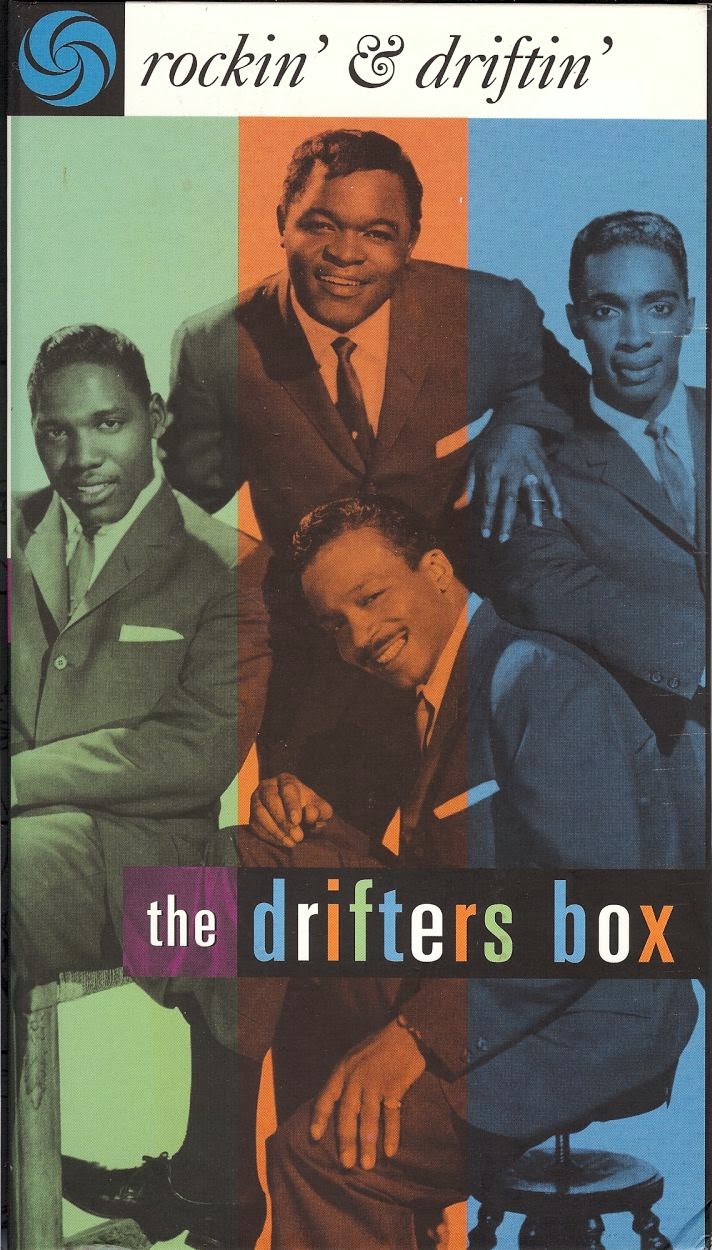
The history of rhythm and blues is filled with vocal groups whose names -- the Orioles, the Cadillacs, the Crows, the Flamingos, the Moonglows, the Coasters, the Penguins -- are held in reverence by fanatics and devotees. The Drifters are part of an even more exclusive fraternity, as a group that managed to carve out a place for themselves in the R&B firmament and also define that music, not only at its inception as a national chart phenomenon in the early '50s but also in the decade that followed. Their place in history is as complex as their role in it, by virtue of the fact that there are two distinct phases to their music and the continuity of their membership, and their extraordinary longevity -- only the Platters could claim as great a span of years as an active recording unit, though the latter group, due to major differences in the way they were organized, were far more stable in their membership and output. The Drifters can also claim a unique place in popular music history, as a major R&B group founded at the instigation of a record-label chief. N'joy

xxxxx xxxxx xxxxx xxxxx xxxxx

The Drifters story began in early 1953, when Clyde McPhatter, the soaring high-tenor lead singer in the Dominoes, a vocal quintet formed by Billy Ward three years earlier, quit that group. the Dominoes were playing a scheduled gig at the New York club Birdland, one of their first performances without McPhatter, when one of the audience members present asked after the singer backstage. That fan was Ahmet Ertegun, a one-time record collector who had started Atlantic Records in the late '40s; as soon as he learned of McPhatter's having left the Dominoes, he contacted the singer and signed him to Atlantic.

It was Ertegun who gave McPhatter the impetus, as part of his contract, to start a group of his own, which came to be called The Drifters. The origins of the name and credit for thinking of it are obscure, although no one at Atlantic liked "The Drifters" at first, thinking it sounded too country & western -- the explanation sometimes offered by those present was that the members simply drifted in from other groups.

The main source for McPhatter's backing singers was among the ranks of former members of the Mount Lebanon Singers, the gospel group with which McPhatter had sung in the '40s. He went through several attempts at assembling a group that would be acceptable to Ertegun and producer Jerry Wexler, going through as many as a dozen friends and acquaintances, a handful of whom actually made it to formal recording sessions. The initial, unsuccessful lineup, featuring William Anderson, David Baughn, Dave Baldwin (the brother of author James Baldwin), and James Johnson, recorded four songs on June 28, 1953, of which only "Lucille," a McPhatter-authored song, was ever released. In August, a second Drifters lineup was put together, with Gerhart Thrasher, Andrew Thrasher, two very experienced gospel singers on tenor and baritone, respectively, bass singer Willie Ferbee, and Walter Adams on the guitar. From the beginning, the group was unusual among R&B vocal ensembles in that a guitarist was part of their core lineup and the electric guitar central to their arrangements; Jimmy Oliver, who would soon take that spot as his own, also proved to be an important songwriter for The Drifters, especially for tenor Gerhart Thrasher. The new edition of the group cut five numbers on August 9, 1953, one of which was "Money Honey," written by arranger/pianist Jesse Stone. Released within a few weeks, it hit the number one spot on the R&B chart by mid-fall of that year, and it was occasionally cited in later years as the first rock & roll record, and later entered the repertory of Elvis Presley and dozens of lesser talents. The group's career was made after that, at least as long as Clyde McPhatter was singing lead with them.

This success didn't stop the regular lineup changes that would characterize The Drifters' history. By the time The Drifters were enjoying their breakthrough hit, a reconstituted lineup, with bass singer Bill Pinkney and guitarist Jimmy Oliver joining Gerhart Thrasher and Andrew Thrasher, cut their first session. This was the lineup that lasted for the year that followed, and cut "Such a Night," a number two R&B hit, and a second R&B chart-topper with "Honey Love" in early 1954. By that time, the charts and radio play, along with audience sensibilities, had opened up and "Honey Love" also made number 21 on the pop charts late that spring. Not for the last time, it seemed as though The Drifters were headed for big things together, but a key member had developed other ideas by the fall of 1954.

Although he'd been assured of a considerable amount of musical control, McPhatter found that Ertegun and Wexler were, as the producers, always trying to push the group into directions of their own choosing. McPhatter didn't begrudge them their efforts at finding new sounds that might sell records to white as well as black audiences, but he didn't feel like participating. His goal was to cross over to pop audiences as a balladeer, and saw himself as having the potential to become another Nat "King" Cole, or perhaps a black answer to Frank Sinatra or Perry Como. By October of 1954, he had parted company with the group in favor of a solo career that would make him a success for the rest of the 1950s.

Rather than see the group in which they'd invested 18 months of their time go out of existence, Ertegun and Wexler were still interested in recording The Drifters, but that group's internal circumstances were vastly different once McPhatter was gone. He had organized The Drifters under the auspices of his own business entity, Drifters Incorporated, so that he would have a share of their earnings, something that he'd been denied in the Dominoes; his own willingness to share those earnings with the other members has never been broached or questioned. He was half-owner of the group with his manager, George Treadwell, a former jazz musician who had masterminded the solo career of his first wife, Sarah Vaughan; when McPhatter left the group, rather than making a provision for the other members and his eventual successor to get his share, he sold out his interest in Drifters Incorporated to Treadwell.

This basically doomed the group to a permanent revolving-door lineup. From that day forward, all of the members of The Drifters were salaried employees, earning as little as $100 a week even into the early '60s, and getting no share of royalties from record sales, no benefits from the concert fees they commanded, nor any claim to the use of the name "The Drifters" if they left, no matter how successful the group became through their efforts. It thus became impossible for the group to hold on to anyone with serious talent or aspirations for a long-term career in music. This made The Drifters, for those present after McPhatter's exit, little more inviting than McPhatter's own tenure with the Dominoes, and he later regretted making the decision, recognizing not only what he had cheated himself of out by not hanging on to his share of the ownership but also what he had done to his fellow musicians.

The immediate problem facing all concerned in 1954, however, was finding a replacement for Clyde McPhatter, and some would argue that they never did. David Baughn, who had sung with a very early version of The Drifters, came in as a temporary replacement, singing at one recording session and serving as lead vocalist for six months' worth of live engagements (which was how the group generated most of its income). Baughn's singing was good enough, but the group sounded like an imitation of the McPhatter-era Drifters, and Atlantic declined to release any of these sides at the time, possibly due to their potential to interfere with McPhatter's solo releases, which were selling well. The label didn't know whether to shoot for an entirely new sound or to try to find a replacement who sounded like the former lead singer who, by 1956, was a major R&B star in his own right. Additionally, Baughn soon demonstrated an erratic personality, sufficiently unnerving to force Treadwell to recruit a second lead vocalist in Bobby Hendricks, who had previously sung with the Five Crowns and the Swallows. Attempts were made to record this lineup, and even bass singer Bill Pinkney was cut doing a lead vocal, but none of it was considered acceptable.

The lineup itself began to shift as Baughn quit, but the group soldiered on, drawing good crowds at their shows based on the quality of their earlier recordings. In 1955, however, they auditioned a young man who approached the group after a show in Cleveland. Johnny Moore had been a member of a group called the ornets, who had done a little bit of recording without making any more than a local reputation for themselves. He sounded enough like McPhatter, however, with his pleasing high tenor, and was offered a spot in The Drifters the next day. Moore would prove to be a mainstay of the group in two different decades.

The Drifters resumed recording in September of 1955, with Nesuhi Ertegun and songwriter Jerry Leiber producing and with Moore singing lead. The result was a number one R&B chart single, "Adorable," which went a long way toward establishing their post-Clyde McPhatter reputation. This proved to be one of the very few major chart records they would enjoy during this era, however -- The Drifters were still absent from the top of the pop charts, where the real money and huge sales figures lay. Their records during the late '50s were overlooked by most young white listeners, despite the presence of future rock & roll standards such as "Ruby Baby" in their output.

Dion would enjoy a much bigger hit with the latter song in the early '60s, but it was an important recording for The Drifters, marking their introduction to the talents of songwriters Jerry Leiber and Mike Stoller, who would later take over the job of producing the group. The Drifters' lineup was also stabilized for the first time in over a year. The original Drifters now entered their "silver age" behind Moore's cool high tenor, ably supported by the bass singing (and occasional lead spot) from Bill Pinkney and Bobby Hendricks' tenor. "I Gotta Get Myself a Woman," written by Jesse Stone and cut during the summer of 1956, brought the group a number 11 R&B hit and the group's fortunes once again seemed to be on a consistent upswing.

As it turned out, the black record-buying public wasn't prepared to fully accept a new Drifters, without McPhatter -- black audiences practically worshipped the singer, who commanded a passionate loyalty that anticipated the future success of Sam Cooke. Additionally, the music was changing -- white teenagers were now a much bigger part of the market than they had been in 1953-54, and Atlantic set its sights on that potentially much richer vein of listeners.

The end of 1956 saw the release of the first album by group, entitled Clyde McPhatter & the Drifters. Such was the popularity of McPhatter at the time, and the tracks that he'd done with The Drifters, versus their recent work, that those 14 songs rated inclusion on an LP well over a year after his exit from the lineup in an effort to sell the music once more to his fans -- in that regard, Atlantic was very forward-looking; very few labels in 1956 were releasing LPs aimed at black R&B listeners (apart from Elvis Presley's albums, very little white rock & roll made an impression on the album charts).

Late 1956 was also the point when the consequences of The Drifters' business organization caught up with the group. Their recent hits had led to more bookings than at any time since 1954, which was good for Treadwell and his partners, but difficult for the members, who were still working on straight salary and, by Bill Pinkney's estimation, very low salaries. He approached Treadwell for a new arrangement, or at least more money for the group members, and he was fired. His dismissal drove fellow founding member Andrew Thrasher out of the lineup as well, and out of music altogether. Pinkney and ex-Drifter Bobby Hendricks became the core of a new Atlantic group called the Flyers, who released one single that failed to attract much attention.

The new Drifters lineup was filled by bass singer Jimmy Ricks and then, more permanently, by Tom Evans, late of the Dominoes, and baritone Charlie Hughes. The group's fortunes now took a new turn as Jerry Leiber and Mike Stoller began producing their sessions in late 1956 -- unfortunately, their arrival on the scene coincided with Johnny Moore's receiving his draft notice in early 1957. The group was (no joke intended) adrift once again, in terms of its sound and lineup. Bobby Hendricks was brought back in, and Jimmy Millender took over the baritone chores, but there wasn't a lot of good material that came from those sessions. For a time, in the absence of an ability to create a successful Drifters sound, it seemed as though Atlantic was trying to turn them into another version of the Coasters, doing light-hearted versions of pop standards. In a way, this was understandable -- black listeners held this era's Drifters at arm's length, while white teenagers were dominating the pop charts and they seemed, at least potentially, open to new records by anyone, so Atlantic decided to cater to them, hoping for a breakthrough.

By late 1958, Hendricks had announced his exit, and even guitarist Jimmy Oliver, who had managed to get several of his songs recorded during his four-year tenure with the group and was an unheralded mainstay of their sound, finally quit. The remaining members, such as they were, were working as hard as ever and wanted more money and, when Treadwell refused their request, they all walked out (or were fired en masse).

Treadwell was about to find himself without a group and faced with upcoming engagements to fulfill at the Apollo Theater in New York. He spotted his way out of this impasse at the Apollo, way down on a bill on May 30, 1958 on which the about-to-be-fired Drifters were headlining. the Five Crowns, or the Crowns, as they were then known, had been a fixture in Harlem for most of the 1950s, predating The Drifters without ever making a mark as a recording act, and enjoying precious little reputation as performers.

Treadwell approached their manager, Lover Patterson, explaining that he was dumping the existing Drifters and needed a new group to fulfill their performing obligations. Patterson agreed and the group followed suit, and all of the individual members' contracts, except for that of one of the group's two baritones, were sold to Treadwell. In later years, this kind of arrangement would become a little more familiar in the business -- the Grass Roots essentially evolved this way, as did the performing version of the group Steam -- but it was unusual in those days, and difficult to pull off, and mostly served to keep Treadwell from ending up in court.

The new Drifters lineup consisted of Charlie Thomas on lead, baritone Benjamin Earl Nelson, later known as Ben E. King, Dock Green (who had held the Crowns together) (baritone), and Elsbeary Hobbs singing bass. They did as they were required under the agreement and, for ten months, worked in the shadow of the old group, playing live gigs characterized by the awkwardness of performing the old songs as though they were their own, to mostly black audiences who knew that these weren't The Drifters. Atlantic still hoped to profit from the group, however, and a second Drifters LP, Rockin' & Driftin', was released in late 1958, comprised entirely of single tracks recorded by the 1955-58 lineup. Ironically, in all of their 19-year history with Atlantic Records, The Drifters, in any incarnation, never recorded an actual "album" session; every one of their LPs was compiled from existing single tracks and B-sides and, except for the first album, all have a mix-and-match element to the memberships and, especially, the singers represented.

The group still had a recording contract with Atlantic Records and, despite the fact that the old Drifters' recent releases had done little business, the label decided to try once more with the new lineup and get a record out. On March 6, 1959, they went into the studio with Leiber & Stoller producing, to cut four songs. Charlie Thomas was supposed to sing lead but he developed mic-fright in the studio, and so Nelson was deputized for "There Goes My Baby," which he had co-written, along with "Hey Senorita," and "Oh My Love." "There Goes My Baby," co-written by Nelson and orchestrated by Stan Applebaum, was as much a landmark in the history of R&B and soul as "Money Honey" had been six years earlier. At the time, nobody present was sure of what they had because it sounded so chaotic, strange, and complicated -- no one had ever used a string section, much less one recorded as prominently as this one was, on an R&B record, and no R&B record up until that time had ever dared sound so complex, overlaying Latin percussion, violins, and a fiercely passionate performance by the singer. It not only didn't sound anything like the old Drifters, but it didn't sound like anything else that had ever been heard on a commercial recording before. And it was a complete mess in the eyes of some observers, including Jerry Wexler, who said the song sounded like a radio picking up two different stations at once.

"There Goes My Baby" peaked at number two, their biggest hit to that date on the pop charts and their biggest seller up to that time, winning over both R&B and pop audiences and transforming the group and its image. Moreover, it marked the group's first impact on audiences overseas -- the earlier Drifters, for all of their impact on rock & roll, never got a record released in Europe, but this new group and their sound would soon find a very important mass audience in England. The group seemed headed for a huge future when the problem of their business set-up came into play again. They'd cut other songs at that same session, including "Baltimore," which sounded like an update of the Cadillacs' "Speedo," but the strings-percussion-echo timbres of "There Goes My Baby," hung around long melodic lines, became The Drifters' trademark sound for the ten years that followed.

This seemed to be a new lease on life to the group, and then more troubles arose from within, owing to the way The Drifters were organized as a business. Ben Nelson wasn't happy working for $100 a week; not with the hundreds of miles of travel between some shows, and as many as six days of shows each week. He was so poor working for the group that he felt compelled to sell off his share of the songwriting on "There Goes My Baby," Accounts differ as to precisely what happened on this issue -- some say that he sold the share off to Treadwell and his accountant, while Jerry Wexler claims that he accepted a document from the singer assigning him the copyright, in exchange for $200; Wexler held on to the document, and gave it back to the singer once the song was a hit so he could tear it up.

After approaching Treadwell for more money and being turned down, Nelson saw that there was no future as a member of The Drifters and announced his exit almost as soon as it came time to cut a follow-up. At the same moment, Lover Patterson played his trump card, a separate contract that he'd signed with the singer, as a solo artist, dated before Treadwell's offer. It all could have ended up in court but luckily for the singer and fans of The Drifters, cooler heads prevailed. He remained with Atlantic Records on their Atco subsidiary as a solo artist, and agreed to record with the group until a suitable replacement could be found, singing on "Dance With Me," "This Magic Moment," "I Count the Tears," and "Save the Last Dance for Me," the latter their only number one hit, among other songs, through the spring of 1960. By the time his exit had been arranged, Nelson had changed his name to the more memorable Ben E. King, which was how he emerged in his own right.

The post-1959 Drifters (which also included guitarist Billy Davis) are usually thought of as the "Ben E. King Drifters," but the reality was that King had left the group by the end of that same year. King's first successor was Johnny Williams, who exited suddenly in late 1960, but The Drifters quickly found a replacement in Rudy Lewis. An ex-member of the Clara Ward Singers, Lewis was the singer on "Some Kind of Wonderful," "Up on the Roof" (a Top Five hit), "Please Stay," "What to Do," and "On Broadway" (a Top Ten hit), among numerous other classic tracks by the group. Lewis, tragically, wasn't the longest lasting of the group's lead vocalists but his tenure with the group, following King's, arguably constituted the second half of a second golden age in their history.

Whoever was involved on a particular record, this lineup of the group was once again at a peak of influence in those years. "There Goes My Baby" anticipated the shift to a more pop-oriented brand of soul music, embraced by Sam Cooke and, even more so, by Berry Gordy at his fledgling Motown label. Indeed, the sound of "There Goes My Baby" was practically the prototype for Smokey Robinson & the Miracles' landmark single "Way Over There." Others also learned from them, most notably a young producer named Phil Spector, who was working at Atlantic as a session guitarist in the early '60s and ran with the sound he heard in Stan Applebaum's arrangements, expanding it into something new and turning it into his own trademark, imprinted on the work of a dozen top recording acts. And it was during the recording of his own "Please Stay" by the group that Burt Bacharach first encountered a vocalist named Dionne Warwick, who was part of the backing trio for The Drifters.

Between 1960 and 1964, The Drifters achieved a level of stability that was unprecedented in their history, and it was matched by their success. Not that they didn't make mistakes -- they turned down "This Diamond Ring," and Atlantic never released their version of "Only in America," both of which became huge hits, in the hands of Gary Lewis & the Playboys and Jay & the Americans, respectively. Still, luck was with them even as essential personnel around them moved on -- in late 1963, as Leiber & Stoller shifted their attention to their own record label, Red Bird, The Drifters got a new producer in Bert Berns, a songwriter with a feel for commercial soul music. "Vaya Con Dios," from their first session with the new producer (and which reflected his love of Latin themes), was a moderate pop chart hit. And in the spring of 1964, with Leiber & Stoller no longer writing the way they had been, the group was offered a new song by composers Art Resnick and Kenny Young, called "Under the Boardwalk."

It was scheduled for recording on May 21 of 1964. Then, on the night of May 20, just hours before the recording session, Rudy Lewis was found dead in his apartment under circumstances that are still in dispute -- the police suspected a drug overdose, but people who knew Lewis insisted that his only vice was binge-eating, and that he had choked to death. Without any time to reschedule the session, Johnny Moore, who had rejoined the group as second tenor in early 1963, stepped into the breach. Moore, who had previously held the thankless task of leading the late-'50s Drifters, achieved a special magnificence at that session singing "Under the Boardwalk," which became the group's last Top Ten hit in 1964, peaking at number four. He became the longest lasting of The Drifters' various lead singers, lasting into the 1970s and beyond their time as a serious recording act.

By late 1964, Berns was moving on to other projects including the early releases of his new independent label, Bang Records, and the group found itself working with producer Tom Dowd in what were very unproductive sessions. They still had lots of bookings, and enough hits behind them to remain a thoroughly established act, but by that time the whole notion of soul music was changing around them, due in some measure to a vast array of other acts associated with Atlantic Records, including Wilson Pickett, Otis Redding, Sam & Dave, and Don Covay. The Drifters were never able to make the jump comfortably to this harder brand of soul music, and the loss of Berns as a producer after 1965 seemed to seal their fate. Their own sessions began to show a lack of urgency and organization, exemplified by the fact that one of the very best tracks of Moore's era, "In the Park," was left unfinished (without the group recorded behind him) and in the can for years. The death of George Treadwell in 1967 removed another layer of impetus behind The Drifters' continuation as a going concern.

They continued recording for Atlantic with a succession of producers until 1972. By that time, the company itself was part of a huge corporate conglomerate, far removed from its origins -- Led Zeppelin, Yes, and Emerson, Lake & Palmer were the stars of the Atlantic roster then, and scarcely anyone at the company except Ertegun and Wexler likely even remembered who The Drifters were or how they'd started. Johnny Moore still sang lead, but there were no more hits after the mid-'60s. They tried altering their sound to mainstream adult pop, cutting old-style standards in an effort to capture older listeners. As the hits faded away and the bookings dried up, the group broke up yet again -- in the end, Johnny Moore was the only recognizable Drifter and he did most of the singing on the records as well.

The 1970s saw a proliferation of acts trading on the Drifters name as the rock & roll revival suddenly made the group's classic repertory profitable again. Founding member Bill Pinkney led a group sometimes called "the Original Drifters" while Charlie Thomas led another version and Johnny Moore kept the fully authorized group under the auspices of Treadwell's widow Faye.

The result was a series of lawsuits that ultimately saw the various claimants divide different territories within the United States between them, while the Faye Treadwell-authorized group, led by Johnny Moore, moved to England, where they enjoyed a Top Ten hit in 1972 ("Come on Over to My Place"), falling under the influence of the Roger Cook/Roger Greenaway songwriting team. This incarnation of the group, no longer signed to Atlantic after 1972, was signed to Bell Records. The British-based version of The Drifters became a dance-disco outfit for a time in the late '70s, virtually irrelevant to the group's history, while Pinkney and Thomas maintained contact with The Drifters' roots, and even Jimmy Ricks, who was only in the group for a few months, turned up at some point leading a combo using the name. Ben E. King even returned to the lineup for a tour in the late '80s.

In the 1990s, after decades of conflicting and contradictory claims, a new court ruling determined that Faye Treadwell owned the trademark of The Drifters' name. The death of Johnny Moore in the 1990s brought the end of the era in the group's history, though Bill Pinkney -- the last active original member from the early '50s -- continued to front a group of Drifters up until his death on July 4th, 2007. The late '80s and early '90s also saw a full revival of the group's entire catalog; for decades, from the 1960s through the 1980s, fans and collectors in America had to content themselves with a single LP, the 1968 Golden Hits album, consisting of a selection of the group's early-'60s hits -- none of the McPhatter-era cuts were around, nor were any other tracks from the '60s era. A pair of Rhino Records-inspired double-CD/LP sets helped break this log-jam in the late '80s, and Rhino's 1996 triple-CD set Rockin' & Driftin': The Drifters Box opened the floodgates of their history. That same year, Sequel Records in England issued seven CDs devoted to the group's history, and more recently Collectables Records has been busy re-releasing the group's classic albums on CD.

xxxxx xxxxx xxxxx xxxxx xxxxx

This triple-disc 79-song compilation looks pretty impressive, and in some ways it is, representing most of the best work of each incarnation of the Drifters from 1953 through 1976. There's a lot of classic music here, including all of the big hits and many interesting (even musically glorious) flops and B-sides, but the limitations of three CDs make this less than ideal. Atlantic had already released a pair of two-CD sets, Let the Boogie Woogie Roll: Greatest Hits 1953-58 and All-Time Greatest Hits & More: 1959-1965, eight years earlier, each of which covers those major periods in question far more generously than does this box -- although it must be conceded that the sound on the cuts included on Rockin' & Driftin' is improved over those late-'80s digital transfers, good as they seemed at the time. Additionally, almost concurrent with this release from Rhino Records in America, Sequel Records in England issued its Drifters Anthology series, assembling the group's complete Atlantic Records output on seven separate CDs, organized somewhat awkwardly at times but also including a number of outtakes, so serious fans may want to opt for that group of discs. This set, had it gone to four CDs, could have been truly comprehensive, covering all of those bases by grabbing some of the best of those genuinely beautiful outtakes, such as "In the Park" -- as it is, the only unreleased cut here is the group's version of "Only in America" -- and oddities like the achingly soulful "She Never Talked to Me That Way," plus all of the official live recordings that they left behind from the mid-'60s. At three CDs, it's a little squeezed, especially as the producers devote some space and attention on concurrent solo hits by Clyde McPhatter and Ben E. King. As it is, this set covers the group's history into their 1970s era work on Bell Records and Arista Records, which did yield some serious hits in the U.K. (where the Johnny Moore-version of the group relocated in the early '70s) and which don't sound bad; they're but a shadow of the group's classic early-'60s singles, but songs like "Kissin' in the Back Row of the Movies" and "Down on the Beach Tonight" are perfectly listenable. Those tracks are not necessarily worth the 40-50 dollars that this set costs, but coupled with the gorgeous sound of the classic material and the almost book-length essays that accompany the set, this is a purchase to consider, especially for anyone who doesn't already own the earlier Atlantic double sets or the Sequel collection. Anyone who has the Sequel discs may well want to pass this up, but for anybody building a Drifters collection beyond the '60s hits, this will supply most of what's needed, and serve as a guide of where to go for a closer listen to specific parts of their history. The essays are highly detailed, covering several different angles on the history of the group, and are refreshingly, highly opinionated (although some fans may pause over the slights given to Johnny Moore as the group's last lead singer -- no, he wasn't Clyde McPhatter or Ben E. King, or even Rudy Lewis, but he did sing beautifully). As a significant bonus, along with the previously unreleased 1963 version of "Only in America," a song which was subsequently placed with Jay & the Americans (who had a hit with it) because it was deemed too upbeat (despite the obvious irony that was intended) for a black group to release, one gets a very full account of the contortions that the composers, producers, and Atlantic went through over the song. Comes with an extensive booklet


The Drifters - Rockin' & Driftin' 01  (flac  296mb)

01 Let the Boogie Woogie Roll  2:50
02 Money Honey  2:58
03 Lucille 3:04
04 The Way I Feel  2:46
05 Such a Night 2:30
06 Gone  2:41
07 Don't Dog Me 2:33
08 Bip Bam  2:47
09 The Bells of St. Mary's  2:41
10 White Christmas 2:40
11 Honey Love 2:25
12 What' Cha Gonna Do 2:48
13 Someday (You'll Want Me to Want You) 2:54
14 Three Thirty Three 2:40
15 Adorable 2:43
16 Your Promise to Be Mine 2:37
17 Ruby Baby   2:25
18 Steamboat 2:28
19 Driftin' Away from You 2:08
20 Treasure of Love 2:10
21 Without Love (There Is Nothing)  2:57
22 Fools Fall in Love   2:32
23 Long Lonely Nights 2:27
24 Drip Drop 2:32
25 A Lover's Question 2:35
26 Baltimore 2:11

The Drifters - Rockin' & Driftin' 01  (ogg  125mb)

xxxxx xxxxx xxxxx xxxxx xxxxx

The Drifters - Rockin' & Driftin' 02 (flac 295mb)

01 There Goes My Baby 2:14
02 Oh My Love 2:22
03 (If You Cry) True Love, True Love 2:19
04 Dance With Me 2:25
05 This Magic Moment 2:31  
06 Lonely Winds 2:49  
07 Save the Last Dance for Me 2:36
08 Nobody But Me 2:36
09 I Count the Tears 2:09
10 Sometimes I Wonder 2:22  
11 Spanish Harlem 2:55
12 Young Boy Blues 2:20
13 Stand by Me  2:56
14 Room Full of Tears 2:54  
15 Please Stay 2:17  
16 Sweets for My Sweet 2:37  
17 Some Kind of Wonderful 2:20
18 Loneliness or Happiness 2:33
19 Mexican Divorce 2:35
20 When My Little Girl Is Smiling 2:35
21 Lover Please 1:55
22 Don't Play That Song (You Lied) 2:56
23 Stranger on the Shore 2:42
24 Another Night With the Boys 2:51
25 Up on the Roof 2:37  
26 I (Who Have Nothing) 2:33
27 Let the Music Play 2:34  

The Drifters - Rockin' & Driftin' 02 (ogg 120mb)

xxxxx xxxxx xxxxx xxxxx xxxxx

The Drifters - Rockin' & Driftin' 03 (flac 369mb)

01 On Broadway  3:05
02 Only in America 2:10
03 Rat Race 2:13
04 If You Don't Come Back 2:42
05 I'll Take You Home 2:44
06 In the Land of Make Believe 2:35
07 One Way Love 2:27
08 Vaya Con Dios (May God Be with You) 3:19
09 Under the Boardwalk  2:44
10 He's Just a Playboy 2:58
11 I Don't Want to Go on Without You 2:59
12 I've Got Sand in My Shoes 2:51
13 Saturday Night at the Movies  2:31
14 On Broadway 4:50
15 The Christmas Song 2:30
16 At the Club 3:00
17 Come on Over to My Place 2:31
18 I'll Take You Where the Music's Playing 2:42
19 Up in the Streets of Harlem 3:03
20 Memories Are Made of This 2:32
21 Like Sister and Brother 3:26
22 Kissin' in the Back Row of the Movies 3:32
23 Down on the Beach Tonight 3:05
24 There Goes My First Love 3:06
25 Can I Take You Home Little Girl? 3:31
26 You're More Than a Number (In My Little Red Book) 3:17

The Drifters - Rockin' & Driftin' 03 (ogg 148mb)

xxxxx xxxxx xxxxx xxxxx xxxxx