Dec 23, 2013

RhoDeo 1351 Hobbit 6

Hello,

Ok Hobbitlovers the second part of Jackson's trilogy is out, the Desolation of Smaug seems to be a great film if the critic consensus is anything to go by. Brisk, fun, spectacular in parts, these are the most commonly described phrases. Specially the Barrel ride gets a mention looks like it's on here today.  N'Joy

Well in a few weeks time part 2 of the Hobbit trilogy is coming to the screens to get you started the coming 8 weeks a 1968 BBC Radio adaptation of J. R. R. Tolkien's 1937 children's fantasy novel The Hobbit is here. The series was adapted by Michael Kilgarriff and produced by John Powell in eight half-hour mono episodes for BBC Radio 4 ... NJoy

 xxxxx xxxxx xxxxx xxxxx xxxxx

The radio series follows the plot of the original novel (revised 1951 version) very closely, except for the addition of The Tale Bearer, a narrator whose account of the story is often interrupted and embellished by the protagonist Bilbo Baggins in the role of secondary narrator.

Bilbo is approached by the wizard Gandalf to undertake a dangerous adventure, and despite his initial reluctance he soon finds himself accompanying Thorin Oakenshield and his party of dwarves on a long and difficult quest to recover the dwarves' treasure from Smaug the dragon. On the way, he encounters trolls, goblins, and giant spiders, and finds a magic ring with the power of invisibility. The show's production was complicated by the inclusion of multiple sound effects (often inserted live while recording the actors' performances), songs from the novel, and special sounds and electronic voice treatments created by the BBC Radiophonic Workshop. All of the trolls, goblins, elves, wargs and eagles have treated voices, as does Gandalf when imitating the trolls.

With:
-----
The Tale Bearer – Anthony Jackson
Bilbo Baggins – Paul Daneman
Gandalf – Heron Carvic
Gollum – Wolfe Morris
Thorin Oakenshield – John Justin
Elrond – John Pullen
The Elvenking – Leonard Fenton
Beorn – Denys Hawthorne
Bard the Bowman – Peter Williams
Balin – Peter Pratt
Smaug – Francis de Wolff
Other parts are not individually credited

Music – composed by David Cain, performed by David Munrow with The Early Music Consort
Special sound effects and voice treatments – David Cain and Dick Mills, BBC Radiophonic Workshop
Producer – John Powell
xxxxx xxxxx xxxxx xxxxx xxxxx


The Hobbit 06 A Warm Welcome (24mb)

06 A Warm Welcome 26:20

xxxxx xxxxx xxxxx xxxxx xxxxx
previously

The Hobbit 01 An Unexpected Party (25mb)
The Hobbit 02 Out of the Frying-Pan into the Fire (25mb)
The Hobbit 03 Riddles in the Dark (25mb)
The Hobbit 04 Strange Lodgings (24mb)
The Hobbit 05 Barrels Out of Bond (24mb)

xxxxx xxxxx xxxxx xxxxx xxxxx

Dec 22, 2013

Sundaze 1351

Hello,  some shocking news this week 1% of US births is virginal, yes Jezus is returning thousandfold, or maybe it's the lack of sex education combined with Christian propaganda that convinces those young women they got pregnant without sex. Absurd and sad.. The same goes for the UK planning to go nuclear big time, apparently all that spying on Germans made them non the wiser. The cynicism of the Tories knows no bounds, let future generations deal with the waste, we collect the profit now and that labor intensive distributed alternative energy-just not enough money in it for the 1%, so let's scale it back. B.T.W the Germans will be storing excess wind and solarpower into pumping up water which can drive turbines when it's needed. Anyway yet another argument for the Scots to vote to liberate themselves from the greedy idiots in Westminster.

If psychedelic music had a voice in '90s post-punk, today's artists may have been its strongest reincarnation. They much preferred the dark side of psychedelia, as exemplified by the most distended tracks of the Doors and the Velvet Underground. Their fuzzy guitar workouts and plaintive folky compositions are often suffused in a dissociative ennui that is very much of the '90s, however much their textures may recall the drug-induced states of vintage psychedelia.  ..... N'Joy

xxxxx xxxxx xxxxx xxxxx xxxxx

Mazzy Star has deep roots within the Californian Paisley Underground movement of the early 1980s. David Roback, along with his brother Steven, was one of the main architects of leading Los Angeles psychedelic revival band, the Rain Parade. Leaving that band after their first LP, he founded Clay Allison in 1983 with then-girlfriend, ex-Dream Syndicate bassist Kendra Smith. Soon after the publication of their sole release, the 1983 double A-sided single "Fell From the Sun"/"All Souls", Clay Allison renamed themselves Opal and released the LP Happy Nightmare Baby on Rough Trade on December 14, 1987. With Roback as its musical catalyst, Opal were a direct precursor to Mazzy Star musically — often featuring the same psychedelic guitar drones and similar hints of blues and folk that would later appear on Mazzy Star recordings. Meanwhile, Sandoval – who was in high school at the time – formed the folk music duo Going Home in the early 1980s with fellow student Sylvia Gomez, and went on to tour with Sonic Youth and Minutemen. Both were devoted followers of the Rain Parade, and after a 1983 concert by the band in the Los Angeles area, Gomez entered the backstage area of the venue and gave Roback a copy of Going Home's demo tape, featuring Sandoval on vocals and Gomez on guitar. Upon hearing the tape, Roback offered to produce a still-unreleased album by the pair. When Smith left Opal under cloudy circumstances in the middle of a tour supporting The Jesus & Mary Chain, Sandoval was tapped as her replacement.

Despite Smith's departure, Rough Trade retained Roback's original record deal, contractually obligating him to supply a follow-up to Opal's debut LP. As a result, Roback and Sandoval continued to tour under the Opal alias for the next two years, during which time they completed production on Opal's planned second album, titled Ghost Highway. Composed mainly of songs written by Roback and Smith, Sandoval stated that she was unhappy with the material, and expressed an interest in wanting to "start something completely new." The pair quickly composed and recorded seven new tracks in Hyde Street Studios in San Francisco, and renamed the band Mazzy Star.

She Hangs Brightly was released in April 1990 on Rough Trade and, although it was not an immediate commercial success, the album established the duo as a recurrent fixture on alternative rock radio, with lead single "Blue Flower" – a cover of the Slapp Happy track – peaking at No. 29 on Billboard's Modern Rock Tracks chart. The album would go on to sell over 70,000 copies in the UK, and 500,000 in the US

The American branch of Rough Trade folded in late 1990, briefly leaving Mazzy Star without a record label. Within weeks, the duo's contract was picked up by Capitol, who re-released She Hangs Brightly and released their follow-up, So Tonight That I Might See on September 27, 1993. A year after its release, the album yielded an unexpected hit single. "Fade Into You" peaked at No. 44 to become their first Billboard Hot 100 single, while also reaching a career-high peak of No. 3 on the Modern Rock Tracks chart. On April 19, 1995, the album was certified platinum by the RIAA for shipments in excess of 1 million units. Following the success of "Fade Into You", She Hangs Brightly album opener "Halah" began to receive heavy airplay in the US and peaked at No. 19 on Billboard's Modern Rock Tracks chart, a position based solely on airplay. In 1995, She Hangs Brightly was awarded a gold certification from the RIAA for shipments in excess of 500,000 units.

Their final album for Capitol, Among My Swan, was released on October 29, 1996. Entering the Billboard 200 at No. 68 and, as of September 2001, selling 214,000 copies in the United States, the album was less commercially successful than its predecessors, although it produced their highest-peaking single in the United Kingdom, when "Flowers In December" entered at No. 40 to become their only top forty entry on the chart. The band promoted the album with a five-month tour of the US and Europe, after which Sandoval and Roback began work on new material. Over the course of these sessions, Sandoval reportedly "begged" Capitol to be released from her contract, later elaborating, "It seemed record companies wanted bands to be creative because they didn't know how to manufacture underground music. We could do our own thing and go at our own pace. But that changed when major labels started wanting bands that would sell 7 million records. They had a formula. And suddenly all these people wanted to come to the studio to keep track of what we were doing and make sure we were following that formula. So we got out.

After 1996, Sandoval collaborated with a series of artists, including Air, Bert Jansch, Death in Vegas, Le Volume Courbe, Richard X, The Chemical Brothers, The Jesus and Mary Chain, Twilight Singers, Vetiver, and Massive Attack. Sandoval formed The Warm Inventions in 2000 and released her first solo album Bavarian Fruit Bread in 2001, which she recorded with My Bloody Valentine drummer Colm Ó Cíosóig. The album differed in terms of theme, voice, and instrumentation from that of her work with Mazzy Star. They released two EPs, At the Doorway Again in 2000 and Suzanne in 2002 but did not win commercial success, with one video on MTV and little radio play. Sandoval recorded a song, "Wild Roses", for a compilation CD released by Air France, In the Air (2008). Hope Sandoval and The Warm Inventions released their second album, Through the Devil Softly, on September 29, 2009.

In 2009, Sandoval confirmed in an interview with Rolling Stone that Mazzy Star was still active: "It's true we're still together. We're almost finished [with the record]. But I have no idea what that means." In October 2011, the group released the single "Common Burn"/"Lay Myself Down", their first material in 15 years. The band completed an 18-date Californian and European tour in 2012, their first since 2000, performing at several major European festivals. After the final date of the tour in August 2012, David Roback stated that production on the album had completed and that it would see release "soon." In July 2013, "California", the first single from the new album was released. The album, Seasons of Your Day, was released in September 2013. The band began a North American tour on November 3, 2013 in support of the album, with a European tour expected to be announced after the New Year.

xxxxx xxxxx xxxxx xxxxx xxxxx

Mazzy Star's debut, She Hangs Brightly, picks up where Opal's Happy Nightmare Baby left off; merely exchanging Kendra Smith's languorous vocals for the more sultry presence of Hope Sandoval, David Roback continues chasing the neo-psychedelic holy grail he's pursued since his days with the Rain Parade, albeit with mixed success here. After opening with a pair of standouts, the dreamy "Halah" and the garage-inspired "Blue Flower," the album quickly loses focus, and even the group's solid grasp of atmosphere and texture can't overcome the songs' distinctly unmemorable melodies.


Mazzy Star - She Hangs Brightly (flac  251mb)

01 Halah 3:12
02 Blue Flower 3:32
03 Ride It On 2:58
04 She Hangs Brightly 6:22
05 I'm Sailin 3:10
06 Give You My Lovin 3:47
07 Be My Angel 3:14
08 Taste Of Blood 5:33
09 Ghost Highway 3:25
10 Free 3:06
11 Before I Sleep 2:09

xxxxx xxxxx xxxxx xxxxx xxxxx

Thanks to the fluke hit "Fade Into You" -- one of the better beneficiaries of alt-rock's radio prominence in the early '90s, a gentle descent of a lead melody accompanied by piano, a steady beat, and above all else, Hope Sandoval's lovely lead vocal -- Mazzy Star's second album became something of a commercial success. All without changing much at all from where the band was before -- David Roback oversaw all the production, the core emphasis remained a nexus point between country, folk, psych, and classic rock all shrouded in mystery, and Sandoval's trademark drowsy drawl remained swathed in echo. But grand as She Hangs Brightly was, So Tonight That I Might See remains the group's undisputed high point, mixing in plenty of variety among its tracks without losing sight of what made the group so special to begin with. Though many songs work with full arrangements like "Fade Into You," a thick but never once overpowering combination, two heavily stripped-down songs demonstrate in different ways how Mazzy Star makes a virtue out of simplicity. "Mary of Silence" is an organ-led slow shuffle that easily ranks with the best of the Doors, strung-out and captivating all at once, Sandoval's singing and Roback's careful acid soloing perfect foils. "Wasted," meanwhile, revisits a classic blues riff slowed down to near-soporific levels, but the snarling crunch of Roback's guitar works wonders against Sandoval's vocals, a careful balance that holds. If there's a left-field standout, then unquestionably it's "Five String Serenade." A cover of an Arthur Lee song -- for once not a Love-era number, but a then-recent effort -- Roback's delicate acoustic guitar effortlessly brings out its simple beauty. Tambourine and violin add just enough to the arrangement here and there, and Sandoval's calm singing makes for the icing on the cake.


Mazzy Star- So Tonight That I Might See (flac  362mb)

01 Fade Into You 4:55
02 Bells Ring 4:32
03 Mary Of Silence 6:02
04 Five String Serenade 4:24
05 Blue Light 5:10
06 She's My Baby 4:25
07 Unreflected 3:42
08 Wasted 5:31
09 Into Dust 5:36
10 So Tonight That I Might See 7:19
From the Fade Into You EP
11 I'm Gonna Bake My Biscuit 3:38
12 Under My Car 3:36
13 Bells Ring (Acoustic Version) 4:35

xxxxx xxxxx xxxxx

Having built up a considerable reputation thanks to So Tonight That I Might See, Mazzy Star reappeared after three years with Among My Swan, only to receive widespread indifference. It's a touch surprising -- unlike, say, fellow 1993 breakthroughs the Cranberries, David Roback and Hope Sandoval didn't rapidly descend into self-parody crossed with delusions of grandeur. Instead, they kept on keeping on, proffering the same combination of psych, blues, folk, and art-pop touches that made their earlier releases so captivating. That said, though, at base Among My Swan just isn't as quietly involving as the earlier records, that magical fusion of styles somehow coming across as a little been-there, done-that here. There's nothing quite as immediate as "Fade Into You," nothing as awesomely delicate as "Five String Serenade," as woozy and powerful as "Mary of Silence." There are plenty of songs that try for that, though, and even if Among My Swan won't raise the dead or heal the sick, it's still pleasant enough listening, and sometimes the secret of success is in the details. Keep an ear out for the soft chimes that punctuate "Happy," for instance, or how William Reid from the Jesus and Mary Chain's guest guitar helps turn "Take Everything" into the slow-burning monster it is. Sandoval's singing is as drowsily intoxicating as before, while Roback's ability to create atmospheres is equally fine. Among the better moments: "Rhymes of an Hour," which carefully balances a quieter arrangement with sudden moments that almost but don't quite lead to a full-band jam; the acoustic-based mood-out "All Your Sisters," suggesting such earlier guitar/violin efforts as "Into Dust"; and the soft-landing conclusion, "Look on Down from the Bridge," a bit of a church hymn in its own way, thanks to the organ-led melody.


Mazzy Star - Among My Swan (flac 298mb)

01 Disappear 4:04
02 Flowers In December 4:57
03 Rhymes Of An Hour 4:12
04 Cry, Cry 3:58
05 Take Everything 4:53
06 Still Cold 4:48
07 All Your Sisters 5:16
08 I've Been Let Down 3:17
09 Roseblood 4:51
10 Happy 3:58
11 Umbilical 4:59
12 Look On Down From The Bridge 4:47

xxxxx xxxxx xxxxx xxxxx xxxxx

Dec 21, 2013

RhoDeo 1350 Beats

Hello, as new revelations from Snowden shows, The NSA and it's British counterpart GCHQ targeted not just potential terrorists but anyone who had connections with the Africa, NGO's and United Nation's taskforces, and anyone who might stand in the way of US multinationals. Yes these spies don't serve their countries but it's (private) economic powerhouses.. go figure. Next thing we learn that L-K-Dah was set up as a tool to legitimize all this spying hmmm


These months Frenchies rule the beats and they have plenty to offer even though not that much reaches the world as  the music scene is rather dominated by the Anglo - American industry. Meanwhile the French enjoyed themselves in their own niche so to speak, and they did rather well. Today's artist, compared to his cohorts in the new wave of French dance music, looks much farther afield for his influences. While both Air and Daft Punk make much of their affection for the music of the 1970s (prog and disco, respectively), his inspiration comes from the Continental jet-setting faux-jazz of the 1950s and early '60s (exemplified by Dick Hyman, John Barry, and Martin Denny), though the whole is updated by his long years of experience as a house DJ. ....... N'joy

xxxxx xxxxx xxxxx xxxxx xxxxx

Dimitri from Paris is the ultimate DJ Playboy. He plays music that gets the high class socialites shaking their booty’s at times were they would normally be seated on a leather couch perusing the cocktail menu. He has over 30 years experience in creating the perfect party atmosphere and with gigs at consistently A-list parties, you could say that Dimitri has cracked the global house music sphere.

Contrary to his musical pseudonym, Dimitri was born not in Paris but in Istanbul, Turkey. Born in Turkey to Greek parents, Dimitri grew up in France where he discovered DJing at home, using whatever he could find to "cut and paste" samples from disco hits heard on the radio, blending them together to make tapes. This early experimentation helped him launch his DJ career.He started out by DJ'ing at the French station Radio 7, before moving on to Skyrock and finally to Radio NRJ, Europe's largest FM radio network, in 1986. There, he introduced the first ever house music show to be broadcast in France, while simultaneously producing under the direction of sound designer Michel Gaubert, runway soundtracks for fashion houses such as Chanel, Jean-Paul Gaultier, Hermès and Yves Saint-Laurent. He also released two solo EPs from 1993 to 1994 and contributed to the Yellow Productions compilation La Yellow 357.

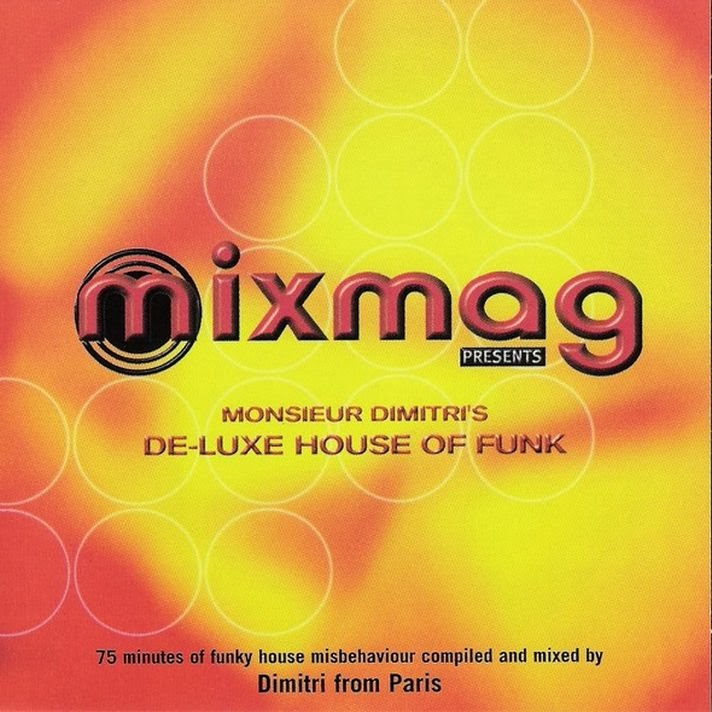
In 1996 Dimitri gained worldwide recognition with the release of his first full album, Sacrebleu, released on Yellow Productions. A blend of diverse influences including jazz, original film soundtracks, samba, and organic house, Sacrebleu sold 300,000 copies worldwide and was named Album of the Year by UK's Mixmag magazine. The 1997 mix album Monsieur Dimitri's De-Luxe House of Funk, however, showed the Frenchman coming back to his house roots

In 2000, Dimitri followed Sacrebleu up with A Night at the Playboy Mansion (Virgin) and Disco Forever (BBE), followed by My Salsoul in 2001, After the Playboy Mansion in 2002. In 2003, Cruising Attitude was released, to be closely followed by his first outing on UK's premier dance music label Defected: Dimitri from Paris In the House. He has followed a somewhat glamorous musical path by recording soundtracks and advertising campaigns for fashion houses Chanel, Jean-Paul Gautier and Yves Saint Laurent and remixing hundreds of artists as diverse as Björk, The Cardigans, James Brown, New Order and Quincy Jones. He also did the music for the anime Tsukuyomi: Moon Phase and mixed the soundtrack for the French luxury dessin animé Jet Groove produced by Method Films.

2005 saw Dimitri go back to his Funk and Disco roots, with Japanese hip hop producer and über collector DJ Muro for Super Disco Friends a double CD mixdown. In 2006 he offered his House of Love outing to Valentine's Day's lovers. Later on Dimitri produced Los Amigos Invisibles "Super Pop Venezuela" album which grabbed a nomination for a grammy award. 2007 saw the release of the Cocktail Disco project with longtime partner BBE, a handful of Disco classics remixes and other surprises down the line.2009 saw the release of the Night Dubbin', a post-disco R&B compilation remix album. Followed by Get Down With The Philly Sound, 2010, Knights of the Playboy Mansion, 2011, The Remix Files, 2011 and Back In The House, 2012

xxxxx xxxxx xxxxx xxxxx xxxxx

Dimitri from Paris' debut is a breezy collection of what could be loosely termed house music, but is in fact indebted to a variety of intriguing styles reminiscent of the Continent around the mid-part of the century, including cabaret music, easy listening, and exotica. Besides the infectious singles "Sacre Francais" and "Dirty Larry," there are at least a dozen other good tracks, and though Sacrebleu would have fared better after an editing job (it clocks right in at 75 minutes), it's difficult to criticize this immensely enjoyable album.


Dimitri From Paris - Sacrebleu ( flac 431mb)

01 Prologue 0:36
02 Sacré Français 4:54
03 Monsieur Dimitri Joue Du Stylophone 1:05
04 Nothing To Lose 4:42
05 Un Termède 0:45
06 Rêveries (Edit) 3:45
07 Attente Musicale 1:05
08 Dirty Larry (Edit) 5:22
09 Free Ton Style (Edit) 3:52
10 Un Terlude 2:27
11 Une Very Stylish Fille 3:20
12 Un Woman's Paradis 3:15
13 La Rythme Et Le Cadence 4:48
14 Le Moogy Reggae 5:06
15 Encore Un Terlude 0:45
16 Un World Mystériouse 4:16
17 Par Un Chemin Différent 6:30
18 Nothing To Lose (Lounge Instrumentale) 4:42
19 Epilogue - Souvenirs De Paris 9:20  

xxxxx xxxxx xxxxx xxxxx xxxxx

Dimitri from Paris' 1997 release, Monsieur Dimitri's De-Luxe House of Funk, is a joint release from Mixer magazine, Razor and Tie, and DMC World. Monsieur Dimitri's De-Luxe House of Funk is a funky and lustful mix CD consisting of all kinds of tracks from all kinds of different artists, from Björk to the Brand New Heavies and from UFO to Sir Raymond Mang. As is the case in most of Dimitri's other works, particularly the Astralwerks release A Night at the Playboy Mansion, there is a series of Dimitri's own reworks, remixes, and re-edits. The energy of this recording is fantastic, as it's definitely more funky than disco, like some of the other works in his catalog. But when it comes to disco, there's next to no one who can outmix Dimitri from Paris, and that's the same here with these nearly classic and groovy rhythm tracks. This work is representative of Dimitri from Paris' work, but the Astralwerks release A Night at the Playboy Mansion is probably his best work to get started with.


VA - Monsieur Dimitri's De-Luxe House Of Funk  (flac 502mb)

01 Dimitri From Paris - Free Ton Style (Monsieur D's Classique Extension) 5:21
02 Morning Kids - Free Lovin' (Original Mix) 3:49
03 Switchblade Sisters - U Love My Music 6:26
04 Sir Raymond Mang - Number One 4:03
05 Second Crusade - May The Funk Be With You 4:48
06 Teddy G - Captain Dobbey 4:28
07 Bob Sinclar - Visions Of Paradise 5:41
08 Karma - High Priestess 4:40
09 Mondo Grosso - Vibe PM (Masters At Work Crooklyn Dub) 5:52
10 Takada - Ola-Le (Ashley Beedle's Sun Barrio Break Mix) 4:33
11 UFO - Spy's Spice (Dim's Cosmic Jazz Dubstramental) 6:56
12 Cheb Khaled - N'ssi N'ssi (Jamming The Casbah Mix) 4:47
13 Brand New Heavies - Sometimes (Monsieur D's Underground Behaviour Mix) 6:14
14 Bjork - Isobel (Dim's Enchanted Forest) 7:48
 
xxxxx xxxxx xxxxx xxxxx xxxxx

Sometimes it's possible to do something too well. Take Dimitri from Paris, for example. A king of lounge-y disco-house behind the decks, he scored huge with all of his mix CDs, most notably the Playboy Mansion series, which catapulted him from underground tastemaker to international player. Often in the case of such high-profile DJs, an eventual artist album is released to excessive fanfare, only to disappoint when placed against the diversity and creativity that can be displayed on a DJ mix, where the best records by a variety of producers are all assembled together. However, in the case of this Japanese import of all new original material, the press and public at large seem to have overlooked it completely, which is a shame since Dimitri delivers a fantastic array of disco and lounge-pop songs that are informed by, yet don't mimic, his lauded DJ style. Dimitri heightens his deep disco senses on "Not Quite Disco" and "Brooklyn," which he recorded with Masters at Work affiliates Los Amigos Invisibles. He also works with Japanese vocalists Kisen Horino, Helena Noguerra, and Maki Nomiya to create Bacharach-esque pop confections and joins with acid jazz gurus Omar and Victor Davies on "Strong Man (For Real)" and "This Is Your Life," respectively, with both supplying soulful vocal parts. Unlike Dimitri's debut album, Sacrebleu, released prior to his rising DJ status in 1996, Cruising Attitude stays clear of any sample-heavy club fare or studio trickery in favor of far more mature grooves. It can only be hoped that more people get on board Dimitri's newest flight of fancy.


Dimitri From Paris - Cruising Attitude (flac 484mb)

01 Welcome Aboard 0:44
02 Not Quite Disco 7:46
03 Strong Man (For Real) 5:20
04 Okinawa Love 4:31
05 La Vie 4:30
06 This Is Your Life 5:17
07 Le Soundtrack 3:44
08 Syracuse 3:59
09 Merumo 4:56
10 Toi Mon Auto 5:13
11 Venusienne Dance 5:15
12 Live Jazz 4:02
13 San Juan Five-O 4:22
14 Paris-Brooklyn 6:19
15 Live Jazz (Masters At Work Remix Edit) 4:35

xxxxx xxxxx xxxxx xxxxx xxxxx

Dec 19, 2013

RhoDeo 1350 Goldy Rhox 139

Hello, today the 139th post of Goldy Rhox, classic pop rock in the darklight are an Irish rock band were founded one night in late December 1969 in Dublin, Ireland, when Belfast guitarist Eric Bell met up with organist Eric Wrixon in a pub and found that they shared an ambition to form a group. Both musicians had previously played with Them, fronted by Van Morrison. The same night, they went to see the band Orphanage, which featured vocalist Phil Lynott and drummer Brian Downey. Bell and Wrixon introduced themselves after the gig and suggested the four of them form a band together. Lynott and Downey were aware of Bell's good musical reputation, and agreed with the condition that Lynott play bass guitar as well as sing, and that they perform some of his own compositions. Lynott assumed the role of frontman and led them throughout their recording career of twelve studio albums. After Lynott's death in 1986, various incarnations of the band have emerged over the years based initially around guitarists Scott Gorham and John Sykes, though Sykes left the band in 2009. Gorham later continued with a new line-up including Downey.

Lynott, the band's de facto leader, was composer or co-composer of almost all of the band's songs, and the first black Irishman to achieve commercial success in the field of hard rock music. They boasted some of the most critically acclaimed guitarists throughout their history, with Downey and Lynott as the rhythm section, on the drums and bass guitar. As well as being multiracial, the band drew their members not only from both sides of the Irish border but also from both the Catholic and Protestant communities during The Troubles.

The band played their final UK concert before their break-up at the Reading Festival on 28 August 1983, which was eventually released in 1992 as their BBC Radio One Live in Concert album. The last concert came in Nuremberg on 4 September, at the Monsters of Rock festival, after which the band members went their separate ways.

***** ***** ***** ***** *****
Most of the albums i 'll post made many millions for the music industry and a lot of what i intend to post still gets repackaged and remastered decades later, squeezing the last drop of profit out of bands that for the most part have ceased to exist long ago, although sometimes they get lured out of the mothballs to do a big bucks gig or tour. Now i'm not as naive to post this kinda music for all to see and have deleted, these will be a black box posts, i'm sorry for those on limited bandwidth but for most of you a gamble will get you a quality rip don't like it, deleting is just 2 clicks...That said i will try to accommodate somewhat and produce some cryptic info on the artist and or album.

Today's mystery album was released 2nd of June 1978, It was the 8th album release by the band and it's first live album which went platinum in the UK. The album was originally intended to be a studio album. Working with producer Tony Visconti, Thin Lizzy maintained huge success with their previous album Bad Reputation, and the group wanted to work with him again. However, Visconti had a very tight schedule, so Phil Lynott came up with the idea that they spend two weeks together compiling a live album instead.

The album sleeve notes credit two live recordings as the source of the album - Hammersmith Odeon, London, England on 14 November 1976 (as part of the tour for Johnny the Fox), and Seneca College Fieldhouse, Don Mills, Toronto, Canada on 28 October 1977. Although all sources agree that Live and Dangerous contains overdubs, there is considerable disagreement about the extent of them. According to Visconti, the album was "75% recorded in the studio." Other sources, including the band members themselves, claim that the finished album is "75% live". Mixing and overdubs were done at Studio Des Dames in Paris. The record sleeve includes a montage photograph in the studio consisting of a mirror, straw, razor blade and a rolled up five pound note (as an overt reference to cocaine consumption).

On this album, the band segues immediately from "Cowboy Song" into "The Boys Are Back in Town", on the line "a cowboy’s life is the life for me" - the last chord of the former was the first of the latter anyway though their studio versions were recorded as separate songs. This technique was revisited with the same pair of live tracks in subsequent performances, and showcased more professionally on further live albums. It's included in the book 1001 Albums You Must Hear Before You Die and ranked number one in PlanetRock.com's The Greatest Live Album Top 40. In 2011, the British music magazine NME ranked it at No. 1 in its 50 Greatest Live Albums of All Time.  Here in it's latest remastered and extended version (87min). N'Joy


Goldy Rhox 139   (flac 602mb)

Goldy Rhox 139   (ogg 213mb)

***** ***** ***** ***** *****

Dec 18, 2013

RhoDeo 1350 Aetix

Hello, Google's motto "don't be evil" is getting ever closer to the infamous War=Peace slogan from 1984. Recently they've been buying up robotics companies and this week they bought the current jewel in that crown, Boston Dynamics, instantly adding world-leading robotics capability, including robots that can walk all on their own, to Google’s arsenal – as well as significant links to the US military – conjuring images of Skynet. Its robotics work is at the forefront of the technology creating the self-proclaimed “most advanced robots on Earth” particularly focused around self-balancing humanoid or bestial robots. Funding for the majority of the most advanced Boston Dynamics robots comes from military sources, including the US Defence Advanced Research Projects Agency (Darpa) and the US army, navy and marine corps.


You *know* that some day something like that will be out there hunting your fellow human beings on some battlefield. Or, worse still, patrolling the streets of your city. Our robotic achievements really are beginning to reach the 'stunning' level - Wildcat (for one example) is amazing - I just have a feeling that humans being what they are, those in power will use them against the 99% without any second thoughts. But who knows hackers might be able to make it turn sides. Real robot wars...


Time for another Aetix episode and here a band that merged revolutionary politics with hardcore punk music and, in the process, became one of the defining hardcore bands. Often, they were more notable for their politics than their music, but that was part of their impact. They were more inspired by British punk and the fiery, revolutionary-implied politics of the Sex Pistols than the artier tendencies of New York punk rockers. Under the direction of lead vocalist Jello Biafra, they became the most political and -- to the eyes of many observers, including Christians and right-wing politicians -- the most dangerous band in hardcore. . . ....N'Joy

xxxxx xxxxx xxxxx xxxxx xxxxx

Dead Kennedys formed in June 1978 in San Francisco, California, when East Bay Ray (Raymond Pepperell) advertised for bandmates in the newspaper The Recycler, after seeing a ska-punk show at Mabuhay Gardens in San Francisco. The original band lineup consisted of Jello Biafra (Eric Reed Boucher) on vocals, East Bay Ray on guitar, Klaus Flouride (Geoffrey Lyall) on bass, and Ted (Bruce Slesinger) on drums and percussion. This lineup recorded their first demos. In early to mid July, the band recruited 6025 (Carlos Cadona) as a secondary guitarist. Their first show was on July 19, 1978, at the Mabuhay Gardens in San Francisco, California.

Dead Kennedys played numerous shows at local venues afterwards. Due to the provocative name of the band, they sometimes played under pseudonyms, including "The DK's", "The Sharks", "The Creamsicles" and "The Pink Twinkies". The band's real name generated controversy. San Francisco Chronicle columnist Herb Caen wrote in November 1978, "Just when you think tastelessness has reached its nadir, along comes a punk rock group called The Dead Kennedys, which will play at Mabuhay Gardens on Nov. 22, the 15th anniversary of John F. Kennedy's assassination. Despite mounting protests, the owner of Mabuhay says, "I can't cancel them NOW — there's a contract. Not, apparently, the kind of contract some people have in mind." However, despite popular belief, the name was not meant to insult the Kennedy family, but according to Biafra, "to bring attention to the end of the American Dream".

6025 left the band in March 1979 under somewhat unclear circumstances, generally considered to be musical differences. In June, the band released their first single, "California Über Alles", an attack on the then-current governor, Jerry Brown, on the independent label Alternative Tentacles. The band followed with a well received East Coast tour. Shortly afterward they released by their second single, "Holiday in Cambodia." In 1979, Biafra ran for mayor of San Francisco; he finished fourth. By this time, the band had become quite popular in both the American and British underground. Finally, in 1980, the band released their debut album, Fresh Fruit for Rotting Vegetables, on IRS Records. After its release, Ted left the band; he was replaced by drummer Darren H. Peligro.

Around the same time, East Bay Ray had tried to pressure the rest of the band to sign to the major record label Polydor Records; Biafra stated that he was prepared to leave the group if the rest of the band wanted to sign to the label, though East Bay Ray asserts that he recommended against signing with Polydor. Polydor decided not to sign the band after they learned that the Dead Kennedys' next single was to be entitled "Too Drunk to Fuck". When it came out in May 1981, the song caused much controversy in the UK as the BBC feared the single would reach the Top 30; this would require a mention of the song on Top of the Pops.

Following the release of Fresh Fruit for Rotting Vegetables, The Dead Kennedys formed their own independent record label, Alternative Tentacles, in 1981. First release the EP In God We Trust, Inc. (1981) saw them move toward a more aggressive hardcore/thrash sound. In addition to the EP's controversial artwork depicting a gold Christ figure on a cross of dollar bills, the lyrics contained Biafra's most biting social and political commentary yet. In 1982, they released their second studio album, Plastic Surgery Disasters. The album's cover features a withered starving African child's hand being held and dwarfed by a white man's hand. This picture won the World Press Photo award in 1980, and was taken in Karamoja district in Uganda by Mike Wells.

The band's music had evolved much in a short time, moving away from hardcore formulas toward a more innovative jazz-informed style, featuring musicianship and dynamics far beyond other bands in the genre (thus effectively removing the music from that genre). By now the group had become a de facto political force, pitting itself against rising elements of American social and political life such as the religious right, Ronald Reagan and the idle rich. The band continued touring all over the United States, as well as Europe and Australia, and gained a large underground following. While they continued to play live shows during 1983 and 1984,  the band took a hiatus, during which bandmembers -- most notably Klaus Flouride -- performed with various side projects. During that time, Alternative Tentacles began to establish itself as a major force in the American underground, hence they concentrated on the Alternative Tentacles record label, which would become synonymous with DIY alternative culture.

The release of the album Frankenchrist in 1985 showed the band had grown in terms of musical proficiency and lyrical maturity. While there were still a number of loud/fast songs, much of the music featured an eclectic mix of instruments including trumpets and synthesizers. Around this time Klaus Flouride released the similarly experimental solo EP Cha Cha Cha With Mr. Flouride. Lyrically, the band continued their trademark social commentary, with songs such as "MTV Get Off The Air" and "Jock-o-rama" poking fun at mainstream America. In some ways the album represented an artistic peak.

However, the album also heralded in an era of prolonged legal trouble for the band. The artwork caused a furor with the newly formed Parents Music Resource Center (PMRC). In December 1985 a teenage girl purchased the album at the Wherehouse Records store in Los Angeles County. The girl's mother wrote letters of complaint to the California Attorney General and to Los Angeles prosecutors.

The Dead Kennedys returned in 1985 with Frankenchrist, which was the record that earned the band its greatest notoriety. Included with the album was a poster of the Swiss artist H.R. Giger's Landscape #XX, it depicts nine copulating penises. A year after the release of the album, The Kennedys and Alternative Tentacles were prosecuted under revised Californian anti-obscenity laws for distributing pornography to minors because of the poster. For the next two years, the band was embroiled in a bitter legal battle, during which Biafra emerged as one of the most articulate advocates for free speech and vocal opponents of the PMRC. In the summer of 1987, the case ended with a hung jury and was dismissed.

In addition to the obscenity lawsuit and being ignored by the mainstream media (MTV and most radio stations gave such groups scant notice, not to mention airplay), the band became increasingly disillusioned with the underground scene as well. The hardcore scene, which had been a haven for free-thinking intellectuals and downtrodden nonconformists, was increasingly attracting hooligans who came to punk concerts looking only to slam dance and fight to violent music. In earlier years the band had criticized neo-Nazi skinheads for trying to ruin the punk scene, but just as big a problem was the increasing popularity of thrash metal and stereotypical macho "post-1982 hardcore" which brought the group (and their genre) an audience that had little to do with the ideas/ideals they stood for. In January 1986, frustrated and alienated from their own scene, the DKs decided to break up to pursue other interests and played their last concert on February 21.

The band continued to work on songs, with Biafra penning songs such as "Chickenshit Conformist" and "Anarchy for Sale", which articulated their feelings about the "dumbing down" of punk rock. During the summer they recorded these songs for their final album, Bedtime for Democracy, which was released in November. The artwork, depicting a defaced Statue of Liberty overrun with Nazis, media, opportunists, Klan members, corrupt government officials, and religious zombies, echoed the idea that the punk scene was no longer a safe haven for "your tired, your poor, your huddled masses yearning to breathe free".

The album contains a number of fast/short songs interspersed with jazz ("D.M.S.O."), spoken word ("A Commercial") and psychedelia ("Cesspools In Eden"). The lyrical focus is more introspective and earnest ("Where Do Ya Draw The Line?"), with an anti-war, anti-violence ("Rambozo The Clown") bent, moving away from the violent imagery of their early records, while remaining as subversive as ever ("I Spy", "D.M.S.O."). In December, the band announced their split. Biafra went on to speak about his political beliefs on numerous television shows and he released a number of spoken-word albums. Ray, Flouride, and Peligro also went on to solo careers.

Although The Dead Kennedys emerged victorious from the court battle, they didn't remain a band for much longer. After the case was settled, The Kennedys split, releasing the posthumous compilation Give Me Convenience or Give Me Death in 1987. Biafra embarked on a solo career, releasing musical and spoken-word recordings sporadically over the next couple decades. Flouride returned to his fledgling solo career, releasing two albums in the late '80s and early '90s. The DVD format of Dmpo's On Broadway, The Dead Kennedys' June 1984 performance marking the closing of San Francisco's avant-garde theater and nightclub, was released in May 2000.

In the late 1990s, former band members discovered problems with the amount of payments which each band member had received from their record label Alternative Tentacles. Former band members claimed that Jello Biafra had conspired to pay lower royalty rates to the band members. Although both sides agreed that the failure to pay these royalties was an accounting mistake, they were upset that Biafra failed to inform the band of the mistake after he and his co-workers discovered it. Both sides claim they attempted to resolve the matter without legal action, but the ultimately complicated legal dispute (involving royalties, publishing rights, and a number of other issues) soon led to the courts, where Biafra was found liable for the royalties after the jury determined that he had committed fraud and malice, and was ordered to pay damages of nearly $200,000, including $20,000 in punitive damages, to the band members.

Biafra had received sole songwriting credit for most Dead Kennedys songs on all released albums for the last 20 years or so without complaints from the band, though a minority of songs had given credit to certain group members or the entire band as a whole, indicating a system designed to reflect the primary composers. Biafra's former bandmates maintain that they sued because of Jello Biafra's deliberate withholding of money, though when pressed they have acknowledged that the payment was an accounting mistake, but insist that Biafra was wrong in failing to inform the band directly. Details about this issue remain scarce. The band also maintains that the Levi's story was completely fictitious and invented by Biafra to discredit them. Ultimately, these issues have led to a souring of relationships with the erstwhile bandmates, who still have not resolved their personal differences as of today.

Several DVDs, re-issues, and live albums have been released since the departure of Biafra most recently on Manifesto Records. According to Biafra, the live albums are "cash-ins" on Dead Kennedys' name and his music. Biafra also accused the releases of the new live material of having poor sound quality. Furthermore he has stated he is not receiving any royalties from the sale of any Manifesto Records releases. Consequently, he has discouraged fans from buying any Dead Kennedy reissues. The other band members denied Biafra's accusations regarding the live releases, and have defended the mixes as an effort of hard work. Biafra dismissed the new group as "the world's greediest karaoke band." well they did go through a handful of singers in the noughties. Officially they still exist but no new material has been released which kinda proves the point Biafra was right he was entiteld to the writing credits...

xxxxx xxxxx xxxxx xxxxx xxxxx

A hyper-speed blast of ultra-polemical, left-wing hardcore punk, and bitingly funny sarcasm, Fresh Fruit for Rotting Vegetables stands as the Dead Kennedys' signature statement. As one of the first hardcore albums, it was a galvanizing influence on the musical and attitudinal development of the genre, also helping to kickstart the fertile California scene. The record's tactics are not subtle in the least; Jello Biafra's odd warble and spat-out lyrics leave no doubt as to what he thinks, baiting his targets of conservatism, violence, overbearing authority, and capitalist greed with a viciously satirical sarcasm that keeps his unflinchingly political outlook from becoming too didactic. The thin production dilutes some of the music's power, but the ragged speed-blur still packs a wallop, and the hooks cribbed from surf and rockabilly give it a gonzo edge. The songwriting isn't consistent all the way through the album, but classics like "Kill the Poor," "Let's Lynch the Landlord," "Chemical Warfare," "California Über Alles," and "Holiday In Cambodia" helped define the hardcore genre and, thus, must be heard.

The band didn't hold back at all when it came to the follow-up for Fresh Fruit -- if anything, they exploded to a degree never matched by them in later years. Arguably the sheer speed and lack of any subtlety throughout most of this eight-song EP means there's less to talk about in terms of deathless songs and more in the way of sheer breathless anger and rage. The titles say it all: "Nazi Punks Fuck Off," "Religious Vomit," "Hyperactive Child." The sheer hilarity of the band isn't lost, thankfully; "Moral Majority" may rip along as per always, but Biafra's parody of a typical TV preacher at the start is a scream. The real winners come at the end, starting with "We've Got a Bigger Problem Now." A reworking of "California Über Alles," specifically targeted at California governor turned president Ronald Reagan, benefits from an amusing jazz/lounge start and even more righteous, slow-burn bile than before. The group tops it off with a romp through Frankie Laine's "Rawhide," ending everything on a fun, kicking note.


Dead Kennedys - Fresh Fruit For Rotting Vegetables + In God We Trust, Inc. EP  (flac 317mb)

01 Kill The Poor 3:03
02 Forward To Death 1:22
03 When Ya Get Drafted 1:22
04 Let's Lynch The Landlord 2:11
05 Drug Me 1:55
06 Your Emotions 1:19
07 Chemical Warfare 2:54
08 California Über Alles 3:00
09 I Kill Children 2:02
10 Stealing Peoples' Mail 1:33
11 Funland At The Beach 1:48
12 Ill In The Head 2:44
13 Holiday In Cambodia 4:33
14 Viva Las Vegas 2:37
In God We Trust, Inc. EP
15 Religious Vomit 1:03
16 Moral Majority 1:55
17 Hyperactive Child 0:37
18 Kepone Factory 1:17
19 Dog Bite 1:13
20 Nazi Punks Fuck Off 1:03
21 We've Got A Bigger Problem Now 4:24
22 Rawhide 2:07

Dead Kennedys - Fresh Fruit For Rotting Vegetables + In God We Trust, Inc. EP   (ogg 104mb)

xxxxx xxxxx xxxxx xxxxx xxxxx

Having proved themselves masters of the quick, vicious smash and bash, on their second full-length album the Kennedys continued in that vein while finding other effective ways to express their all-encompassing message of resistance and satire. Absolutely nobody is safe, whether it's the more expected targets of conservative society, or those who claim to follow what the Kennedys and punk promised but only ended up acting like idiots. For the most part, though, it's a well-deserved smackdown of all the jerks the early '80s produced, set to some fantastic music. Bookended by random noise jams -- the first one with a wonderfully dismissive spoken-word analysis on societal programming for The Good Life -- Plastic Surgery Disasters shows East Bay Ray, Klaus Fluoride and D.H. Peligro turning into an even more awesome unit than before. Ray's sheet-metal intense guitar may once or twice get slammed into too much treble for its own good, but his spaghetti-western-cranked-to-ten playing is fantastic stuff at its best. The others have their moments, like Peligro's rolling drum breaks on "Trust Your Mechanic." When the band aims for subtlety, the results are grand -- the sudden silences on "Trust Your Mechanic," the goofy hipswing start to "Forest Fire." Unsurprisingly, Biafra is still at the center of it all; once again, the song titles make it clear what's at play. "Terminal Preppie," rips into an example of the type with gusto, and the wonderfully sneering "Winnebago Warrior" is just the tip of the iceberg. The real highlight can be found at the end -- "Moon Over Marin," with a soaring, anthemic surf-rock line from Ray offsetting Biafra's semi-apocalyptic vision of the Bay Area's snooty region.


Dead Kennedys - Plastic Surgery Disasters  (flac 312mb)

01 Advice From Christmas Past 0:55
02 Government Flu 2:04
03 Terminal Preppie 1:30
04 Trust Your Mechanic 2:55
05 Well Paid Scientist 2:22
06 Buzzbomb 2:22
07 Forest Fire 2:23
08 Halloween 3:35
09 Winnebago Warrior 2:08
10 Riot 5:58
11 Bleed For Me 3:25
12 I Am The Owl 4:52
13 Dead End 3:56
14 Moon Over Marin 3:42

Dead Kennedys - Plastic Surgery Disasters (ogg 101mb)

xxxxx xxxxx xxxxx xxxxx xxxxx

Released after a three-year studio hiatus, this album picks up right where Plastic Surgery Disasters left off. As always, the lyrics are among the most literate and angry in all of rock & roll. "Goons of Hazard" scores the culture of guns and the rednecks who love them, utilizing full-textured hard rock to set the verses. "Soup Is Good Food" lacerates the concept of disposable people in disposable jobs, pairing this idea with repeated guitar riff-based music that suggests a nightmare version of 1960s songs. "Jock-O-Rama" excoriates organized sports and macho attitudes; musically, the outer sections wed rockabilly and hardcore influences, sandwiching a slow middle section that spoofs martial numbers like Barry Sadler's "Ballad of the Green Berets." "This Could Be Anywhere" has critical lyrics about racism and classicism set to music highly reminiscent of the Sex Pistols. "Hellnation" has garbled, wide-range, muckracking verses set to stun-speed punk that recalls numbers from In God We Trust Inc. The excellent "MTV -- Get Off the Air" lambastes the corporate influences on rock & roll; musically, the song exhibits a tripartite structure, using a vacuously poppy opening, a speed hardcore central section, and a mid-tempo rocking finale that prominently features trumpet (a very brief coda reprise of hardcore ends the number). The finest selection on this album (and perhaps in the whole Dead Kennedys' canon) is the anthemic "Stars and Stripes of Corruption." This number also utilizes a three-part construct, consisting here of a hard-rocking midsection flanked by faster, punk-oriented material. The verses here are stunningly detailed, describing what the band believes is wrong with the United States and what the solutions should be. Wonderful and challenging.


Dead Kennedys - Frankenchrist ( flac 338mb)

01 Soup Is Good Food 4:17
02 Hellnation 2:20
03 This Could Be Anywhere (This Could Be Everywhere) 5:24
04 A Growing Boy Needs His Lunch 5:46
05 Chicken Farm 5:08
06 Macho-Rama 4:05
07 Goons Of Hazzard 4:24
08 M.T.V. - Get Off The Air 3:36
09 At My Job 3:40
10 Stars And Stripes Of Corruption 6:22

Dead Kennedys - Frankenchrist  (ogg 107mb)

xxxxx xxxxx xxxxx xxxxx xxxxx

Dec 17, 2013

RhoDeo 1350 Roots

Hello, we still find ourselves in an environment that gave rise to the worlds monotheistic religions be that on the Arabian peninsula, here we stay in the Saharan/Sahel band stretching from the West-Atlantic coast to the highlands of Ethiopia in the east of the continent, a vast area where fresh water usually tends to come at a premium , where the sun is burning down during daytime and nighttime can be cold, where the moon is the sole light source apart from the warming campfires. Is it any surprise then that singing and making music together lifted the spirits of those gathering in these desolate landscapes. And the moon became their God.

Today we find ourselves amidst the music of Egypt .....N'joy

xxxxx xxxxx xxxxx xxxxx xxxxx

Egyptian music has been an integral part of Egyptian culture since ancient times. The ancient Egyptians credited the god Thoth with the invention of music, which Osiris in turn used as part of his effort to civilize the world. The earliest material and representational evidence of Egyptian musical instruments dates to the Predyanstic period, but the evidence is more securely attested in the Old Kingdom when harps, flutes and double clarinets were played. Percussion instruments, lyres and lutes were added to orchestras by the Middle Kingdom. Cymbals frequently accompanied music and dance, much as they still do in Egypt today. Egyptian folk music, including the traditional Sufi zikr rituals, are the closest contemporary music genre to ancient Egyptian music, having preserved many of its features, rhythms and instruments.

Religious music remains an essential part of traditional Muslim and Coptic celebrations called mulids. Mulids are held in Egypt to celebrate the saint of a particular mosque or church. Muslim mulids are related to the Sufi Zikr ritual. The Egyptian flute, called the Ney, is commonly played at mulids. The liturgical music of the Coptic Church also constitutes an important element of Egyptian music and is said to have preserved many features of ancient Egyptian music. Coptic music is the liturgical music of the Coptic Church. It consists mainly of chanted hymns in rhythm with instruments such as cymbals (hand and large size) and the triangle. It has preserved some features of ancient Egyptian music, and few of its melodies are identified and labeled as Syrian (called Shamy in the Coptic Church) or Byzantine (called Roumy or Roman in the Coptic Church).

Bedouin
Bedouin music is found in the deserts of the west, near Libya, and the eastern Sinai area. The Mizmar, a twin-pipe clarinet, is the most popular folk instrument, and popular singers include Awad e'Medic.

Saidi (Upper Egyptian)
Egyptian musicians from Upper Egypt play a form of folk music called Saidi (Upper Egyptian). Metqal Qenawi's Les Musiciens du Nil are the most popular saidi group, and were chosen by the government to represent Egyptian folk music abroad. Other performers include Shoukoukou, Ahmad Ismail, Omar Gharzawi, Sohar Magdy and Ahmed Mougahid.

Nubian
Nubians are native to the south of Egypt and northern Sudan, though many live in Cairo and other cities. Nubian folk music can still be heard, but migration and intercultural contact with Egyptian and other musical genres have produced new innovations. Ali Hassan Kuban's jazz fusions had made him a regular on the world music scene, while Mohamed Mounir's social criticism and sophisticated pop have made him a star among Nubians, Egyptians, and other people worldwide. Ahmed Mounib, Mohamed Mounir's mentor, was by far the most notable Nubian singer to hit the Egyptian music scene, singing in both Egyptian Arabic and his native Nobiin. Hamza El Din is another popular Nubian artist, well-known on the world music scene and has collaborated with the Kronos Quartet.

Sha'abi
Adaweyah, by far the most popular Egyptian sha'abi singer in the history of Egyptian music, initially gained controversy for his lyrics, which were often humorous, salacious and highly critical of social rules and respectable society. By the 1980s, shaabi was being influenced by music from the United Kingdom and United States, as well as other Egyptian pop stars. Electric guitars, synthesizers, and later beat boxes, were integrated into the music, which is now highly-polished and meant for mainstream consumption. Today, the most popular shaabi stars are Hakeem and Shaaban Abdel Rahim.

Al Jeel
Al Jeel music genre arose in the 70s. It was dance-pop modeled after foreign rock and roll and pop music with a background rhythm similar to reggae, and it included distinctively Egyptian characteristics. Hamid el Shaery, a Libyan living in Egypt, was the most influential of Al-Jeel's early performers.

Popular music
Until the late 1970s, classical singers like Um Kulthoum were Egypt's biggest pop stars. By the middle of the 1990s, though, Al Jeel and al shaabi music had taken over, especially among young audiences.  Starting in the late 1960s, light song emerged as the first modern Egyptian pop tradition. Often nationalist in tone, light songs were humorous and sometimes risqué. It was dominated by singers like Aida el-Shah and Leila Nazmi, who were popular in middle-class communities. The working class youth of Egypt reacted against light songs and shaabi music evolved out of Cairo's poorest districts. Shaabi began entering the mainstream of Egyptian society in 1971, with the breakthrough success of Ahmed Adaweyah. Since the 1970s, Egyptian pop music has become increasingly important in Egyptian culture, particularly among the large youth population of Egypt. Egyptian folk music continues to be played during weddings and other traditional festivities. In the last quarter of the 20th century, Egyptian music was a way to communicate social and class issues. Among some of the most popular Egyptian pop singers today are Mohamed Mounir and Amr Diab.

The 20th century has seen Cairo become associated with a roots revival. Musicians from across Egypt are keeping folk traditions alive, such as those of rural Egyptians (fellahin), the Nubians, and the Arab and Berber Bedouins. Mixtures of folk and pop have also risen from the Cairo hit factory.  Sawahli (coastal) music is a type of popular music from the northern coast, and is based around the simsimaya, an indigenous stringed instrument. Well-known singers include Abdo'l Iskandrani and Aid el-Gannirni. After the second millennium, a music revolution was started in Egypt as bands started to become more popular and more famous year after year. It began with bands like Eftekasat and Wust El Balad with the help of El Sawy Cutlurewheel, Cairo Jazz Club, multiple cultural centers like the French Culture Centre. As a result, people started to become more aware of the different genres that could be presented by the different bands as the bigger Egyptian taste was more of pop artists like Amr Diab, Mohamed Mounir and Tamer Hosny.

xxxxx xxxxx xxxxx xxxxx xxxxx

Although the album is subtitled "Cairo to Nubia: the source of Arabic music," the booklet takes care to point out that there's no classical Arab music here -- which perhaps explains the absence of Umm Kulthum, the greatest icon of Arab music. Instead, the concentration is on modern-day stars, and they don't come any bigger than Amr Diab, who gets two tracks, and deservedly so. His pop music keeps its roots firmly in Egypt under a gloss that never tries too hard to be international. A couple of the old-timers -- Warda and Mohamed Abdel Wahab -- are represented, and Abdel Halim Hafez proves to be the real link between the past and the present with "Ahwak." The inclusion of cuts from four Nubians is interesting, showing different facets of the music they've brought to Egypt. Both Mahmoud Fadl and Ali Hassan Kuban display their backgrounds proudly, while Hamza el Din forged a new fusion of styles in his music and Mohamed Mounir is almost a law unto himself, with a sound that's absolutely unique (and enthralling on "Sala Fi Serri We Gahri"). Angham and the interesting Nagat el Saghira both also warrant a pair of cuts, but their material simply isn't as strong -- too formulaic and ultimately bland. Nonetheless, this is an interesting portrait of Egyptian music at the beginning of the 21st century.

Some excellent music - the first six tracks are great. I would almost give this five stars - probably 4 1/2 overall - but it starts repeating artists after the first six tracks. We have Amr Diab, Abgham, and the rather obscure Nagat el Saghira all TWICE. There should never be the same artists twice on a rough guide. It's not as if there's a lack of music in Egypt. Besides, there are ommissions; virtually no folk, Arabic classical or Sufi music, and as others have pointed out, no Umm Kalthoum, though I've never heard anything by her. However, Nubian music is represented excellently by good tracks from Ali Hassan Kuban, Mahmoud Fadl and the Cairo Opera orchestra, and Hamza el Din. There's also quite a lot of old music from former stars such as Abdel Hlim Hafez, Mohamed Abdel Wahab, and Warda (and Nagat el Saghira, twice, on slightly old recordings.) And there's alot of pop music, most of which is still pretty traditional.


Rough Guide To The Music Of Egypt (flac  428mb)

01 Angham - Leih Sebtaha
02 Amr Diab - Aktar Wahed Beyhebak
03 Nagat El Saghira - Ana Baashaq El Bahr
04 Mahmoud Fadl Feat. Salwa Abou Greisha - Hayart Albi Maak
05 Ali Hassan Kuban - Henna
06 Mohamed Mounir - Sala Fi Serri We Gahri
07 Angham - Tedhak Alaia
08 Amr Diab - Adini Regeatelek
09 Mohamed Abdel Wahab - Jafnoho Allama El Ghazal
10 Warda - Walaw Ennak Ya Habibi Beied
11 Hamza El Din - Nabra (Gold Ore)
12 Nagat El Saghira - Ah Law Tearaf
13 Abdel Halim Hafez - Ahwak

Rough Guide To The Music Of Egypt  (ogg 171mb)

xxxxx xxxxx xxxxx xxxxx xxxxx

Hossam Ramzy was born in Cairo, Egypt. His musical career began early, when at the age of three he was given his first drum, an Egyptian Tabla..... Hossam's passion and huge talent for percussion was noted by his family, many of whom were themselves involved in the arts. Hossam was encouraged to master his craft and studied under leading Cairo music teachers. A move to Saudi Arabia led him to joining with many Bedouin tribes which gave the young Hossam a rich insight into the cultural origins of Middle Eastern music and became the inspiration for many of his later rhythmic directions.

This is a workshop with Egypt's master percussionist Hossam Ramsey. The listener is introduced to basic Arabic instruments, the Tabla, the Mazhar, the Duf, the Reque, the Doholla and the Sagat. Each in turn is played and a short description is given. Mr. Ramsey then explains 6 different rhythms giving an example of each. The recording concludes with a wonderful long piece which gives examples of all the rhythms presented. I love to dance to this piece. The rhythms presented are Masmoudi, Maqsoum, Malfuf, Zaar, Fallahi and Saaidi. Even if you are tone deaf, you should at least be able to hear the differences between the Masmoudi and the Malfuf and the Zaar .... and the repetitive nature serves to reinforce the lesson. But even if you don't get it at 1st go, try try again... the penny will drop one fine day! For those looking for nice "Oriental background music" this is not for you. For dancers....this is not really suitable for a choreographed show/ piece but it's still good for a workout ...those hip drops, that 3 step malfuf, the zaar moves...plenty to work on there. You could also work on your zill skills here by playing along.


Hossam Ramzy - Rhythms of the Nile   (flac  369mb)

01 Masmoudi 4:02
02 Masqsoum 3:08
03 Saaidi 3:13
04 Fallahi 3:19
05 Zaar 1:56
06 Malfuf 2:41
07 Karachi 2:12
08 Elzaffa 2:35
09 Three four time 1:12
10 Samaai 1:28
11 Abu el Khamsa 2:36
-
12 Introduction 0:38
13 The Instruments 1:24
14 The Sounds 4:07
15 Practice 0:44
16 The Rhythms 1:38
17 Masmoudi I 1:53
18 Maqsoum 3:48
19 Malfuf 3:49
20 Zaar 4:02
21 Fallahi 5:55
22 Masmoudi II 4:41
23 Saaidi 3:04
24 Rhythmic Combination 10:37

Hossam Ramzy - Rhythms of the Nile      (ogg 182mb)

xxxxx xxxxx xxxxx xxxxx xxxxx

Issued from the furthest reaches of Upper-Egypt, The Musicians of the Nile have criss-crossed Europe over the last 20 years. Like the ancient bards of time past, the difference is that they move through space and cultures as comfortably on an airplane as on the back of a donkey Discovered in 1975 by Alain Weber, who has been their artistic director ever since, The Musicians of the Nile is a group whose talent has always included some of the greatest figures of the Upper Egyptian tradition . Well before the World Music wave, The Musicians of the Nile were the first so-called "Arab Music" group to attain widespread popularity. Frequently imitated and sometimes plagiarized, The Musicians of the Nile have kept up with the parallel currents in music ever since the Chateauvallon Festival in 1975, where they met some of the greatest jazz musicians of the time including Sun Ra and Keith Jarret. They were a part of the first WOMAD (World of Music Arts and Dance) in 1983, which brought World Music to international attention. Recently, the film "Latcho Drom" directed by Tony Gatlif, which traces the great musical voyage of the Gypsies from India to Spain, has made even more listeners aware that The Musicians of the Nile are a part of the Gypsy tradition.

Their dazzling mix of traditional songs is perfectly showcased on this early Real World release, which was taped in both France and England during the late '80s. With the dusky strains from the rababah (traditional fiddle), the mizmar (an oboe-like instrument), and the tablah (a hand drum similar to the darbouka) filling the air, the group delivers an array of trance-inducing long-players, including ensemble pieces as well as solo spotlights like the tablah feature "Zahrafat Al Sa'id" (Rejoicing in Upper Egypt) and the arghul (double-reed clarinet) vehicle "Kol Elle Qalboh Ankawa" (Everyone Has Had a Broken Heart). From the opening sounds of the horse and buggy and street sounds in Luxor to the haunting and melodic sounds of the rababah to the beat of the tablah, it is a wonderful collection of songs. An essential disc for world music connoisseurs.


The Musicians Of The Nile - Luxor To Isna (flac 298mb)

01 Al Bahr Al Gharām Wāsah (Love Is As Vast As A River) 10:03
02 Zahrafat Al Sa'īd (Rejoicing In Upper Egypt) 7:07
03 Yā Tīr 'Ala Shadjarah (Oh Bird Upon The Tree) 9:19
04 Horse Steps 0:42
05 Al Nahla Al 'Ālī (The Tall Palm Tree) 3:25
06 Kol Ēllē Qalboh Ānkawā (Everyone Has Had A Broken Heart) 11:59
07 Yunes Wa 'Azīzah (Yunes And Azizah) 10:05
08 Āl-Āqsur-Īsnā (From Luxor To Isna) 1:24

The Musicians Of The Nile - Luxor To Isna (ogg 128mb)

xxxxx xxxxx xxxxx xxxxx xxxxx

Dec 16, 2013

RhoDeo 1350 Hobbit 5

Hello, this time of year it's all about wintersports and with the winterolympics coming up the athlete's compete hard for the right to be there. Naturally the football goes on in the UK, but then they don't expect to win any medals at the olympics. That said most football is played by extremely wellpaid foreigners.

Ok Hobbitlovers the second part of Jackson's trilogy is out, the Desolation of Smaug seems to be a great film if the critic consensus is anything to go by. Brisk, fun, spectacular in parts, these are the most commonly described phrases. Specially the Barrel ride gets a mention looks like it's on here today.  N'Joy

Well in a few weeks time part 2 of the Hobbit trilogy is coming to the screens to get you started the coming 8 weeks a 1968 BBC Radio adaptation of J. R. R. Tolkien's 1937 children's fantasy novel The Hobbit is here. The series was adapted by Michael Kilgarriff and produced by John Powell in eight half-hour mono episodes for BBC Radio 4 ... NJoy

 xxxxx xxxxx xxxxx xxxxx xxxxx

The radio series follows the plot of the original novel (revised 1951 version) very closely, except for the addition of The Tale Bearer, a narrator whose account of the story is often interrupted and embellished by the protagonist Bilbo Baggins in the role of secondary narrator.

Bilbo is approached by the wizard Gandalf to undertake a dangerous adventure, and despite his initial reluctance he soon finds himself accompanying Thorin Oakenshield and his party of dwarves on a long and difficult quest to recover the dwarves' treasure from Smaug the dragon. On the way, he encounters trolls, goblins, and giant spiders, and finds a magic ring with the power of invisibility. The show's production was complicated by the inclusion of multiple sound effects (often inserted live while recording the actors' performances), songs from the novel, and special sounds and electronic voice treatments created by the BBC Radiophonic Workshop. All of the trolls, goblins, elves, wargs and eagles have treated voices, as does Gandalf when imitating the trolls.

With:
-----
The Tale Bearer – Anthony Jackson
Bilbo Baggins – Paul Daneman
Gandalf – Heron Carvic
Gollum – Wolfe Morris
Thorin Oakenshield – John Justin
Elrond – John Pullen
The Elvenking – Leonard Fenton
Beorn – Denys Hawthorne
Bard the Bowman – Peter Williams
Balin – Peter Pratt
Smaug – Francis de Wolff
Other parts are not individually credited

Music – composed by David Cain, performed by David Munrow with The Early Music Consort
Special sound effects and voice treatments – David Cain and Dick Mills, BBC Radiophonic Workshop
Producer – John Powell
xxxxx xxxxx xxxxx xxxxx xxxxx


The Hobbit 05 Barrels Out of Bond (24mb)

05 Barrels Out of Bond 26:18

xxxxx xxxxx xxxxx xxxxx xxxxx
previously

The Hobbit 01 An Unexpected Party (25mb)
The Hobbit 02 Out of the Frying-Pan into the Fire (25mb)
The Hobbit 03 Riddles in the Dark (25mb)
The Hobbit 04 Strange Lodgings (24mb)

xxxxx xxxxx xxxxx xxxxx xxxxx

Dec 15, 2013

Sundaze 1350

Hello,  the Chinese have trown down the gauntlet, they landed on the moon and tell the world, we're going to explore and mine the moon, good for them. The US and Russia basically turned their back on the moon since the mid seventies, some say aliens told them to stay away, whatever probably lack of money, a problem the Chinese don't have, it's a great tactical move for them. Meanwhile back on Earth Roger Waters takes on the zionists calling them nazi's, tut tut you make those poor Jews almost suffocate in their mob money Roger. But then a 70 year old doesn't need to worry about his career anymore, just don't expect any support from Bono.

Today's artists formed when they were mostly in their teens, initially lumped in with the remainder of the early-'90s British shoegaze scene; the band's later releases extended upon the likes of the Cocteau Twins and the more atmospheric sides of post-punk, and they closed out their first career with an excellent and misunderstood ambient album. Not to worry, they shed some members and reinvented themselves, signed to a new more serious label and build further on their last album, subtle, sparse, and somber adding more and more light into their music, de-stress and ..... N'Joy

xxxxx xxxxx xxxxx xxxxx xxxxx

The band formed in Reading in 1989, and primarily consisted of Nick Chaplin (bass), Rachel Goswell (vocals, guitar), Neil Halstead (vocals, guitar), and Christian Savill (guitar). Several drummers played with the band, including Ian McCutcheon, Adrian Sell, and most notably Simon Scott who drummed on the first and second albums. Halstead was the band's primary songwriter. Scott left in 1994 and when Savill and Chaplin left the band after the release of Pygmalion, the remaining members renamed the band Mojave 3.

Slowdive was formed in Reading by Neil Halstead and Rachel Goswell in October 1989. The two sang and played guitar, and had been friends since they were six years old. At a Sunday youth group, they began making music in an indie pop band called The Pumpkin Fairies, with bassist Mike Cottle and drummer Adrian Sell. When the Fairies disbanded, Slowdive formed with drummer Adrian Sell, and Nick Chaplin, his friend who played bass. A third guitarist named Christian Savill, previously of the band "Eternal", joined when he became the only person to answer an advert from the band. The ad called for a female guitarist, but Savill wanted to join so badly he offered to wear a dress. He was subsequently recruited. The name "Slowdive" was inspired by a dream Nick Chaplin experienced.

Signing with Creation, Slowdive's early singles received glowing press and chart placement. Their debut single, Slowdive, thinly veiled an indebtedness to the Byrds and My Bloody Valentine, with no traceable punk influence. (In fact, they were probably amongst the first batch of young rock bands to ignore the movement.) Just after Slowdive's recording, Sell left for university. Neil Carter subbed for less than a year, lending his skills to the follow-up single, Morningrise; former Charlottes member Simon Scott hopped on board prior to the band's third single, Holding Our Breath. The sleepy escapist psychedelia of both Morningrise and Holding Our Breath made significant impressions on the British indie chart.

Slowdive's debut album, Just for a Day, was released in September of 1991. Though it placed in the Top Ten of the indie chart, the press backlash was beginning to surface -- shoegaze was beginning to fall out of favor, and when bands put out a full-length, it's typically an ideal time for the British press to decide you're no good. Regardless, it was a fine debut. Months later, the Blue Day compilation appeared on the racks. It combined the bands first three singles, leaving off their version of Syd Barrett's "Golden Hair" and the instrumental version of "Avalyn."

When the band returned to the UK, they wrote a letter to ambient visionary Brian Eno and requested he produce their second album. Eno responded and told them he liked their music, but wanted to collaborate not produce. Two songs from the collaboration arrived on the ensuing album: "Sing", which was co-written with Eno, and "Here She Comes" where Eno played keyboards. The band's sound tightened for Souvlaki (named from a favorite Jerky Boys skit), released in mid-1993. (Initial copies included Blue Day as a second disc.) With assistance from Brian Eno on a couple tracks and an excellent mixing job from Ed Buller, it was a marked improvement from their earlier material. It wandered less, but didn't sacrifice their sense of woozy atmosphere for it.

The band's third and final studio outing was released in 1995. Pygmalion was essentially a solo ambient record by Halstead; the only detectable contributions were courtesy of Goswell's vocals and occasional patterns from McCutcheon. Within a couple weeks of release, Creation dropped the band. SBK had since given them the boot as well, but their U.K. label had been expecting a song-based affair. Slowdive had clearly turned into something separate from what they had been signed as. Taken further than the intelligent techno slant of the 5 EP, the record was often beatless. Unhappy with this shift, Chaplin and Savill left during the recording.

Between the recording and release of Slowdive's ambient Pygmalion, Neil Halstead began writing more song-based tunes to occupy down time. Weeks after being dropped by Creation, Halstead and the remaining members of Slowdive (Rachel Goswell and Ian McCutcheon) recorded six demos within three days, much of it live without overdubs. Their manager brought the tape to 4AD head Ivo Watts-Russell, who immediately gave the trio money to record more material. Feeling that the direction was too removed to retain the Slowdive moniker, they christened themselves Mojave, only to add "3" later for legal purposes. Signed to 4AD, the six demos and three later-recorded songs made up 1996's Ask Me Tomorrow. Subtle, sparse, and somber, the record drew likenesses to Mazzy Star and Cowboy Junkies, along with some debatable country references. Not necessarily country, it sounded like unplugged Slowdive with a slight twang. The band gigged for several months, including a package 4AD tour in the U.S. with Scheer and Lush, dubbed the "Shaving the Pavement Tour."

The shift away from Slowdive was completed with 1998's Out of Tune. More upbeat in nature, it also featured more involved arrangements. Former Chapterhouse guitarist Simon Rowe was officially added as a member, as well as Alan Forrester on keys. Their full-time presence helped round out the band's sound. At this point, Mojave 3 -- and Halstead's classicist songwriting in particular -- began to earn favorable comparisons to Bob Dylan, Nick Drake, and Neil Young. Excuses for Travellers followed two years later, continuing in similar fashion as something of a hybrid of their first two LPs. Three years came and went -- and were broken up by a Halstead solo album -- before the release of Spoon and Rafter, an album that was recorded throughout the course of a year, at the band's studio in Cornwall. The next bandmember to release a solo record was Goswell, whose 2004 release Waves Are Universal was met with critical and commercial indifference. Perhaps the whole group was feeling this wave of indifference too, because their next record, 2006's Puzzles Like You, threw their formula out and recast them (quite successfully) as an uptempo pop band with the occasional country-influenced ballad. They are currently on hiatus, partly on account of Goswell developping a severe tinnitus after a virus infection in 2006 then in 2010 she gave birth to a severely disabled child.


xxxxx xxxxx xxxxx xxxxx xxxxx

After the spare, delicate power of Slowdive's final album, Pygmalion, with influences like the Durutti Column and Brian Eno readily apparent, it would have made perfect sense for Mojave 3 to continue in that vein. Neil Halstead and Rachel Goswell had a much different idea in mind, though, and Ask Me Tomorrow, though even further away from Slowdive's shoegaze beginnings, is just as intoxicatingly intriguing. Arguably it remains the group's high point, flashes of inspiration here and there; as the band grew more straightforwardly authentic and less swathed in an aural cocoon, much of their uniqueness went with them. Here, though, both Goswell and Halstead -- along with drummer Ian McCutcheon (more often than not using brushes), pianist Christopher Andrews, and some guests -- tapped into a drowsy beauty that ran parallel to the burgeoning alt-country movement without completely sounding like it yet. Slowdive's cover of "Some Velvet Morning" is a good reference point -- everything is swathed in echo still, but the emphasis on slide guitar twang and a gently down-home feeling, plus some occasional soft cello, makes the album a hushed masterpiece. Andrews' piano often takes the lead, further emphasizing Mojave 3's own approach, while the Goswell/Halstead vocal combination suggests a cousin to the killer Chris Eckman/Carla Torgeson blend in the Walkabouts. Ask Me Tomorrow starts and ends with its best songs; "Love Songs on the Radio," also the band's debut single, sets the tone perfectly, Goswell's sweet but strong voice and Halstead's guitar in perfect balance. "Mercy," meanwhile, concludes things on a dramatic, powerful note; without completely exploding, it's the most fiery song hands down, with Andrews' steady, doom-laden piano and the ever more strung-out guitar the bed for an at once soothing and warning vocal duet, Goswell and Halstead closing the album with a final a cappella singing sigh.


Mojave 3 - Ask Me Tomorrow (flac  221mb)

01 Love Songs On The Radio 5:48
02 Sarah 3:44
03 Tomorrow's Taken 5:37
04 Candle Song 3 5:26
05 You're Beautiful 3:06
06 Where Is The Love 4:38
07 After All 3:33
08 Pictures 4:21
09 Mercy 4:56

xxxxx xxxxx xxxxx xxxxx xxxxx

Mojave 3 likely grew tired of the words "Mazzy Star" being thrown into the otherwise encouraging reviews of their sparkling, twinkling Ask Me Tomorrow. So, the band keeps the sound but expands the style to incorporate gaping helpings of Dylan, from Blonde on Blonde to Nashville Skyline. Bullseye. Only one song is as amazing and heart-tugging as Ask Me Tomorrow's "Love Songs on the Radio" and "Candle Song": "Give What You Take" actually reconfigures Slowdive's propensity for waves of luscious hooks, led by Neil Halstead and Rachel Goswell's still otherworldly, wonderfully brother-and-sister-like (actually they are an ex-couple) harmonies. One can easily take issue with their decision to cut Goswell's spectacular throat out of the lead vocal equation after seven years, but as she remains a force on Halstead's choruses, singing countermelodies at his side, it's hard to quibble too much. The songs tickle by, softly floating timelessly, tirelessly, and the vocals are like a pillow for your head as you listen, enraptured, on the single "Some Kinda Angel," another first-rate piece of unhurried pop, and the more gripping "Keep It All Hid" and the gurgling "Baby's Coming Home." Not so much laconic as measured, the Mojave five perch on the precipice of masterpiece, with subtle keyboards, an absolutely sorrowful lap steel on "Give What You Take," and tasteful brass on two others. Out of Tune may well be the least English record made in those isles -- the cover shot of surfers hints that California is the place.


Mojave 3 - Out Of Tune (flac  241mb)

01 Who Do You Love? 3:29
02 Give What You Take 4:25
03 Some Kinda Angel 3:44
04 All Your Tears 4:37
05 Yer Feet 4:15
06 Caught Beneath Your Heel 6:12
07 Keep It All Hid 3:56
08 Baby's Coming Home 5:35
09 To Whom Should I Write 3:23

xxxxx xxxxx xxxxx

Who expected a big stylistic turnabout? Probably nobody. Album number four, Spoon and Rafter, is another worthy addition to the discography of Mojave 3, whose Neil Halstead is steadily building a swelling stockpile of charming, bittersweet, easygoing songs that warrant almost all of the comparisons -- to icons of '60s British folk and American country-rock alike -- that have been drawn throughout the years. Rachel Goswell plays her most reduced role to date, chiming in, as always, with invaluable background vocals, yet she contributes no lead turns this time -- not even one. This one irritating issue does contradict the fact that the album feels more like a natural and collaborative effort than the others. Perhaps that feel has something to do with the fact that it was recorded in their new studio, allowing them to work at their own pace. The songs remain simple, yet the interplay between the instruments is more intricate and lively than before, with minor touches -- twinkles of glockenspiel, splashes of Moog, quivers of theremin -- falling with ease into the snug mix. As consistent as the group has been with its sound since its second album, the feather-light debut is beginning to seem more and more like Slowdive's swan song.


Mojave 3 - Spoon and Rafter (flac 292mb)

01 Bluebird Of Happiness 9:15
02 Starlite #1 4:55
03 Billoddity 4:18
04 Writing To St. Peter 5:57
05 Battle Of The Broken Hearts 6:38
06 Hard To Miss You 2:50
07 Tinkers Blues 5:09
08 She's All Up Above 3:38
09 Too Many Mornings 3:16
10 Between The Bars 5:01

xxxxx xxxxx xxxxx xxxxx xxxxx