Feb 22, 2018

RhoDeo 1807 Re-Ups 132

Hello, just 5 correct requests for this week and as usual requests that totally ignore my 12 months limit, whatever another batch of 16 re-ups (4.7 gig)


These days i'm making an effort to re-up, it will satisfy a small number of people which means its likely the update will  expire relatively quickly again as its interest that keeps it live. Nevertheless here's your chance ... asks for re-up in the comments section at the page where the expired link resides, or it will be discarded by me. ....requests are satisfied on a first come first go basis. ...updates will be posted here remember to request from the page where the link died! To keep re-ups interesting to my regular visitors i will only re-up files that are at least 12 months old (the older the better as far as i am concerned), and please check the previous update request if it's less then a year old i won't re-up either.

Looka here , requests fulfilled up to February 21th.... N'Joy

xxxxx xxxxx xxxxx xxxxx xxxxx

3x Sundaze Back In Flac ( Future Sound Of London - ISDN, Future Sound Of London - Lifeforms,  Future Sound Of London - Archives Vol 1)


4x Aetix Back In Flac (Joe Jackson - I'm The Man, Joe Jackson - Look Sharp !, Joe Jackson Band - Beat Crazy, Joe Jackson - Jumpin' Jive)


3x Alphabet Soup NOW in Flac (Masters Of Reality - Sunrise On The Sufferbus, MC 900 Ft Jesus - Welcome To My Dream, Mono - Formica Blues)


3x Aetix Back In Flac (Elvis Costello - My Aim Is True, Elvis Costello - Armed Forces, Elvis Costello - Get Happy)


3x Grooves Back in Flac (The Temptations - 1990, The Temptations - In Japan!, The Temptations - A Song For You)


xxxxx xxxxx xxxxx xxxxx xxxxx


.

Feb 21, 2018

RhoDeo 1807 Aetix

Hello, so the richest country on the planet leads on the winter olympics medal table, with just 5 million citizens they just manage to keep 80 million Germans behind them ah yes those arian super (wo)men from Norway aren't that contaminated Hitler would have said. Meanwhile that amalgimation of the human cultures in the USA is having a rather poor games, despite having 320 million inhabitants, even media darling Lindsay Vonn just now missed out on the goldmedal (she was expected to win gold in the downhill). How come a country like Norway with 1/64 the amount of citizens score twice as many medals ? This is a serious question the US should ask itself. What about the UK then, well they're the leading country in the most suicidal of sports, skeleton ah yes no surprise there.


Today's artists  are an Australian rock music band composed of Peter Garrett (vocals, harmonica), Rob Hirst (drums), Jim Moginie (guitar, keyboard), Martin Rotsey (guitar) and Bones Hillman (bass guitar).  The band's music typically broaches political subjects, including the mistreatment of indigenous Australians and the environmental impact of nuclear power, and they have often lent their support to left-wing causes. The group have won eleven Australian Recording Industry Association (ARIA) Awards, and were inducted into the ARIA Hall of Fame in 2006. Midnight Oil's legacy has grown since the late 1970s, with the band being cited as an influence, and their songs covered, by numerous popular artists.........N'Joy

xxxxx xxxxx xxxxx xxxxx xxxxx

Australia's Midnight Oil brought a new sense of political and social immediacy to pop music: not only did incendiary hits like "Beds Are Burning" and "Blue Sky Mine" bring global attention to the plight of, respectively, Australia's indigenous people and working class, but the group also put its money where its mouth was -- in addition to mounting benefit performances for groups like Greenpeace and Save the Whales, frontman Peter Garrett later became a member of the Australian House of Representatives on the Labor ticket.

The band formed in Sydney in 1971 as Farm, and originally comprised guitarists Jim Moginie and Martin Rotsey, drummer Rob Hirst, and bassist Andrew "Bear" James; Garrett, a law student known for his seven-foot-tall stature and shaven head, assumed vocal duties in 1975, and the group soon rechristened itself Midnight Oil. After months of sporadic gigs, they began making the rounds to area record companies; following a string of rejections, the group formed its own label, Powderworks, and issued its self-titled debut -- a taut, impassioned collection of guitar rock that quickly established the Midnight Oil sound -- in 1978.

After declaring their independence from the music industry, Midnight Oil grew increasingly active and outspoken in the political arena; after performing in opposition to uranium mining, they supported the Tibet Council before turning their attentions to the unfair practices of the local music industry, and formed their own booking agency in response to the monopoly exerted by area agents and promoters. With their 1979 sophomore effort, Head Injuries, the band scored its first hit single, "Cold Cold Change," and earned a gold record. James left the band the following year due to health problems; with new bassist Peter Gifford, they cut the EP Bird Noises, another chart success.

With 1981's Place Without a Postcard (recorded with producer Glyn Johns), Midnight Oil achieved platinum status on the strength of the smash "Armistice Day," which won the group an American deal with Columbia Records. Their follow-up, 1983's 10, 9, 8, 7, 6, 5, 4, 3, 2, 1, spent over two years in the Australian Top 40; after 1984's Red Sails in the Sunset, Garrett made a run at the Australian Senate on the Nuclear Disarmament Party ticket, losing by only a narrow margin. Participation in the Artists United Against Apartheid project followed, leading directly into Midnight Oil's increased interest in the battles of Australia's indigenous population and a tour, dubbed "Black Fella White Fella," with the Warumpi Band.

The plight of Indigenous Australians fueled much of 1987's Diesel and Dust, the Oils' breakthrough record; sparked by the hit single "Beds Are Burning," the album reached the U.S. Top 20 and made the band a household name. After bassist Dwayne "Bones" Hillman (ex-Swingers) replaced Gifford, Midnight Oil returned with 1990's Blue Sky Mining, which they followed with a concert outside of the Exxon corporation's Manhattan offices in protest of the company's handling of the Alaskan oil spill. (A film of the performance titled Black Rain Falls was later released, with profits going to Greenpeace.) The album Earth and Sun and Moon appeared in 1993, followed three years later by Breathe.

Midnight Oil next resurfaced in 1998 with Redneck Wonderland. The Real Thing, only available in Australia, followed in 2001. It was a solid collection of new songs and live tracks from Midnight Oil's magnificent run at the Metro Theatre in Sydney. Capricornia, issued on Liquid 8 in spring 2002, marked the band's 14th album of its career. In December, Peter Garrett announced his split from the band after 25 years. Garrett, who left Midnight Oil on good terms, decided to pursue politics full-time. In 2004, Garrett ran for the House of Representatives on the Labor ticket. He won the Kingsford Smith seat in New South Wales and was appointed as Shadow Parliamentary Secretary for Reconciliation and the Arts in 2005. In 2007, Garrett was appointed as Minister for the Environment, Heritage and the Arts by Prime Minister-elect Kevin Rudd, and he continued to serve in various capacities until 2013, when he chose to conclude his political career.

While Peter Garrett served in the Australian government, the other members of Midnight Oil pursued various musical projects. The most prominent of these was Ghostwriters, a band featuring drummer Rob Hirst and guitarist Martin Rotsey. In 2009, Midnight Oil reunited with Garrett for three concerts, culminating in a charity show for Sound Relief. In 2016, a few years after Garrett retired from politics, Midnight Oil announced via their website that they were exploring a possible live and studio reunion in 2017.


xxxxx xxxxx xxxxx xxxxx xxxxx

Midnight Oil's second international release found them ambitiously taking on a variety of lyrical causes in a variety of musical styles. Their basic approach, with its martial rhythms, chanted vocals, and guitar textures, served as a jumping-off place, but they always sounded more assured when they stuck to that, rather than trying other things. And the unrelentingly judgmental tone of the lyrics, sung with dead seriousness by Peter Garrett, tended to douse the album's potential enjoyment, too. (It's hard to dance when you're being lectured to.) It wasn't much of a surprise when Garrett decided to run for the Australian Senate shortly after this album's release.


Midnight Oil - Red Sails in the Sunset (flac  290mb)

01 When The Generals Talk 3:31
02 Best Of Both Worlds 4:05
03 Sleep 5:08
04 Minutes To Midnight 3:07
05 Jimmy Sharman's Boxers 7:22
06 Bakerman 0:51
07 Who Can Stand In The Way 4:33
08 Kosciusko 4:40
09 Helps Me Helps You 3:23
10 Harrisburg 3:48
11 Bells And Horns In The Back Of Beyond 3:14
12 Shipyards Of New Zealand 5:50

Midnight Oil - Red Sails in the Sunset   (ogg  125mb)

xxxxx xxxxx xxxxx xxxxx xxxxx

Midnight Oil frontman Peter Garrett has long been active in elective politics in Australia, and like any good politician, he knows that sometimes the most important thing is to get your message out to the masses, even it means speaking with a bit less force than might be your custom. While the hard edges and challenging angles of 10, 9, 8, 7, 6, 5, 4, 3, 2, 1 and Red Sails in the Sunset made Midnight Oil bona fide superstars in Australia, they were little more than a rumor in most of the rest of the world, and for their sixth album, Diesel and Dust, Midnight Oil made some changes in their approach. On Diesel and Dust, there's less in the way of bruising hard rock like "Best of Both Worlds," nothing as eccentric as "Outside World," and very little as esoterically regional as "Jimmy Sharman's Boxers," while the production favors the tuneful side of the band's songwriting (which, truth to tell, was always there) and buffs away some of the group's harsher edges. As a result, Diesel and Dust isn't an album for hardcore Oils fans, but as a bid for a larger audience, it was both shrewd and well executed -- it was the group's first real worldwide success, going platinum in America and spawning a massive hit single, "Beds Are Burning." While the album lacks the kick-in-the-head impact of their earlier work, Diesel and Dust also makes clear that the bandmembers could apply their intelligence and passion to less aggressive material and still come up with forceful, compelling music, as on the haunting "The Dead Heart" and the poppy but emphatic "Dreamworld." And as always, there was no compromise in the band's forceful political stance -- most of the album's songs deal openly with the issues of Aboriginal rights (hardly an issue pertinent only to Australians), and one of Midnight Oil's greatest victories may well be writing a song explicitly demanding reparations for indigenous peoples, and seeing it top the charts around the world. And the closer, "Sometimes," may be the finest and most moving anthem the band ever wrote ("Sometimes you're beaten to the core/Sometimes you're taken to the wall/But you don't give in"). Diesel and Dust is that rarity, a bid for the larger audience that's also an artistic success and a triumph for leftist politics -- even the Clash never managed that hat trick this well.


Midnight Oil - Diesel And Dust (flac  284mb)
 
01 Beds Are Burning 4:14
02 Put Down That Weapon 4:38
03 Dreamworld 3:36
04 Arctic World 4:21
05 Warakurna 4:38
06 The Dead Heart 5:10
07 Whoah 3:50
08 Bullroarer 4:59
09 Sell My Soul 3:35
10 Sometimes 3:53

Midnight Oil - Diesel And Dust     (ogg  116mb)

xxxxx xxxxx xxxxx xxxxx xxxxx

Success didn't change Midnight Oil with their 1990 album Blue Sky Mining. The Australian band had finally broken through with their previous record, Diesel and Dust, but chart accomplishments didn't temper the group. Blue Sky Mining found lead singer Peter Garrett and the boys singing about familiar themes with their usual passion. The songs aren't quite on par with those from Diesel and Dust, but there's still enough here to make it a worthy follow-up. The lead track "Blue Sky Mine" deals with the oppression of the lower working class within the context of a mining company. The immediately catchy cut managed to find mid-chart success. Other notable tracks are the driving "Forgotten Years," which also managed a bit of airplay, and the menacing "Mountains of Burma." The band stumble only once, on the clumsy love song "Shakers and Movers."


Midnight Oil - Blue Sky Mining (flac  270mb)
 
01 Blue Sky Mine 4:18
02 Stars Of Warburton 4:43
03 Bedlam Bridge 4:25
04 Forgotten Years 4:21
05 Mountains Of Burma 4:50
06 King Of The Mountain 3:58
07 River Runs Red 5:23
08 Shakers And Movers 4:32
09 One Country 5:56
10 Antarctica 4:22

Midnight Oil - Blue Sky Mining   (ogg  109mb)

xxxxx xxxxx xxxxx xxxxx xxxxx

Feb 20, 2018

RhoDeo 1807 Roots

Hello,

Today’s artists are Chico Trujillo one of the most important orchestras in Chile. They are the soundtrack of all parties, from Arica to Punta Arenas. Their mix of classical cumbia, bolero, Latin American, Balkan and reggae music has assured them an audience of all generations and lifestyles.

The group began as a branch of the punk / ska band LaFloripondio in 1999 in Valparaíso. Twelve years and five albums later, they have come to symbolize a unique cocktail that has its roots in the cumbia of the pre-Pinochet days and has managed to incorporate all aspects of Chilean popular culture. They have been able to mix pieces of the past with the global influence of alternative culture and have merged it all under the Pan-American flag of cumbia. The exuberance of the band represents a welcome return to the world of dance party and nocturnal pleasures.......N'Joy

xxxxx xxxxx xxxxx xxxxx xxxxx

The New Chilean Cumbia also known as New Chilean Cumbia Rock (Spanish: Nueva cumbia chilena, Nueva cumbia rock chilena) is a subgenre of cumbia music that originated in Chile in the early 2000s and that largely surfaced in mainstream media in 2009 and 2010. In contrast to older cumbias the lyrics of New Chilean Cumbia deals more with urban life and combines aspects of rock, hip hop and a wide variety of Latin American genres like Andean music, salsa, the son, reggae, boleros, ska, Latin-African music, diablada and even folklore from the Balkans, like the Klezmer, and Gipsy music.

While the movement has various influences its roots lie in the Chilean cumbia tradition established by Orquesta Huambaly, Giolito y su Combo, Orquesta Cubanacán, La Sonora Palacios and Sonora de Tommy Rey, but in contrast to these bands the New Chilean Cumbia is aimed towards a younger public. The New Chilean Cumbia public comes often from the middle classes.

The movement have been contrasted to the heavily aired and commercialized Chilean Romantic Cumbia whose commercially most successful acts are La Noche and Américo. The New Chilean Cumbia is also distinct from the Argentine Cumbia Villera a genre that enjoys certain popularity in Chile and relyes on synthesizers and focus on marginal shanty town life.

The most popular New Chilean Cumbia acts include: Chico Trujillo, Juana Fe, La Mano Ajena, Banda Conmoción, Villa Cariño, Combo Ginebra, La María Goyo (psychedelic cumbia), Sonora Barón and Santa Feria.

xxxxx xxxxx xxxxx xxxxx xxxxx

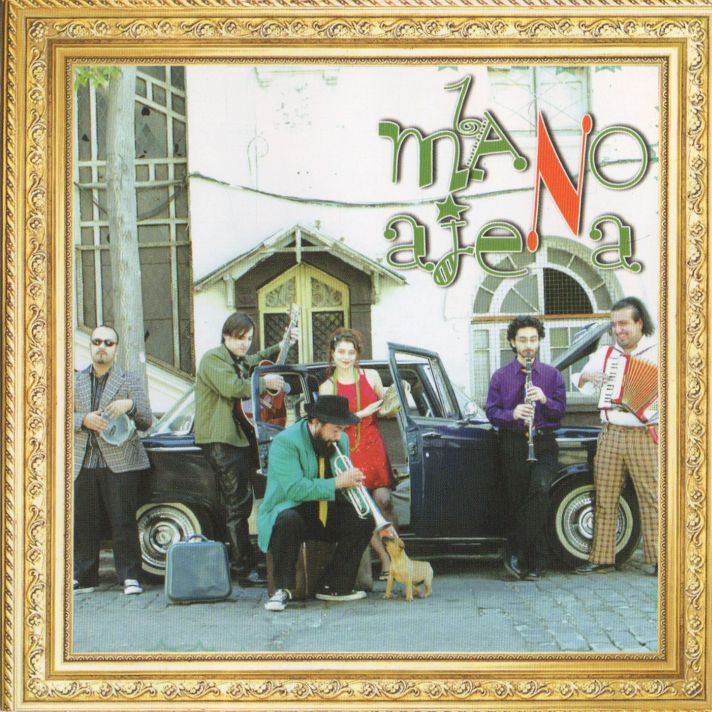
La Mano Ajena is a Chilean band founded in 2002 that mixes rhythms from Eastern Europe, Latin America, France and Russia, blending all these sounds in a pastiche that also unites the tendencies of each member of the band: rock, punk, Latin American folklore and theater music. This musical project is unique in Chile, and its hybrid sound has been called "klezmer a la chilena" by press.

Its first references were Jazz manouche, Klezmer, Balkan and Gypsy music, rhythms to which later they would incorporate Latin influences like Cumbia, Mambo, Cha-cha-cha, Tango and Rumba; creating a cosmopolitan sonority. From its beginning, the band was a precursor in spreading the Gypsy, Balkan and Klezmer rhythms in Chilean stages; and today, after almost a decade, they are one of the most important and celebrated bands from the so called “new culture of musical carnival” that has taken place in Chile in the last years.

La Mano Ajena has played in many stages abroad and inside of Chile, in countries as Denmark, Spain, Serbia and Argentina. In Santiago, they have shared stage with bands as Gogol Bordello and Emir Kusturica & The No Smoking Orchestra. In January, 2009, they became the first and only Latin American band to participate in the Küstendorf Film and Music Festival in Serbia, created by the twice Palm d’Or winner in Cannes and world famous filmmaker Emir Kusturica, whose band The No Smoking Orchestra is the main and most important reference concerning Balkan and Gypsy music in the world.

La Mano Ajena incorporates in its work a traditional repertoire sung in diverse languages: Gypsy language, Yiddish, Hebrew, French, English and Spanish. Its members are 8 multi-instrumentalists: Rodrigo Latorre, soprano saxophone, alto saxophone, baritone saxophone, guitar, piccolo flute, keyboard and theremin; María Fernanda Carrasco, vocals, keyboard, melodica and minor percussion; Danka Villanueva, violin and marimba; Gabriel Moyla, accordion, alto saxophone and baritone saxophone; Jair Moreno, clarinet; Álvaro Sáez, drums, darbuka and djembe; and Cristian Aqueveque, electric bass and double bass. Most of them have been part of important Chilean theater companies.

During 2006 they went on their first European Tour, doing shows in several cities of Denmark and Spain. On that same year, their first album was released in Spain by the Fundación Autor record company. In 2008, on their second European tour, they played 19 times in different Danish cities. On November 2009, La Mano Ajena opened the concert of the world famous New York gypsy punk band Gogol Bordello, on their first visit to Chile.

In Chile, they have played in some of the most important stages of the country, and their versatility has led them to create original music and songs for television shows. In 2009, they participated in “Leche para Haití” a charity concert created to raise funds for children in Haití; and they were part of the cultural program “Creando Chile en mi barrio” (“Creating Chile in my neighborhood”), organized by the Chilean Ministry of Culture, where, as a cultural delegation, they travelled around the country playing in different stages, recording new tracks, teaching lessons and sharing their experiences with new musicians and bands from different corners of Chile.

In 2010, they created the Music School Escuela Ajena, in which all the band members shared their musical knowledge with children, teenagers and adults. This idea was related to the band's interest for teaching to younger generations specially, and it was also a result of the musicians' social concerns. La Mano Ajena is currently recording their third album in studio, Raza Quimera was released at the end of 2011.


La Mano Ajena - I   (flac  313mb)

01 Aves Errantes 3:56
02 Behusher Khusid 3:40
03 Ashrenu (Doyna) 4:26
04 Danza Alegre Epoca Cose 4:44
05 Favella 5:48
06 Wewo 4:23
07 Tango A La Django 3:59
08 Joropo 4:17
09 Ot Azoy 4:17
10 Maria Derrumba Mi Rumba 6:25

La Mano Ajena - I (ogg   113mb )

xxxxx xxxxx xxxxx xxxxx xxxxx

The origin of one of Chile’s most famous modern bands, Chico Trujillo, is so well known in music circles in Chile it’s entered popular folklore, and can pretty much be described by two words: an accident. Born from sporadic jam sessions between classes, travels and commitments with other groups, the band from Villa Alemana in the Valparaíso Region almost never came to be. If you’re at all familiar with modern Chilean music, you know what a loss that would have been; a decade on and Chico Trujillo has not only carved a name for itself as one of Chile’s most beloved bands, it’s also helped carved out a whole new genre of music, nueva cumbia chilena, or new Chilean cumbia. It’s a sound that brings the classic sounds of cumbia to an urban environment…and mashes it up with influences as diverse as hip-hop and Andean folk, rock and salsa.

The band formed in 1999 in Villa Alemana, Zona Central, Chile, following a tour that lead singer Aldo Enrique Asenjo Cubillos - known as “Macha” - undertook with his then band La Floripondio through the cities of Germany, the Netherlands and Austria. Chico Trujillo’s first songs were born of jamming sessions with Asenjo and his friend Antonio Orellana, and their sound gradually attracted new members to the band. This lineup led to their first album, Chico Trujillo y la Señora Imaginación, in 2001.

Chico Trujillo has performed concerts at universities, musical venues, festivals and various events, including the Cumbre Guachaca Chilena at Estación Mapocho and concerts campaigning for the rights of the indigenous Mapuche. They have also featured on the Lollapalooza music festival lineup in both Santiago and Chicago.

Chico Trujillo mixes original songs with traditional cumbia, exploring styles as diverse as boleros and ska, Andean folk and hip hop, reggae and rock, in a popular live act. A post on the New York Times Artsbeat blog described Chico Trujillo’s signature sound:

    “Every party band needs a rhythm, and Aldo Asenjo, the band’s leader and singer, relies on cumbia, the beat heard in countless variations across Latin America. Cumbia often trots calmly, but Chico Trujillo’s version gallops, bounding along; now and then, the music switches into rumba, equally upbeat. Mr. Asenjo sings lyrics as chattery and percussive as some hip-hop, taking on the ups and downs of love and life, with his voice answered by chortling horns — did he borrow the arranging idea from ska bands? — and a tootling, circusy organ. Syncopation, momentum and a way of romping through pain — a party band needs them all, and Chico Trujillo has them.”

As they themselves explain, Chico Trujillo has “been able to mix pieces of the past with the global influence of alternative culture, bringing it all together under the Pan-American flag of the cumbia.”


Chico Trujillo - Cumbia Chilombiana   (flac  279mb)

01 Medallita 4:31
02 Pollera Amarilla 3:46
03 Conductor 2:50
04 Calentones 2:42
05 Gauraré 3:18
06 No Me Busques 3:16
07 Sombrero 4:51
08 La Escoba 2:48
09 Mira Si No He De Venir 2:13
10 Regresa 4:17
11 Mix Chilombiano 5:12

Chico Trujillo - Cumbia Chilombiana (ogg   96mb)

xxxxx xxxxx xxxxx xxxxx xxxxx

Chico Trujillo's  Gran Pecador hits home, comparisons with Argentina's Fabulosos Cadillacs are inevitable--the wonderfully complex horn lines, the irresistible melodies, clever lyrics, and punkish blend of Latin music styles are all similar. They also remind me of Austin's brilliant Grupo Fantasma, another gonzo cumbia outfit. If you've been jonesing for something that will get you off like the Cadillacs in their prime, look no further.

Even the lesser material--like the shamelessly sexist "Linda secretaria"--has such powerful hooks that you'll be hard pressed not to sing along. And instead of being front-loaded, like so many albums, Gran Pecador just gets better and better as it goes, climaxing with the 1-2-3 punch of the rip-roaring "Negra santa," the gorgeous, sad, spare, and completely un-ironic "Fuera de mi vida," and the stunning "Fiesta de San Benito," which incorporates haunting Andean indigenous melodies (think Inti-Illimani) in its powerhouse horn lines. This is an instant classic, required listening for fans of Manu Chao, Sargent Garcia, the Cadillacs, or Grupo Fantasma


 Chico Trujillo ‎- Gran Pecador (great sinner)   (flac  222mb)

01 Caleta Vargas 4:11
02 Asi Es Que Vivo Yo (Sigue La Fiesta) 3:38
03 La Banda De Mi Vecino 3:45
04 Gran Pecador 3:31
05 Calientame La Sopa Con Un Hueso 2:33
06 Se Baila O No Se Baila 2:14
07 Linda Secretaria 3:17
08 Negra Santa 2:32
09 Fuera De Mi Vida 2:53
10 La Fiesta De San Benito 3:46

Chico Trujillo ‎- Gran Pecador   (ogg  78mb)

xxxxx xxxxx xxxxx xxxxx xxxxx

After 10 years of playing in Santiago’s cumbia-punk underground, Chico Trujillo has been hailed by The New York Times as a “world-class party band.” Fusing punk rock and classic Latin grooves with a touch of ska, this energetic eight-piece band has been the soundtrack to parties all around the world, including Lollapalooza.

Chico Trujillo play cumbia with a twist. Cumbia is a Colombian rhythm based on the West African groove that gave birth to blue beat and ska in Jamaica. In Colombia it became cumbia, the country's signature sound. In many parts of South America, particularly Chile, cumbia is more popular than salsa. Chico Trujillo started as a side project of the Chilean ska band La Floripondio (The Magnolia), but soon became the main attraction for the musicians involved. Chico de Oro (A Little Gold) is the band's first North American release and includes popular cuts from three of the band's Chilean albums, hence the punny title. Chico Trujillo use cumbia's irresistible pulse as a jumping-off place for their own particular sound, a hybrid that includes salsa, soca, ska, surf music, jazz, chicha, and other Latin and Caribbean flavors. The band's music is relentlessly upbeat, and this album will get any party up and moving. The album opens with the insanely catchy "Varga Varga," an amalgamation of cumbia and salsa driven by a blazing horn section with Michael Magliocchetti adding some twangy spaghetti Western guitar and Camilo Salinas playing a few fine Cuban-style piano fills. "Conductor" showcases "Oso" Tabile's big boozy trombone and a tongue-twisting call and response between vocalist Macha Asenjo and the ensemble; "Loca" is marked by Asenjo's passionate crooning, forceful horn accents, shimmering surf guitar, and Salinas' uncontained Farfisa; while "Pollera Amarilla" is driven by odd staccato guitar playing a Brazilian melodic line that's reminiscent of Carmen Miranda's "Chica Boom Chic." The band pays tribute to its ska roots with "Maria," a quiet skank with acoustic accordion and Magliocchetti adding some jazzy Les Paul-goes-to-Chile electric guitar ornamentation, and the pan-Latin rave up of "Ahora Quien," which blends ska, cumbia, and rhumba. The band only slows down for "Cabildo," a moody bolero with a sultry trumpet solo by Zorra Cabezas that morphs into a percussion jam featuring a long spoken word outro.


Chico Trujillo - Live At California Plaza   (flac  349mb)

01 Intro 1:51
02 Chico Trujillo Live July 27 2013
03 Chico Trujillo Live July 27 2013
04 Chico Trujillo Live July 27 2013
05 Chico Trujillo Live July 27 2013
06 Chico Trujillo Live July 27 2013
02 Chico Trujillo Live July 27 2013
14 Outro 1:12

Chico Trujillo - Live At California Plaza (ogg  160mb)

xxxxx xxxxx xxxxx xxxxx xxxxx


Marca Chancho is the fourth studio album by the Chilean band Chancho en Piedra. Strongly inspired by popular culture and traditional music mixed with rock, it has a wide variety of themes and rhythms ranging from the most traditional rock, through the bossanova, to the cueca. This album includes a theme that would be a great success in the group's career, "Eligiendo una reina", a well-known and well-known subject among Chilean youth that critically criticizes the overvaluation of female physical beauty on television and entertainment. from a local point of view.

The cover and the design of the album take as reference the classic American soup label Campbell popularized by the father of pop art, Andy Warhol.


Chancho en Piedra - Marca Chancho   (flac  392mb)

01 Popular Condimento 0:32
02 Buenos Días A Todos 5:15
03 Eligiendo Una Reina 4:05
04 Lophophora 2:21
05 Historias De Amor Y Condón 4:47
06 Kiltro Virtual 3:38
07 Quiero Comer... 0:08
08 El Curanto 4:19
09 Mampato 6:47
10 Brocacochi 2:42
11 Los Huilles 0:25
12 Hermanos Marranos 3:16
13 El Día En Que Los Gatos Hicieron Las Paces Con Los Ratones 3:28
14 Me Vuelvo Mono 3:59
15 Patá En La Raja 1:52
16 El Durazno Y El Melón 4:01

Chancho en Piedra - Marca Chancho (ogg  128mb)

xxxxx xxxxx xxxxx xxxxx xxxxx

Feb 19, 2018

RhoDeo 1807 Neverwhere 8

Hello, today the BBC tv series that gave rise to the comic books and the audioplay i've been posting these last weeks, these tv episodes are RussianDVD rips, but not to worry there's the original english audiotrack available as well. I will post these in 3 pairs of about an hour each...


 Confused ? Why not delve into London's underbelly......'N Joy

xxxxx xxxxx xxxxx xxxxx xxxxx

Neil Richard MacKinnon Gaiman born 10 November 1960 is an English author of short fiction, novels, comic books, graphic novels, audio theatre, and films. His notable works include the comic book series The Sandman and novels Stardust, American Gods, Coraline, and The Graveyard Book. He has won numerous awards, including the Hugo, Nebula, and Bram Stoker awards, as well as the Newbery and Carnegie medals. He is the first author to win both the Newbery and the Carnegie medals for the same work, The Graveyard Book (2008). In 2013, The Ocean at the End of the Lane was voted Book of the Year in the British National Book Awards

...continued from last week

After forming a friendship with comic-book writer Alan Moore, Gaiman started writing comic-books, picking up Miracleman after Moore finished his run on the series. Gaiman and artist Mark Buckingham collaborated on several issues of the series before its publisher, Eclipse Comics, collapsed, leaving the series unfinished. His first published comic strips were four short Future Shocks for 2000 AD in 1986–87. He wrote three graphic novels with his favourite collaborator and long-time friend Dave McKean: Violent Cases, Signal to Noise, and The Tragical Comedy or Comical Tragedy of Mr. Punch. Impressed with his work, DC Comics hired him in February 1987, and he wrote the limited series Black Orchid. Karen Berger, who later became head of DC Comics's Vertigo, read Black Orchid and offered Gaiman a job: to re-write an old character, The Sandman, but to put his own spin on him.

The Sandman tells the tale of the ageless, anthropomorphic personification of Dream that is known by many names, including Morpheus. The series began in January 1989 and concluded in March 1996. In the eighth issue of The Sandman, Gaiman and artist Mike Dringenberg introduced Death, the older sister of Dream, who would become as popular as the series' title character. The limited series Death: The High Cost of Living launched DC's Vertigo line in 1993. The 75 issues of the regular series, along with an illustrated prose text and a special containing seven short stories, have been collected into 12 volumes that remain in print, 14 if the Death: The High Cost of Living and Death: The Time of Your Life spin-offs are included. Artists include Sam Kieth, Mike Dringenberg, Jill Thompson, Shawn McManus, Marc Hempel and Michael Zulli, lettering by Todd Klein, colours by Daniel Vozzo, and covers by Dave McKean. The series became one of DC's top selling titles, eclipsing even Batman and Superman. Comics historian Les Daniels called Gaiman's work "astonishing" and noted that The Sandman was "a mixture of fantasy, horror, and ironic humor such as comic books had never seen before". DC Comics writer and executive Paul Levitz observed that "The Sandman became the first extraordinary success as a series of graphic novel collections, reaching out and converting new readers to the medium, particularly young women on college campuses, and making Gaiman himself into an iconic cultural figure."

Gaiman and Jamie Delano were to become co-writers of the Swamp Thing series following Rick Veitch. An editorial decision by DC to censor Veitch's final storyline caused both Gaiman and Delano to withdraw from the title. Gaiman produced two stories for DC's Secret Origins series in 1989. A Poison Ivy tale drawn by Mark Buckingham and a Riddler story illustrated by Bernie Mireault and Matt Wagner. A story which Gaiman originally wrote for Action Comics Weekly in 1989 was shelved due to editorial concerns but it was finally published in 2000 as Green Lantern/Superman: Legend of the Green Flame.

In 1990, Gaiman wrote The Books of Magic, a four-part mini-series that provided a tour of the mythological and magical parts of the DC Universe through a frame story about an English teenager who discovers that he is destined to be the world's greatest wizard. The miniseries was popular, and sired an ongoing series written by John Ney Rieber. Gaiman's adaptation of Sweeney Todd, illustrated by Michael Zulli for Stephen R. Bissette's publication Taboo, was stopped when the anthology itself was discontinued.

In the mid-1990s, he also created a number of new characters and a setting that was to be featured in a title published by Tekno Comix. The concepts were then altered and split between three titles set in the same continuity: Lady Justice, Mr. Hero the Newmatic Man, and Teknophage. They were later featured in Phage: Shadow Death and Wheel of Worlds. Although Gaiman's name appeared prominently on all titles, he was not involved in writing any of the above-mentioned books.

Gaiman wrote a semi-autobiographical story about a boy's fascination with Michael Moorcock's anti-hero Elric of Melniboné for Ed Kramer's anthology Tales of the White Wolf. In 1996, Gaiman and Ed Kramer co-edited The Sandman: Book of Dreams. Nominated for the British Fantasy Award, the original fiction anthology featured stories and contributions by Tori Amos, Clive Barker, Gene Wolfe, Tad Williams, and others.

Asked why he likes comics more than other forms of storytelling, Gaiman said: "One of the joys of comics has always been the knowledge that it was, in many ways, untouched ground. It was virgin territory. When I was working on Sandman, I felt a lot of the time that I was actually picking up a machete and heading out into the jungle. I got to write in places and do things that nobody had ever done before. When I’m writing novels I’m painfully aware that I’m working in a medium that people have been writing absolutely jaw-droppingly brilliant things for, you know, three-four thousand years now. You know, you can go back. We have things like The Golden Ass. And you go, well, I don’t know that I’m as good as that and that's two and a half thousand years old. But with comics I felt like – I can do stuff nobody has ever done. I can do stuff nobody has ever thought of. And I could and it was enormously fun."

Gaiman wrote two series for Marvel Comics. Marvel 1602 was an eight-issue limited series published from November 2003 to June 2004 with art by Andy Kubert and Richard Isanove. The Eternals was a seven-issue limited series drawn by John Romita Jr. which was published from August 2006 to March 2007.

In 2009, Gaiman wrote a two-part Batman story for DC Comics to follow Batman R.I.P. titled "Whatever Happened to the Caped Crusader?" a play-off of the classic Superman story "Whatever Happened to the Man of Tomorrow?" by Alan Moore. He contributed a twelve-part Metamorpho serial drawn by Mike Allred for Wednesday Comics, a weekly newspaper-style series. Gaiman and Paul Cornell co-wrote Action Comics #894 (Dec. 2010) which featured an appearance by Death. In October 2013, DC Comics releasedThe Sandman: Overture with art by J. H. Williams III. Gaiman's Angela character was introduced into the Marvel Universe in the last issue of the Age of Ultron miniseries in 2013.

xxxxx xxxxx xxxxx xxxxx xxxxx

Neverwhere is an urban fantasy television series by Neil Gaiman that first aired in 1996 on BBC Two. The series is set in "London Below", a magical realm coexisting with the more familiar London, referred to as "London Above". It was devised by Neil Gaiman and Lenny Henry, and directed by Dewi Humphreys. Gaiman adapted the series into a novel, which was released in September 1996. The series and book were partially inspired by Gene Wolfe's novel Free Live Free.


Richard Mayhew, a Scot living in London, encounters an injured girl named Door on the street one night. Despite his fiancée's protests he decides to help her; upon doing so he ceases to exist on Earth and becomes real only to the denizens of 'London Below', whose inhabitants are generally invisible and non-existent to the people of 'London Above'. He loses his house, his job and nearly his mind as he travels London Below in an attempt to make sense out of it all, find a way back, and help Door survive as she is hunted down by hired assassins.

In London Below the various familiar names of London all take on a new significance: for example Knightsbridge becomes "Night's Bridge", a stone bridge whose darkness takes its toll in human life; The Angel, Islington is an actual angel. London Below is a parallel world in and beneath the sewers. Its inhabitants are the homeless, but also people from other times, such as Roman legionaries and medieval monks, as well as fictional and fantastical characters.


Characters and cast

Richard Mayhew (Gary Bakewell) – a young businessman, who discovers the world of London Below one day after helping the injured Door recover in his flat.

Door (Laura Fraser) – A young woman from London Below, the daughter of a noble family who were all murdered shortly before the beginning of the story. She possesses her family's innate ability to "open" things (and not just doors).

The Marquis de Carabas (Paterson Joseph) – The Marquis is arrogant, cunning and very self-confident. Though very much the trickster, he is a loyal friend of Door and her family. This character was inspired by Puss in Boots. Gaiman stated this as the starting point for the character, and imagining "Who would own a cat like this?"

Mr. Croup (Hywel Bennett) – The talkative half of the pair of assassins, the Messrs. He is short, fat, and speaks in a pompous and verbose manner. Like his partner, Mr. Vandemar, he seems to be able to simply move from one place to another very quickly despite his ungainly appearance. He is the brains of the pair and seems be the one calling the shots, and he apparently has a taste (literally) for fine china. Much of the imagery used to describe him is that of a fox.

Mr. Vandemar (Clive Russell) – Dull-witted, tall, and gangly, Vandemar is Croup's polar opposite. He does not speak much, and when he does, his statements are often laconic and blunt. He is quite brutish and seems to enjoy nothing more than killing and destroying things (even practising his golf swing with live toads). He also has a tendency to eat live animals. The descriptive imagery likens him to a hound or a wolf, and he even howls at one point when catching up with his mark.

Old Bailey (Trevor Peacock) – An old friend of the Marquis, he keeps the company of pigeons on the rooftops and wears clothing made of feathers. He became indebted to the Marquis long ago, and so is charged with keeping a portion of his life safe for him.

Hunter (Tanya Moodie) – A warrior of London Below; her feats are legendary. Her lifelong obsession is to slay the great Beast of London. The imagery used to describe her likens her to a lioness.
The Angel Islington (Peter Capaldi) – An angel dwelling in the sewers of London Below. Its duty is to watch over London Below, though (or maybe because) it failed at its previous task: guarding the city of Atlantis.

Lamia (Tamsin Greig) – The leader of a group of vampire-like seductresses, dressed in dark velvet, who "suck the warmth" from their victims.

The Abbott (Earl Cameron) – The leader of a group of armed black friars guarding a special key at Blackfriars.

Music by Brian Eno


Neil Gaiman - Neverwhere Episode 3,4 (avi 755mb)


03 Earls Court Yo Islington 28:12
Richard Mayhew joins Door, her new bodyguard Hunter and the Marquis de Carabas on their search for the only person who can tell Door who killed her family

04 Blackfriars 29:37
Door and Richard share a glass of 40,000-year-old wine from Atlantis with the Angel Islington. He tells them that the only way to find out who killed Door's family is to deliver a vital key to him. But the key is in the custody of the machine-gun-carrying Black Friars.


xxxxx

Neil Gaiman - Neverwhere PDF 7, 8 (PDF 101mb)
Now with...

A nine-issue comic book limited Neverwhere series began in June 2005, written by Mike Carey (of the Vertigo Comics series Lucifer), with art by Glenn Fabry. The comic is an adaptation inspired by the novel, rather than the original TV series, though apart from certain scenes in certain locations, the dialogue and plot of both novel and television series is identical.

Neverwhere 7 . pdf   49mb
Neverwhere 8 . pdf 51mb


xxxxx xxxxx xxxxx xxxxx xxxxx

previously

Neil Gaiman - Neverwhere part 1 (mp3  53mb)
Neil Gaiman - Neverwhere part 2 (mp3  26mb)
Neil Gaiman - Neverwhere part 3 (mp3  26mb)
Neil Gaiman - Neverwhere part 4 (mp3  26mb)
Neil Gaiman - Neverwhere part 5 (mp3  26+ 96mb)
Neil Gaiman - Neverwhere part 6 (mp3  26+ 99mb)
Neil Gaiman - Neverwhere Episode 1,2 (avi 756mb)


xxxxx xxxxx xxxxx xxxxx xxxxx


Feb 18, 2018

Sundaze 1807

Hello,

Today's Artist is a British electronic producer who meticulously constructs lush arrangements, blending digital beats and soothing ambience. His unique, hypnotic style made him a sought-after producer in the pop world, and earned him credits on albums by Coldplay, Massive Attack, Brian Eno, and Herbie Hancock in the late 2000s. Starting out as a gifted child pianist, in his teen years he became interested in synthesized sounds and started making acid house and drum'n'bass on a four-track recorder using computer software. Meanwhile .. ........N'Joy

xxxxx xxxxx xxxxx xxxxx xxxxx

Jon Hopkins was born in 1979 in Kingston upon Thames, Surrey and grew up in nearby Wimbledon. He first became aware of electronic music after hearing early house music on the radio at the age of seven or eight, and also became a fan of Depeche Mode and the Pet Shop Boys. These records inspired an early fascination with synths. At the age of 12 Hopkins began studying piano at the Junior Department of the Royal College of Music in London, where he continued until age 17. The composers that were greatly influential to him whilst studying were Ravel and Stravinsky, and he eventually won a competition to perform a concert of Ravel's Piano Concerto in G with an orchestra. For a time Hopkins considered becoming a professional pianist, only to decide classical performance was too formal and unnerving to pursue full-time.

As a teenager he also listened to acid house, early hardcore, grunge, as well as electronica artists such as Acen, Seefeel, and Plaid. When Hopkins was 14 he got his first computer, an Amiga 500, and started programming MIDI material. By the age of 15 he had saved up enough money from winning piano competitions to buy a low-level professional Roland synth, and on this he began creating his first full-length electronic compositions. After finishing his final exams at age 17, Hopkins accompanied his friend Leo Abrahams to an audition for Imogen Heap's backing band. Hopkins decided to audition as well, and was hired to handle both keyboard and samples, while Abrahams was hired as guitarist. He toured with the new band for the entirety of 1998.

In 1999 Hopkins signed with boutique London label Just Music as a solo artist, and began recording his debut album Opalescent. At the time he was also working part-time as a studio session musician Opalescent attracted positive press attention upon its release, and several tracks were licensed to Sex and the City. The Guardian reviewed it as "a beautifully realized debut. Using synth oozes, phased and echoed guitars and pianos and chilled beats, his wonderful tunes drift from calm to eerie power like a restless sea. It will delight any lovers of beautiful music." DJ Magazine gave it 4/5 stars, and stated "Piano, guitar strings and slow beats blend like the clouds at sunset (or an opiate smoothy) filtering in and out like elegantly wasted beauty. Darker drums add a further depth."

Hopkins released his second album, Contact Note, on Just Music in 2004 while still working as a studio musician. The album slowly gained an underground following but failed to take off, and led Hopkins to become disillusioned with his solo career, and take a break from writing to learn how to become a producer.

By 2004, Abrahams had been collaborating for some time with ambient musician and producer Brian Eno. Abrahams played some of Hopkins' second record for Eno, and Eno invited him to join them for a jam session. On the first day of their collaboration they came up with some of the music for Eno's upcoming album Another Day on Earth, and Hopkins became a long-term collaborator. Shortly afterwards Hopkins produced King Creosote's album Bombshell, which initiated his relationship with the Fence Collective. He also co-wrote tracks with DJ and composer David Holmes for Holmes' Holy Pictures album, and remixed for James Yorkston.

In early 2007 Hopkins was invited by Eno, who was producing Coldplay's upcoming album Viva la Vida or Death and All His Friends, to join the band in the studio for a day. Hopkins ended up staying and contributing to the album for the next year, co-producing several tracks and playing organs, harmoniums, and other keyboard instruments on others. The intro to the track "Violet Hill" came from an improvisation with Hopkins and Davide Rossi, the album's string arranger. Throughout this period Hopkins was periodically creating his own solo tracks, and his song "Light Through the Veins" was adapted to serve as the introduction to the album's first track "Life in Technicolor". "Light Through the Veins" was also picked by the band to serve as the backing for the track "The Escapist", which is hidden at the end of the album. Viva la Vida was released in 2008, and won Best Rock Album at the 2009 Grammy Awards and became the best-selling album of 2008. Coldplay asked Hopkins to serve as the pre-show DJ and opening act for their 2008 world tour. Hopkins toured with the band for six months through England, the United States, and Japan. He performed at venues including Madison Square Garden and the London O2 Arena, with crowds as large as 20,000 people.

In 2008 Hopkins was commissioned by choreographer Wayne McGregor to compose music for Entity, a production of McGregor's "Random Dance" group. Entity was performed live at Sadler's Wells in April 2008 to critical acclaim. A world tour followed throughout 2008 and 2009.

Hopkins also has co-writing or producing credits on albums by artists such as David Holmes and Dan Arborise. He is also known for remixing a variety of artists, including Wild Beasts, Nosaj Thing, Imogen Heap, Four Tet, and James Yorkston. He was also one of the few producers chosen by Radio 1's Rob Da Bank to remix film director David Lynch's first electronica release, "Good Day Today" / "I Know", which was released on Sunday Best Records.

Hopkins signed to Domino Records in late 2008. Hopkins's third album, Insides, was released by Domino Records on 5 May 2009. It included the track "Light Through the Veins", which had previously been used on the Coldplay album, Viva la Vida or Death and All His Friends. Some of the tracks had been written by Hopkins sporadically since his last release, while others were based on the music he had composed for the Entity production. Hopkins developed an intense live show to support the release, resulting in club and festival performances across Europe and the United States. He secured supporting slots with The xx, Röyksopp, and Four Tet. Many of his live shows used background visuals featuring the animations of Vince Collins.

Insides charted at no. 15 on the Billboard Dance/Electronic Albums chart. PopMatters listed the album as one of the top ten electronic albums of 2009.

In June 2009 Hopkins was invited by Brian Eno to play some solo shows at the Luminous Festival at the Sydney Opera House. A few weeks prior to leaving, Eno asked Hopkins to join with himself, Underworld's Karl Hyde, Leo Abrahams, and the Sydney-based improv trio The Necks in the group "Pure Scenius", the planned finale for the Luminous Festival. They then improvised music based on pre-planned themes, putting on three 1½-hour shows in the Opera House with Hyde on vocals. Pure Scenius was repeated a year later in Brighton, when Eno was curating the Brighton Festival.

In 2009 Hopkins collaborated with Brian Eno and Leo Abrahams to score the Peter Jackson film The Lovely Bones. In early 2010 Hopkins composed the score for the short film Rob and Valentyna in Scotland directed by Eric Lynne, which won an honourable mention for the short film-making award at Sundance. Also in 2010 Hopkins was commissioned to create the soundtrack for the British science fiction film Monsters, which was directed by Gareth Edwards. To create the score, Hopkins partly used string parts performed by arranger Davide Rossi and guitar by Leo Abrahams. The soundtrack album was released on 29 November 2010 on Domino Records. In 2011 the score was nominated for an Ivor Novello Award for Best Original Score.


Hopkins collaborated with Tunng on the EP Seven Gulps of Air in 2009, which was commissioned by designer Christopher Kelly for London Fashion Week. Seven Gulps of Air was listed as one of Drowned in Sound's singles of the year. In 2010 Hopkins collaborated with Leo Abrahams and Brian Eno to create the album Small Craft on a Milk Sea. Released on Warp Records in late 2010, the album is based on a three-week session of improvisation wherein the artists recorded about six hours of material a day.

In 2011 Hopkins collaborated with Scottish musician King Creosote to create the album Diamond Mine, which featured lyrics and vocals by Creosote sung over musical backdrops arranged and recorded by Hopkins. The album was a culmination of about seven weeks of work spread over seven years of recording and collaboration, from whenever the two artists had the opportunity to get together. The album was released on 28 March 2011 to acclaim, which included a glowing review from NPR. On 19 July 2011 Hopkins and Anderson were announced as nominees for the 2011 Barclaycard Mercury Prize, which is annually awarded for best album from the United Kingdom and Ireland.

Also in 2011, the EP Honest Words, a Hopkins collaboration with King Creosote, was released on Domino Records. In April 2012, this was followed by another collaboration with King Creosote: The Jubilee, also on Domino. Hopkins wrote the score for the 2013 film by Kevin Macdonald, How I Live Now.

Immunity is Hopkins' fourth studio album, released on 4 June 2013, by Domino Records. Among the artists that contributed vocals were long-time collaborator King Creosote, and Corin Roddick and Megan James of the band Purity Ring. It was recorded and produced in Hopkins' London studio, with Hopkins often using homemade sound effects or the natural sound of the room. Stated MixMag, "Immunity is an album of organic techno and exquisite mini-symphonies."

Immunity peaked at no. 13 on Top Electronic Albums by Billboard in the United States. In Britain it was nominated for the 2013 Mercury Prize for best album. The album met with a largely positive reception among critics, receiving perfect scores from Mixmag and MusicOMH, and 4/5 from The Guardian. Pitchfork Media described Immunity as a "remarkably visceral, sensual, confident electronic record," and MusicOMH called it a "modern classic". The video for the single 'Open Eye Signal' directed by Aoife McArdle won best cinematography at the UK Music Video Awards.


In 2014 Hopkins co-produced the song "Midnight" for Coldplay's 2014 album Ghost Stories, and released an EP titled Asleep Versions on 10 November. The EP includes (according to Domino Records) "four decelerated, dreamlike re-imaginings" of four tracks featured on his album Immunity. The EP has additional vocals from Raphaelle Standell-Preston of the band Braids & regular collaborator King Creosote, and artwork from Robert Hunter.

Hopkins has performed at music festivals such as Moogfest, Mutek, Beacons Festival, and Electric Zoo, and at venues such as Madison Square Garden and the London O2 Arena. As of 2014 he maintains a regular touring schedule both in England and internationally, playing at the Glastonbury Festival in June, with upcoming dates at the Pitchfork Music Festival, Electric Picnic and Time Music Festival and in 2015 at Wonderfruit in Thailand for the premiere of the iy_project, a collaboration with light artist, Chris Levine.
Style a

xxxxx xxxxx xxxxx xxxxx xxxxx

The Oxford Dictionary’s definition of opalescent neatly summarises the debut album from musician, Jon Hopkins. The classically trained artist has always taken his style of electronic music to a new level, preferring to experiment with the sounds of the Earth rather than sounds of a computer program. From an interview in 2013, Hopkins detailed the pain staking process of recording "weird little sine wave blips" from a water pipe in his hotel bathroom. This attention to detail in Hopkin’s music creates an alluring humanity to his creations. As the definition of ‘Opalescent’ suggests, the emotion swings throughout record. Hopkins takes the album from moments of pure ecstasy to sobering depths. The eerie howling winds of ‘Fading Glow’ contrast strongly with the calming ocean sounds of ‘Elegiac’. These moods presented by Hopkins creates something greater than the music itself, igniting all the senses into a state of hazy meditation. It is little surprise he has scored the music for various film and theatre performances throughout his fascinating career.


Jon Hopkins - Opalescent (flac 240mb)

01 Elegiac 6:21
02 Private Universe 5:36
03 Halcyon 5:01
04 Opalescent 2:09
05 Lost In Thought 6:17
06 Fading Glow 6:57
07 Apparition 2:02
08 Inner Peace 4:50
09 Cerulean 3:54
10 Grace 4:14
11 Cold Out There 3:53
12 Afterlife 4:00

xxxxx xxxxx xxxxx xxxxx xxxxx

With the arrival of 'Contact Note' some years after the debut of 'Opalescent', it would be fair to say that this second album by Jon Hopkins is both slightly ambient and mixed with a different approach to drumming and percussion. It's a good album but takes more than a few listens to get into. Whereas his first album is a work of extremely pleasing guitar loops and acoustic samples mixed with laid back electronica, 'Contact Note' is different and that's not a bad thing, it's just a different approach to drumming and percussion but similar with it's approach to music overall. Not as obviously nice but a slightly more serious and interesting production. Still a very good album overall but takes a little longer to get into.


Jon Hopkins - Contact Note (flac  329mb)

01 Circle 5:48
02 Second Sense 5:13
03 Contact Note 7:47
04 Searchlight 2:16
05 Symmetry 5:12
06 100 6:00
07 Glasstop 2:43
08 Sleepwalker 4:34
09 Reprise 3:14
10 Nightjar 7:31
11 Black & Red 5:25
12 Luna Moth 5:38

xxxxx xxxxx xxxxx xxxxx xxxxx

This album is heart-wrenching, you can count on Hopkins to do that to you. It touches on something hidden inside, cuts too close to the heart to deal with it casually. Right from the quivering strings in the opening The Wider Sun, the music stops everything and pulls your heart out. If the moment isn't right, of course, you must resist and switch it off. It's not for everyone, every day. It's definitely not an easy listening. But when the time's right and you venture *inside*, it serves as a perfect vehicle to get you there, to face your inner demons, emotional states, whatever they might be. The production is immaculate, detailed, layered, you drown in the synths. It feels like a narrative to get you through your emotional core, it goes through darker turns, heavy-hitting tracks like Colour Eye mercilessly rinse every little drop of residue sweetness, like a weird childhood memory that suddenly pops into your consciousness from somewhere deep within, or perhaps a memory of your first heartbreak. At other times, the tracks simply touch you for their sheer beauty, the sunlit warmth that fills up the desolate space, carrying you through the worst to the safety on the other side, whispering soothingly to facilitate your heart's recovery, its newly found strength, having gone through the worst with you, now seeing you off onwards and upwards. That's the resolution point, track 9, A Drifting Up, perhaps the only reason to give this a listen. So, yes, it's definitely not for everyone.  If you don't know this, looking for reasons to listen to this, do so. It speaks with understanding to the part in you that usually stays hidden and it knows it well. takes its cues from ambient electronica, but uses strings and piano, along with some very tasty beats and dubstep-influenced bass on some tracks." Jon's sense of timing, the clarity of his production, and the variety of effects he employs draw you into the story that each instrumental tells. Jon Hopkins is not a button-pushing man of presets; he is a bona fide composer and a trained pianist. Craftsmanship sets him apart, and allows Insides to be as incredibly moving as it is and always will be. one of the best electronic albums of 2009.


Jon Hopkins - Insides (flac  290mb)

01 The Wider Sun 2:35
02 Vessel 4:42
03 Insides 4:38
04 Wire 4:41
05 Colour Eye 5:11
06 Light Through The Veins 9:18
07 The Low Places 6:35
08 Small Memory 1:41
09 A Drifting Up 6:27
10 Autumn Hill 2:40

xxxxx xxxxx xxxxx xxxxx xxxxx

Monsters is rather patient, yet quite explorative with its ambience. This almost gives definition to ambient music, in that it twists what little it offers your ear, because they know that it's all they need to do. There isn't a moment that isn't enjoyable, it feels like one big song, and the replay value is at 1800's gold-level. I think most of it works better in the context of the film, it sounds kind of meandering and formless by itself (what made it such a good score to Monsters movie, one IDBM reviewer wrote that it very strongly enhanced the movie experience on a side note this score was mostly a freebee because there was no budget at all). On the other hand, Monsters Theme is fucking amazing.


Jon Hopkins - Monsters (flac  153mb)

01 Prologue 1:14
02 Journey 2:52
03 Candles 2:28
04 Water 1:18
05 Underwater 2:00
06 Spores 1:47
07 Campfire 2:36
08 Dawn 1:58
09 Attack 1:57
10 Temple 2:30
11 Encounter 5:49
12 Monsters Theme 4:55

xxxxx xxxxx xxxxx xxxxx xxxxx

Brian Eno's best recordings are timeless. Small Craft on a Milk Sea regains the timeless, ageless feel of his best ambient work. Opener, "Emerald and Lime," is a piece of bright ambience -- as close to a Starbucks soundtrack as a stereotypical Eno work can get. The title track has the dark textures of the later ambient works (Ambient 4: On Land), while the middle section has nods to contemporary electronic music -- "Flint March" is pummeling, percussive techno, and the next track, "Horse," also indulges -- then it's back to opaque, spacious ambience with "Calcium Needles" and "Emerald and Stone." Here too, some tracks have the earthy bass of Ambient 4: On Land, others the formless but inviting void of Discreet Music, still others the heart-stopping piano isolationism of the original Ambient 1: Music for Airports. Eno may be trading on his earlier developments in ambience to a small degree, but Small Craft on a Milk Sea is a good and proper balance of curiosity and expression.


Brian Eno, Jon Hopkins, Leo Abrahams - Small Craft On A Milk Sea  (flac  275mb)

01 Emerald And Lime 3:04
02 Complex Heaven 3:07
03 Small Craft On A Milk Sea 1:51
04 Flint March 1:58
05 Horse 3:04
06 2 Forms Of Anger 3:17
07 Bone Jump 2:24
08 Dust Shuffle 1:56
09 Paleosonic 4:27
10 Slow Ice, Old Moon 3:27
11 Lesser Heaven 3:23
12 Calcium Needles 3:27
13 Emerald And Stone 2:14
14 Written, Forgotten 3:57
15 Late Anthropocene 7:54

xxxxx xxxxx xxxxx xxxxx xxxxx 

Feb 16, 2018

RhoDeo 1806 Grooves

Hello, the first big school shooting of the year, lifes cut short by an idiot who stormed Marjory Stoneman Douglas High School in Parkland on Wednesday afternoon armed with an assault rifle.Randomly shooting anyone in his firingline. Americans are giving up on their violence and now tend to think students should be armed. Great idea instabile youths armed with guns in the classroom-and at home - gets you hundreds of teachers shot each year and thousands more suicides and crime passionel. Something is seriously wrong in the USA the amount of shootings have been getting out of hand these last years, guns have been easily available much longer, so it's the society has changed for worse. Take this idiot he was ignored and let to stew in his poisonous brew, nobody cared and now there's an outporing of grief......


Todays Artist is an American pianist, keyboardist, bandleader, composer and actor. Starting his career with Donald Byrd, he shortly thereafter joined the Miles Davis Quintet where he helped to redefine the role of a jazz rhythm section and was one of the primary architects of the post-bop sound. Having studied engineering and professing to love gadgets and buttons, Hancock was perfectly suited for the electronic age; he was one of the earliest champions of the Rhodes electric piano and Hohner clavinet, and would field an ever-growing collection of synthesizers and computers on his electric dates. Yet his love for the grand piano never waned, and despite his peripatetic activities all over the musical map, his piano style continued to evolve into tougher, ever more complex forms. He is as much at home trading riffs with a smoking funk band as he is communing with a world-class post-bop rhythm section -- and that drives purists on both sides of the fence up the wall. Ultimately his music is often melodic and accessible; he has had many songs "cross over" and achieve success among pop audiences. ........ N'joy

xxxxx xxxxx xxxxx xxxxx xxxxx

Hancock was born in Chicago, Illinois, the son of Winnie Belle (Griffin), a secretary, and Wayman Edward Hancock, a government meat inspector. His parents named him after the singer and actor Herb Jeffries. He attended the Hyde Park Academy. Like many jazz pianists, Hancock started with a classical music education. He studied from age seven, and his talent was recognized early. Considered a child prodigy, he played the first movement of Mozart's Piano Concerto No. 26 in D Major, K. 537 (Coronation) at a young people's concert on February 5, 1952, with the Chicago Symphony Orchestra (led by CSO assistant conductor George Schick) at the age of 11. Through his teens, Hancock never had a jazz teacher, but developed his ear and sense of harmony. He was also influenced by records of the vocal group the Hi-Lo's.

In 1960, he heard Chris Anderson play just once, and begged him to accept him as a student. Hancock often mentions Anderson as his harmonic guru. Hancock left Grinnell College, moved to Chicago and began working with Donald Byrd and Coleman Hawkins, during which period he also took courses at Roosevelt University (he later graduated from Grinnell with degrees in electrical engineering and music. Grinnell also awarded him an honorary Doctor of Fine Arts degree in 1972). Byrd was attending the Manhattan School of Music in New York at the time and suggested that Hancock study composition with Vittorio Giannini, which he did for a short time in 1960. The pianist quickly earned a reputation, and played subsequent sessions with Oliver Nelson and Phil Woods. He recorded his first solo album Takin' Off for Blue Note Records in 1962. "Watermelon Man" (from Takin' Off) was to provide Mongo Santamaría with a hit single, but more importantly for Hancock, Takin' Off caught the attention of Miles Davis, who was at that time assembling a new band. Hancock was introduced to Davis by the young drummer Tony Williams, a member of the new band.

Hancock received considerable attention when, in May 1963, he joined Davis's Second Great Quintet. Davis personally sought out Hancock, whom he saw as one of the most promising talents in jazz. The rhythm section Davis organized was young but effective, comprising bassist Ron Carter, 17-year-old drummer Williams, and Hancock on piano. After George Coleman and Sam Rivers each took a turn at the saxophone spot, the quintet gelled with Wayne Shorter on tenor saxophone. This quintet is often regarded as one of the finest jazz ensembles as of yet.

The second great quintet was where Hancock found his own voice as a pianist. Not only did he find new ways to use common chords, but he also popularized chords that had not previously been used in jazz. Hancock also developed a unique taste for "orchestral" accompaniment – using quartal harmony and Debussy-like harmonies, with stark contrasts then unheard of in jazz. With Williams and Carter he wove a labyrinth of rhythmic intricacy on, around and over existing melodic and chordal schemes. In the latter half of the 1960s their approach became so sophisticated and unorthodox that conventional chord changes would hardly be discernible; hence their improvisational concept would become known as "Time, No Changes".

While in Davis's band, Hancock also found time to record dozens of sessions for the Blue Note label, both under his own name and as a sideman with other musicians such as Shorter, Williams, Grant Green, Bobby Hutcherson, Rivers, Byrd, Kenny Dorham, Hank Mobley, Lee Morgan and Freddie Hubbard.

His albums Empyrean Isles (1964) and Maiden Voyage (1965) were to be two of the most famous and influential jazz LPs of the 1960s, winning praise for both their innovation and accessibility (the latter demonstrated by the subsequent enormous popularity of the Maiden Voyage title track as a jazz standard, and by the jazz rap group US3 having a hit single with "Cantaloop" (derived from "Cantaloupe Island" on Empyrean Isles) some twenty nine years later). Empyrean Isles featured the Davis rhythm section of Hancock, Carter and Williams with the addition of Hubbard on cornet, while Maiden Voyage also added former Davis saxophonist Coleman (with Hubbard remaining on trumpet). Both albums are regarded as among the principal foundations of the post-bop style. Hancock also recorded several less-well-known but still critically acclaimed albums with larger ensembles – My Point of View (1963), Speak Like a Child (1968) and The Prisoner (1969) featured flugelhorn, alto flute and bass trombone. 1963's Inventions and Dimensions was an album of almost entirely improvised music, teaming Hancock with bassist Paul Chambers and two Latin percussionists, Willie Bobo and Osvaldo "Chihuahua" Martinez.

During this period, Hancock also composed the score to Michelangelo Antonioni's film Blowup (1966), the first of many film soundtracks he recorded in his career. As well as feature film soundtracks, Hancock recorded a number of musical themes used on American television commercials for such then well known products as Pillsbury's Space Food Sticks, Standard Oil, Tab diet cola and Virginia Slims cigarettes. Hancock also wrote, arranged and conducted a spy type theme for a series of F. William Free commercials for Silva Thins cigarettes. Hancock liked it so much he wished to record it as a song but the ad agency would not let him. He rewrote the harmony, tempo and tone and recorded the piece as the track "He Who Lives in Fear" from his The Prisoner album of 1969.

Davis had begun incorporating elements of rock and popular music into his recordings by the end of Hancock's tenure with the band. Despite some initial reluctance, Hancock began doubling on electric keyboards including the Fender Rhodes electric piano at Davis's insistence. Hancock adapted quickly to the new instruments, which proved to be important in his future artistic endeavors.

Under the pretext that he had returned late from a honeymoon in Brazil, Hancock was dismissed from Davis's band. In the summer of 1968 Hancock formed his own sextet. However, although Davis soon disbanded his quintet to search for a new sound, Hancock, despite his departure from the working band, continued to appear on Davis records for the next few years. Appearances included In a Silent Way, A Tribute to Jack Johnson and On the Corner.

continued

Hancock left Blue Note in 1969, signing with Warner Bros. Records. In 1969, Hancock composed the soundtrack for Bill Cosby's animated prime-time television special Hey, Hey, Hey, It's Fat Albert.[15] Music from the soundtrack was later included on Fat Albert Rotunda (1969), an R&B-inspired album with strong jazz overtones. One of the jazzier songs on the record, the moody ballad "Tell Me a Bedtime Story", was later re-worked as a more electronic sounding song for the Quincy Jones album Sounds...and Stuff Like That!! (1978).

Hancock became fascinated with accumulating musical gadgets and toys. Together with the profound influence of Davis's Bitches Brew (1970), this fascination would culminate in a series of albums, in which electronic instruments are coupled with acoustic instruments. Hancock's first ventures into electronic music started with a sextet comprising Hancock, bassist Buster Williams and drummer Billy Hart, and a trio of horn players: Eddie Henderson (trumpet), Julian Priester (trombone), and multireedist Bennie Maupin. Patrick Gleeson was eventually added to the mix to play and program the synthesizers.

The sextet, later a septet with the addition of Gleeson, made three albums under Hancock's name: Mwandishi (1971), Crossings (1972), and Sextant (1973) ; two more, Realization and Inside Out, were recorded under Henderson's name with essentially the same personnel. The music exhibited strong improvisational aspect beyond the confines of jazz mainstream and showed influence from the electronic music of contemporary classical composers.

Synthesizer player Gleeson introduced the instrument on Crossings, released in 1972, one of a handful of influential electronic jazz/fusion recordings to feature synthesizer that year. On Crossings (as well as on Weather Report's I Sing the Body Electric), the synthesizer is used more as an improvisatory global orchestration device than as a strictly melodic instrument. An early review of Crossings in Downbeat magazine complained about the synthesizer, but a few years later the magazine noted in a cover story on Gleeson that he was "a pioneer" in the field of electronics in jazz.[citation needed] In the albums following The Crossings, Hancock started to play synth himself, with synth taking on a melodic role.

Hancock's three records released in 1971–73 later became known as the "Mwandishi" albums, so-called after a Swahili name Hancock sometimes used during this era (Mwandishi is Swahili for writer). The first two, including Fat Albert Rotunda were made available on the 2-CD set Mwandishi: the Complete Warner Bros. Recordings, released in 1994. Of the three electronic albums, Sextant is probably the most experimental since the ARP synthesizers are used extensively, and some advanced improvisation ("post-modal free impressionism") is found on the tracks "Hornets" and "Hidden Shadows" (which is in the meter 19/4).[citation needed] "Hornets" was later revised on the 2001 album Future2Future as "Virtual Hornets".

After the sometimes "airy" and decidedly experimental "Mwandishi" albums, Hancock was eager to perform more "earthy" and "funky" music. The Mwandishi albums – though later seen as respected early fusion recordings – had seen mixed reviews and poor sales, so it is probable that Hancock was motivated by financial concerns as well as artistic restlessness. Hancock was also bothered by the fact that many people did not understand avant-garde music. He explained that he loved funk music, especially Sly Stone's music, so he wanted to try to make funk himself.

He gathered a new band, which he called The Headhunters, keeping only Maupin from the sextet and adding bassist Paul Jackson, percussionist Bill Summers, and drummer Harvey Mason. The album Head Hunters, released in 1973, was a major hit and crossed over to pop audiences, though it prompted criticism from some jazz fans. Head Hunters still sounds fresh and vital three decades after its initial release, and its genre-bending proved vastly influential on not only jazz, but funk, soul, and hip-hop.

Drummer Mason was replaced by Mike Clark, and the band released a second album, Thrust, the following year, 1974. (A live album from a Japan performance, consisting of compositions from those first two Head Hunters releases was released in 1975 as Flood.) This was almost as well received as its predecessor, if not attaining the same level of commercial success. The Headhunters made another successful album called Survival of the Fittest in 1975 without Hancock, while Hancock himself started to make even more commercial albums, often featuring members of the band, but no longer billed as The Headhunters. The Headhunters reunited with Hancock in 1998 for Return of the Headhunters, and a version of the band (featuring Jackson and Clark) continues to play and record.

In 1973, Hancock composed his soundtrack to the controversial film The Spook Who Sat by the Door. Then in 1974, he composed the soundtrack to the first Death Wish film. One of his memorable songs, "Joanna's Theme", was re-recorded in 1997 on his duet album with Shorter, 1 + 1. Hancock's next jazz-funk albums of the 1970s were Man-Child (1975), and Secrets (1976), which point toward the more commercial direction Hancock would take over the next decade. These albums feature the members of the Headhunters band, but also a variety of other musicians in important roles.

continued

During the late 1970s and early 1980s, Hancock toured with his V.S.O.P. quintet, which featured all the members of the 1960s Davis quintet except Davis, who was replaced by trumpeter Hubbard. There was constant speculation[citation needed] that Davis would reunite with his classic band, but he never did. VSOP recorded several live albums in the late 1970s, including The Quintet (1977).

In 1978, Hancock recorded a duet with Chick Corea, who had replaced him in the Davis band a decade earlier. Hancock also released a solo acoustic piano album, The Piano (1979), which was released only in Japan. (It was released in the US in 2004.) Other Japan-only albums include Dedication (1974), V.S.O.P.'s Tempest in the Colosseum (1977), and Direct Step (1978). VSOP: Live Under the Sky was a VSOP album remastered for the US in 2004 and included a second concert from the tour in July 1979.

From 1978 to 1982, Hancock recorded many albums of jazz-inflected disco and pop music, beginning with Sunlight (featuring guest musicians including Williams and Pastorius on the last track) (1978). Singing through a vocoder, he earned a British hit, "I Thought It Was You", although critics were unimpressed. This led to more vocoder on his next album, Feets, Don't Fail Me Now (1979), which gave him another UK hit in "You Bet Your Love".

Albums such as Monster (1980), Magic Windows (1981), and Lite Me Up (1982) were some of Hancock's most criticized albums[citation needed]. Hancock himself had quite a limited role in some of those albums, leaving singing, composing, and even producing to others. Mr. Hands (1980) is perhaps the one album during this period that was critically acclaimed.There were no vocals on the album, and one track featured Jaco Pastorius on bass. The album contained a variety of styles, including a disco instrumental, a Latin-jazz number, and an electronic piece in which Hancock played alone with the help of computers.

Hancock toured with Williams and Carter in 1981, recording Herbie Hancock Trio, a five-track live album released only in Japan. A month later, he recorded Quartet with trumpeter Wynton Marsalis, released in the US the following year. Hancock, Williams, and Carter toured internationally with Wynton Marsalis and his brother, saxophonist Branford Marsalis, in what was known as "VSOP II". This quintet can be heard on Wynton Marsalis's debut album on Columbia (1981). In 1984 VSOP II performed at the Playboy Jazz Festival as a sextet with Hancock, Williams, Carter, the Marsalis Brothers, and Bobby McFerrin.

In 1983, Hancock had a pop hit with the Grammy-award-winning single "Rockit" from the album Future Shock. It was the first jazz hip-hop song and became a worldwide anthem for breakdancers and for hip-hop in the 1980s. It was the first mainstream single to feature scratching, and also featured an innovative animated music video, which was directed by Godley and Creme and showed several robot-like artworks by Jim Whiting. The video was a hit on MTV and reached No. 8 in the UK. The video won in five categories at the inaugural MTV Video Music Awards. This single ushered in a collaboration with noted bassist and producer Bill Laswell. Hancock experimented with electronic music on a string of three LPs produced by Laswell: Future Shock (1983), the Grammy Award-winning Sound-System (1984), and Perfect Machine (1988).

During this period, he appeared onstage at the Grammy Awards with Stevie Wonder, Howard Jones, and Thomas Dolby, in a synthesizer jam. Lesser known works from the 1980s are the live album Jazz Africa (1987) and the studio album Village Life (1984), which were recorded with Gambian kora player Foday Musa Suso. Also, in 1985 Hancock performed as a guest on the album So Red the Rose (1985) by the Duran Duran spinoff group Arcadia. He also provided introductory and closing comments for the PBS rebroadcast in the United States of the BBC educational series from the mid-1980s, Rockschool (not to be confused with the most recent Gene Simmons' Rock School series).

In 1986 Hancock performed and acted in the film 'Round Midnight. He also wrote the score/soundtrack, for which he won an Academy Award for Original Music Score. His film work was prolific during the 1980s, and included the scores to A Soldier's Story (1984), Jo Jo Dancer, Your Life Is Calling (1986), Action Jackson (1988, with Michael Kamen), Colors (1988), and the Eddie Murphy comedy Harlem Nights (1989). Often he would also write music for TV commercials. "Maiden Voyage", in fact, started out as a cologne advertisement. At the end of the Perfect Machine tour, Hancock decided to leave Columbia Records after a 15-plus-year relationship.


xxxxx xxxxx xxxxx xxxxx xxxxx

The follow-up to the breakthrough Headhunters album was virtually as good as its wildly successful predecessor: an earthy, funky, yet often harmonically and rhythmically sophisticated tour de force. There is only one change in the Headhunters lineup -- swapping drummer Harvey Mason for Mike Clark -- and the switch results in grooves that are even more complex. Hancock continues to reach into the rapidly changing high-tech world for new sounds, most notably the metallic sheen of the then-new ARP string synthesizer which was already becoming a staple item on pop and jazz-rock records. Again, there are only four long tracks, three of which ("Palm Grease," "Actual Proof," "Spank-A-Lee") concentrate on the funk, with plenty of Hancock's wah-wah clavinet, synthesizer textures and effects, and electric piano ruminations that still venture beyond the outer limits of post-bop. The change-of-pace is one of Hancock's loveliest electric pieces, "Butterfly," a match for any tune he's written before or since, with shimmering synth textures and Bennie Maupin soaring on soprano (Hancock would re-record it 20 years later on Dis Is Da Drum, but this is the one to hear). This supertight jazz-funk quintet album still sounds invigorating a quarter of a century later.


Herbie Hancock - Thrust    (flac  225mb)

01 Palm Grease 10:34
02 Actual Proof 9:41
03 Butterfly 11:18
04 Spank-A-Lee 7:11

Herbie Hancock - Thrust  (ogg  94mb)

xxxxx xxxxx xxxxx xxxxx xxxxx

Herbie Hancock and the Headhunters take to the road in the live double album Flood, recorded and released only in Japan. Contrary to the impression left by his American releases at this time, Hancock was still very much attached to the acoustic piano, as his erudite opening workout on "Maiden Voyage/Actual Proof" with his funk rhythm section makes clear. The electric keyboards, mostly Rhodes piano and clavinet, make their first appearances on side two, where Hancock now becomes more of a funky adjunct to the rhythm section, bumping along with a superb feeling for the groove while Bennie Maupin takes the high road above on a panoply of winds. Except for "Voyage," the tunes come from the Head Hunters, Thrust, and Man-Child albums (another reason why this was not released in the U.S.). "Chameleon" comes with a lengthy outbreak of machine pink noise that attests to Hancock's wide-eyed love of gadgetry. In all, this was a great funk band, not all that danceable because of the rapid complexities of Mike Clark's drumming, and quite often, full of harmonic depth and adventure.


Herbie Hancock - Flood   (flac 436mb)

01 Introduction & Maiden Voyage 7:00
02 Actual Proof 8:18
03 Spank-A-Lee 8:49
04 Watermelon Man 5:23
05 Butterfly 12:43
06 Chameleon 10:54
07 Hang Up Your Hang Ups 19:27

.Herbie Hancock - Flood  (ogg  179mb)

xxxxx xxxxx xxxxx xxxxx xxxxx

Perhaps the funkiest album of Herbie Hancock's early- to mid-'70s jazz/funk/fusion era, Man-Child starts off with the unforgettable "Hang Up Your Hang Ups," and the beat just keeps coming until the album's end. "Sun Touch" and "Bubbles" are slower, but funky nonetheless. Hancock is the star on his arsenal of keyboards, but guitarist Wah Wah Watson's presence is what puts a new sheen on this recording, distinguishing it from its predecessors, Head Hunters and Thrust. Others among the all-star cast of soloists and accompanists include Wayne Shorter on soprano sax, Stevie Wonder on chromatic harmonica, and longtime Hancock cohort Bennie Maupin on an arsenal of woodwinds.


Herbie Hancock - Man-Child    (flac 269mb)

01 Hang Up Your Hang Ups 7:28
02 Sun Touch 5:10
03 The Traitor 9:37
04 Bubbles 9:01
05 Steppin' In It 8:41
06 Heartbeat 5:16

Herbie Hancock - Man-Child  (ogg  107mb )

xxxxx xxxxx xxxxx xxxxx xxxxx

V.S.O.P. is a landmark album in the history of jazz, though not at all in the way it was intended. George Wein organized a Herbie Hancock retrospective concert at the 1977 Newport Jazz Festival in New York where three bands from Hancock's past and present -- the 1965-1968 Miles Davis Quintet with Freddie Hubbard deputizing for the indisposed Miles, the 1969-1973 sextet, and Hancock's then-current jazz-funk outfit -- would share the stage. As things turned out, it was the Miles band reunion that grabbed most of the attention, leading to several tours which in turn inspired a whole generation of young musicians (led by Wynton Marsalis) to turn their backs upon electronics and make bop-grounded acoustic jazz the lingua franca of jazz for the rest of the 20th century. This is not the outcome the forward-looking Hancock would have preferred, but you cannot deny that he, Hubbard, Wayne Shorter, Ron Carter and Tony Williams sound marvelously in sync with each other, playing in a free-flowing, post-bop style none of them had touched in years. (Hancock is actually playing a Yamaha electric grand piano, not an acoustic grand -- there's a substantial sonic difference, yet one that went unremarked upon by otherwise-watchful purists at the time). The concert also turned out to be a farewell to the great Hancock Sextet (which has yet to reunite on records); this group actually made the most absorbing, adventurous music of that evening, with trumpeter Eddie Henderson laying a more credible claim to Miles' pithy idiom than Hubbard had earlier. The sextet plays only two numbers: "Toys" and "You'll Know When You Get There." It's a pity there isn't more. The two-LP set concludes with a somewhat disappointing jazz-funk set from a post-Headhunters edition band with Bennie Maupin and Paul Jackson as holdovers. They don't quite raise the temperature, or the complexity level as high as earlier Hancock jazz-funk outfits. The contrast between Hancock's present on this given day and his illustrious past was no doubt used as ammunition by the back-to-bop crowd to proclaim that "fusion" has got to go, which was unfair. The reverberations from this concert continue to this day.


Herbie Hancock - V.S.O.P.   (flac 469mb)

01 Piano Introduction 4:32
02 Maiden Voyage 13:18
03 Nefertiti 5:17
04 Introduction Of Players/Eye Of The Hurricane 18:35
05 Toys 14:00
06 Introductions 1:47
07 You'll Know When You Get There 7:00
08 Hang Up Your Hang Ups 11:54
09 Spider 10:12

. Herbie Hancock - V.S.O.P.  (ogg  198mb)

xxxxx xxxxx xxxxx xxxxx xxxxx